
Ресурсы
Изучайте широкий спектр ценных ресурсов ВГГ, чтобы углубить своё понимание и повысить эффективность исследований, просветительской деятельности, преподавания и обучения.
Найдено: 3,376
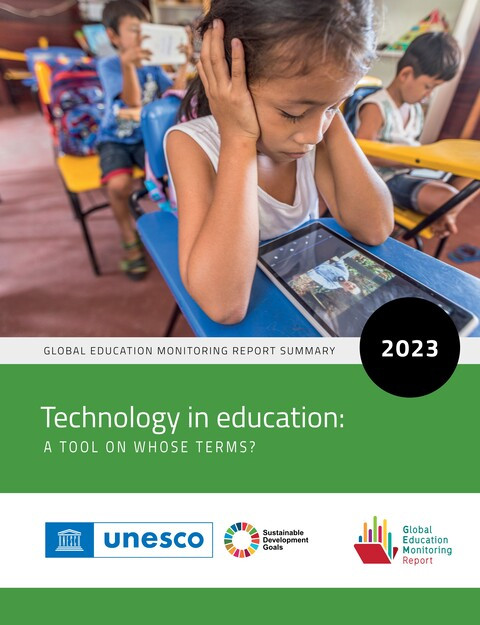 [Résumé] Résumé du rapport mondial de suivi sur l’éducation 2023 : les technologies dans l’éducation; qui est aux commandes? Год публикации: 2023 Организация-автор: UNESCO | Global Education Monitoring Report Team Le rôle de la technologie dans l’éducation suscite depuis longtemps un débat intense. Est-ce qu’elle démocratise le savoir ou menace la démocratie en permettant à quelques-uns de contrôler l’information? Offre-t-elle des opportunités sans limite ou mène-t-elle vers un avenir dépendant de la technologie sans retour en arrière possible ? Est-ce qu’elle égalise les chances ou aggrave les inégalités? Devrait-elle être utilisée pour enseigner aux jeunes enfants ou présente-t-elle des risques pour leur développement? Ce débat a été alimenté par les fermetures d’écoles dues à la COVID-19 et l’émergence de l’intelligence artificielle générative. Mais comme les développeurs sont souvent en avance sur les décideurs, la recherche sur la technologie éducative est complexe. Les preuves solides et impartiales sont rares. Les sociétés posent-elles même les bonnes questions sur l’éducation avant de se tourner vers la technologie comme solution? Reconnaissent-elles ses risques tout en cherchant ses avantages? Les technologies de l’information et de la communication ont le potentiel de favoriser l’équité et l’inclusion en permettant d’atteindre les apprenants défavorisés et de diffuser plus de connaissances dans des formats attrayants et abordables. Dans certains contextes et pour certains types d’apprentissage, elles peuvent améliorer la qualité de l’enseignement et l’apprentissage des compétences de base. De toute évidence, les compétences numériques font désormais partie des compétences de base. La technologie numérique peut également soutenir la gestion et accroître l’efficacité en aidant à traiter de plus grands volumes de données éducatives. Mais la technologie peut également exclure, être inappropriée et pesante, voire carrément nuisible. Les gouvernements doivent veiller à créer les bonnes conditions pour assurer un accès équitable à l’éducation pour tous, réguler l’utilisation de la technologie afin de protéger les apprenants de ses influences négatives, et former les enseignants. Ce rapport recommande que la technologie soit introduite dans l’éducation sur la base de preuves montrant qu’elle serait appropriée, équitable, évolutive et durable. En d’autres termes, son utilisation devrait être dans l’intérêt des apprenants et compléter l’interaction en face-à-face avec les enseignants. Elle devrait être considérée comme un outil à utiliser dans ces conditions. À mi-parcours de l’échéance, le Rapport mondial de suivi sur l'éducation 2023 évalue la distance qu’il reste à parcourir pour atteindre les objectifs éducatifs de 2030. L’éducation est la clé pour débloquer la réalisation d’autres objectifs de développement, notamment le progrès technologique.
 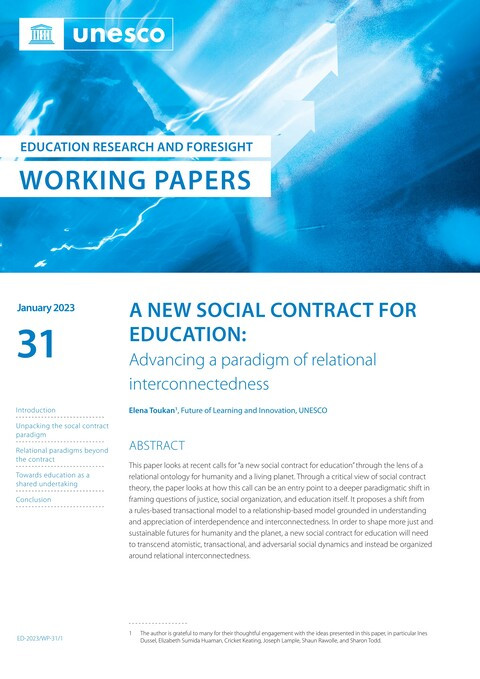 نحو عقد اجتماعي جديد للتربية والتعليم: الأخذ بترابط العلاقات نموذجاً فكرياً Год публикации: 2023 Автор: Elena Toukan Организация-автор: UNESCO إىل إبرام »عقد اجتماعي جديد للرتبية والتعليم« وذلك بمنظار تتناول هذه املقالة الدعوات الصادرة مؤخرا العالقات الوجودية بني البرش والكوكب الحي، وتفحص من خالل التحليل النقدي لنظرية العقد االجتماعي ً إىل إحداث تحول أعمق عىل مستوى النموذج الفكري عند تناول كيف يمكن أن توفر تلك الدعوات مدخال مسألة العدالة والتنظيم االجتماعي والتعليم بحد ذاته. وتقرتح املقالة التحول من نموذج املعامالت القائمة عىل قواعد محددة إىل نموذج قائم عىل العالقات يرتكز عىل إدراك عالقات الرتابط والتداخل وتقديرها حق ً للبرشية والكوكب، ال بد للعقد االجتماعي الجديد للرتبية ً واستدامة ً إىل بناء مستقبل أكثر عدال قدرها. وسعيا والتعليم من تجاوز الديناميات االجتماعية الفردية الذرية والقائمة عىل املعامالت والصدام، بل أن ينتظم حول ترابط العالقات املتشابكة. A New Social Contract for Education: Advancing a Paradigm of Relational Interconnectedness Год публикации: 2023 Автор: Elena Toukan Организация-автор: UNESCO This paper looks at recent calls for “a new social contract for education” through the lens of a relational ontology for humanity and a living planet. Through a critical view of social contract theory, the paper looks at how this call can be an entry point to a deeper paradigmatic shift in framing questions of justice, social organization, and education itself. It proposes a shift from a rules-based transactional model to a relationship-based model grounded in understanding and appreciation of interdependence and interconnectedness. In order to shape more just and sustainable futures for humanity and the planet, a new social contract for education will need to transcend atomistic, transactional, and adversarial social dynamics and instead be organized around relational interconnectedness. Un nuevo contrato social para la educación: promover un paradigma de interconexión relacional y los conocimientos Год публикации: 2023 Автор: Elena Toukan Организация-автор: UNESCO En el presente artículo se examinan los recientes llamamientos a “un nuevo contrato social para la educación” a través de la lente de una ontología relacional para la humanidad y un planeta vivo. Mediante una visión crítica de la teoría del contrato social, el artículo examina cómo este llamamiento puede ser un punto de partida hacia un cambio paradigmático más profundo a la hora de enmarcar cuestiones de justicia, organización social y la propia educación. Propone pasar de un modelo transaccional basado en normas a un modelo basado en relaciones y fundamentado en la comprensión y la apreciación de la interdependencia y la interconexión. Con miras a forjar futuros más justos y sostenibles para la humanidad y el planeta, el nuevo contrato social para la educación deberá trascender las dinámicas sociales atomistas, transaccionales y de confrontación y organizarse en torno a la interconexión relacional. Un nouveau contrat social pour l’éducation : promouvoir un paradigme d’interconnexion relationnelle Год публикации: 2023 Автор: Elena Toukan Организация-автор: UNESCO Le présent article examine les récents appels en faveur d’un « nouveau contrat social pour l’éducation » à travers le prisme d’une ontologie relationnelle au service de l’humanité et d’une planète vivante. Il se penche, en portant un regard critique sur la théorie du contrat social, sur la façon dont ces appels peuvent amorcer un changement de paradigme plus profond en ce qui concerne la façon d’aborder les questions de justice, d’organisation sociale et d’éducation. Il propose de passer d’un modèle transactionnel fondé sur les règles à un modèle relationnel qui repose sur la compréhension et la valorisation de l’interdépendance et de l’interconnexion. Afin de façonner des futurs plus justes et plus durables pour l’humanité et la planète, le nouveau contrat social pour l’éducation devra dépasser les dynamiques sociales atomistes, transactionnelles et antagonistes et se structurer autour de l’interconnexion relationnelle.
 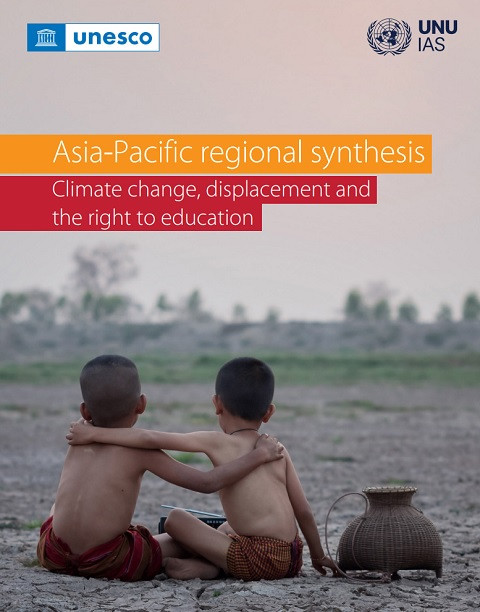 Asia-Pacific Regional Synthesis: Climate Change, Displacement and the Right to Education Год публикации: 2023 Организация-автор: UNESCO | United Nations University Institute for the Advanced Study of Sustainability (UNU-IAS) | UNESCO Bangkok In 2020, 30.7 million people were displaced by natural disasters – disasters which the scientific community acknowledges are more frequent and more intense as a result of climate change. In Asia and the Pacific alone, 21.3 million people were displaced, making it the region the most impacted by national disasters and climate change in the world. Therefore, country case studies were carried out in Bangladesh, India, Indonesia, Tuvalu, and Viet Nam to examine not only specific vulnerabilities to climate change and related mobility, but also the impacts of climate change on the right to education in Asia and the Pacific. These case studies show that climate change directly threatens education – through the destruction of schools and property – but also indirectly puts education in peril by forcing people to cross borders, ensuring neither legal residency nor the right to education. This regional synthesis report aims to guide policy-makers through providing operational policy recommendations on how to ensure education is protected in Asia and the Pacific in the face of climate change and displacement from a human rights-based approach. The report is one of four being developed and will contribute to the global initiative on climate change and displacement and the right to education – launched by UNESCO in 2020 – by informing the development of a Global Report with global policyrecommendations.How climate change impacts the right to education in Asia and the Pacific21.3million displacementstook place in Asia and the Pacific
 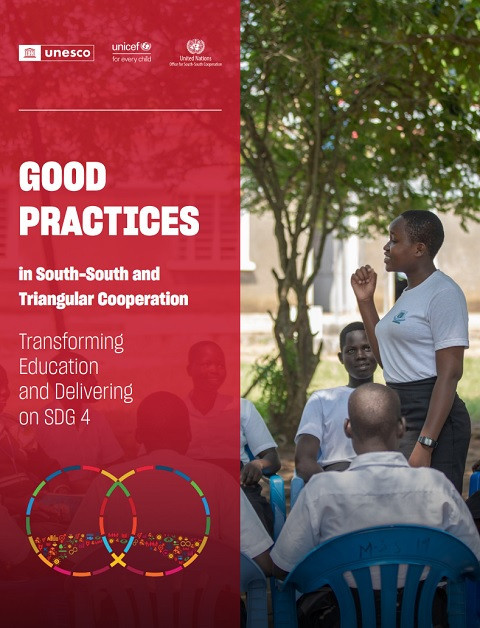 Good Practices in South-South and Triangular Cooperation: Transforming Education and Delivering on SDG 4 Год публикации: 2023 Организация-автор: UNESCO | United Nations Children's Fund (UNICEF) | UN. Office for South-South Cooperation (UNOSSC) Quality Education: South-South cooperation as a lever for action. This publication showcases 40 innovative solutions on how South-South and Triangular Cooperation can transform education.South-South and triangular cooperation is at the heart of SDG4 implementation on Quality Education. As demonstrated in the last few years, this kind of cooperation can mobilize action, ambition, solidarity and solutions to transform education in a rapidly changing world. From the inclusive approach to digital learning in Lao People’s Democratic Republic to distance learning and teacher training strategies in Caribbean SIDS, South-South cooperation is a key modality of cooperation for transforming education and supporting internationally agreed development goals, including the 2030 Agenda. This publication showcases 40 innovative solutions on how South-South and Triangular Cooperation can transform education.This publication presents forty innovative solutions from around the world which showcase how South-South and triangular cooperation can support the development of more efficient, equitable and resilient education systems that are adapted to the challenges of the 21st century. Countries of the South, with the support of partners, must enhance South-South and triangular cooperation to exchange resources, technology, skills and knowledge to realize the promise of making inclusive, quality education available to all.
  International Forum on AI and the Futures of Education: Developing Competencies for the AI Era Synthesis Report; 7-8 December 2020 Год публикации: 2021 Автор: Fengchun Miao | Wayne Holmes Организация-автор: UNESCO This synthesis report has been developed by the UNESCO Unit for Technology and Artificial Intelligence in Education within the Future of Learning and Innovation Team, drawing on the International Forum on AI and the Futures of Education held in Beijing and simultaneously online from 7 to 8 December 2020.The Forum underlined the importance of reviewing the very purpose of education, together with the opportunity for real transformation, and the role that AI might play. It is widely acknowledged that current educational practices and educational environment are very rigid, and that the future of education should be more flexible and responsive to changing circumstances and innovation. National education authorities should identify what skills young people need to enable them to live and thrive in the new realities of a constantly changing world, and what digital transformation makes possible in the national and international context. In short, new education models are needed to put students at the centre, to move away from a focus on memorizing content, to integrate the digital and the analogue, and to foster human cognitive, socioemotional and critical skills, all of which might – with foresight and careful attention – be enabled by AI and other digital technologies.
  Artificial Intelligence for Sustainable Development: Synthesis Report; Mobile Learning Week 2019 Год публикации: 2019 Организация-автор: UNESCO During the five-day event for Mobile Learning Week 2019, UNESCO gathered participants from around the world to share experiences, initiatives and plan joint actions with a view to harnessing artificial intelligence (AI) to achieve Sustainable Development Goal (SDG) 4. The report stems from the work that the speakers presented and the insights that all the participants shared at the event.
  AI and Education: Guidance for Policy-Makers Год публикации: 2021 Автор: Fengchun Miao | Wayne Holmes | Ronghuai Huang | Hui Zhang Организация-автор: UNESCO Artificial intelligence (AI) is envisioned as a new tool to accelerate the progress towards the achievement of SDG 4. Policies and strategies for using AI in education are central to maximizing AI’s benefits and mitigating its potential risks. Fostering AI-ready policy-makers is the starting point of the policy development process.This publication offers guidance to policy-makers in understanding AI and responding to the challenges and opportunities in education presented by AI. Specifically, it introduces the essentials of AI such as its definition, techniques, technologies, capacities and limitations. It also delineates the emerging practices and benefit-risk assessment on leveraging AI to enhance education and learning, and to ensure inclusion and equity, as well as the reciprocal role of education in preparing humans to live and work with AI.The publication summarizes three approaches to the policy responses from existing practices: independent approach, integrated approach and thematic approach. In a further step, it proposes more detailed recommendations and examples for planning AI and education policies, aligned with the recommendations made in the 2019 Beijing Consensus on AI and Education.