
Ресурсы
Изучайте широкий спектр ценных ресурсов ВГГ, чтобы углубить своё понимание и повысить эффективность исследований, просветительской деятельности, преподавания и обучения.
Найдено: 3,446
 Русский язык в Центрально-Азиатском регионе Год публикации: 2014 Автор: Ksenia .P. Borishpolets Статья посвящена роли русского языка в Центральной Азии и перспективам развития его ресурсов в контексте евразийских интеграционных процессов.
  How to Solve the Problems of Preschool Education in Kyrgyzstan? Год публикации: 2021 Автор: Ekaterina Kasymova Организация-автор: Central Asian Bureau for Analytical Reporting (CABAR) An independent expert Ekaterina Kasymova (Kyrgyzstan) analyzes the current problems of preschool education and its connection with the successful functioning of the government in an article. Как решить проблемы дошкольного образования в Кыргызстане? Год публикации: 2021 Автор: Ekaterina Kasymova Организация-автор: Central Asian Bureau for Analytical Reporting (CABAR) В статье независимый эксперт Екатерина Касымова анализирует текущее положение дошкольной ступени образования и его взаимосвязь с успешным функционированием государства.
  Problems of Preschool Education in Kazakhstan Год публикации: 2021 Автор: Gaukhar Kiikova There is no unified state policy in the field of early childhood development in Kazakhstan, its individual components are assigned to different ministries and departments, which is one of the main problems, since there is a fragmentation of decisions taken and their inefficiency. Проблемы дошкольного образования в Казахстане Год публикации: 2021 Автор: Gaukhar Kiikova В Казахстане отсутствует единая государственная политика в сфере раннего детского развития, отдельные ее оставляющие закреплены за разными министерствами и ведомствами, что является одной из основных проблем, поскольку наблюдается разрозненность принимаемых решений и их неэффективность.
  How Can People With Disabilities Find Employment in Uzbekistan? Год публикации: 2023 Автор: Abror Kurbanmuratov As in most other Central Asian countries, it is difficult for people with disabilities in Uzbekistan to survive. In addition to problems with health and social adaptation, it is difficult for them to find employment and feel themselves needed by society. Despite the adopted state laws and support programs, most cities and districts lack mechanisms for their implementation, as well as adapted infrastructure, accessible environment and employment system. Как трудоустроиться людям с инвалидностью в Узбекистане? Год публикации: 2023 Автор: Abror Kurbanmuratov Как и в большинстве других стран Центральной Азии, людям с инвалидностью в Узбекистане выживать сложно. Помимо проблем со здоровьем, социальной адаптацией, им трудно трудоустроиться, почувствовать себя нужными обществу гражданами. Несмотря на принятые государственные законы и программы поддержки, в большинстве городов и районов отсутствуют механизмы их реализации, как и адаптированная инфраструктура, доступная среда и система трудоустройства.
 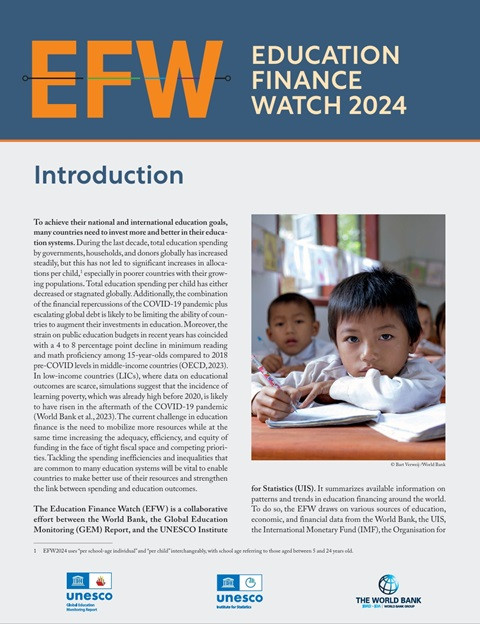 Education Finance Watch 2024 Год публикации: 2024 Организация-автор: Global Education Monitoring Report Team | UNESCO Institute for Statistics (UIS) | World Bank The Education Finance Watch (EFW) is a collaborative effort between the World Bank, the GEM Report, and the UNESCO Institute for Statistics (UIS). The EFW aims to provide an analysis of trends, patterns, and issues in education financing around the world. The EFW uses various sources of education, economic, and financial data from the World Bank, UIS, the International Monetary Fund, and the Organization of Economic Co-operation and Development (OECD).
 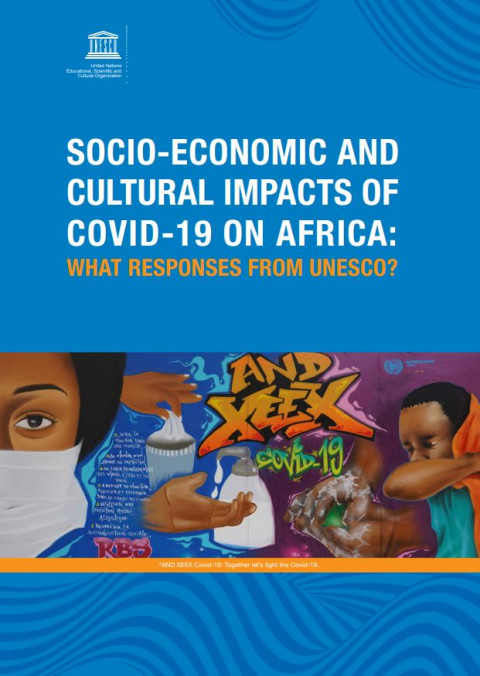 Socio-Economic and Cultural Impacts of COVID-19 on Africa: What Responses from UNESCO? Год публикации: 2020 Организация-автор: UNESCO This policy paper analyses the socio-economic and cultural impacts of the disease on Africa as a whole, caused by both the immediate effects and the present and future consequences of the pandemic, including on the African societal fabric, which is likely to lead to a fracture in the trust between States and their citizens and within communities themselves. As such, it highlights the main measures that were adopted by African countries to contain the crisis and its socio-economic and cultural effects. While committing to acting and reflecting on the present and future consequences of the pandemic, UNESCO aims to contribute substantially to the ongoing debates in Africa through the development of a strategic response to help the collective global and regional efforts against the pandemic. Incidences socio-économiques et culturelles de la COVID-19 sur l'Afrique: quelles réponses de l'UNESCO?? Год публикации: 2020 Организация-автор: Organisation des Nations Unies pour l'éducation, la science et la culture (UNESCO) Ce document de politique analyse les incidences socioéconomiques et culturelles de la maladie sur l’Afrique dans son ensemble, aussi bien par les effets immédiats que les conséquences présentes et futures de la pandémie, y compris sur le tissu sociétal africain, susceptible d’entraîner une fracture de la relation de confiance entre les États et leurs citoyens, et au sein des communautés elles-mêmes. Ce faisant, elle met en lumière les principales mesures adoptées par les pays africains pour juguler la crise et ses effets socio-économiques et culturelles. Tout en s’engageant dans l’action et dans la réflexion sur les conséquences présentes et futures de la pandémie, l’UNESCO entend ainsi contribuer de manière substantielle aux débats en cours en Afrique à travers en l’articulation d’une réponse stratégique pour apporter sa contribution aux efforts collectifs mondiaux et régionaux de lutte contre la pandémie.