
Ресурсы
Изучайте широкий спектр ценных ресурсов ВГГ, чтобы углубить своё понимание и повысить эффективность исследований, просветительской деятельности, преподавания и обучения.
Найдено: 3,780
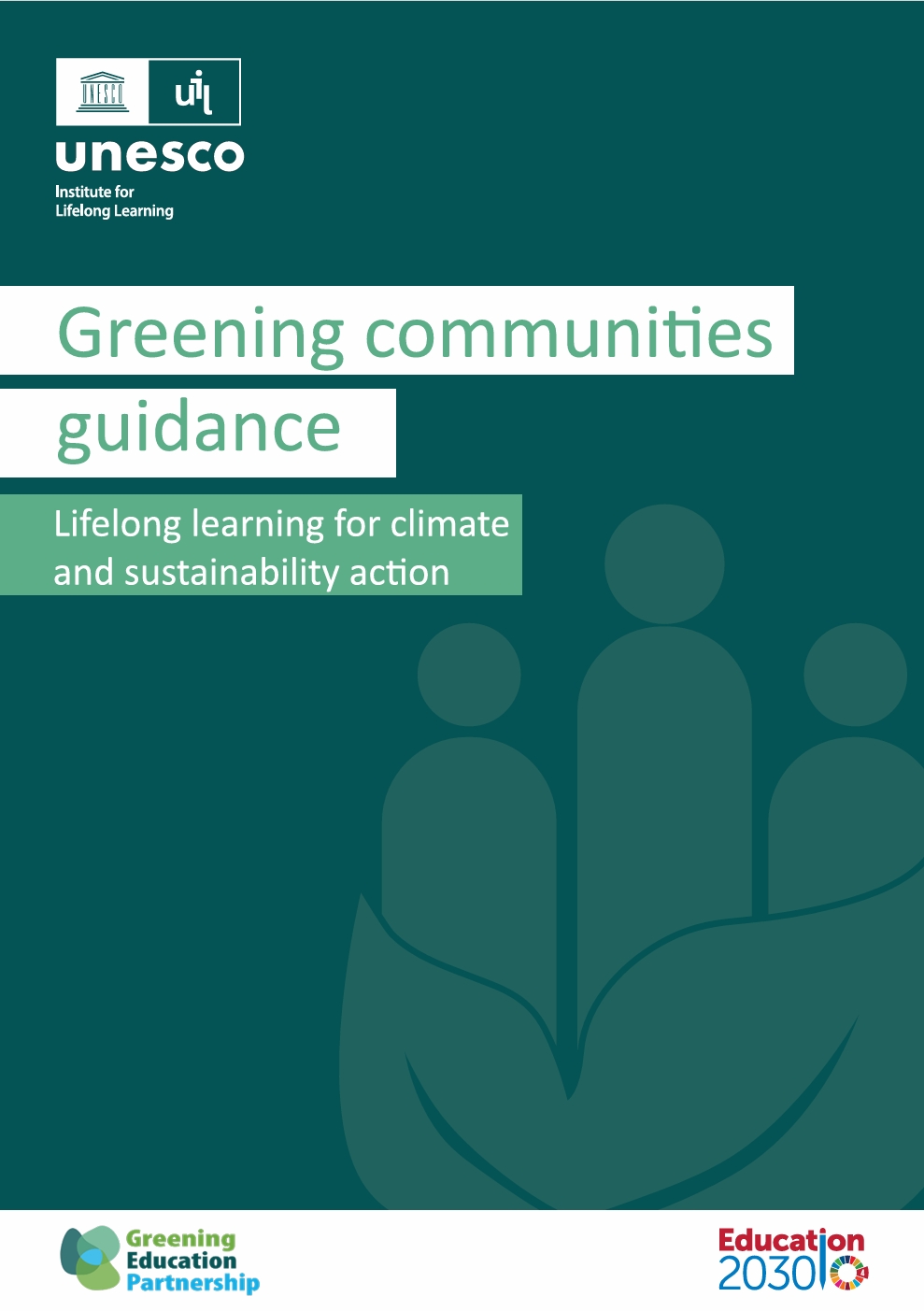 Greening Communities Guidance: Lifelong Learning for Climate and Sustainability Action Год публикации: 2025 Организация-автор: UNESCO Institute for Lifelong Learning (UIL) | World Organization of the Scout Movement Climate change poses a serious threat to communities around the world, compelling us to protect vulnerable lives and shape resilient futures. By nurturing lifelong learning and empowering local initiatives, communities can drive transformative change – amplifying local efforts into global impact.Green communities are municipalities of any size that embrace lifelong learning to empower individuals to take meaningful climate and sustainability action. This is achieved by extending climate education beyond the classroom and offering learning opportunities in non-formal and informal settings – rooted in and responsive to local culture and context. By engaging learners of all ages across a variety of learning environments, residents of green communities are equipped to take informed, proactive and responsible action for the climate and environment, contributing to more sustainable living.The sections of this document provide an overview of the diverse learners, learning spaces and educational approaches that can contribute to greening communities. It outlines practical steps for developing a comprehensive green learning strategy and action plan that mobilizes learners of all generations in climate and sustainability efforts.Municipal governments, along with a wide range of local stakeholders and change agents in both urban and rural areas, are invited to use this guidance to foster green communities through a lifelong learning lens.Together, let’s green our communities!
 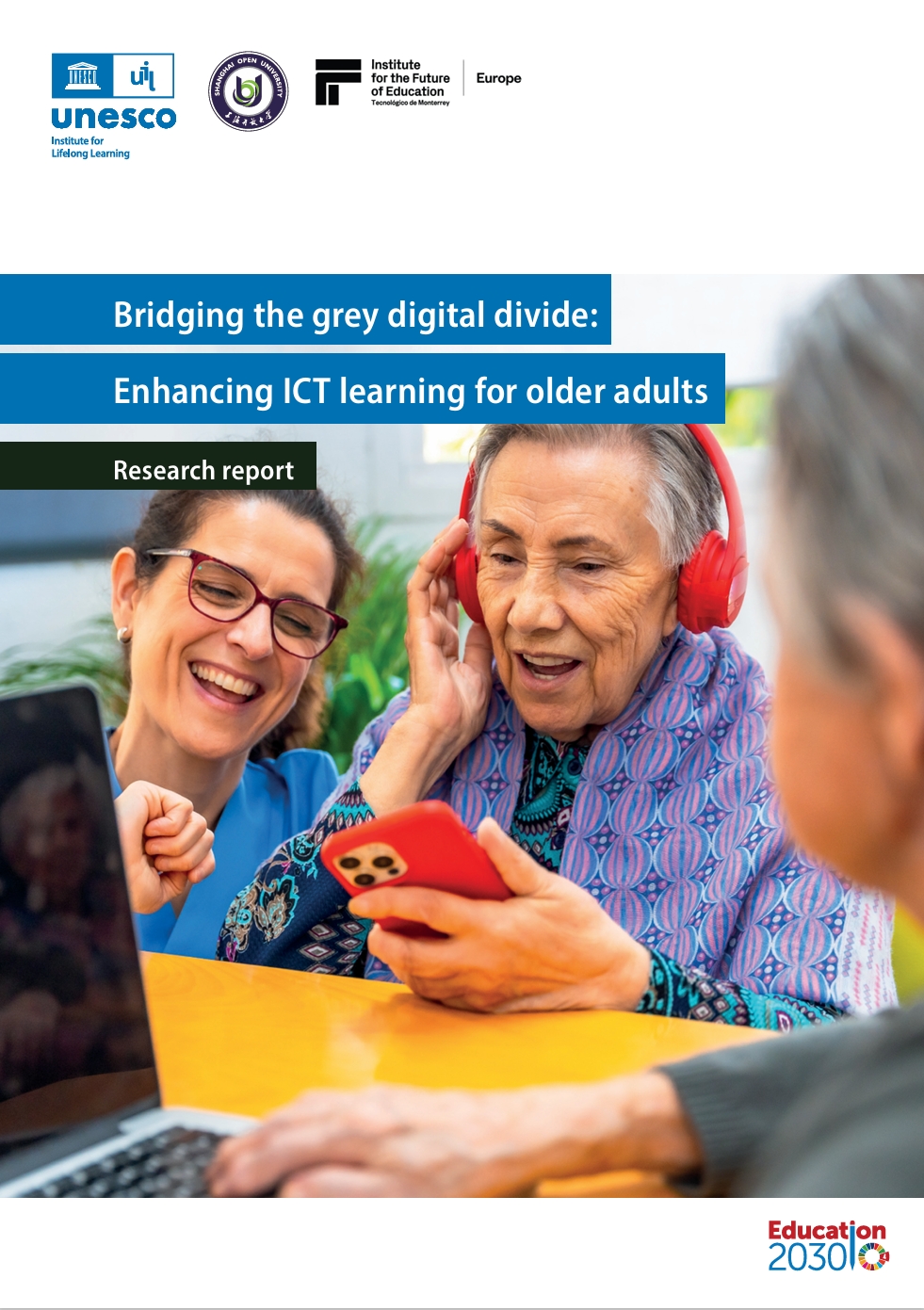 Bridging the Grey Digital Divide: Enhancing ICT Learning for Older Adults; Research Report Год публикации: 2025 Организация-автор: UNESCO Institute for Lifelong Learning (UIL) | Shanghai Open University (SOU) | Institute for the Future of Education This research report, Bridging the Grey Digital Divide: Enhancing ICT Learning for Older Adults, explores how organizations across diverse national and regional contexts are supporting digital learning opportunities for older adults. Through six case studies from across five UNESCO regions, it presents a rich array of practices and strategies adopted by independently funded non-profit organizations, community learning centres operating under the auspices of national and local governments, foundations and adult education institutions drawing on a combination of private and public funding sources while maintaining links with universities, and other stakeholders working to close the digital gap for older learners. These examples demonstrate that with the right support structures and pedagogical methods – such as tailored learning programmes, age-friendly technology environments, and intergenerational collaboration – older adults can, and do, engage meaningfully with digital technologies..
 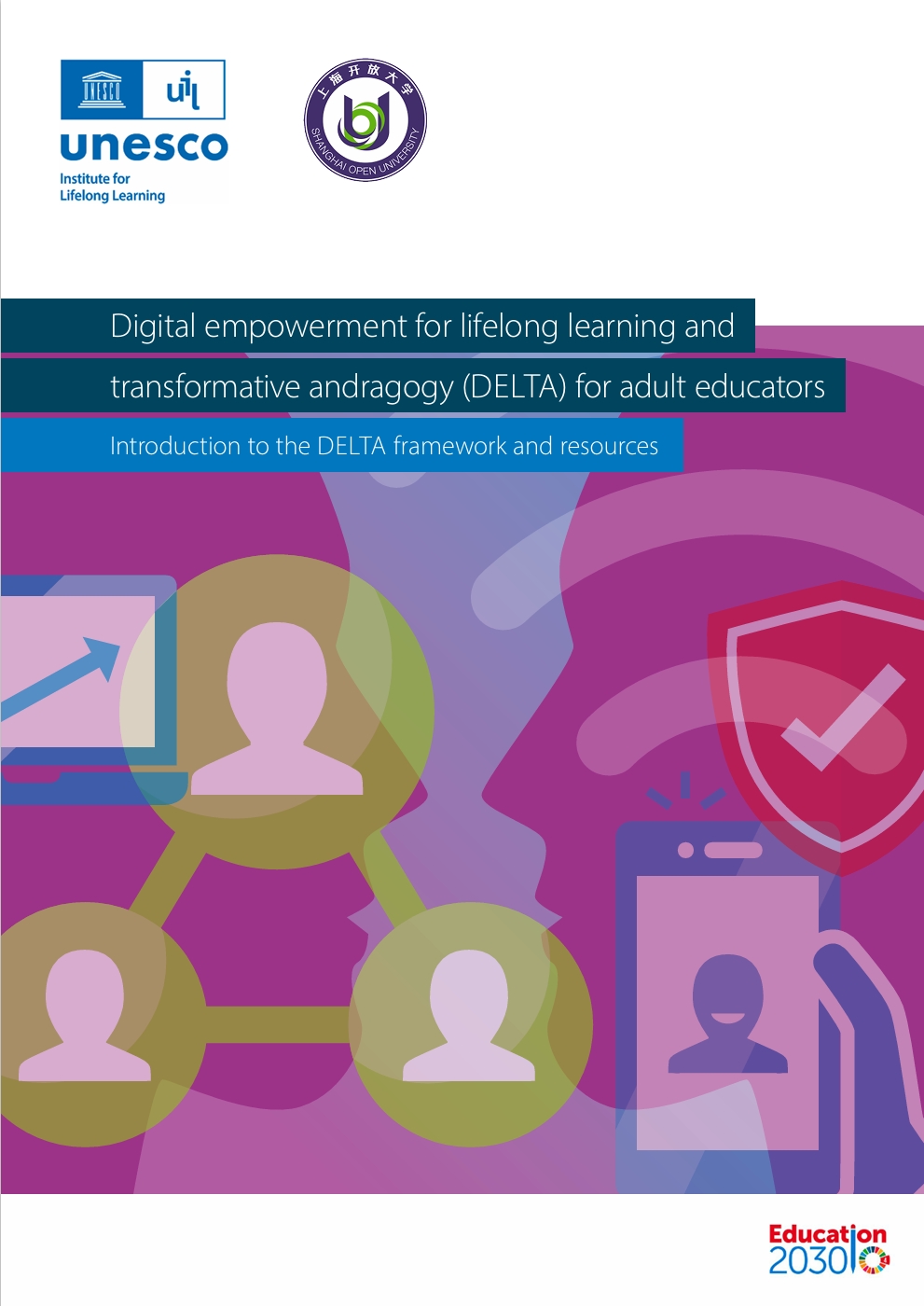 Digital Empowerment for Lifelong Learning and Transformative Andragogy (DELTA) for Adult Educators: Introduction to the DELTA Framework and Resources Год публикации: 2025 Организация-автор: UNESCO Institute for Lifelong Learning (UIL) | Shanghai Open University (SOU) The UNESCO Institute for Lifelong Learning (UIL), in partnership with Shanghai Open University (SOU), has unveiled the DELTA Framework — Digital Empowerment for Lifelong Learning and Transformative Andragogy. This global initiative aims to enhance adult educators’ digital competencies and foster inclusive, lifelong learning opportunities for all.
 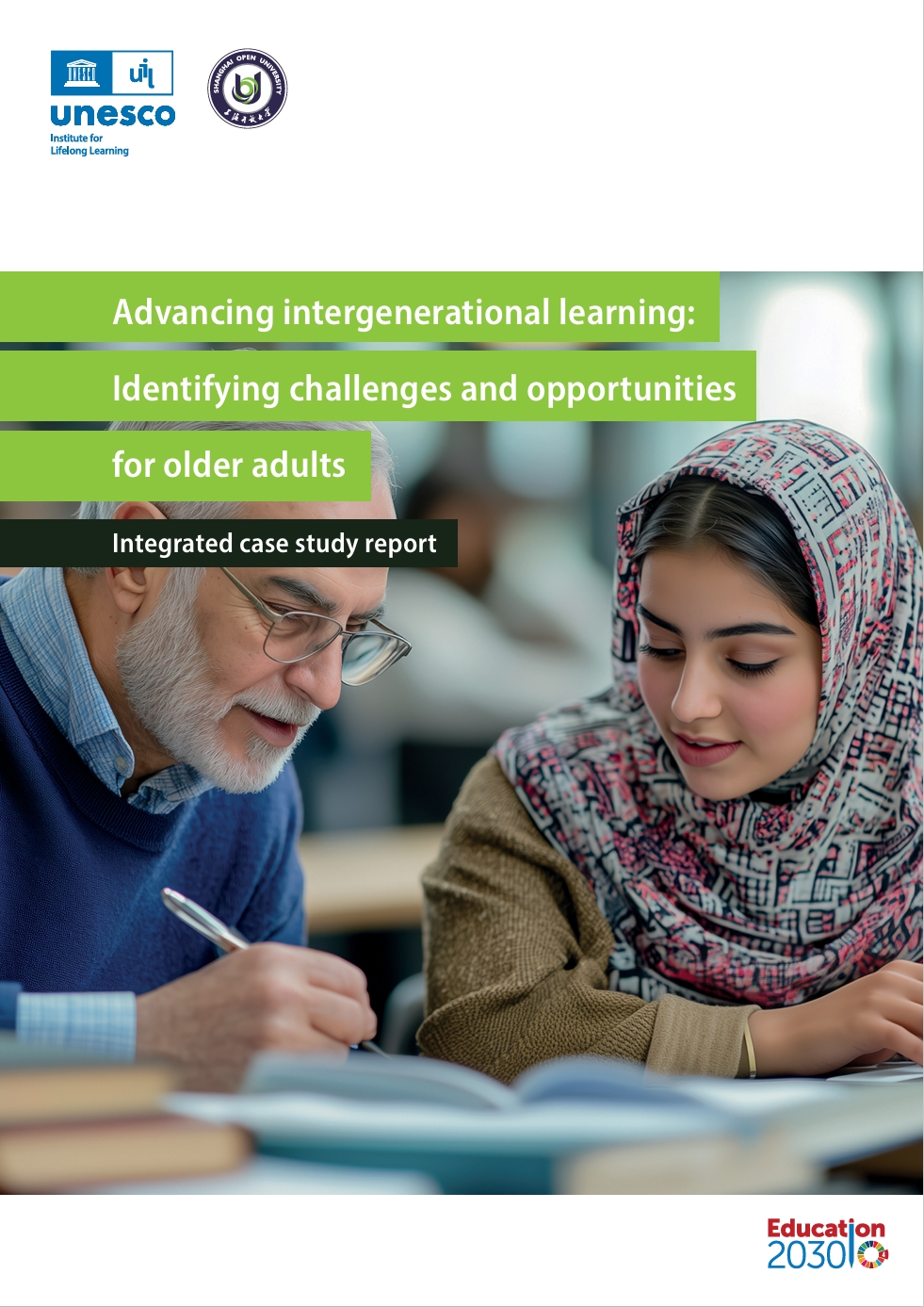 Advancing Intergenerational Learning: Identifying Challenges and Opportunities for Older Adults; Integrated Case Study Report Год публикации: 2025 Организация-автор: UNESCO Institute for Lifelong Learning (UIL) | Shanghai Open University (SOU) This research report presents case studies from the UNESCO regions Europe and North America, Africa, and Asia and the Pacific, showcasing various strategies for designing intergenerational learning initiatives. It highlights the diverse policy frameworks and implementation contexts within which these global programmes operate.Using an exploratory multiple case study approach, the report examines the dynamics and potential of intergenerational learning as a catalyst for cultivating a culture of lifelong learning. It assesses the value of such learning in promoting age-friendly environments and addressing ageism. Additionally, the report offers insights into generational learning motivations and identifies barriers to effective intergenerational programming.Finally, the report provides a set of evidence-based guidelines to inform and enhance future efforts in intergenerational learning. The findings and recommendations serve as a valuable resource for educators, policy-makers, and community leaders.These case studies were developed as part of the broader UNESCO Institute for Lifelong Learning research project, Higher Education Institutions – Responses to the Learning Needs of Ageing Societies.
 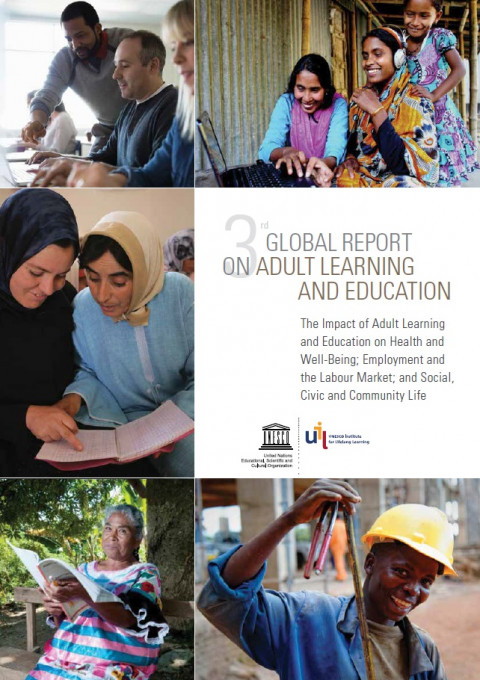 Third Global Report on Adult Learning and Education: The Impact of Adult Learning and Education on Health and Well-Being; Employment and the Labour Market; and Social, Civic and Community Life Год публикации: 2016 Организация-автор: UNESCO Institute for Lifelong Learning (UIL) This Report on Adult Learning and Education (GRALE III) comes out as the international community works towards the 2030 Agenda for Sustainable Development. It is also reference and advocacy documents, providing information for analysts and policymakers, and reminding Member States of their commitment. Here policymakers will find high-quality evidence to support policies, strategies and budgets. Stakeholders will find compelling arguments for how adult learning and education promotes sustainable development, healthier societies, better jobs and more active citizenship. Researchers will find entry points and ideas for future research.
 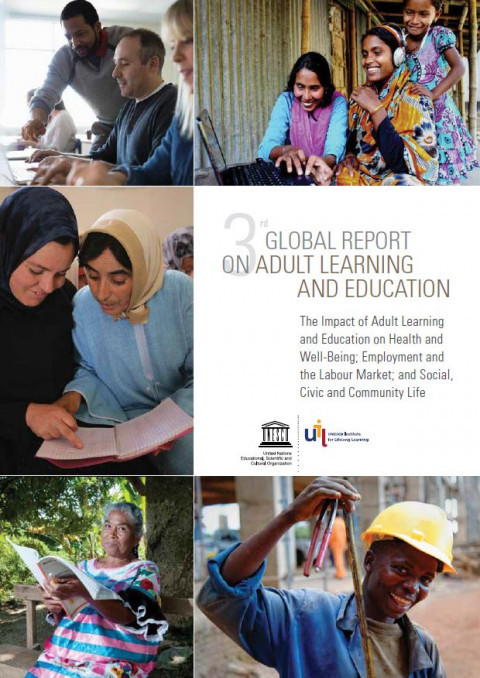 3rd Global Report on Adult Learning and Education: The Impact of Adult Learning and Education on Health and Well-being, Employment and the Labour Market, and Social, Civic and Community Life Год публикации: 2016 Организация-автор: UNESCO Institute for Lifelong Learning (UIL) The Global Reports on Adult Learning and Education (GRALE) play a key role in meeting UNESCO’s commitment to monitor and report on countries’ implementation of the Belém Framework for Action. This Framework was adopted by 144 UNESCO Member States at the Sixth International Conference on Adult Learning and Education (CONFINTEAVI), which was held in Belém, Brazil, in 2009. In the Belém Framework for Action, countries agreed to improve ALE across five areas of action: policy; governance; financing; participation, inclusion and equity; and quality (UNESCO Institute for Lifelong Learning, 2010b).GRALE III appears as the ALE community prepares for an important global conference: the 2017 Mid-Term Review of CONFINTEA VI. GRALE III will help high-level decision makers take stock of progress in delivering their Belém promises since 2009. It will also help them look ahead to 2030. Policymakers are now considering how to put into practice the ALE promises made in the 2030 Agenda for Sustainable Development (United Nations, 2015) and the Recommendation on Adult Learning and Education (2015) (UNESCO, 2015). GRALE III will support their deliberations by showing how ALE can help achieve broader health, economic and social outcomes. It will identify major challenges for ALE and examine the implications for ALE of major global trends like migration and demographic shifts.GRALE III brings together the latest data, policy analysis and case studies on ALE. Government leaders will find high quality evidence to inform their policies, strategies and budgets. Proponents of change will find compelling arguments showing how ALE promotes sustainable development, healthier societies, better jobs and more active citizenship. Policy analysts will find entry points and ideas for future research and policy.
  세계시민교육의 실태와 실천과제 Год публикации: 2015 Автор: 이성회 | 김미숙 | 정바울 | 이승진 | 박영 | 조윤정 | 송수희 Организация-автор: 한국교육개발원 본 연구는 ‘학교 교육현장에서의’ 세계시민 교육에 대한 실증적 연구로 특히 교사의 세계시민교육에 대한 인식과 실천을 중심으로 세계시민 교육의 실태를 파악하고자 한다. 먼저 학교 교육현장에서의 세계시민교육 실태를 파악하기 위하여 전국의 99개교(초등학교 33 개교, 중학교 32개교, 고등학교 34개교)의 교사 1968명(초등학교 656명, 중학교 628명, 고등학교 684명)을 대상으로 설문조사를 실시하였다. 또한 교사들이 이해하고 있는 세계시민교육에 대한 인식과 실천 현황에 대한 보다 심도 있고 입체적인 분석을 위해 질적 사례 연구(중학교 한 사례, 초등학교 교사연구동아리 한 사례)를 병행하였다. 즉 본 연구는 양적 연구를 통해 학교 교육 현장에서의 세계시민교육의 전반적인 ‘양상(pattern)’을 파악하고 질적 연구를 통해 세계시민교육이 수행되는 ‘과정(process)’을 보다 총체적이고 심층적으로 탐색할 수 있도록 연구를 설계하였다.
  A Study on Contextualization of Global Education Agenda: Focusing on Education Policies of Global Citizenship Education in South Korea (The Journal of Korean Education; Vol.46, No.3) Год публикации: 2019 Автор: Insun Jeon Организация-автор: Korean Educational Development Institute (KEDI) This study aims to provide a concrete discussion on contextualization of global education agenda with the case of Global Citizenship Education(GCED) policies in South Korea.Design/Methodology: With a theoretical approach based on neoinstitutionalism, this study investigates influential factors in determining the direction and key words of GCED policies in policy-making process. Policy documents of Ministry of Education, the local education authority of Seoul city, Kyeonggi-province, Incheon city and the Asia-Pacific Centre of Education for International Understanding of UNESCO, and the speeches of key stakeholders such as presidents, ministers and superintendents from 2014 to April 2019 are analyzed by using KHcoder for text mining and mapping. Semi-structured interviews are conducted with experts to supplement the text analysis.Findings/Result: The result shows that the influence of key stakeholders on directing GCED policies is significant. By and large, GCED is re-defined by purpose in the socio-political context of South Korea, which contributes to the expansion of GCED but also results in inconsistency and fragmentation.Value: This study shows a limit of the top-down approach to GCED policy decisions, and the necessity to allow more bottom-up proposals, transparency of the policy-making process, the participation of diverse groups and ongoing discussions focusing on the process of contextualization for future GCED. 국제교육의제의 지역적 맥락화에 대한 고찰: 한국의 세계시민교육 정책을 중심으로 (한국교육; Vol.46, No.3) Год публикации: 2019 Автор: 전인선 Организация-автор: 한국교육개발원 본 연구는 한국의 세계시민교육 정책을 통해 국제교육의제의 지역적 맥락화의 구체적인 사례와 논의의 발전가능성을 제시하고자 하였다. 신제도주의에 기반을 둔 이론적 접근방식을 통해, 세계시민교육정책의 핵심주제와 연계정책 결정에 영향을 미친 요인을 분석하였다. 연구방법으로는 KHcoder를 이용하여 2014년부터 2019년 4월까지의 서울특별시, 경기도, 인천광역시교육청의 세계시민교육 관련 정책자료와 유네스코 아시아태평양 국제이해교육원의 문서, 교육부 보도자료, 대통령, 교육부장관, 차관, 교육감 등 주요인사의 공식 발언 자료를 분석하고, 전문가 그룹과의 반구조면담을 통해 분석내용을 검증・보완하였다. 분석결과, 한국은 정책결정권자가 세계시민교육 정책의 핵심주제와 방향 설정에 미치는 영향이 매우 크며, 세계시민교육의 역할과 개념이 한국의 사회・정치적 맥락에서 목적 중심으로 재정립되는 것으로 나타났다.하향식 정책결정구조를 통해 이뤄진 ‘목적’ 중심의 세계시민교육의 맥락화는 양적팽창에는 긍정적으로 작용하였으나, 결정권자가 변경됨에 따라 생기는 정책의 비일관성과 파편화를 야기했다. 따라서 본 연구는 앞으로의 세계시민교육의 맥락화는 ‘목적’이 아닌 ‘과정’에 초점을 두어야하며, 이를 위해 정책구조의 개선을 통한 활발한 상향식 담론 생산과 정책결정과정의 투명성 보장과 다양한 그룹의 공식적인 참여, 그리고 지속적이고 공개적인 성찰이 필요하다.
 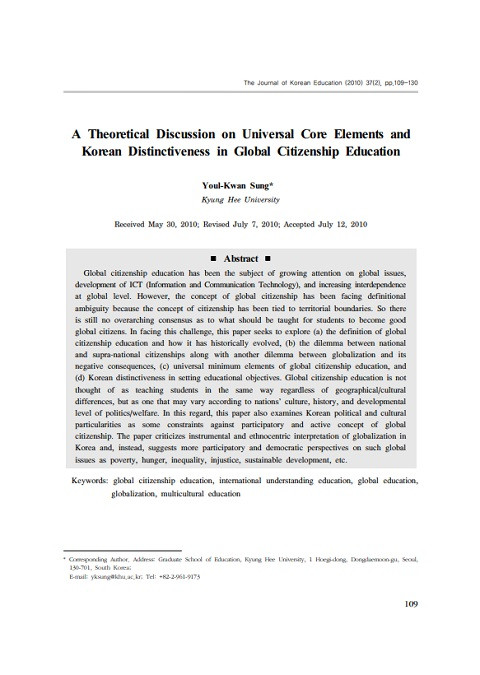 A Theoretical Discussion on Universal Core Elements and Korean Distinctiveness in Global Citizenship Education (The Journal of Korean Education; Vol. 37, No. 2) Год публикации: 2010 Автор: Youlkwan Sung Организация-автор: Korean Educational Development Institute (KEDI) Global citizenship education has been the subject of growing attention on global issues, development of ICT (Information and Communication Technology), and increasing interdependence at global level. However, the concept of global citizenship has been facing definitional ambiguity because the concept of citizenship has been tied to territorial boundaries. So there is still no overarching consensus as to what should be taught for students to become good global citizens. In facing this challenge, this paper seeks to explore (a) the definition of global citizenship education and how it has historically evolved, (b) the dilemma between national and supra-national citizenships along with another dilemma between globalization and its negative consequences, (c) universal minimum elements of global citizenship education, and (d) Korean distinctiveness in setting educational objectives. Global citizenship education is not thought of as teaching students in the same way regardless of geographical/cultural differences, but as one that may vary according to nations' culture, history, and developmental level of politics/welfare. In this regard, this paper also examines Korean political and cultural particularities as some constraints against participatory and active concept of global citizenship. The paper criticizes instrumental and ethnocentric interpretation of globalization in Korea and, instead, suggests more participatory and democratic perspectives on such global issues as poverty, hunger, inequality, injustice, sustainable development, etc.