
Ресурсы
Изучайте широкий спектр ценных ресурсов ВГГ, чтобы углубить своё понимание и повысить эффективность исследований, просветительской деятельности, преподавания и обучения.
Найдено: 3,433
 Greening Technical and Vocational Education and Training: A Practical Guide for Institutions Год публикации: 2017 Организация-автор: UNESCO International Centre for Technical and Vocational Education and Training (UNEVOC) This Guide describes the macro need for TVET reform in conformity with the Sustainable Development Goals, the Global Action Programme (GAP) on Education for Sustainable Development (ESD), and other United Nations, UNESCO and national initiatives. The Guide also provides specific practical help for institutional greening transition teams to plan and carry out the changes that are deemed necessary. It is essential that all such greening undertakings have a clear vision, are known to all those concerned, follow a strategic plan, set targets and milestones, and include a monitoring/assessment tool. The concept of shared vision and team reformation combined with the support of senior leaders is evident throughout this Guide. A major goal is that greening will grow into an ongoing process which is eventually infused into the culture of each institution.
  Concept note for the 2020 Global education monitoring report on inclusion Год публикации: 2018 In line with its mandate, the 2020 GEM Report will assess progress towards Sustainable Development Goal 4 (SDG 4) on education and its ten targets, as well as other related education targets in the SDG agenda.Echoing the overall orientation in the SDGs to “leave no one behind”, this year's Report will also take an in-depth look at inclusion and education. Inclusion is central in the formulation of SDG 4 but is also taken up in other targets in the goal, notably targets 4.5 on gender equality and 4.a on learning environments. Responding to this emphasis, the 2020 GEM Report will analyse policies the world over and present evidence on the different elements of education systems that can support inclusion, such as laws and policies, governance and finance, curricular and learning materials, teachers, school infrastructure, school selection and parental and community views.The Report will focus on the barriers faced by all learners, especially those with overlapping characteristics that make them particularly vulnerable to exclusion. It will also take an in-depth look at people with disabilities, a group whose particular challenges gave rise to the inclusion debate. The Report will look at a range of indicators measuring inclusion in education using both quantitative and qualitative data. The analysis will be based on geographically balanced evidence, and will pay special attention to contexts where disadvantaged children might be particularly at risk of exclusion from education, such as in situations of conflict.
  Artificial intelligence in education: challenges and opportunities for sustainable development Год публикации: 2019 Автор: Pedró, Francesc | Subosa, Miguel | Rivas, Axel | Valverde, Paula Artificial Intelligence is a booming technological domain capable of altering every aspect of our social interactions. Ineducation, AI has begun producing new teaching and learning solutions that are now undergoing testing in differentcontexts. This working paper, written for education policymakers, anticipates the extent to which AI affects the education sector to allow for informed and appropriate policy responses. This paper gathers examples of the introduction of AI in education worldwide, particularly in developing countries, discussions in the context of the 2019 Mobile Learning Week and beyond, as part of the multiple ways to accomplish Sustainable Development Goal 4, which strives for equitable, quality education for all. First, this paper analyses how AI can be used to improve learning outcomes, presenting examples of how AI technology can help education systems use data to improve educational equity and quality in the developing world. Next, thepaper explores the different means by which governments and educational institutions are rethinking and reworking educational programmes to prepare learners for the increasing presence of AI in all aspects of human activity. Thepaper then addresses the challenges and policy implications that should be part of the global and local conversations regarding the possibilities and risks of introducing AI in education and preparing students for an AI-powered context. Finally, this paper reflects on future directions for AI in education, ending with an open invitation to create new discussions around the uses, possibilities and risks of AI in education for sustainable development.
 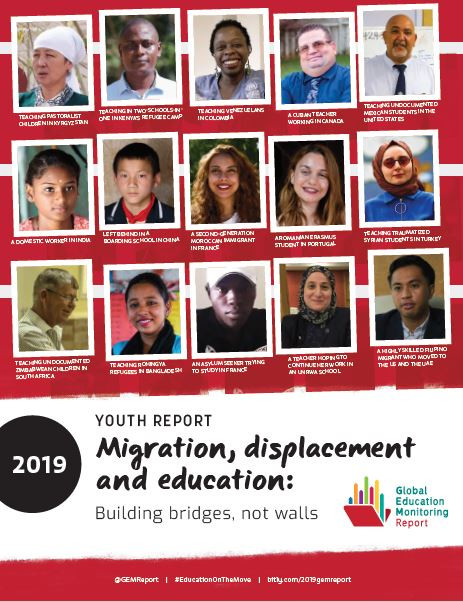 Migration, displacement and education: building bridges, not walls; Global education monitoring report, youth report, 2019 Год публикации: 2018 Организация-автор: Global Education Monitoring Report Team The Education 2030 Incheon Declaration and Framework for Action specifies that the mandate of the Global Education Monitoring Report is to be ‘the mechanism for monitoring and reporting on SDG 4 and on education in the other SDGs’ with the responsibility to ‘report on the implementation of national and international strategies to help hold all relevant partners to account for their commitments as part of the overall SDG follow-up and review’. It is prepared by an independent team hosted by UNESCO. This is among the most aspirational global commitments of the United Nations 2030 Agenda for Sustainable Development. Migration and displacement are two global challenges the agenda needs to address in achieving the 17 Sustainable Development Goals (SDGs), including SDG4: ‘Ensure inclusive and equitable quality education and promote lifelong learning opportunities for all’.
 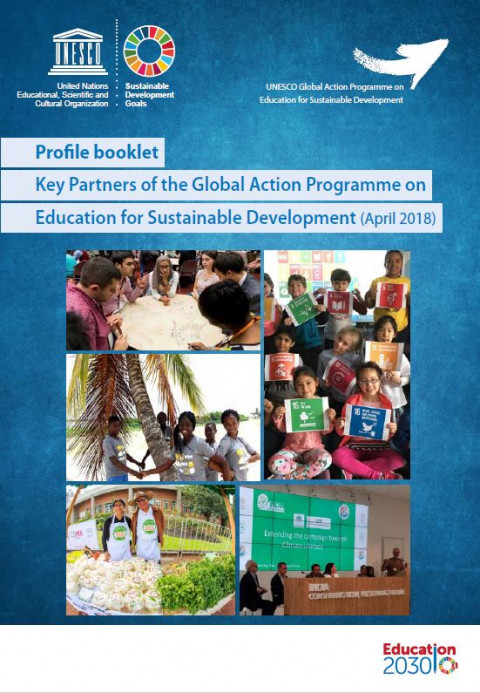 Profile booklet: key partners of the Global Action Programme on Education for Sustainable Development (April 2018) Год публикации: 2018 UNESCO’s Global Action Programme (GAP) was launched at the World Conference on Education for Sustainable Development (ESD) in November 2014 in Aichi-Nagoya, Japan as a follow-up programme to the Decade of ESD (2005-2014). This booklet contains profiles of the current 96 members (also called Key Partners) of the GAP Partner Networks. Each Key Partner is listed in alphabetical order within one of the five Partner Networks. Each profile presents the main objective of their work, their GAP launch commitment and specific activities that contribute to the GAP, as well as related website links and contact information for the organization’s focal point.
 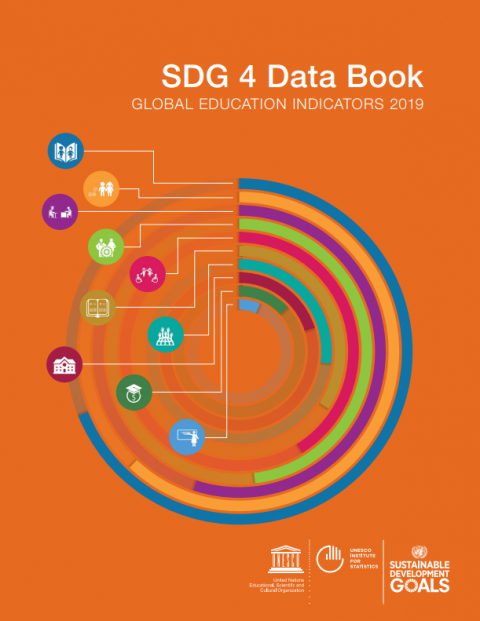 SDG 4 Data Book 2019 Год публикации: 2019 Организация-автор: UNESCO Institute for Statistics (UIS) This publication presents the global monitoring indicators used by countries and the international development community to monitor progress towards Sustainable Development Goal 4 (SDG 4) on education. The indicators were produced by the UNESCO Institute for Statistics (UIS), based on the latest available data.The UIS is the official source of internationally-comparable education data and the custodian agency for SDG 4 data. This mandate reflects the trust of the international community in UIS data and its proven track record in methodological work and standard-setting with national statistical offices, line ministries and technical partners in every region. Recueil de données de l’ODD4 Год публикации: 2019 Организация-автор: UNESCO Institute for Statistics (UIS) Cette publication présente les indicateurs de suivi mondiaux utilisés par les pays et la communauté du développement international pour surveiller les progrès réalisés sur la voie de l’Objectif de développement durable 4 (ODD 4) relatif à l’éducation. Les indicateurs ont été produits par l’Institut de statistique de l’UNESCO (ISU), sur la base des dernières données disponibles.L’ISU est la source officielle de données comparables au plan international sur l’éducation et l’organisme dépositaire pour les données relatives à l’ODD 4. Ce mandat témoigne de la confiance de la communauté internationale dans les données de l’ISU et de son expérience avérée dans les travaux méthodologiques et l’élaboration de normes avec les bureaux nationaux de statistique, les ministères compétents et les partenaires techniques dans chacune des regions Libro de Datos del ODS 4 Год публикации: 2019 Организация-автор: UNESCO Institute for Statistics (UIS) Esta publicación presenta los indicadores de monitoreo global usados por los países y la comunidad internacional para el desarrollo con el fin de realizar el seguimiento del progreso hacia el Objetivo de Desarrollo Sostenible 4 (ODS 4) en educación. Los indicadores han sido producidos por el Instituto de Estadística de la UNESCO (UIS), con base en los últimos datos disponibles más recientes.El UIS es la fuente oficial de datos en educación internacionalmente comparables y la agencia responsable de la custodia de los datos para el ODS 4. Su mandato refleja la confianza de la comunidad internacional en los datos del UIS y su comprobada trayectoria en el trabajo metodológico y elaboración de estándares con las oficinas nacionales de estadística, los ministerios sectoriales y los socios técnicos en cada región.
 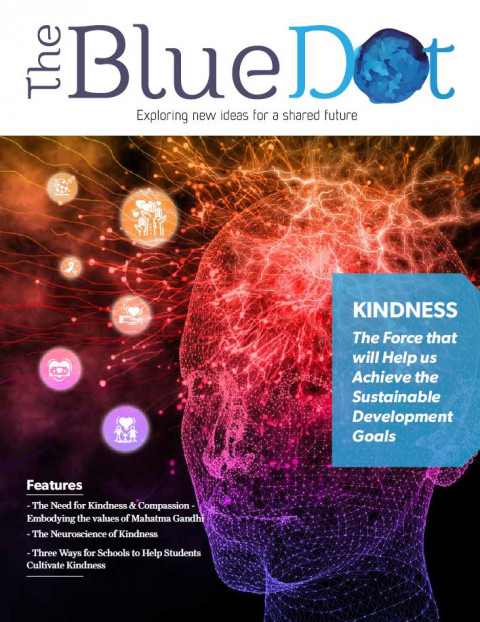 Kindness: The Force That Will Help Us Achieve the Sustainable Development Goals (The Blue Dot Issue 11, 2020) Год публикации: 2020 Организация-автор: Mahatma Gandhi Institute of Education for Peace and Sustainable Development (MGIEP) In the eleventh issue of The Blue Dot, we focus on ‘Kindness’ – as the force that will help us achieve the Sustainable Development Goals, towards making the world more peaceful and sustainable – a better place to live in the future for our children. We hear from Ramesh Pokhriyal ‘Nishank’, Minister of Human Resource Development, Government of India on ‘The Need for Kindness and Compassion – Embodying the values of Mahatma Gandhi’, experts such as Zoran Josipovic on the neuroscience behind kindness; Michael Karlin and Brendran Ozawa-De Silve on the science and theory behind kindness, and from educators (Vicki Zakrzewski and John-Tyler Binfet) on how kindness can be practiced in our classrooms.Our cover story on ‘Kindness – the force to Achieve the Sustainable Development Goals’ discusses the biology of kindness, how kindness can help us achieve the SDGs and Kindness and SDGs and the Youth. Further, we have a hand-picked collection of youth stories on kindness, extracted from the 7,300+ stories we have from 120 countries around the world as part of UNESCO MGIEP’s #KindnessMatters for the SDGs youth campaign.
 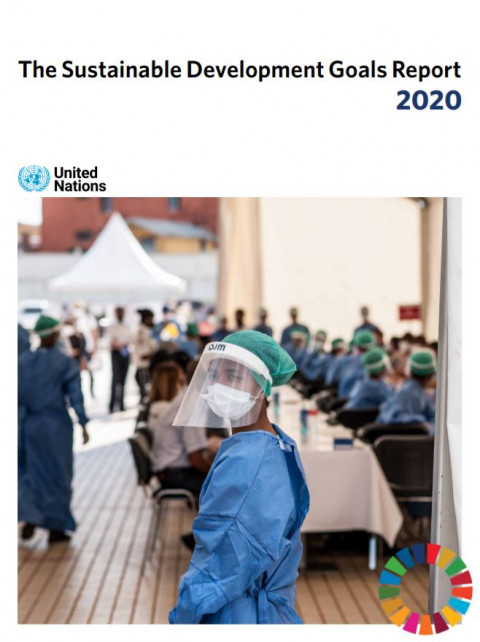 The Sustainable Development Goals Report 2020 Год публикации: 2020 Организация-автор: United Nations (UN) The annual Sustainable Development Goals Report provides an overview of the world’s implementation efforts to date, highlighting areas of progress and areas where more action needs to be taken to ensure no one is left behind. Now, in only a short period of time, the COVID-19 pandemic has unleashed an unprecedented crisis, causing further disruption to SDG progress, with the world’s poorest and most vulnerable affected the most.Using the latest data and estimates, this annual stocktaking report on progress across the 17 Goals shows that it is the poorest and most vulnerable – including children, older persons, persons with disabilities, migrants and refugees – who are being hit the hardest by the effects of the COVID-19 pandemic. Women are also bearing the heaviest brunt of the pandemic’s effects.The report also shows that climate change is still occurring much faster than anticipated.