
Ресурсы
Изучайте широкий спектр ценных ресурсов ВГГ, чтобы углубить своё понимание и повысить эффективность исследований, просветительской деятельности, преподавания и обучения.
Найдено: 2,193
 Преимущества и риски внедрения программы «Многоязычного и поликультурного образования» в Кыргызстане Год публикации: 2019 Автор: Kanzada Zayirbekova Организация-автор: Central Asian Bureau for Analytical Reporting (CABAR) | Institute for War and Peace Reporting (IWPR) «Многоязычное образование дает возможность одновременно овладеть государственным, официальным и одним из иностранным языком. Также создает сплоченность в обществе и повышение культуры межнационального общения и все это укрепляет межнациональные отношения», – отмечает участница Школы аналитики CABAR.asia Канзада Зайырбекова в своей статье.
  How to Improve the Availability of Pre-School and Primary Education in Kazakhstan? Год публикации: 2019 Автор: Meruert Seidumanova Организация-автор: Central Asian Bureau for Analytical Reporting (CABAR) | Institute for War and Peace Reporting (IWPR) «Equal access for all social groups to quality pre-school and primary education is the key to sustainable development, both for the individual and society as a whole», – notes Meruert Seidumanova, independent researcher from Kazakhstan, in her special article for CABAR.asia.
  포스트휴먼 시대의 기후위기 대응 교육: 사례와 실천 방안 Год публикации: 2021 Автор: 엄수정 | 우라미 | 황순예 Организация-автор: 경기도교육연구원 본 연구는 포스트휴먼시대의 기후위기 대응 교육의 모습을 구체화하는데 목적이 있다. 본 연구에서는 포스트휴먼 생태주의를 이론적 기틀로 삼아 기후위기 대응을 위한 학교 교육 사례를 분석하고, 이를 토대로 실천 방안을 탐색하였다.본 저작물은 경기도교육연구원에서 2021년 작성하여 공공누리 제 4유형으로 개방한 ‘포스트휴먼 시대의 기후위기 대응 교육: 사례와 실천 방안 (엄수정, 우라미, 황순예)’ 를 이용하였으며 해당 저작물은 경기도교육연구원 (www.gie.re.kr)에서 무료로 다운받으실 수 있습니다.
 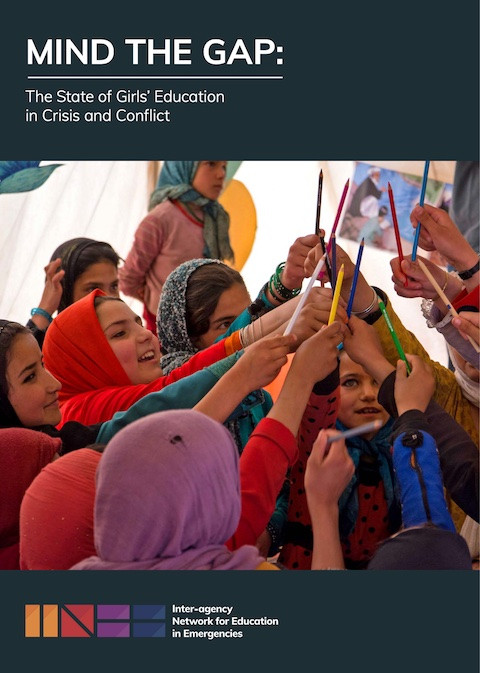 Mind the Gap: The State of Girls’ Education in Crisis and Conflict Год публикации: 2021 Организация-автор: Inter-agency Network for Education in Emergencies (INEE) This report summarizes progress, gaps, challenges and opportunities in improving education and training for girls and women affected by conflict and crisis. The report aims to support the Charlevoix Declaration on Quality Education’s commitment to enhance the evidence base and monitor progress toward gender-equitable education in crises. The report draws from data on 44 crisis-affected countries, from recent research, and from a set of case studies of interventions in a range of crisis-affected contexts.
  연극을 통한 민주 시민 교육 방법 (2019 문화예술교육 유관학회 연계 ‘작은 연구’ - 서울어젠다 예술교육 목표 3. 예술교육의 사회적 가치 확산성을 중심으로) Год публикации: 2019 Автор: 이화식 Организация-автор: 한국예술경영학회 | 한국문화교육학회 본 자료는 2019 문화예술교육 유관학회 연계 '작은 연구’에서 발췌한 '연극을 통한 민주 시민 교육 방법' 연구자료이다. 본 연구는 연극 활동을 통하여 민주시민의 가치를 함양하는 민주 시민교육의 모형을 제시하며, 시민교육이라는 주제의 특성을 반영하여 학습자가 실제 생활과 유사한 환경에서 민주적인 가치를 체험하고 구성하며 생활에서 적용할 수 있는 교육 방법을 모색하는 것을 목적으로 한다. 본 저작물은 한국예술경영학회, 한국문화교육학회에서 2019년 작성하여 공공누리 제4유형으로 개방한 ‘연극을 통한 민주 시민 교육 방법(이화식)'을 이용하였으며 해당 저작물은 한국문화예술교육진흥원 arte 라이브러리 홈페이지(lib.arte.or.kr)에서 무료로 다운받으실 수 있습니다.
  Inequalities in Learning in Vietnam: Teachers’ Beliefs About and Classroom Practices for Ethnic Minorities (RISE Working Paper Series; 21/061) Год публикации: 2021 Автор: Joan DeJaeghere | Vu Dao | Bich-Hang Duong | Phuong Luong Организация-автор: Research on Improving Systems of Education (RISE) Global and national education agendas are concerned with improving quality and equality of learning outcomes. This paper provides an analysis of the case of Vietnam, which is regarded as having high learning outcomes and less inequality in learning. But national data and international test outcomes may mask the hidden inequalities that exist between minoritized groups and majority (Kinh) students. Drawing on data from qualitative videos and interviews of secondary teachers across 10 provinces, we examine the role of teachers’ beliefs, curricular design and actions in the classroom (Gale et al., 2017). We show that teachers hold different beliefs and engage in curricular design – or the use of hegemonic curriculum and instructional practices that produce different learning outcomes for minoritized students compared to Kinh students. It suggests that policies need to focus on the social-cultural aspects of teaching in addition to the material and technical aspects.
  联合国 教科文组织 绿色学院: 气候适应型学校指南 Год публикации: 2019 Организация-автор: UNESCO Bangkok 本手册鼓励社区进行能力建设,并朝着适应气候变化的方向 过渡。它以科学知识为基础,按照“人与生物圈计划”的规 定改善人与环境之间的关系。
 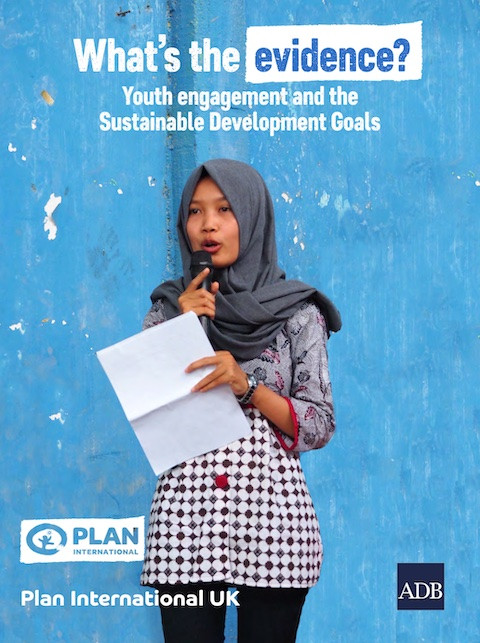 What’s the Evidence?: Youth Engagement and the Sustainable Development Goals Год публикации: 2018 Организация-автор: Asian Development Bank (ADB) | Plan International UK This study represents an encouraging body of evidence, both primary and secondary, which will inform future practice and policymaking with regard to young women and men’s contributions towards the Sustainable Development Goals (SDGs). The learnings from this study provide important insight that will support the design and implementation of youth programming. It examines five programs across three youth-focused or youth-led organisations: Plan International UK, the Asian Development Bank (ADB), and AIESEC.
 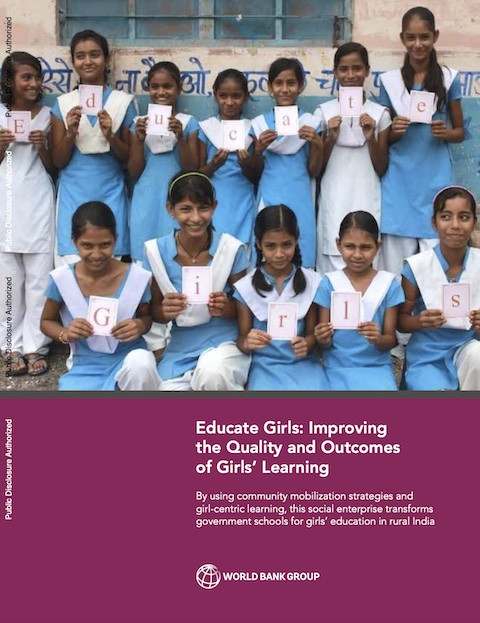 Educate Girls: Improving the Quality and Outcomes of Girls’ Learning Год публикации: 2017 Организация-автор: World Bank In India, women and girls, especially in rural areas, are particularly affected by the country’s illiteracy problem, since they face discrimination based on their sex and need for childbearing. In Rajasthan, the north- western Indian state that borders Pakistan, 9 out of 26 districts have the worst gender gap in India for girls’ education.Established in 2007, Educate Girls is holistically tackling issues at the root cause of gender inequality in India’s education system that has helped to ensure over 90% enrollment and significantly higher attendance for all girls as well as improved school infrastructure, quality of education and learning outcomes for all children.As a result of Educate Girls’ efforts to date, an army of “girls champions” has been created to combat cultural issues and support systemic change. More than 150,000 out-of-school girls have been enrolled in school and the program has benefitted around 3.8 million of beneficiaries. Continuing to address the social and cultural barriers in girls’ education can bring about real transformation, such as improvement in health, income levels, and overall livelihoods in rural populations.
  Positioning ICT in Education to Achieve the Education 2030 Agenda in Asia and the Pacific: Recommendations for a Regional Strategy Год публикации: 2018 Автор: Hyojeong So | Kyungsim Yeon | Kyungsim Yeon | Jian Xi Teng Организация-автор: UNESCO Bangkok This regional study is an important document for Asia-Pacific Member States as it consolidates data related to the effective use of ICT in education. One highlight of this study is the five priority areas for the use of ICT towards achieving SDG4 and Education 2030 that were identified based on a synthesis of the data:ICT for transforming and expanding TVET and higher education ICT for improving teacher qualityICT for improving access to and quality of secondary education ICT for enabling inclusive and equitable learningICT for monitoring and evaluation