
Ресурсы
Изучайте широкий спектр ценных ресурсов ВГГ, чтобы углубить своё понимание и повысить эффективность исследований, просветительской деятельности, преподавания и обучения.
Найдено: 684
 Education à la citoyenneté mondiale: préparer les apprenants aux défis du XXIe siècle Год публикации: 2015 Организация-автор: Organisation des Nations Unies pour l'éducation, la science et la culture (UNESCO) The United Nations Secretary-General’s Global Education First Initiative (GEFI) has established education as a means to ‘foster global citizenship’ – one of its three priority areas. To support this, UNESCO organized two landmark meetings on GCE in 2013. This publication aims to define the parameters of GCE by using the collective expertise, experience and wisdom of those participants who gathered at these landmark events, and to plan for future action in line with emerging thinking and other ongoing work. The review establishes that GCE has a critical role to play in equipping learners with competencies to deal with the dynamic and interdependent world of the twenty-first century. While GCE has been applied in different ways in different contexts, regions and communities, it has a number of common elements, which include fostering in learners. In formal settings, GCE can be delivered as an integral part of an existing subject (such as civic or citizenship education, social studies, environmental studies, geography or culture), or as an independent subject area. Integrated models appear to be more common. Some less traditional, but at least as effective, pathways for GCE have included the following: the use of information and communication technologies and social media, sport competitions and the use of art and music, and youth-led initiatives employing a wide variety of approaches. Both traditional and new horizons for GCE are profiled in this review. This publication also explores a number of enabling conditions for the promotion and implementation of GCE. These include: the existence of an open environment for universal values, the implementation of transformative pedagogy and support for youth-led initiatives. The review acknowledges that there are a number of ongoing tensions with the concepts of global citizenship and global citizenship education. While these tensions vary, they all point to the fundamental question of how to promote universality (e.g. common and collective identity, interest, participation, duty), while respecting singularity (e.g. individual rights, self-improvement). Some ways forward to resolve these tensions are suggested, whilst maintaining that challenges around theoretical elements of GCE should not undermine its practice. The processes documented in this publication have strengthened partnerships, built coalitions and contributed to improving the evidence base on the theory and practice of global citizenship education. While there are tasks that remain, this foundation bodes well for improving the enabling conditions and the practices highlighted in this review. By preparing learners to fulfil their potential in an increasingly globalized world, we are promoting transformed societies that are also better equipped to deal with the twenty-first century challenges and to seize twenty-first century opportunities.
  [Summary] Accountability in Education: Meeting Our Commitments: Global Education Monitoring Report Summary, 2017/8 Год публикации: 2017 Организация-автор: UNESCO This summary of the 2017/8 GEM Report shows the entire array of approaches to accountability in education. It ranges from countries unused to the concept, where violations of the right to education go unchallenged, to countries where accountability has become an end in itself instead of a means to inclusive, equitable and high-quality education and lifelong learning for all.The report emphasizes that education is a shared responsibility. While governments have primary responsibility, all actors – schools, teachers, parents, students, international organizations, private sector providers, civil society and the media – have a role in improving education systems. The report emphasizes the importance of transparency and availability of information but urges caution in how data are used. It makes the case for avoiding accountability systems with a disproportionate focus on narrowly defined results and punitive sanctions. In an era of multiple accountability tools, the report provides clear evidence on those that are working and those that are not. [Résumé] Rendre des Comptes en Matière Déducation: Tenir nos Engagements, Résumé du Rapport Mondial de Suivi sur l'éducation, 2017/8 Год публикации: 2017 Организация-автор: UNESCO La deuxième édition du Rapport mondial de suivi sur l’éducation (Rapport GEM) présente les dernières données disponibles sur les progrès accomplis à l’échelle mondiale dans la réalisation des cibles des objectifs de développement durable des Nations Unies relatives à l’éducation.À l’heure où des centaines de millions de personnes sont encore non scolarisées et où beaucoup quittent l’école sans avoir acquis les compétences fondamentales, il est évident que les systèmes éducatifs sont bien loin d’atteindre les objectifs mondiaux. Les populations marginalisées en supportent actuellement la plupart des conséquences, mais sont également celles qui bénéficieront le plus des résultats obtenus, pour peu que les décideurs prêtent suffisamment d’attention à leurs besoins. Face à de tels défis, et compte tenu des restrictions budgétaires et de l’importance accrue accordée à la rentabilité axée sur les résultats, les pays sont à la recherche de solutions. Parmi celles-ci, une plus forte obligation de rendre des comptesarrive souvent en tête de liste.Le présent résumé du Rapport GEM 2017/2018 passe en revue les différentes approches qui existent en matière de reddition de comptes dans l’éducation, depuis les pays qui ne sont pas familiarisés avec le concept et où les violations du droit à l’éducation sont monnaie courante, jusqu’aux pays où l’obligation de rendre des comptes constitue une fin en soi et non plus un moyen de parvenir à une éducation inclusive, équitable et de qualité et un apprentissage tout au long de la vie pour tous.Le rapport souligne que l’éducation est une responsabilité partagée. Si celle-ci incombe en premier lieu aux gouvernements, tous les acteurs – établissements scolaires, enseignants, parents, élèves, organisations internationales, prestataires du secteur privé, société civile et médias – ont un rôle à jouer dans l’amélioration des systèmes éducatifs. Le rapport insiste sur l’importance de la transparence et de la disponibilité des informations, mais appelle à une utilisation prudente desdonnées. Il préconise d’éviter les systèmes de reddition de comptes qui reposent dans une trop large mesure sur une évaluation restrictive des performances et sur des sanctions punitives. Enfin, à l’heure où les outils de reddition de comptes se multiplient, le rapport démontre clairement quels sont ceux qui sont efficaces et ceux qui ne le sont pas. [Resumen] Rendir Cuentas en el Ámbito de la Educación: Cumplir Nuestros Compromisos, Resumen del Informe de Seguimiento de la Educación en el Mundo, 2017/8 Год публикации: 2017 Организация-автор: UNESCO El segundo Informe de Seguimiento de la Educación en el Mundo (el Informe GEM) presenta las pruebas más recientes de los progresos alcanzados en el mundo en cuanto a la consecución de las metas relativas a la educación de los Objetivos de Desarrollo Sostenible de las Naciones Unidas.Puesto que hay centenares de millones de personas que todavía no están escolarizadas y muchas que no adquieren unas competencias mínimas en la escuela, es evidente que los sistemas educativos no llevan camino de alcanzar los objetivos mundiales. Las personas marginadas son quienes sufren actualmente la mayoría de las consecuencias, pero también son las que más se beneficiarán si los encargados de formular políticas prestan suficiente atención a sus necesidades. Ante estos retos, junto con presupuestos muy ajustados y una mayor importancia concedida a obtener rendimiento del dinero en forma de resultados, los países están buscando soluciones, entre las cuales a menudo la rendición de cuentas ocupa el primer lugar.Este resumen del Informe GEM 2017/18 muestra todos los diversos enfoques de la rendición de cuentas en el ámbito de la educación. Abarca desde los países que no están acostumbrados al concepto, en los que no se cuestionan las violaciones del derecho a la educación, hasta aquellos en los que la rendición de cuentas se ha convertido en un fin en sí misma, en lugar de un medio para alcanzar una educación y un aprendizaje a lo largo de toda la vida para todos que sean inclusivos, equitativos y de gran calidad.En el informe se recalca que la educación es una responsabilidad compartida.Aunque son los gobiernos los principales responsables de ella, a todos los actores – las escuelas, los docentes, los padres, los estudiantes, las organizaciones internacionales, los prestatarios del sector privado, la sociedad civil y los medios de comunicación – les corresponde desempeñar un papel en la mejora de los sistemas educativos. El informe recalca la importancia de la transparencia y la disponibilidad de la información, pero exhorta a manejar con prudencia los datos. Explica por qué debemos evitar unos sistemas de rendición de cuentas que den una importancia desproporcionada a unos resultados definidos de manera demasiado restringida y a sanciones punitivas. En una época en la que existen y se emplean múltiples instrumentos para rendir cuentas, el informe demuestra palmariamente con pruebas empíricas cuáles funcionan y cuáles no dan buenos resultados.
 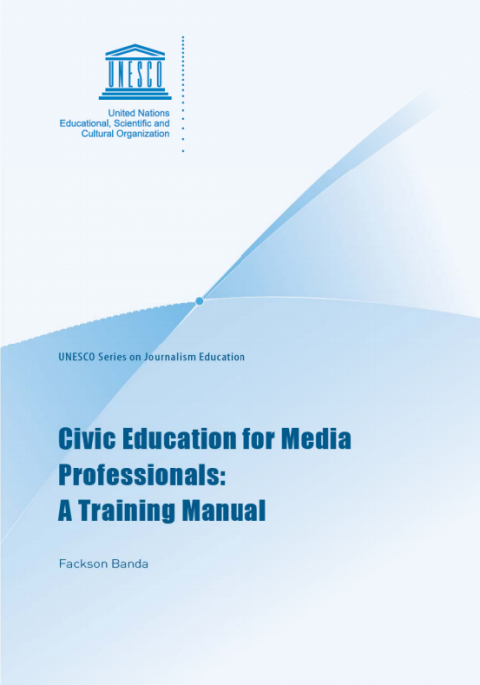 Civic education for media professionals: a training manual Год публикации: 2009 Автор: Fackson Banda Организация-автор: UNESCO Civic awareness enables both media practitioners and users to appreciate the role of journalism and media in building democratic societies. This manual serves as a resource for journalism students and media professionals in developing countries, providing them with essential knowledge for the analysis of the relationship between media functions and active citizenship, and the underlying nexus of democracy, development and the media based on the fundamental principles of democracy and human rights that lie at the heart of UNESCO’s mandate. For the purpose of this manual, civic education refers to the cultivation of civic knowledge, civic skills and civic virtues. Civic knowledge consists of fundamental ideas and information that learners must know and use to become effective and responsible citizens in a democracy. Civic skills include the intellectual skills needed to understand, explain, compare, and evaluate principles and practices of government and citizenship. They also include participatory skills that enable citizens to monitor and influence public policies. Civic virtues include the traits of character, dispositions, and commitments necessary for the preservation and improvement of democratic governance and citizenship. Examples of civic virtues are respect for the worth and dignity of each person, civility, integrity, self-discipline, tolerance, and compassion. Commitments include a dedication to human rights, the common good, equality and the rule of law. L'éducation civique pour les professionnels des médias: un manuel de formation Год публикации: 2009 Автор: Fackson Banda Организация-автор: UNESCO La conscience civique permet aux deux professionnels des médias et aux utilisateurs d'apprécier le rôle du journalisme et des médias dans l'édification de sociétés démocratiques. Ce manuel sert de ressource pour les étudiants en journalisme et les professionnels des médias dans les pays en développement, en leur fournissant des connaissances essentielles pour l'analyse de la relation entre les fonctions des médias et la citoyenneté active, et le lien sous-jacent de la démocratie, le développement et les médias sur la base des principes fondamentaux de la démocratie et des droits humains qui sont au cœur du mandat de l'UNESCO. Aux fins de ce manuel, l'éducation civique fait référence à la culture des connaissances civiques, les compétences civiques et les vertus civiques. la connaissance civique se compose d'idées fondamentales et de l'information que les apprenants doivent connaître et utiliser pour devenir des citoyens efficaces et responsables dans une démocratie. compétences civiques comprennent les compétences intellectuelles nécessaires pour comprendre, expliquer, comparer et évaluer les principes et les pratiques du gouvernement et de la citoyenneté. Ils comprennent également les compétences participatives qui permettent aux citoyens de suivre et d'influencer les politiques publiques. vertus civiques comprennent les traits de caractère, les dispositions et les engagements nécessaires à la préservation et l'amélioration de la gouvernance démocratique et de la citoyenneté. Des exemples de vertus civiques sont le respect de la valeur et la dignité de chaque personne, la civilité, l'intégrité, l'auto-discipline, la tolérance et la compassion. Les engagements comprennent un attachement aux droits de l'homme, le bien commun, l'égalité et la primauté du droit.
 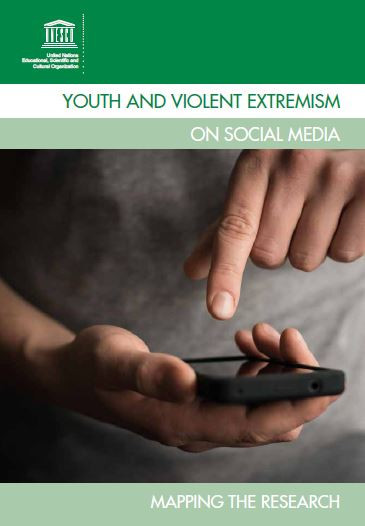 Молодежь и насильственный экстремизм в социальных медиа: Сопоставление исследований Год публикации: 2017 Автор: Séraphin Alava | Divina Frau-Meigs | Ghayda Hassan Организация-автор: UNESCO Приводят ли социальные сети уязвимых людей к насилию? Многие люди верят, что это так. И они отвечают на такую возможность введением цензуры, слежкой и контрпропагандой. Но что мы действительно знаем об Интернете как о причине и что мы знаем о влиянии этих реакций? Во всем мире правительства и интернет-компании принимают решения на основе предположений о причинах и средствах защиты от насильственных нападений. Задача состоит в том, чтобы обеспечить надежные обоснования для проводимого анализа и принимаемых ответных мер. Необходима политика, которая строится на основе фактов и доказательств, а не основывается на догадках - или движимая паникой и страхом. Именно в этом контексте ЮНЕСКО заказала исследование под названием «Молодежь и насильственный экстремизм в социальных сетях». В данной работе представлено глобальное сопоставление исследований (проведенных в основном в период 2012-2016 гг.), посвященных изучению предполагаемой роли, которую играют социальные сети в процессах насильственной радикализации, особенно когда они затрагивают молодежь и женщин.
 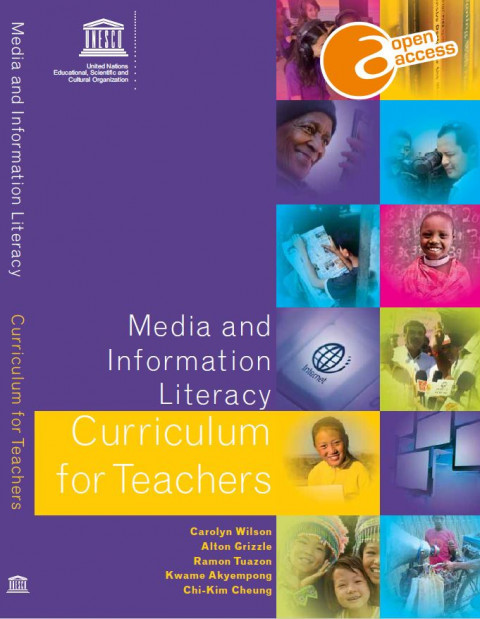 Education aux médias et à l'information: programme de formation pour les enseignants Год публикации: 2011 Автор: Carolyn Wilson | Alton Grizzle | Ramon Tuazon | Kwame Akyempong | Chi Kim Cheung Организация-автор: UNESCO Nous vivons dans un monde où la qualité de l’information que nous recevons détermine largement nos choix et nos actions et en particulier, notre capacité à pro ter des libertés fondamentales et notre possibilité d’autodétermination et de développement. Ce programme d’éducation aux médias et à l’information pour les enseignants est une ressource importante pour les États membres de l’UNESCO et une publication expérimentale. Elle est prospective et s’efforce de réaliser la convergence de la radio, la télévision, l’Internet, les journaux, les livres, les archives numériques et les bibliothèques sur une même plate-forme. Elle est aussi spécialement conçue pour permettre l’intégration de ce programme dans le système formel de formation des enseignants. L’UNESCO croit que ce programme sera une étape importante d’innovation et de progrès pour tous les niveaux d’éducation. Медийная и информационная грамотность: программа обучения педагогов Год публикации: 2011 Автор: Carolyn Wilson | Alton Grizzle | Ramon Tuazon | Kwame Akyempong | Chi Kim Cheung Организация-автор: UNESCO Данная программа обучения педагогов медийной и информационной грамотности — важный источник информации для государств-членов ЮНЕСКО, призванный содействовать их усилиям по достижению целей, сформулированных в Грюнвальдской декларации (1982 г.), Александрийской декларации (2005 г.) и Парижской повесткой дня (2007 г.), имеющих прямое отношение к медийной и информационной грамотности (МИГ). Данное издание состоит из двух частей. Часть 1 содержит описание программы обучения и системы компетенций МИГ. В ней описываются логика, структура и основные темы програм-мы. Она дополняет «Структуру ИКТ-компетентности учителей» (ICTs Competency Framework for Teachers), подготовленную ЮНЕСКО в 2008 г. Часть 2 включает в себя подробное описание базовых и дополнительных модулей учебной программы. Программа обучения учителей медийной и информационной грамотности переведена на арабский, французский, русский и испанский языки.
 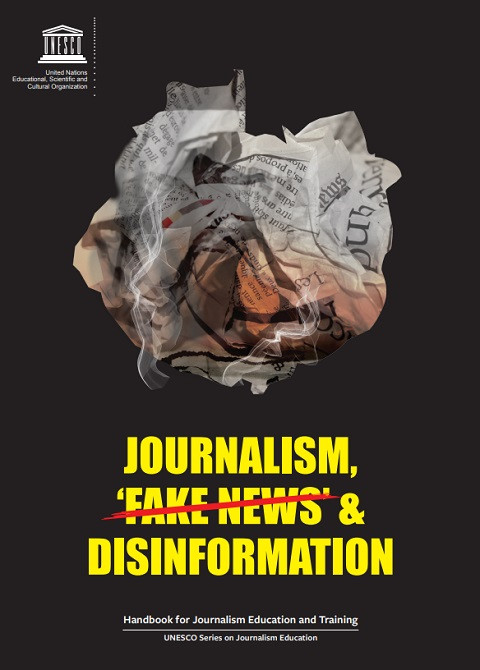 Journalism, Fake News & Disinformation: Handbook for Journalism Education and Training Год публикации: 2018 Автор: Julie Posetti | Cherilyn Ireton | Claire Wardle | Hossein Derakhshan | Alice Matthews | Magda Abu-Fadil | Tom Trewinnard | Fergus Bell | Alexios Mantzarlis Организация-автор: UNESCO This handbook seeks to provide an internationally-relevant model curriculum, open to adoption or adaptation, which responds to the emerging global problem of disinformation that confronts societies in general, and journalism in particular. Serving as a model curriculum, the publication is designed to give journalism educators and trainers a framework and lessons to help students and practitioners of journalism to navigate the issues associated with ‘fake news’.The contents draw together the input of leading international journalism educators, researchers and thinkers who are helping to update journalism method and practice to deal with the challenges of misinformation and disinformation. The lessons are contextual, theoretical and in the case of online verification, extremely practical. Used together as a course, or independently, they can help refresh existing teaching modules or create new offerings.It is part of the “Global Initiative for Excellence in Journalism Education”, which is a focus of UNESCO’s International Programme for the Development of Communication (IPDC). The Initiative seeks to engage with teaching, practising and researching of journalism from a global perspective, including sharing international good practices.