
Ресурсы
Изучайте широкий спектр ценных ресурсов ВГГ, чтобы углубить своё понимание и повысить эффективность исследований, просветительской деятельности, преподавания и обучения.
Найдено: 661
 Education Disrupted Education Reimagined: Responses from Education’s Frontline During the COVID-19 Pandemic and Beyond Год публикации: 2020 Организация-автор: WISE | Salzburg Global Seminar | Diplomatic Courier The special edition E-Book you are reading about today was produced in real time, as WISE, in partnership with Salzburg Global Seminar, convened key stakeholders and education leaders from over 98 countries in a three-part series of global conferences aimed at bringing the global education community together. The result is a contemporary historical record of how schools, NGOs, governments, and international organizations responded to school closures during the crisis and how they are attempting to use this crisis as a springboard to reimagine—and even transform—education in their communities and countries.The E-Book offers an opportunity to a global audience to make sense of what happened but it also offers a breeding ground of ideas from some of the world’s top education thinkers. It is the editors’ sincere hope that through this publication we provide the education community with a reference point from the crisis from which future research, policy, and innovation can grow.
 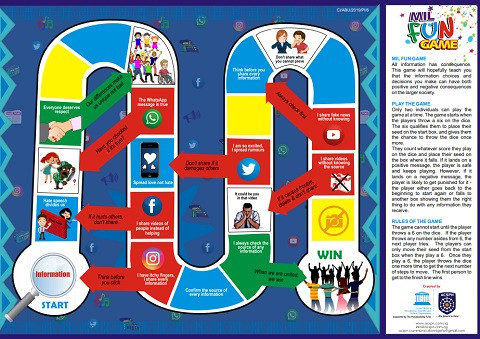 Media and Information Literacy: Fun Game Год публикации: 2019 Организация-автор: UNESCO Dakar | Association of Communication Scholars & Professionals of Nigeria (ACSPN) This game will teach you that the information choices and decisions you make can have both positive and negative consequences on the larger society.
  Indigenous Peoples Glossary Год публикации: 2018 Организация-автор: International Fund for Agricultural Development (IFAD) The purpose of this glossary is to ensure consistency and accuracy of terminology in English, French and Spanish, and standardize the terminology used in relation to indigenous peoples in official documentation and publications, and in all aspects of meeting preparations. It is intended for use by IFAD staff, indigenous peoples' organizations and other interested parties. Terms and definitions are accompanied by details of the source document and its date of publication.
  Mapping Digital Literacy Policy and Practice in the Canadian Education Landscape Год публикации: 2015 Автор: Michael Hoechsmann | Helen DeWaard Организация-автор: MediaSmarts This paper Mapping Digital Literacy Policy and Practice in the Canadian Landscape draws on policy and curriculum documents from across Canada to synthesize key concepts and best practices in current digital literacy education. Glosario sobre los pueblos indígenas Год публикации: 2018 Организация-автор: International Fund for Agricultural Development (IFAD) La finalidad de este glosario es asegurar la coherencia y la exactitud de la terminología en español, francés e inglés, así como normalizar la terminología en materia de pueblos indígenas que se emplea en la documentación y las publicaciones oficiales, y en todos los aspectos relativos a la preparación de reuniones. Sus destinatarios son el personal del FIDA, las organizaciones de pueblos indígenas y otras partes interesadas. Los términos y las definiciones van acompañados de información sobre el documento de origen y su fecha de publicación. Glossaire sur les peuples autochtones Год публикации: 2018 Организация-автор: International Fund for Agricultural Development (IFAD) Le but de ce glossaire est de garantir la cohérence et la précision de la terminologie relative aux peuples autochtones, et ce en anglais, en espagnol et en français, et d’uniformiser cette terminologie dans les documents officiels ainsi que dans tout ce qui a trait à l’organisation de réunions. Il a été établi à l’intention du personnel du FIDA, des organisations des peuples autochtones et d’autres parties concernées. À côté de chaque terme, on trouvera le document source et sa date de publication.
  Libre de Choisir: L'après Iles de Paix; Reportage sur l'autonomie dans les pays du Sud Год публикации: 2018 Организация-автор: Îles de Paix Au Bénin et au Burkina Faso, Iles de Paix a soutenu pendant plusieurs années des familles rurales dans la réalisation de leurs projets afin d’améliorer leurs conditions de vie. Pas d’assistanat, mais plutôt un engagement au côté d’hommes et de femmes décidés à prendre leur futur en mains et à être porteurs de leur propre développement. Aujourd’hui, quelques 5 années se sont écoulées depuis qu’a pris fin l’accompagnement d’Iles de Paix, et le reportage « Libre de choisir » donne la parole à ces hommes et ces femmes engagés. Quel regard portent-ils sur l’autonomie qu’ils ont acquise ? Quels sont les leviers qui les ont aidé ? Qu’est-ce qui leur a permis de développer leurs capacités à mener les projets qui leur tiennent à cœur ?
 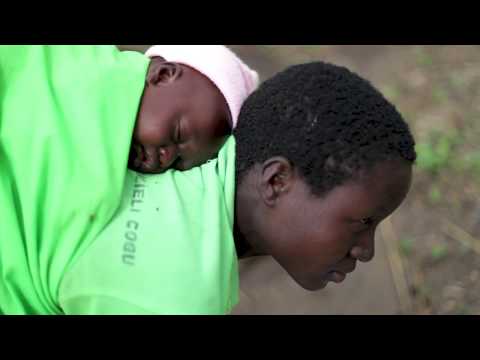 Yiéga (version courte, écoles primaires) Год публикации: 2017 Организация-автор: Îles de Paix Ana habite dans le village de Yiéga, au Burkina Faso. Elle vit avec sa maman Sibidi, son papa Arzoumbouga et ses 7 frères et sœurs. Ses voisins et ses parents sont agriculteurs et, dans ses temps libres, Ana les aide avec ses frères et sœurs. Au Burkina Faso, les agriculteurs rencontrent beaucoup de difficultés et doivent s'adapter au réchauffement de la planète, à la sécheresse et aux crises alimentaires. Ils apprennent de nouvelles manières de cultiver, agroécologiques, et varient leurs productions. Grâce à diverses pistes de solutions, et avec l’accompagnement d’Iles de Paix, ils deviennent capables de rebondir en cas de coup dur… on parle de résilience.
  Eduquer à la citoyenneté mondiale et solidaire pendant le confinement Год публикации: 2020 Организация-автор: Fédération Francophone et Germanophone des Associations de Coopération au Developpement (ACODEV) | Annoncer la Couleur (ALC) | Îles de Paix Dans le cadre de la période de confinement inédite que nous vivons actuellement toutes et tous, l’ensemble des ONG actives en éducation à la citoyenneté mondiale, regroupées dans la fédération ACODEV et Annoncer la Couleur, avec la collaboration de Iles de Paix, poursuivent leur mission de soutien aux enseignant·e·s de tous niveaux, tous réseaux et toutes disciplines confondues. Ensemble, nous vous proposons ici une liste – non exhaustive – d’outils pédagogiques digitaux clé sur porte que vous pouvez partager à vos élèves, pour leur demander de réagir, pour leur proposer une ouverture virtuelle sur le monde, sa diversité, ses richesses et ses interdépendances, ou tout simplement pour garder le contact d’une manière à la fois ludique et éducative. Voici déjà quelques jeux, capsules vidéo et autres webdocumentaires qui permettent, en très peu de temps, de se familiariser avec une thématique ou d’interpeller sur un enjeu de société à échelle mondiale.
 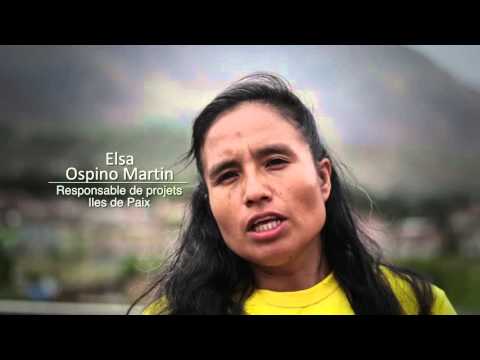 Quand les communes du Pérou prennent le relais Год публикации: 2015 Организация-автор: Îles de Paix L’idée de durabilité a toujours été centrale à toutes les actions d’Iles de Paix. Et pour parvenir à cette durabilité, il est primordial de travailler avec les communes. En effet, la présence des ONG n’est que temporaire alors que les communes, elles, seront toujours là. Ce reportage explique comment cela se passe au Pérou.