
Ресурсы
Изучайте широкий спектр ценных ресурсов ВГГ, чтобы углубить своё понимание и повысить эффективность исследований, просветительской деятельности, преподавания и обучения.
Найдено: 1,443
 Dialogue sur l’autonomie alimentaire du Québec Год публикации: 2020 Организация-автор: Institut du Nouveau Monde (INM) L’autonomie alimentaire est plus que jamais un sujet crucial pour la société québécoise. La pandémie de COVID-19 a révélé la fragilité de notre système alimentaire et a créé une nouvelle occasion de parler de cet enjeu stratégique. Plusieurs acteurs le disent : il est temps de rapprocher les producteurs agricoles des citoyens, et de créer de nouvelles solidarités entre eux. Pour ce faire, l’Union des producteurs agricoles (UPA) souhaite mettre en place une occasion réelle de dialogue entre les deux extrémités de la chaîne de production alimentaire, soit les producteurs et les citoyens.Le Dialogue sur l’autonomie alimentaire est l’occasion pour les citoyens de participer à l’élaboration d’un contrat social sur les enjeux liés à l’autonomie alimentaire et de faciliter un dialogue entre eux et les producteurs, qui sont un maillon essentiel de cet enjeu stratégique. Il prévoit des occasions d’échanges ouverts et constructifs entre les producteurs agricoles et les citoyens, d’abord séparément puis dans un groupe commun. Il sera par la suite proposé à l’ensemble du Québec.
  التنوع الثقافي والتعايش السلمي في الوطن العربي: التحديات الفكرية والسياسية Год публикации: 2015 Автор: Osman Hassan Организация-автор: Jil Research Center أصبحت مسألة التنوع الثقافي من المسائل المهمة في المجتمع العربي المعاصر. وقد شغلت الإشكاليات التي تثيرها مثل: "التعايش السلمي". "الوحدة في التنوع". "الاختلاف". "دولة المواطنة"... وغيرها: شغلت كثيرا من الكتاب. والمفكرين. والباحثين على مدى السنوات الماضية. وجزء كبير من تلك الجهود ركز اهتمامه في تدعيم قضايا التنوع الثقافي لبناء المجتمع من ناحية. وتعزيز علاقة الانتماء المشترك في الوطن الواحد من ناحية أخرى. وذلك بالنظر لما تثيره قضايا التنوع الثقافي من مطالب متناقضة على الحياة السياسية خلفت واقعاً مأساويا في جانب من التجربة العربية الحديثة والمعاصرة يقتضي المعالجة على مستوى الفكر والممارسة. لهذا نقول في ضوء التجربة المعيشة في المجتمعات العربية إن مسألة التعايش بين الثقافات. وأشكال التنوع. وما انبثق عنها من اشكاليات ليست ذات طبيعة ثقافية. وإنما هي مشكلة سياسة ومصالح مرتبطة بالبعض تزامنت مع متغيرات نمو الوعي بحقيقة الذات ومعرفة حقوقها المشروعة. كما إن التعايش يتحقق على أساس الحقوق والواجبات التي تكفلها الأنظمة والدساتير التي يضعها البشر. Cultural Diversity and Peaceful Coexistence in the Arab World: Intellectual and Political Challenges Год публикации: 2015 Автор: Osman Hassan Организация-автор: Jil Research Center The issue of cultural diversity has become an important issue in contemporary Arab society. It has occupied the problems it raises, such as: "peaceful coexistence". "Unity in Diversity". "the difference". "State of Citizenship"... and others: It occupied a lot of books. and thinkers. and researchers over the past years. A large part of those efforts focused on strengthening the issues of cultural diversity to build society on the one hand. And strengthening the relationship of common belonging to the one country on the other hand. This is in view of the contradictory demands raised by cultural diversity issues on political life, which have left a tragic reality in an aspect of the modern and contemporary Arab experience that requires treatment at the level of thought and practice. That is why we say in light of the experience of living in Arab societies that the issue of coexistence between cultures. and forms of diversity. And the problems that emerged from it are not of a cultural nature. Rather, it is a problem of politics and interests linked to some that coincided with the variables of the growth of awareness of the truth of the self and knowledge of its legitimate rights. Coexistence is also achieved on the basis of the rights and duties guaranteed by the systems and constitutions established by human beings.
 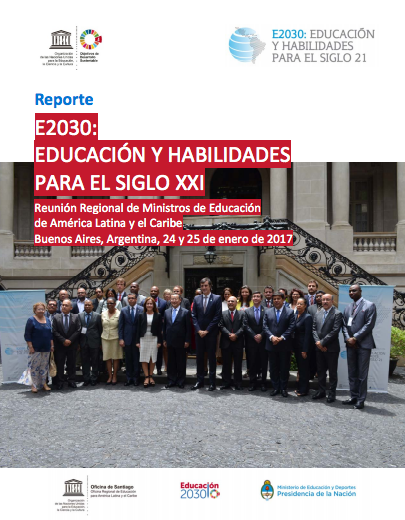 E2030: educación y habilidades para el siglo XXI; reporte Год публикации: 2017 Организация-автор: UNESCO Santiago The UNESCO Regional Bureau for Education in Latin America and the Caribbean, OREALC/UNESCO Santiago, in collaboration with the Ministry of Education and Sport of the Republic of Argentina, organized the Regional Meeting of Ministers of Education of Latin America and the Caribbean – “E2030: Education and skills for the 21st century”. Ministers of Education and high-level representatives of the education sector of the Member States of LAC; bilateral, regional and multilateral organizations; United Nations agencies; representatives of civil society; stakeholders and UNESCO experts participated in the meeting, which was held on 24-25 January 2017 in Buenos Aires, Argentina. This was the first ministerial meeting to be organized within the framework of the 2030 Agenda for Sustainable Development and its 17 Sustainable Development Goals (SDGs), in particular SDG 4 – “Ensure inclusive and quality education for all and promote lifelong learning”. It provided a space for dialogue between ministers of education and other stakeholders to debate SDG 4 in the context of the 2030 SDG Agenda. Discussions and information sharing on various topics related to the SDG 4 targets, and on the coordination mechanisms and monitoring instruments conducive to the achievement of E2030 enabled LAC Member States to reach a common vision and understanding of E2030 in the region. This joint approach on E2030 for the region is laid down in the Declaration of Buenos Aires, which ministers adopted at the end of the meeting. E2030: education and skills for the 21st century, report Год публикации: 2017 Организация-автор: UNESCO Santiago The UNESCO Regional Bureau for Education in Latin America and the Caribbean, OREALC/UNESCO Santiago, in collaboration with the Ministry of Education and Sport of the Republic of Argentina, organized the Regional Meeting of Ministers of Education of Latin America and the Caribbean – “E2030: Education and skills for the 21st century”. Ministers of Education and high-level representatives of the education sector of the Member States of LAC; bilateral, regional and multilateral organizations; United Nations agencies; representatives of civil society; stakeholders and UNESCO experts participated in the meeting, which was held on 24-25 January 2017 in Buenos Aires, Argentina. This was the first ministerial meeting to be organized within the framework of the 2030 Agenda for Sustainable Development and its 17 Sustainable Development Goals (SDGs), in particular SDG 4 – “Ensure inclusive and quality education for all and promote lifelong learning”. It provided a space for dialogue between ministers of education and other stakeholders to debate SDG 4 in the context of the 2030 SDG Agenda. Discussions and information sharing on various topics related to the SDG 4 targets, and on the coordination mechanisms and monitoring instruments conducive to the achievement of E2030 enabled LAC Member States to reach a common vision and understanding of E2030 in the region. This joint approach on E2030 for the region is laid down in the Declaration of Buenos Aires, which ministers adopted at the end of the meeting. E2030: education and skills for the 21st century, report Год публикации: 2017 Организация-автор: UNESCO Santiago The UNESCO Regional Bureau for Education in Latin America and the Caribbean, OREALC/UNESCO Santiago, in collaboration with the Ministry of Education and Sport of the Republic of Argentina, organized the Regional Meeting of Ministers of Education of Latin America and the Caribbean – “E2030: Education and skills for the 21st century”. Ministers of Education and high-level representatives of the education sector of the Member States of LAC; bilateral, regional and multilateral organizations; United Nations agencies; representatives of civil society; stakeholders and UNESCO experts participated in the meeting, which was held on 24-25 January 2017 in Buenos Aires, Argentina. This was the first ministerial meeting to be organized within the framework of the 2030 Agenda for Sustainable Development and its 17 Sustainable Development Goals (SDGs), in particular SDG 4 – “Ensure inclusive and quality education for all and promote lifelong learning”. It provided a space for dialogue between ministers of education and other stakeholders to debate SDG 4 in the context of the 2030 SDG Agenda. Discussions and information sharing on various topics related to the SDG 4 targets, and on the coordination mechanisms and monitoring instruments conducive to the achievement of E2030 enabled LAC Member States to reach a common vision and understanding of E2030 in the region. This joint approach on E2030 for the region is laid down in the Declaration of Buenos Aires, which ministers adopted at the end of the meeting.
 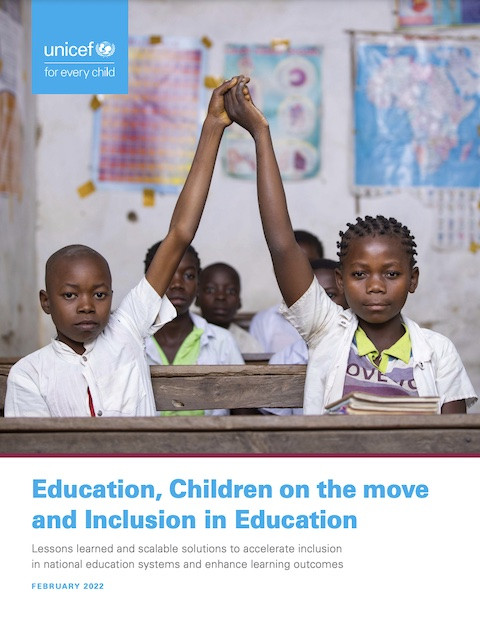 Education, Children on the Move and Inclusion in Education: Lessons Learned and Scalable Solutions to Accelerate Inclusion in National Education Systems and Enhance Learning Outcomes Год публикации: 2022 Автор: Neven Knezevic | Katherine Curtiss | Eric Gero Организация-автор: United Nations Children's Fund (UNICEF) This report summarizes how UNICEF and its partners have contributed to the creation of education solutions that support the skills development and educational attainment of children on the move in countries and regions across the world. Country case studies highlighting best practices from 19 countries and the East African and Sahel regions showcase UNICEF’s work with country governments on issues such as the inclusion of refugees in national education systems and improving relations between refugee children, their families, and their host communities.
  2021 대한민국 SDG4 이행현황 보고서 Год публикации: 2022 Организация-автор: 유네스코한국위원회 본 자료는 2021년 한 해동안 대한민국의 SDG 4 이행 노력을 기록하고, SDG 4 모니터링과 이행촉진을 강화하는데 목적이 있다.
  Dossier pédagogique 2022: S’informer pour comprendre le monde Год публикации: 2021 Организация-автор: Centre pour l’éducation aux médias et à l’information (CLEMI) | Réseau Canopé Le dossier pédagogique 2022 a pour thème pour la deuxième année consécutive: «S'informer pour comprendre le monde». Un thème qui illustre la diversité des thématiques que peut embrasser l’Éducation aux médias et à l’information : des modalités de la liberté d’expression et de l’expression médiatique des élèves au décryptage des communications politiques, de la modération des réseaux sociaux à la compréhension des représentations visuelles des données chiffrées. Un focus particulier est aussi mis sur la production médiatique : lire l’info, parvenir à en comprendre son fonctionnement et ses modalités, de façon fine, est une compétence qui se développe à l’école par une pédagogie active. Il s’agit de proposer aux élèves de fabriquer eux-mêmes de l’information : en écrivant, filmant, photographiant, enregistrant des textes, des images et des sons pour mettre en forme des contenus traitant de l’actualité du monde ou de la classe.
 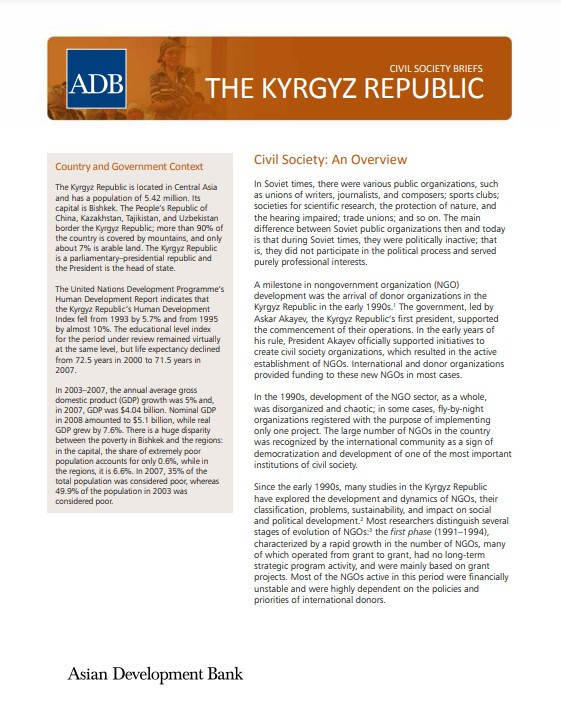 A Brief Overview of Civil Society in the Kyrgyz Republic Год публикации: 2011 Организация-автор: Asian Development Bank (ADB) With a view to strengthening ADB cooperation with civil society organizations (CSOs), the NGO and Civil Society Center periodically prepares reports on the context for CSO activities in various developing countries in Asia and the Pacific. These studies contribute to awareness of the important role that CSOs play in promoting development across the Asia-Pacific region.