
Ресурсы
Изучайте широкий спектр ценных ресурсов ВГГ, чтобы углубить своё понимание и повысить эффективность исследований, просветительской деятельности, преподавания и обучения.
Найдено: 3,435
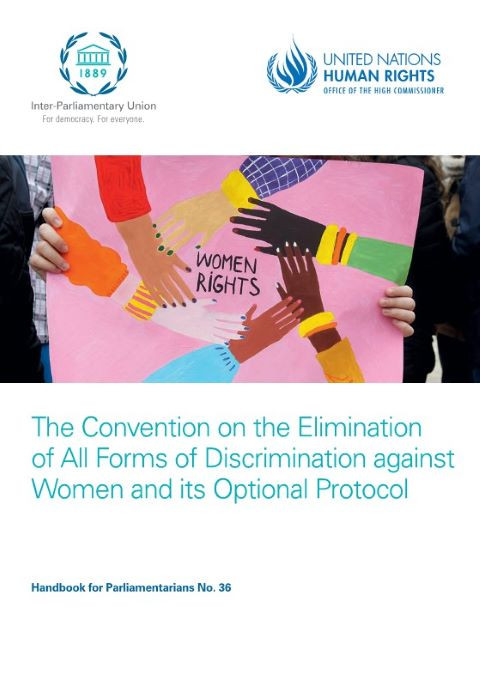 The Convention on the Elimination of All Forms of Discrimination against Women and its Optional Protocol: Handbook for Parliamentarians No. 36; Revised edition Год публикации: 2023 Организация-автор: Inter-Parliamentary Union (IPU) | UN. Office of the United Nations High Commissioner for Human Rights (UN. OHCHR) More than four decades after its adoption, the Convention on the Elimination of All Forms of Discrimination against Women remains an essential and ambitious guide for achieving gender equality across the board – from the family and the classroom to executive boards and political leadership roles. Despite considerable progress since the Convention came into force, no country can yet claim to have fully achieved gender equality. This revised edition of The Convention on the Elimination of All Forms of Discrimination against Women and its Optional Protocol: Handbook for Parliamentarians is a joint collaboration undertaken by the Inter-Parliamentary Union (IPU) and the Office of the United Nations High Commissioner for Human Rights (OHCHR). La Convention sur l’élimination de toutes les formes de discrimination à l’égard des femmes et son Protocole facultatif: Manuel à l'intention des parlementaires; édition révisée Год публикации: 2023 Организация-автор: Inter-Parliamentary Union (IPU) | UN. Office of the United Nations High Commissioner for Human Rights (UN. OHCHR) Plus de quarante ans après son adoption, la Convention sur l’élimination de toutes les formes de discrimination à l’égard des femmes reste un cadre essentiel et ambitieux de promotion de l’égalité des sexes dans tous les domaines – depuis le contexte familial et scolaire jusque dans les conseils d’administration et les sphères dirigeantes de la politique. Si des progrès considérables ont été accomplis depuis l’entrée en vigueur de la Convention, aucun pays ne peut encore prétendre avoir atteint une égalité pleine et entière entre les hommes et les femmes.Au cours des vingt dernières années, une relation très étroite s’est développée entre le Comité pour l’élimination de la discrimination à l’égard des femmes – organe conventionnel chargé de contrôler l’application de la Convention – et l’Union interparlementaire (UIP). Grâce à cette collaboration, des parlementaires du monde entier ont approfondi leur connaissance de la Convention et se sont, en nombre croissant, impliqués dans l’important exercice d’établissement du de rapports périodiques au Comité qui rend compte de la mise en œuvre de la Convention au niveau national. Nombre de parlementaires ont posé des questions au gouvernement, ont proposé ou modifié des lois, mené des opérations de sensibilisation dans leurs circonscriptions et se sont engagés auprès de l’Organisation des Nations Unies pour réduire l’écart entre les promesses de la Convention et la réalité qui est celle des femmes et des filles au quotidien.
  Anti-Semitism : a never-ending struggle ? (Vol 2) Организация-автор: Anne Frank House | OSCE. Office for Democratic Institutions and Human Rights (ODIHR) These teaching materials were developed by ODIHR and the Anne Frank House in Amsterdam, in co-operation with experts from several OSCE participating States. Part 2 covers contemporary forms of anti-Semitism. The version available here is an English translation of the Polish version. L'antisémitisme: une lutte sans fin? (Vol 2) Организация-автор: Anne Frank House | OSCE. Office for Democratic Institutions and Human Rights (ODIHR) Ces matériels pédagogiques ont été élaborés par le BIDDH et la Maison d'Anne Frank à Amsterdam, en coopération avec des experts de plusieurs Etats participants de l'OSCE. Partie 2 couvre les formes contemporaines de l'antisémitisme. La version disponible ici est une traduction anglaise de la version polonaise. Excursion to the past - teaching for the future : Handbook for teachers Год публикации: 2010 Организация-автор: European Union Agency for Fundamental Rights What role do Holocaust-related sites play in today's societies? What do they offer young people? What should schools and teachers consider when planning a visit to such a site? And how can teachers make best use of such visits for teaching about the Holocaust and human rights? This Handbook provides a number of examples, hints and historical background information, which will help teachers and students to make visits to Holocaust-related sites and exhibitions a meaningful and enriching experience. Excursion vers le passé - leçons pour l'avenir: Manuel pour les enseignants Год публикации: 2010 Организация-автор: European Union Agency for Fundamental Rights Quel est le rôle liés Holocauste sites dans les sociétés d'aujourd'hui? Qu'est-ce qu'ils offrent aux jeunes? Qu'est-ce que les écoles et les enseignants doivent prendre en compte lors de la planification d'une visite à un tel site? Et comment les enseignants font le meilleur usage de ces visites pour l'enseignement sur l'Holocauste et les droits humains? Ce manuel fournit un certain nombre d'exemples, des conseils et des informations d'arrière-plan historique, ce qui aidera les enseignants et les élèves à faire des visites de sites liés à l'Holocauste et des expositions d'une expérience significative et enrichissante. Exkurze do minulosti – výuka pro budoucnost: příručka pro pedagogy Год публикации: 2010 Организация-автор: European Union Agency for Fundamental Rights What role do Holocaust-related sites play in today's societies? What do they offer young people? What should schools and teachers consider when planning a visit to such a site? And how can teachers make best use of such visits for teaching about the Holocaust and human rights? This Handbook provides a number of examples, hints and historical background information, which will help teachers and students to make visits to Holocaust-related sites and exhibitions a meaningful and enriching experience. Escuelas asociadas de la UNESCO news infos: educación relativa a los derechos humanos Год публикации: 2011 Организация-автор: UNESCO Associated Schools Project Network (ASPnet) Human Rights Education is as relevant today as it was in 1953 when it was acknowledged as one of the major themes of ASPnet at its foundation. Education should encompass values such as peace, non‐ discrimination, equality, justice, non‐violence, tolerance and respect for human dignity. Quality education, using a human rights‐based approach, means that rights are implemented throughout the whole education system and in all learning environments. Ecoles associées de l'UNESCO news infos: éducation aux droits de l'homme Год публикации: 2011 Организация-автор: UNESCO Associated Schools Project Network (ASPnet) Human Rights Education is as relevant today as it was in 1953 when it was acknowledged as one of the major themes of ASPnet at its foundation. Education should encompass values such as peace, non‐ discrimination, equality, justice, non‐violence, tolerance and respect for human dignity. Quality education, using a human rights‐based approach, means that rights are implemented throughout the whole education system and in all learning environments. UNESCO associated schools news infos: human rights education Год публикации: 2011 Организация-автор: UNESCO Associated Schools Project Network (ASPnet) Human Rights Education is as relevant today as it was in 1953 when it was acknowledged as one of the major themes of ASPnet at its foundation. Education should encompass values such as peace, non‐ discrimination, equality, justice, non‐violence, tolerance and respect for human dignity. Quality education, using a human rights‐based approach, means that rights are implemented throughout the whole education system and in all learning environments.