
Ресурсы
Изучайте широкий спектр ценных ресурсов ВГГ, чтобы углубить своё понимание и повысить эффективность исследований, просветительской деятельности, преподавания и обучения.
Найдено: 1,477
 Causes And Dimensions Of Child Labor Год публикации: 2020 Автор: Fatima Kharshuf The phenomenon of child labor has spread throughout the countries of the world greatly, where there are many factors that push children to work, among them the social factor represented in poverty and the low standard of living, the educational factor, and it appears through the spread of illiteracy and families' ignorance of the importance of education for them and their children. The economic is reflected in the deterioration of the level of development, the spread of unemployment, and the factor of instability Where do we observe the effect of wars on children, where wars and economic crises cause displacement and migration that forces children to work, and there is the legal factor that shows the weakness of states in carrying out their responsibility to impose laws that prevent child labor And the punishment of those who violate it. Child labor affects the child wherever it hinders his psychological, emotional and physical development, as well as affects countries through their influence on society where an unbalanced society results in its formation, and the most important effect of the phenomenon is the economic dimension where the early integration of the child does not contribute to The labor market is to achieve positive results, but it is a losing investment on all levels.
  2022 인천 평화교육 포럼 Год публикации: 2022 Организация-автор: 인천광역시교육청 인천시교육청, '2022 인천 평화교육 포럼' 개최1. 행사명: 2022 인천 평화교육 포럼2. 일시: 2022. 11. 10.(목) 16:00~18:003. 포럼 주제: (평화·공존을 실천하는 세계시민 양성)인천 평화교육의 방향과 과제4. 대상: 인천교육공동체 누구나5. 주관: 정책기획조정관 교육정책연구소, 동아시아시민교육과 평화・공존교육팀 ○ 자료집: https://url.kr/tmwez3
  Disinformation and Peacebuilding in Sub-saharan Africa: Security Implications of AI-Altered Information Environments; Research Report Год публикации: 2024 Автор: Eduardo Albrecht | Eleonore Fournier-Tombs | Rebecca Brubaker Организация-автор: United Nations University | Interpeace This report aims to further explore the way in which AI technologies as they currently stand impact peace and conflict, and what methods might be used to mitigate their adverse effects - through the development of better tools and the inclusion of peace and conflict considerations in AI governance frameworks. The report proposes the following recommendations: 1. More funding and support should be provided to civil society organization efforts to expand media literacy and fact-checking initiatives using AI tools to enhance capabilities. 2. Governments need to work with civil society to develop and implement comprehensive, transparent legal frameworks combating disinformation. These legislative measures need to support digital and media literacy campaigns and fact-checking organizations. 3. Social media companies need to expand investment and research into understanding local information environments, so they can better identify and respond to instances of disinformation in all contexts in which they operate and enhance transparency. 4. Peacebuilding organizations need to carefully consider local media ecosystems and information environments when conducting conflict analyses, and factor these dynamics into their projects' frameworks.
 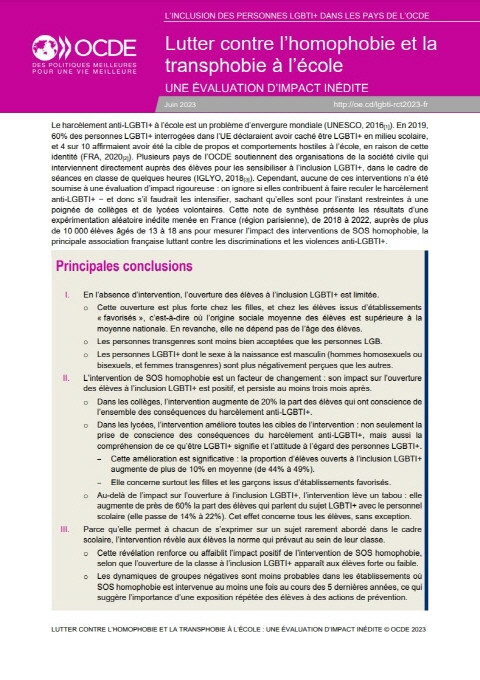 Lutter contre l’homophobie et la transphobie à l’école Год публикации: 2023 Организация-автор: Organisation de coopération et de développement économiques (OCDE) Cette note de synthèse présente les résultats d’une expérimentation inédite que l’OCDE a menée en France (région parisienne), de 2018 à 2022, auprès de plus de 10 000 élèves âgés de 13 à 18 ans pour mesurer l’impact des interventions de SOS homophobie, la principale association française luttant contre les discriminations et les violences anti-LGBTI+. This briefing note presents the results of an unprecedented experiment that the OECD conducted in France (Paris region), from 2018 to 2022, with more than 10,000 pupils aged 13 to 18, to measure the impact of interventions by SOS homophobie, the leading French association fighting anti-LGBTI+ discrimination and violence.
 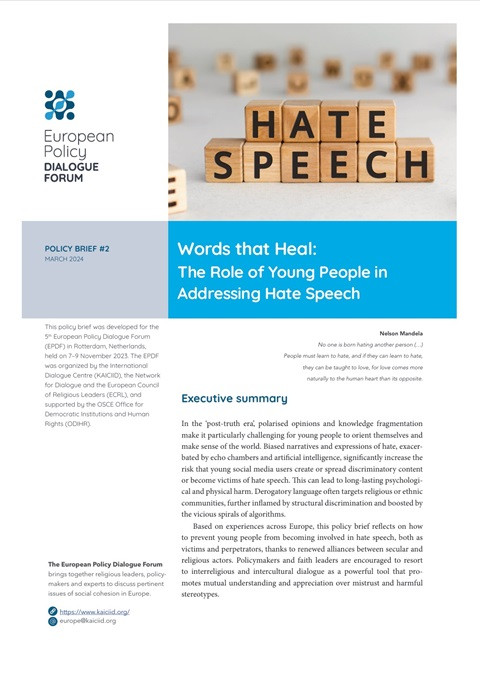 Words that Heal: The Role of Young People in Addressing Hate Speech (EPDF Policy Brief No. 2) Год публикации: 2024 Организация-автор: International Dialogue Centre (KAICIID) In the ‘post-truth era’, polarised opinions and knowledge fragmentation make it particularly challenging for young people to orient themselves and make sense of the world. Biased narratives and expressions of hate, exacerbated by echo chambers and artificial intelligence, significantly increase the risk that young social media users create or spread discriminatory content or become victims of hate speech. This can lead to long-lasting psychological and physical harm. Derogatory language often targets religious or ethnic communities, further inflamed by structural discrimination and boosted by the vicious spirals of algorithms. Based on experiences across Europe, this policy brief reflects on how to prevent young people from becoming involved in hate speech, both as victims and perpetrators, thanks to renewed alliances between secular and religious actors. Policymakers and faith leaders are encouraged to resort to interreligious and intercultural dialogue as a powerful tool that promotes mutual understanding and appreciation over mistrust and harmful stereotypes.
  3 minutes pour comprendre l’Europe Год публикации: 2021 Организация-автор: Toute l’Europe Vous n’êtes pas spécialiste des questions européennes ? Mais vous souhaitez en avoir une première approche sans vous confronter au jargon et discours trop technique ? Alors cette rubrique est pour vous ! Parce qu’il y a mille et une façons de parler de l’Union européenne, Toute l’Europe a choisi de vous présenter l’Europe “en toute simplicité” à travers des articles courts et faciles à lire. Une série d’épisodes de trois minutes, dans lesquels vous trouverez l’essentiel pour mieux comprendre l’Europe. You are not a specialist of European issues ? But you want to have a first approach without confronting yourself with too much technical language ? Then this section is for you ! Because there is a thousand and one ways to talk about the European Union, Toute l’Europe has chosen to present Europe "in all simplicity" through short and easy-to-read articles. A serie of three-minutes episodes in which you will find the essentials to better understand Europe.
 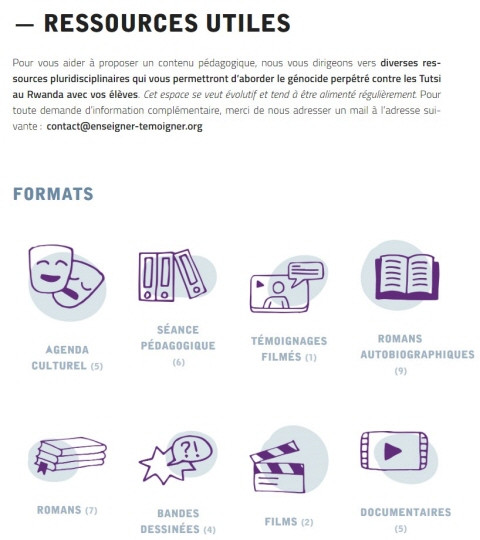 Enseigner Témoigner Год публикации: 2024 Организация-автор: Ligue de l'enseignement, Fédération de Paris & Ibuka France En 1994, environ 1 million de Tutsi ont été tués au Rwanda. Le génocide perpétré contre les Tutsi au Rwanda constitue l’une des principales tueries du XXème siècle. Elle a été rendue possible par l’action d’extrémistes qui ont, pendant des années, attisé la haine anti-tutsi au sein de la population rwandaise à coup de préjugés, de fausses informations, d’accusations en miroir, de stratégie de manipulation et de conditionnement des esprits à la peur, à la haine et à la violence meurtrière.Avec l’inscription récente de son enseignement dans les programmes scolaires, de plus en plus d’enseignants travaillent avec leurs élèves sur cet événement majeur de l’histoire du XXème siècle. Parallèlement, des rescapés ressentent le besoin de témoigner pour partager leur histoire avec la jeune génération et prévenir ainsi les mécanismes qui ont rendu ce drame possible. Dans ce contexte, l’association Ibuka France et la Ligue de l’enseignement engagent une action commune pour proposer un accompagnement dans l’organisation et la gestion pédagogique d’une rencontre avec un témoin-rescapé en classe. Cet accompagnement vise à créer un cadre à la fois utile et sécurisant pour l’ensemble des acteurs engagés et impactés par le témoignage en classe. In 1994, around 1 million Tutsis were killed in Rwanda. The genocide perpetrated against the Tutsis in Rwanda is one of the major killings of the twentieth century. It was made possible by the actions of extremists who, for years, stirred up anti-Tutsi hatred among the Rwandan population by means of prejudice, false informations, mirror-image accusations, a strategy of manipulation and the conditioning of minds to fear, hatred and murderous violence.With the recent inclusion of the subject in school curricula, more and more teachers are working with their pupils on this major event in the history of the 20th century. At the same time, survivors are feeling the need to share their stories with the younger generation and prevent the mechanisms that made this tragedy possible. Against this backdrop, Ibuka France and the Ligue de l'enseignement have joined forces to offer support in organising and managing a meeting with a survivor-witness in the classroom. The aim of this support is to create a framework that is both useful and reassuring for all those involved and affected by the testimonial in the classroom.
  الضمانات الدولية لحماية الحق في التعليم في القانون الإنساني الدولي (مجلة ذي قار للفنون ، المجلد 33 ، العدد 1). Год публикации: 2019 Автор: Firas Jasim Организация-автор: Dhi Qar University يعد الحق في التعليم واحداً من أهم حقوق الإنسان الذي حرص القانون الدولي على ضمان حمايته وقت السلم والنزاعات المسلحة. إذ يعزز القانون الدولي الإنساني إلى جانب الأنظمة القانونية الأخرى الأحكام القانونية الرامية لضمان حصول الأفراد على حقهم في التعليم الذي كثيرًا ما يتعرض للانتهاك في أوضاع النزاعات المسلحة. قسم البحث الى ثلاثة مباحث تضمن الأول مفهوم الحق في التعليم، في حين تناول الثاني آليات القانون الدولي الإنساني في حماية الحق في التعليم، بينما تعرض المبحث الثالث الى السبل القانونية لمواجهة انتهاكات الحق في التعليم. وانتهى البحث بخاتمة تضمنت أبرز الاستنتاجات التي توصل البحث إليها ومجموعة من التوصيات التي نأمل أن تسهم في تعزيز حماية الحق في التعليم إبان النزاعات المسلحة. International Guarantees to Protect the Right to Education in International Humanitarian Law (Thi Qar Arts Journal; vol. 33, no. 1) Год публикации: 2019 Автор: Firas Jasim Организация-автор: Dhi Qar University The right to education is one of the most important human rights that international law is keen to ensure its protection in times of peace and armed conflicts. International humanitarian law, along with other legal systems, reinforces legal provisions aimed at ensuring that individuals obtain their right to education, which is often violated in situations of armed conflict. The research was divided into three sections, the first included the concept of the right to education, while the second dealt with the mechanisms of international humanitarian law in protecting the right to education, while the third section presented legal means to confront violations of the right to education.
 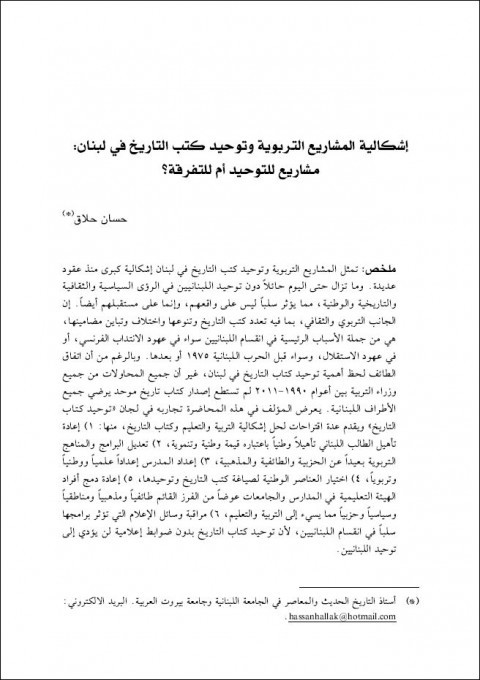 اشكالية المشاريع التربوية وتوحيد كتب التاريخ في لبنان : مشاريع للتوحيد أم للتفرقة؟ Год публикации: 2012 Автор: حلاق، حسان Организация-автор: Lebanese Association for Educational Studies (LAES) تمثل المشاريع التربوية وتوحيد كتب التاريخ في لبنان إشكالية كبرى منذ عقود عديدة. وما تزال حتى اليوم حائلاً دون توحيد اللبنانيين في الرؤى السياسية والثقافية والتاريخية والوطنية، مما يؤثر سلباً ليس على واقعهم، وإنما على مستقبلهم أيضاً. إن الجانب التربوي والثقافي، بما فيه تعدد كتب التاريخ وتنوعها واختلاف وتباين مضامينها، هي من جملة الأسباب الرئيسية في انقسام اللبنانيين سواء في عهود الانتداب الفرنسي، أو في عهود الاستقلال، وسواء قبل الحرب اللبنانية 1975 أو بعدها. وبالرغم من أن اتفاق الطائف لحظ أهمية توحيد كتاب التاريخ في لبنان، غير أن جميع المحاولات من جميع وزراء التربية بين أعوام 1990–2011 لم تستطع إصدار كتاب تاريخ موحد يرضي جميع الأطراف اللبنانية. يعرض المؤلف في هذه المحاضرة تجاربه في لجان "توحيد كتاب التاريخ" ويقدم عدة اقتراحات لحل إشكالية التربية والتعليم وكتاب التاريخ، منها: 1) إعادة تأهيل الطالب اللبناني تأهيلاً وطنياً باعتباره قيمة وطنية وتنموية، 2) تعديل البرامج والمناهج التربوية بعيداً عن الحزبية والطائفية والمذهبية، 3) إعداد المدرس إعداداً علمياً ووطنياً وتربوياً، 4) اختيار العناصر الوطنية لصياغة كتب التاريخ وتوحيدها، 5) إعادة دمج أفراد الهيئة التعليمية في المدارس والجامعات عوضاً من الفرز القائم طائفياً ومذهبياً ومناطقياً وسياسياً وحزبياً مما يسيء إلى التربية والتعليم، 6) مراقبة وسائل الإعلام التي تؤثر برامجها سلباً في انقسام اللبنانيين، لأن توحيد كتاب التاريخ بدون ضوابط إعلامية لن يؤدي إلى توحيد اللبنانيين.