
Ресурсы
Изучайте широкий спектр ценных ресурсов ВГГ, чтобы углубить своё понимание и повысить эффективность исследований, просветительской деятельности, преподавания и обучения.
Найдено: 3,229
 Summit of the Future Outcome Document: Pact for the Future, Global Digital Compact, and Declaration on Future Generations Год публикации: 2024 Организация-автор: United Nations (UN) At the Summit of the Future on 22 September 2024, world leaders adopted a Pact for the Future that includes a Global Digital Compact and a Declaration on Future Generations. This Pact is the culmination of a years-long process to adapt international cooperation to the realities of today and the challenges of tomorrow. The hard work of implementation begins immediately. The adoption of the Pact demonstrates that countries are committed to an international system with the United Nations at its center. Leaders set out a clear vision of a multilateralism that can deliver on its promises, is more representative of today’s world and draws on the engagement and expertise of governments, civil society and other key partners.
  Asia and the Pacific SDG Progress Report 2025: Engaging Communities to Close the Evidence Gap Год публикации: 2025 Организация-автор: UN. Economic and Social Commission for Asia and the Pacific (UN. ESCAP) The SDG progress report 2025 presents the latest data and insights on progress toward the Sustainable Development Goals (SDGs) in the Asia-Pacific region. While celebrating regional achievements, it also highlights persistent challenges—such as climate change, natural disasters, and critical data gaps—that risk leaving marginalized communities behind. By showcasing innovative community-level partnerships, the report explores how local efforts can help bridge the evidence gap, ensuring that progress toward the SDGs is inclusive and leaves no one behind.
  Catalysing Change for Sustainable Peace: KAICIID's Transformative Dialogue Approach Организация-автор: International Dialogue Centre (KAICIID) What is transformative about KAICIID's interreligious and intercultural dialogue approach? Since its establishment, the Centre has worked with the understanding that for dialogue to be truly transformative, it must be continuous, responsive, synergetic, and inclusive of all voices, secular and religious. KAICIID achieves this through sustained engagement with, individual, community, national, regional and international stakeholders. The Centre utilises a synergy of convening, capacity development and mainstreaming of dialogue into the policies and practices of relevant institutions. KAICIID brings diverse stakeholders and partners to the dialogue; empowers and catalyses them through information and expertise exchange, resources and support; supporting changemakers in promoting and incorporating dialogue into the policy and practices of institutions and bodies. The Centre's transformative dialogue approach creates a multiplying effect that leads to an enabling environment for dialogue to take place, fostering social cohesion and sustainable peace.
  Summit of the Future Outcome Document: Pact for the Future, Global Digital Compact and Declarations on Future Generations Год публикации: 2024 Организация-автор: United Nations (UN) World leaders adopt a Pact for the Future that includes a Global Digital Compact and a Declaration on Future Generations (A/RES/79/1). The Pact covers a broad range of themes including peace and security, sustainable development, climate change, digital cooperation, human rights, gender, youth and future generations, and the transformation of global governance.
 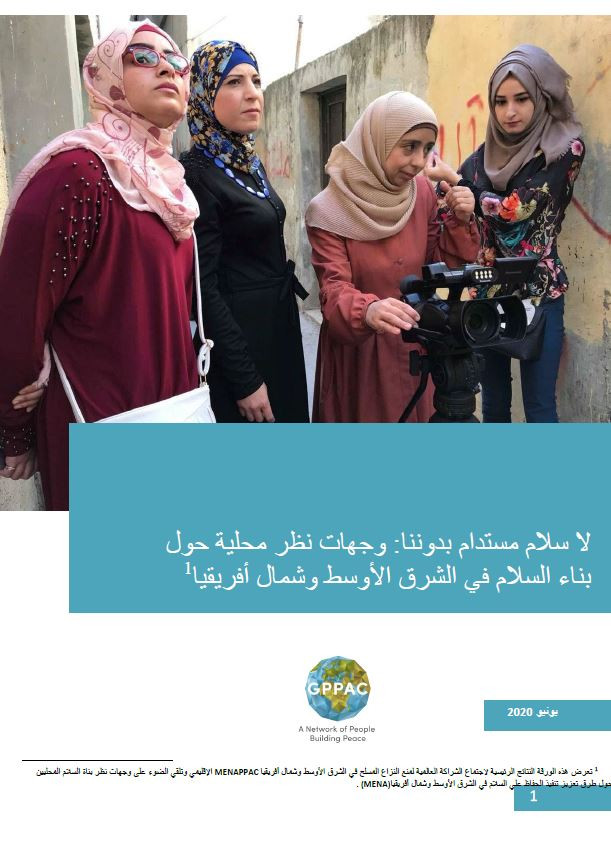 No Sustainable Peace Without Us: Local Perspectives on Peacebuilding in the Middle East and North Africa Год публикации: 2020 Организация-автор: Global Partnership for the Prevention of Armed Conflict (GPPAC) This paper presents the main outcomes of the Global Partnership for the Prevention of Armed Conflict in the Middle East and North Africa meeting. The paper sheds light on the perspectives of local peacebuilders on ways to promote peacekeeping in the Middle East and North Africa region. لا سلام مستدام بدوننا: وجهات نظر محلية حول بناء السلام في الشرق الأوسط وشمال أفريقيا Год публикации: 2020 Организация-автор: Global Partnership for the Prevention of Armed Conflict (GPPAC) تعرض هذه الورقة النتائج الرئيسية لاجتماع الشراكة العالمية لمنع النزاع المسلح في الشرق الأوسط وشمال أفريقيا. وتلقي الورقة الضوء على وجهات نظر بناة السلام المحليين حول طرق تعزيز الحفاظ على السلام في منطقة الشرق الأوسط وشمال أفريقيا.
  Fórum Panafricano: fundamentos e recursos para uma cultura de paz Год публикации: 2013 Организация-автор: African Union The Pan-African Forum “ Sources and resources for a culture of peace” was held in Luanda, Angola, from 26 to 28 March 2013, and was jointly organized by UNESCO, the African Union and the Government of Angola, under the High Patronage of H. E. Mr José Eduardo dos Santos, President of the Republic of Angola. This forum was the result of a close cooperation between UNESCO and the African Union, one of their main objectives being building peace in Africa, through the promotion of a culture of peace based on the intrinsic values of African societies. The Republic of Angola Government, through its President of the Republic H. E. Mr José Eduardo dos Santos, resolutely engaged in this process with major financial and technical support for the organization of the Forum in the Angolan capital city. As indicated in the Action Plan adopted by the participants in plenary (Annex I), recommendations made during the Forum are directed at all components of African society : political leaders, national and regional institutions, civil society, community associations, youth movements and women’s organizations, religious and traditional leaders, entrepreneurs and leaders from the private sector, etc. The implementation of the Action Plan will be continuously monitored by the two institutions that jointly organized the Luanda Forum, the African Union and UNESCO. Representatives from the 55 African countries participating in the Forum will both contribute to the proposal for action by bringing their national experience and take the lead in the follow‐up of the recommendations made at country level. In order to ensure this follow‐up it will be important to link together the participants by the creation of an African Network for the Promotion of a Culture of Peace and Non‐violence. The representatives of African countries will play the role of focal points of the awareness campaign at the national level. Finally, the agenda of the Forum includes a plan to hold a roundtable on the establishment of a multi-stakeholder partnership for action. Organized with the participation of regional institutions, public and private economic actors as well as representatives of Governments and Civil Society, this session will be the occasion to launch a continental and lasting Movement for the promotion of a culture of peace. For this round table and for the Campaign, the stakeholders can now witness the action as their Foundation / Company / Institution / Organization leads to help in building the defence of peace in the minds of men and women and ensure that peace is a reality: "Make Peace Happen".
 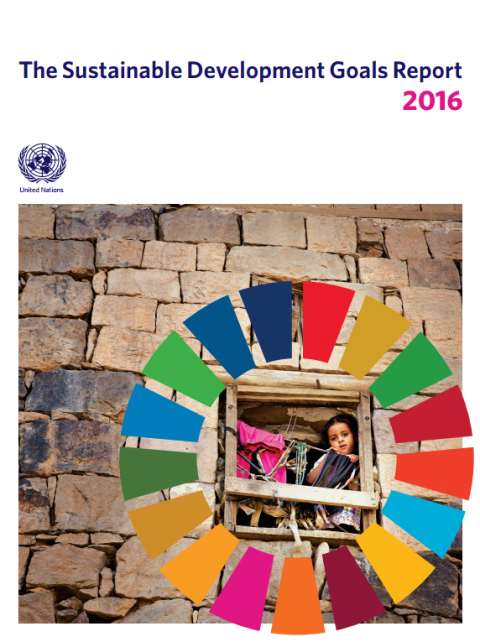 The Sustainable development goals report 2016 Год публикации: 2016 Организация-автор: United Nations (UN) This inaugural report on the global Sustainable Development Goals (SDGs) is a first accounting of where the world stands at the start of our collective journey to 2030. The report analyses selected indicators from the global indicator framework for which data are available as examples to highlight some critical gaps and challenges. The list of SDG indicators agreed upon by the UN Statistical Commission in March 2016 will be subject to refinements and improvements as methods and data availability improve. Every journey has a beginning and an end. Plotting that journey and establishing key milestones along the way requires accessible, timely and reliable disaggregated data. The data requirements for the global indicators are almost as unprecedented as the SDGs themselves and constitute a tremendous challenge to all countries. Nevertheless, fulfilling these requirements through building national statistical capacity is an essential step in establishing where we are now, charting a way forward and bringing our collective vision closer to reality
  Transforming our world: the 2030 Agenda for Sustainable Development Год публикации: 2015 Организация-автор: United Nations (UN) This Agenda is a plan of action for people, planet and prosperity. It also seeks to strengthen universal peace in larger freedom. We recognize that eradicating poverty in all its forms and dimensions, including extreme poverty, is the greatest global challenge and an indispensable requirement for sustainable development. All countries and all stakeholders, acting in collaborative partnership, will implement this plan. We are resolved to free the human race from the tyranny of poverty and want and to heal and secure our planet. We are determined to take the bold and transformative steps which are urgently needed to shift the world on to a sustainable and resilient path. As we embark on this collective journey, we pledge that no one will be left behind.The 17 Sustainable Development Goals and 169 targets which we are announcing today demonstrate the scale and ambition of this new universal Agenda. They seek to build on the Millennium Development Goals and complete what they did not achieve. They seek to realize the human rights of all and to achieve gender equality and the empowerment of all women and girls. They are integrated and indivisible and balance the three dimensions of sustainable development: the economic, social and environmental. The Goals and targets will stimulate action over the next 15 years in areas of critical importance for humanity and the planet.
 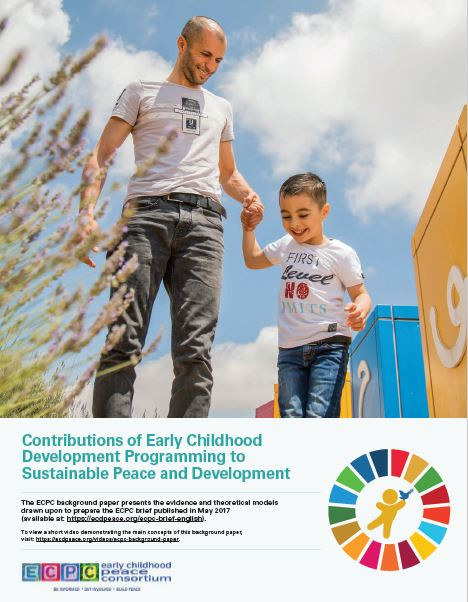 Contributions of Early Childhood Development Programming to Sustainable Peace and Development Год публикации: 2018 Автор: Chelsea K. Donaldson | Friedrich W. Affolter | Liliana Angelica Ponguta | Rima Salah | Pia R. Britto | James Leckman | Paul Connolly | Siobhan Fitzpatrick | Pauline Walmsley By intervening early and engaging with children’s families, ECD services offer a unique opportunity to make a cost-effective and sustainable impact on interrupting cycles of poverty and violence. Given that efforts towards sustainable peace must encompass all sectors and address all societal levels, there is a crucial need for implementing “multi-level ECD services” that center on the whole child and engage his or her surrounding ecological context. These comprehensive ECD services can not only improve child development outcomes, but also strengthen competencies in caregivers, address stressors and conflict drivers in the community and build institutional capacities to reduce structural violence. The purpose of this background paper is to merge insights from both micro and macro-level perspectives to demonstrate how ECD services can be leveraged to sustainable peace and development. While peacebuilding experts have traditionally focused on macro-level strategies such as government reform or economic rehabilitation interventions, ECD practitioners have focused primarily on micro-level interventions of individual children and families without much exploration of how ECD services can be leveraged to mitigate risks of conflict and transform relationships across communities and regions.