
Ресурсы
Изучайте широкий спектр ценных ресурсов ВГГ, чтобы углубить своё понимание и повысить эффективность исследований, просветительской деятельности, преподавания и обучения.
Найдено: 1,477
 A Culture of Peace and Its Role in Achieving Stability and Development in Sudan Год публикации: 2015 Автор: Abdel Nasser Majzoub Makki Организация-автор: Sudan University of Science and Technology The problem of thesis concerned in how to develop peace culture elements to boost stability and development in Sudan, and to develop educational systems, and activated the role of the native administration in peace culture dissemination, and accept other. Thesis aimed to know the elements of social peace and its role in stability and development in Sudan. Thesis hypotheses come out with the statement, that; statically there is relation between peace culture and stability, and development, its ratio estimated 95, 6% from the samples. Researcher used descriptive and historical methods to investigate hypotheses, depended in collecting data on pre-studies, workshops, seminars, questionnaire, and interviews. Research comes out with important results as below; There are many elements threats peace culture in Sudan, as education system, native administration, weapons, and tribal conflicts. Education and training has a great impact upon behavior, and pivotal in compacts poverty, and conflicts, so it has effective role in peace dissimilation.
  “Nobody Has Ever Asked About Young People’s Opinions”: Young People’s Perspectives on Identity, Exclusion and the Prospects for a Peaceful Future in Central Asia Год публикации: 2012 Организация-автор: Saferworld This report offers a number of recommendations for the governments of Central Asian countries, as well as for international donor organizations that provide financial assistance to these states. Recommendations include suggestions priorities and approaches related to institutional and state construction; proposals on creating favorable conditions for enhancing youth participation in political processes; suggestions on how to instill in young people the skills necessary to participate in democratic processes; how to strengthen social unity through building intercommunal dialogue and intergenerational dialogue; as well as how to fight extremism. «Никто и никогда не спрашивал мнения молодежи»: Взгляды молодых людей на вопросы идентичности, изоляции и перспектив мирного будущего в Центральной Азии Год публикации: 2012 Организация-автор: Saferworld Данный отчет предлагает ряд рекомендаций для правительств стран Центральной Азии, а также для международных донорских организаций, которые предоставляют финансовую помощь этим государствам. Рекомендации включают предложения приоритетов и подходов, связанных с институциональным и государственным строительством; предложения по вопросам создания благоприятних условий для активизации участия молодежи в политических процессах; предложения как привить молодым людям навыки, необходимые для участия в демократических процессах; как усилить социальное единство через построение межобщинного диалога и диалога между поколениями; а также как бороться с экстремизмом.
 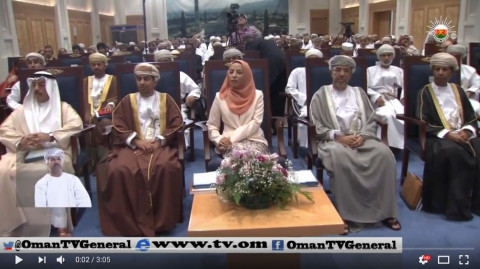 انطلاق ملتقى "المواطنة الإنسانية ودورها في التقارب والوئام الإنساني" Год публикации: 2015 Организация-автор: OmanTvGeneral أقام مركز السلطان قابوس العالي للثقافة والعلوم الملتقى العلمي المواطنة الإنسانية ودورها في التقارب والوئام الإنساني، وذلك في إطار فعاليات أسبوع التقارب والوئام الإنساني الرابع، حيث يعد الملتقىى فرصة سانحة لجميع المشاركين للاطلاع على تجربة السلطنة الرائدة في الحوار الحضاري ودعم قيم التسامح والتعاون والتعايش السلمي وفق الثوابت التي أرسى مبادئها حضرة صاحب الجلالة السلطان قابوس بن سعيد المعظم ـ حفظه الله ورعاه. Forum on "Human Citizenship and its Role in Convergence and Human Harmony" Год публикации: 2015 Организация-автор: OmanTvGeneral The Sultan Qaboos Higher Center for Culture and Science held the Scientific Forum on Human Citizenship and its Role in Convergence and Human Harmony, within the framework of the Fourth Week of Convergence and Human Harmony, where the forum is an opportunity for all participants to learn about the Sultanate's leading experience in civilizational dialogue and support the values of tolerance, cooperation and peaceful coexistence according to the constants. His principles were laid down by His Majesty Sultan Qaboos bin Said.
  العولمة والمواطنة والهوية (بحث في تأثير العولمة على الانتماء الوطني والمحلي في المجتمعات) Год публикации: 2009 Автор: Thaer Rahim Kazem Организация-автор: Al-Qadisiyah University من أهم ثلاثة ركائز التي تقوم عليها الديمقراطية التي أتيحت الفرصة إلى قيامها في المجتمع العراقي اليوم بعد التغيرات الاجتماعية والسياسية التي برزت بعد سقوط الدولة العراقية الحديثة في 9/4/2003 فضلا عن حقوق الإنسان وحرياته ومؤسسات المجتمع المدني، والعلاقة بين المواطنة والهوية هي عملية التعزيز السياسي والقانوني لدور الفرد في المشاركة الفاعلة في البناء الاجتماعي للمجتمع العراقي. إذ إن هنالك نمطا من التوافق أو التطابق بين الهوية الاجتماعية العامة (الوطنية) التي تقوم على مجموعة من الأسس السياسية و القانونية، وبين الانتماء الجغرافي لمجتمع ما (المواطنة). بغض النظر عن الانتماءات الفرعية الأخرى لفرد في الحياة الاجتماعية كالانتماءات الاثنية أو الدينية أو غير ذلك من السمات الانثروبولوجية التي تتميز بها أشكال الهوية الاجتماعية لأفراد المجتمع أو للجماعات الاجتماعية التي يتألف منها البناء الاجتماعي، و بما أن انتماء المجتمع العراقي إلى نظام العولمة أو الاندراج فيه بات امرأ محسوما لا يعيقه سوى عامل الوقت لذا إن التعامل مع العولمة يتطلب الوعي بأهمية معرفة وأدراك تأثيراتها السلبية والايجابية على الحياة الاجتماعية في المجتمع العراقي إذ أن العولمة هي عملية توحيد واندماج للمجتمعات الإنسانية تتسم بضرورة التعايش بين هذه المجتمعات وكذلك بضرورة التعايش بين أفراده من خلال تحقيق المواطنة العالمية فهل توثر العولمة في المواطنة أن وجدت لدى أفراد المجتمع في العراق؟ بوصفهم أفرادا وجماعات؟ وهل تؤثر الانتماءات الفردية والاجتماعية من خلال مجموعة الانتماءات التي تتميز بها السمات الانثروبولوجية التي تتسم بها الجماعات الاجتماعية داخل المجتمع؟ وهل تؤثر هذه الانتماءات على المواطنة؟ وهل يمكن أن تكون هنالك علاقة من نوع معين بين العولمة والهوية الثقافية أو الدينية غير علاقة السلب أو الفقدان؟ وهل يمكن أن تقوم علاقة بين العولمة و الهوية المجتمعية أو غيرها من أنماط الهويات؟ وهل للمواطنة دور في الحفاظ أو فقدان الهوية الثقافية أو الدينية للمجتمعات الإسلامية والعربية والمجتمع العراقي منها على وجه التحديد؟ هل تهدد العولمة اليوم الهوية والمواطنة على حد سواء؟ Globalization, Citizenship and Identity (Research on the Impact of Globalization on National and Local Affiliation in Societies) Год публикации: 2009 Автор: Thaer Rahim Kazem Организация-автор: Al-Qadisiyah University There was a serious need to the citizenship as a psychological feeling in the Iraqi society. Because it represent the one of the most important three standards in the democratic operation as methods we must use in our social live. When we get a chance to build it in the Iraqi society. After the social and political changes that tack place after the 9 April 2003. The relationships between the citizenship and identity refer to the process by which we could strength the individual legal and political role to create the effective participate in the social live and social structure of the Iraqi society. Because there was an equalize between the general collective identity and the citizenship. We need these feelings when Iraqi society joins the globalization system under the pressure of the USA. And that required being aware in the negative effectiveness of the globalization and its positive ones. And the necessary of the living to gather in the global society. That makes the universal citizenship possible. This state creates many questions in the mind of the Arab and Moslemsre searchers. Such as could we keep our social and cultural identity? Are the citizenship help us to maintain the social and cultural identity? And other many questions that dealing with this objectives.
 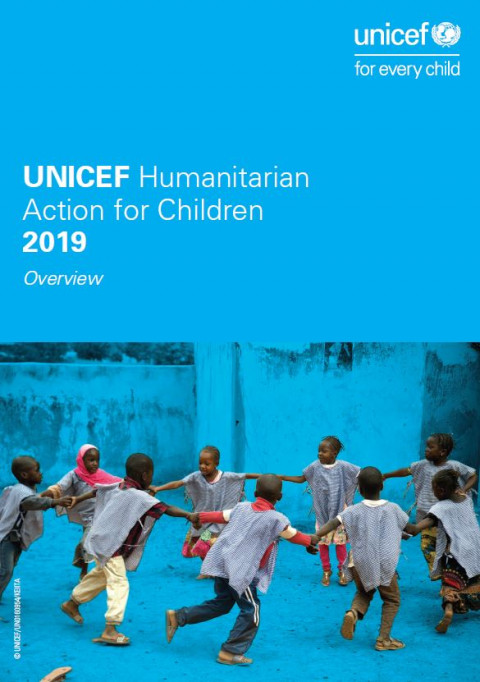 Humanitarian Action for Children 2019: Overview Год публикации: 2019 Организация-автор: United Nations Children's Fund (UNICEF) This edition of UNICEF’s report on requirements for humanitarian action highlights major emergencies affecting children and families around the world, and the results achieved by UNICEF and partners in response to those crises. Noting that more violent conflicts are raging today than at any time since the adoption of the Convention on the Rights of the Child 30 years ago, the report also describes UNICEF initiatives to improve the quality of its humanitarian response in 2019 – particularly in high-threat contexts. Additional information about humanitarian action and UNICEF funding appeals at the country and regional levels is available online atwww.unicef.org/appeals.
 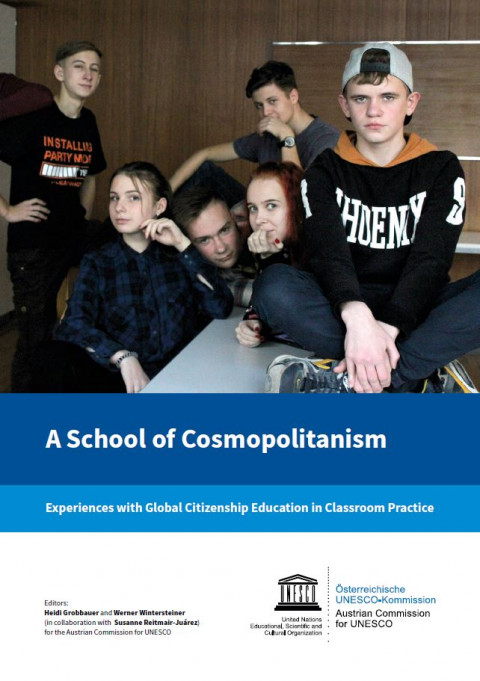 A School of Cosmopolitanism: Experiences with Global Citizenship Education in Classroom Practice Год публикации: 2019 Автор: Heidi Grobbauer | Werner Wintersteiner Организация-автор: Austrian Commission for UNESCO This publication focuses on examples from academic practice: this best practice collection demonstrates how young people can successfully be inspired to “think globally, act locally”. What is crucial is maintaining a view of the wider world; in particular, cooperation efforts with educational institutes outside of Europe (e.g. “élèves pour élèves” in Burkina Faso) provide a critical awareness of global connections. Learning to know/Learning to do/Learning to be/Learning to live together – these four pillars form the pedagogical foundation of the work carried out at more than 90 UNESCO schools throughout the whole of Austria. Since their founding in 1957, UNESCO schools have been considered model schools at which lessons are structured in a project-oriented, participative and even topic-specifc way. The unique ‘spirit’ of UNESCO schools often makes special projects possible. In the programme for the annual meetings of recent years, for example, Global Citizenship Education has been an ongoing topic of focus, accompanied by experts from various specialised institutions and NGOs. The pedagogical preparation of contents in a manner that ensures they are actually absorbed in the classroom presents a major challenge. Different types of schools have different educational goals, and the themes have to be made accessible for different age groups. The pedagogical finesse of each class team or individual teacher lies in finding the most motivating approaches.
 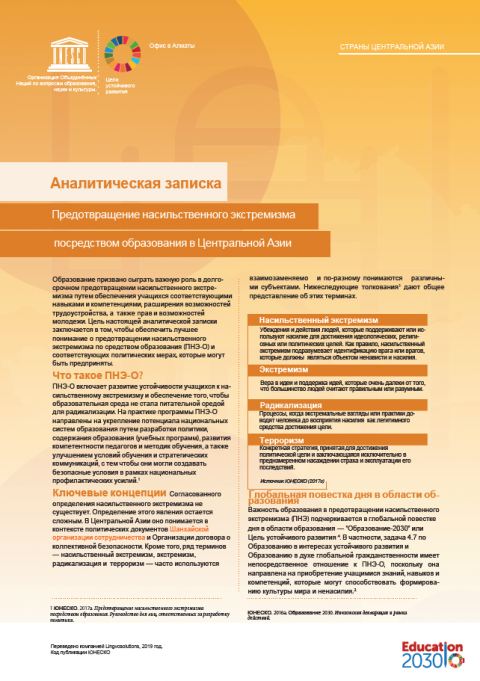 Policy Brief: Prevention of Violent Extremism Through Education in Central Asia Год публикации: 2019 Организация-автор: UNESCO Almaty Education has a powerful role to play in long-term prevention of violent extremism by equipping learners with the right skills and competencies, increasing employment opportunities and empowering youth. This policy brief aims to provide a better understanding of Preventing Violent Extremism through Education (PVE-E) and the relevant policy interventions that could be taken.