
Ресурсы
Изучайте широкий спектр ценных ресурсов ВГГ, чтобы углубить своё понимание и повысить эффективность исследований, просветительской деятельности, преподавания и обучения.
Найдено: 1,180
 Le rôle des enseignants dans l’éducation et la démocratie: Impacts d’un projet de recherche sur la perception de futurs enseignants Год публикации: 2015 Автор: Gina Thésée | Paul R. Carr | Franck Potwora Организация-автор: McGill University. Faculty of Education Cet article étudie les réflexions suscitées par un questionnaire d’enquête portant sur les liens entre l’éducation et la démocratie. Un échantillon de 157 étudiants d’un programme de formation initiale des enseignants à Montréal a répondu à un questionnaire de suivi (seconde étude) après avoir rempli un questionnaire d’enquête (première étude) portant sur leurs perceptions et leurs expériences des liens entre l’éducation et la démocratie. La première étude révèle une expérience démocratique faible et un parcours éducatif pratiquement sans lien avec la démocratie, ce qui concorde avec les résultats d’études antérieures. Cependant, les résultats du questionnaire de suivi indiquent que la participation à l’enquête a suscité des réflexions d’ordre socioéducatif, épistémologique, pédagogique et méthodologique, qui pourraient avoir des retombées significatives sur leur perception du rôle de l’enseignant.
 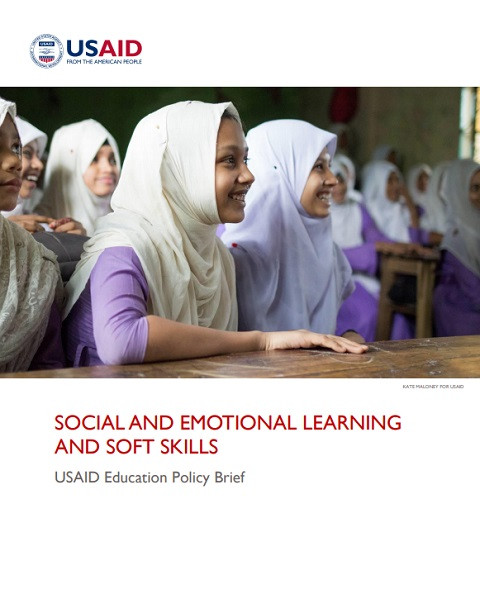 Social and Emotional Learning and Soft Skills: USAID Education Policy Brief Год публикации: 2019 Автор: Kalene Resler | Anjuli Shivshanker | Samantha Alvis | Chris Capacci-Carneal | Melissa Chiappetta | Lauren Greubel | Julie Hanson Swanson | Ashley Henderson | Josh Josa | Laura Lartigue | Rebeca Martinez | Leah Maxson | Olga Merchan | Yolande Miller-Grandvaux | Sandy Oleksy-Ojikutu | Rebecca Pagel | Nancy Taggart | Nina Weisenhorn | Wendy Wheaton Организация-автор: United States Agency for International Development (USAID) Both the 2018 USG Strategy on International Basic Education and the 2018 USAID Education Policy emphasize the importance of social and emotional skills or soft skills in assuring the long-term success of children and youth. Through the Strategy and Policy, USAID is providing new opportunities to systematically design, measure, implement, and understand the impact of programs that build social and emotional skills or soft skills for children and youth.To support USAID staff and implementing partners in this work, this brief: Provides an introductory understanding of what USAID means by the terms “social and emotional skills” and “soft skills” and how to communicate about them. Specifies the desired outcomes and quality standards for programming that teach social and emotional skills or soft skills. Identifies areas in which evidence and best practices still have gaps, and areas in which we should consider investing in further learning.
  Accelerating Education for the SDGs in Universities: A Guide for Universities, Colleges, and Tertiary and Higher Education Institutions Год публикации: 2020 Организация-автор: Sustainable Development Solutions Network (SDSN) The aim of this guide is to help accelerate the institutional process of mainstreaming ESDGs in universities, by helping stakeholders within and outside universities understand why they should pursue this goal, and how. It aims to expand, update and refine the information provided in the previous guide based on new resources, tools, thinking, and learnings from universities working to implement ESDGs, to consider what ESDGs mean for universities. The guide touches on the pedagogical aspects of ESDGs, in terms of how they affect institutional approaches to ESDGs, but does not attempt to provide a comprehensive review of them. The Guide outlines the case for mainstreaming education for the SDGs at universities, what this does and could look like in practice, and the processes and activities universities can take to support implementation. It also provides practical guidance, resources, and case studies to inspire universities to take action and deepen their practice.
  Education and Training in a Changing Word: What Skills Do We Need? Год публикации: 2015 Организация-автор: UNESCO Bangkok What skills do learners need in today’s world? While academic skills have often been the focus of education systems, other skills that help us to better learn to live together and prepare us for the world of work must not be underestimated. This video highlights key messages on the importance of these skills, such as critical thinking, creativity, teamwork and empathy among many others as we enter a new era for Education 2030: towards inclusive and quality education and lifelong learning for all.
  Implementing Pedagogical Approaches for ESD in Initial Teacher Training at Spanish Universities (Sustainability 2019; Vol. 11, No. 18) Год публикации: 2019 Автор: Sílvia Albareda-Tiana | Esther García-González | Rocío Jiménez-Fontana | Carmen Solís-Espallargas Организация-автор: Multidisciplinary Digital Publishing Institute (MDPI) Within the framework of the United Nations 2030 Agenda for Sustainable Development, four case studies of the degree in Primary Education at three Spanish universities are analyzed. The aim is to study the suitability of three different active teaching-learning strategies: problem-based learning (PBL), project-oriented learning (POL), and a cross-disciplinary workshop. Another goal is to promote the integration of education for sustainable development (ESD) and measure the level of acquisition of several competencies of sustainability and the change in consumption habits of future teachers after implementing those pedagogical approaches. Initial and final ecological footprint (EF) as well as a rubric to measure the level of acquisition of competencies of sustainability were used as data collection instruments. The conclusions related to the research objectives show that when sustainability is implemented in the curriculum through active teaching-learning strategies, future teachers acquire competencies of sustainability. They also reveal that said strategies contribute to a change in consumption habits as a reduction in the EF is observed. There exists a relation between EF reduction and high levels of acquisition of competency in sustainability.
 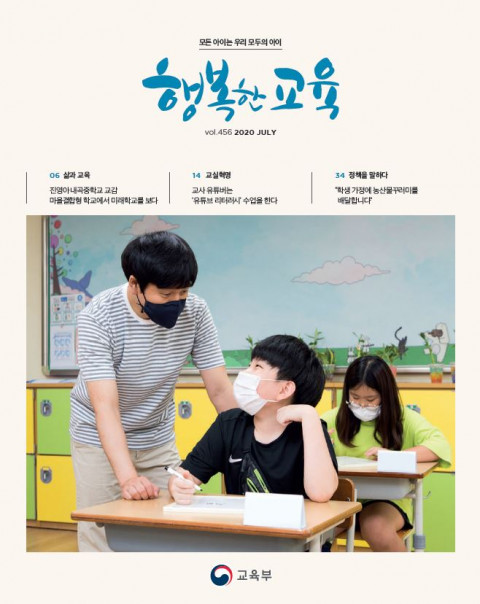 행복한 교육 2020년 7월호 (제456호) Год публикации: 2020 Организация-автор: 대한민국 교육부 특별기획 미래_지능정보사회를 이끌 인재 양성 청사진교육부는 최근 ‘과학·수학·정보·융합교육 종합계획(5개년)’을 발표하며 향후 5년간의 미래 인재 양성에 대한 청사진을 제시했다. 교과 간의 긴밀한 연결과 융합을 바탕으로 정책이 수립되어 시너지 효과가 기대된다. 이번 발표에 따르면, 인공지능(AI), 가상·증강현실(VR·AR) 등 최첨단 에듀테크 기술이 교육 현장에 적극적으로 도입되는데, 대표적으로 최첨단 기술을 적용한 지능형 과학실을 2024년까지 모든 학교에 구축하여 학생들이 첨단 과학을 직접 체험하고 학습할 수 있도록 한다는 계획이다. 교육부의 과학·수학·정보·융합교육 청사진을 살펴본다.정책을 말하다_“학생 가정에 농산물꾸러미를 배달합니다”학교급식의 중단으로 학부모와 농가, 급식업체의 부담이 증가함에 따라 교육부와 농림축산식품부는 시도교육청·지자체와 협력하여 ‘학생 가정 농산물꾸러미 지원사업’을 추진하고 있다. 꾸러미사업에 서울, 대구, 인천, 광주, 대전, 세종, 경기, 강원, 충북, 충남, 전북, 전남, 경북, 경남과 부산 기장군에서 참여하며 499만여 명의 학생 가정에 3만 7천 톤의 농산물을 공급하였다. 일부 지역(울산, 부산, 제주, 세종)에서는 학생 가정 내 경제적 부담을 줄여주고자 잔여 급식예산을 교육재난지원금 등의 형태로 지급하고 있다.
  Basic Elements of Forgiveness and Reconciliation Theory Год публикации: 2018 Автор: Leonel Narváez Gómez Организация-автор: Fundación para la Reconciliación This text presents the theoretical bases for forgiveness and reconciliation that support the pedagogy and actions of the Foundation for Reconcilation. Elementos básicos de la teoría del Perdón y la Reconciliación Год публикации: 2018 Автор: Leonel Narváez Gómez Организация-автор: Fundación para la Reconciliación En este texto se presentan las bases teóricas para el perdón y la reconciliación que sustentan la pedagogía y acciones de la Fundación para la Reconcliación.
  Education Disrupted Education Reimagined: Responses from Education’s Frontline During the COVID-19 Pandemic and Beyond Год публикации: 2020 Организация-автор: WISE | Salzburg Global Seminar | Diplomatic Courier The special edition E-Book you are reading about today was produced in real time, as WISE, in partnership with Salzburg Global Seminar, convened key stakeholders and education leaders from over 98 countries in a three-part series of global conferences aimed at bringing the global education community together. The result is a contemporary historical record of how schools, NGOs, governments, and international organizations responded to school closures during the crisis and how they are attempting to use this crisis as a springboard to reimagine—and even transform—education in their communities and countries.The E-Book offers an opportunity to a global audience to make sense of what happened but it also offers a breeding ground of ideas from some of the world’s top education thinkers. It is the editors’ sincere hope that through this publication we provide the education community with a reference point from the crisis from which future research, policy, and innovation can grow.
  한 세대 후 교육 2050년의 한국교육은 어떻게 변해 있을까? (Future Horizon Plus 제42권 제5호) Год публикации: 2019 Автор: 서영인 Организация-автор: 과학기술정책연구원 세대를 평균 30년으로 보면 향후 약 2050년경의 한국교육은 어떻게 변해 있을까? 변화에는 인간의 의지가 작동하는 변화와 그와 상관없이 나타나는 변화가 있을 수 있다. 전자의 경우가 대부분이지만 간혹 후자가 작동하는 경우도 있다. 자연재해나 불의의 각종 사고 등이 그것이다. 그러나 현재의 모습이 과거 인간의 생각과 상상력의 결과라는 점을 인정한다면 한 세대 후 교육 역시 현재 인간의 상상력과 의지가 작동한 결과로 볼 수 있어 전자의 경우에만 한정하여 미래 교육을 예측해보려고 한다.