
Ресурсы
Изучайте широкий спектр ценных ресурсов ВГГ, чтобы углубить своё понимание и повысить эффективность исследований, просветительской деятельности, преподавания и обучения.
Найдено: 684
 ارشادات استخدام الذكاء الاصطناعي التوليدي في التعليم والبحث Год публикации: 2023 Автор: Fengchun Miao | Wayne Holmes Организация-автор: UNESCO تهدف هذه الإرشادات إلى دعم تخطيط اللوائح والسياسات وبرامج تنمية القدرات البشرية المناسبة ً لضمان أن يصبح الذكاء الاصطناعي التوليدي أداة تفيد المعلمين والمتعلمين والباحثين وتمكنهم حقا. وهو يشرح تقنيات الذكاء الاصطناعي التي يستخدمها الذكاء الاصطناعي التوليدي ويرسم قائمة بنماذج ً المحولات التوليدية المدربة مسبقا المتاحة للجمهور، خاصة تلك التي تخضع لترخيص مفتوح المصدر. كما ً ً حول ظهور نماذج المحولات التوليدية التعليمية المدربة مسبقا - التي يتم تدريبها باستخدام يفتح نقاشا بيانات محددة لخدمة الأغراض التعليمية. علاوة على ذلك، فهو يلخص بعض الخلافات الرئيسية حول ً الذكاء الاصطناعي التوليدي، بدءا من تفاقم الفقر الرقمي إلى تجانس ً الآراء، ومن التزييف العميق إلى قضايا حقوق الطبع والنشر. واستنادا إلى رؤية إنسانية، تقترح الإرشادات خطوات أساسية لتنظيم أدوات الذكاء الاصطناعي التوليدي، بما في ذلك فرض حماية خصوصية البيانات ووضع حد عمري للمحادثات المستقلة مع منصات الذكاء الاصطناعي التوليدي. ً لتوجيه الاستخدام السليم للأدوات في التعليم والبحث، تقترح هذه الإرشادات نهج ً ا مناسبا للعامل البشري والعمر للتحقق من الصحة الأخلاقية وعمليات التصميم التربوي. Guidance for Generative AI in Education and Research Год публикации: 2023 Автор: Fengchun Miao | Wayne Holmes Организация-автор: UNESCO This Guidance aims to support the planning of appropriate regulations, policies and human capacity development programmes to ensure that generative artificial intelligence (GenAI) becomes a tool that genuinely benefits and empowers teachers, learners and researchers. It explains the Al techniques used by GenAI and maps out a list of GPT models that are made publicly available, especially those under open-source licences. It also opens a discussion on the emergence of EdGPT - GenAI models that are trained with specific data to serve educational purposes. Furthermore, it summarizes some of the key controversies around GenAI, from worsening digital poverty to the homogenization of opinions, and from deeper deepfakes to issues of copyright. Based on a humanistic vision, the Guidance proposes key steps for the regulation of GenAI tools, including mandating the protection of data privacy and setting an age limit for independent conversations with GenAI platforms. To guide the proper use of the tools in education and research, this Guidance proposes a human-agent and age-appropriate approach to the ethical validation and pedagogical design processes.
  Artificial Intelligence and Digital Transformation: Competencies for Civil Servants Год публикации: 2022 Организация-автор: UNESCO | Broadband Commission for Sustainable Development. Working Group on AI Capacity Building | International Telecommunication Union (ITU) This report presents a competency framework for civil servants on AI and digital transformation, and recommends ways to implement it to support related capacities in government. The research for this report was guided by the following question: What competencies need to be developed for public-sector officials to effectively design and implement digital and AI transformation initiatives in government, and to create an enabling environment for digital transformation in society?The report provides an overview of the major digital competencies for public sector officials when dealing with digital transformation. The competency framework provides guidance for civil servants, but also for international organisations and research centers to develop curricula and provide a basis for the development of action plans and strategies on digital competencies.
  Citizenship Education in the Global Digital Age: Thematic Paper Год публикации: 2022 Организация-автор: UNESCO This document, prepared by UNESCO Section on Global Citizenship and Peace Education with the contribution of Laura Engel and Evelyne Koumtingue, is part of several thematic papers developed by UNESCO to inform the Revision of the 1974 Recommendation concerning education for international understanding, co-operation and peace. These papers focus on topics that are not currently covered in the Recommendation but that require greater attention in the revised version in view of ensuring it addresses contemporary challenges to lasting peace.
  Freedom of Expression, Media and Information Literacy and Digital Competencies to Support Peace and Human Rights: Thematic Paper Год публикации: 2022 Организация-автор: UNESCO This document is part of the thematic papers developed by UNESCO to inform the Revision of the 1974 Recommendation concerning education for international understanding, co-operation and peace. It focuses on Freedom of Expression, Media and Information Literacy and Digital Competencies that are not currently covered in the Recommendation but that require greater attention in the revised version in view of ensuring it addresses contemporary challenges to lasting peace.
 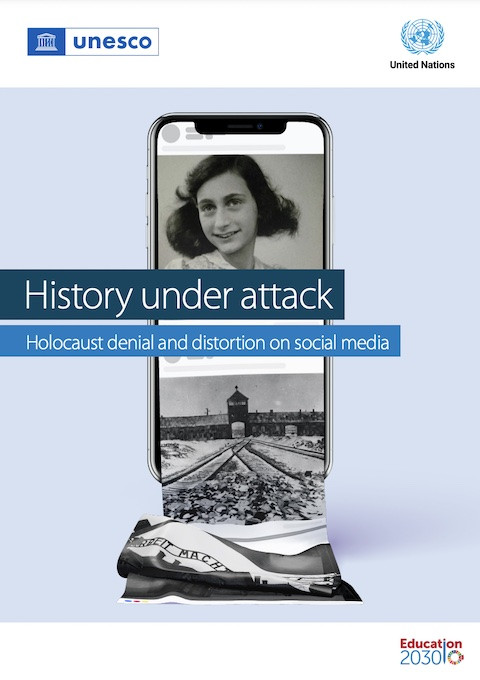 History Under Attack: Holocaust Denial and Distortion on Social Media Год публикации: 2022 Организация-автор: Организация Объединенных Наций по вопросам образования, науки и культуры (UNESCO) | United Nations (UN) Holocaust denial and distortion are dangerous. It is an attack on truth and knowledge. It feeds on and spreads antisemitic tropes and prejudices, and threatens our understanding of one of the most tragic and violent histories: The genocide of six million Jews by Nazi Germany, its allies and collaborators. In countries across Europe, people became complicit in the persecution and murder of their neighbours. Holocaust denial and distortion can prevent society from reckoning with this past. It impedes our comprehension of the causes and warning signs of genocide, and that might strengthen efforts for genocide prevention. It is insulting to the victims and survivors of the Holocaust, and risks the rehabilitation of violent, antisemitic ideologies. At its most extreme, it celebrates and glorifies this history, inciting violence against Jews and calling for another genocide. The United Nations and UNESCO condemn the rise of Holocaust denial and distortion online as a dangerous form of hatred, and commissioned this report in partnership with the World Jewish Congress to raise awareness of the forms and functions of Holocaust denial and distortion on social media, and determine a series of policy and educational responses. This report is a data-driven investigation into the extent and nature of Holocaust denial and distortion on online platforms. It is based on a manual review of almost 4,000 pieces of content collected in June and July 2021 that related to Jews, the Holocaust, antisemitism and Holocaust denial and distortion from five major online platforms and messenger apps. It looks at content posted on Facebook, Instagram, Telegram, TikTok and Twitter: some of the world’s largest online platforms and collectively home to billions of users. It addresses content in four different languages: English, French, Spanish and German, with the aim of providing a wide-ranging review that addresses multiple countries and contexts. This report aims to answer four questions:How much Holocaust-related content on social media either denies the Holocaust or distorts key elements of history?What are the key narratives in contemporary Holocaust denial and distortion?How are Holocaust denial and distortion communicated, and how are they situated within wider discourses and frames?What can online platform companies, policy-makers, educators and organizations promoting Holocaust remembrance, education and research do to tackle the problem? Based on the findings of this report, it provides a series of recommended actions that online platforms, policy-makers, civil society, researchers and educators can implement to prevent and counter Holocaust denial and distortion online.
  Los actores no estatales en la educación superior: ¿Una visión compartida de la calidad y la asequibilidad? (Policy Paper 47) Год публикации: 2022 Организация-автор: UNESCO Los actores no estatales acogen a más de un tercio del alumnado de educación superior en todo el mundo, un porcentaje considerablemente más elevado que en la educación primaria o secundaria. Los proveedores son diversos y responden a una variedad de necesidades, y a menudo no hay una división clara entre los sectores estatal y no estatal. Los actores no estatales son además protagonistas importantes en la financiación de la educación superior a través de los hogares, los mecanismos de mercado y las alianzas público-privadas. A raíz de ello, estos actores desempeñan un papel significativo e influyen en la elaboración de normativas y políticas, así como en la configuración del sistema de educación superior en su conjunto. Los gobiernos deben garantizar la calidad y equidad —las dimensiones clave de la meta 4.3 de los Objetivos de Desarrollo Sostenible (ODS)—, independientemente del modo en que los actores estatales y no estatales compartan responsabilidades.
 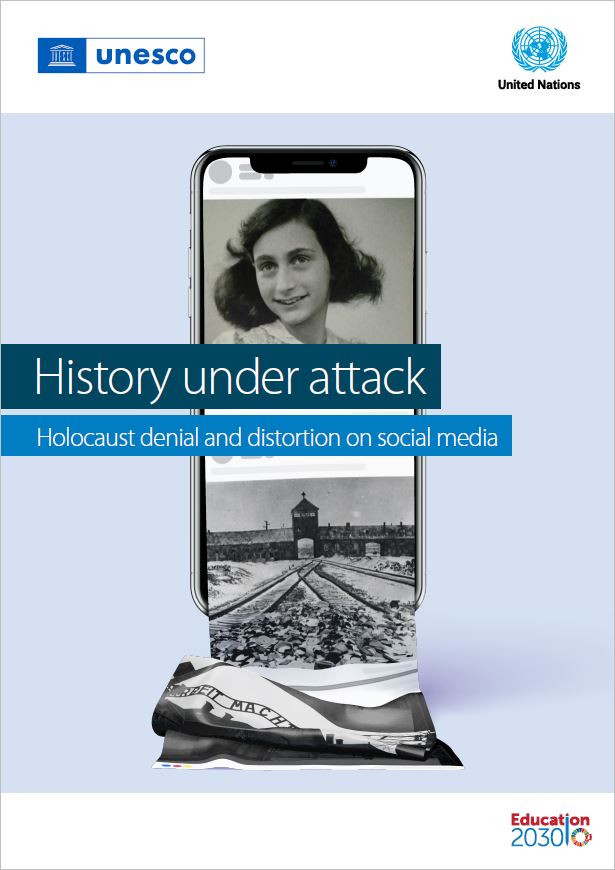 History Under Attack: Holocaust Denial and Distortion on Social Media Год публикации: 2022 Организация-автор: 联合国教科文组织 (UNESCO) | United Nations (UN) A new United Nations and UNESCO study together with the support of the World Jewish Congress investigates Holocaust denial and distortion on social media, measuring their extent and nature on Facebook, Instagram, Telegram, Twitter and TikTok, at a time when the memory and fundamental facts of the Holocaust are under threat from lies, smears and the spread of violent ideologies. It provides recommendations that governments, online platforms, educators and researchers can implement to counter denial and distortion, prevent antisemitism and uphold human rights.This report aims to provide a wide-ranging assessment of the extent to which Holocaust-related content on social media and online platforms denies its factual basis or distorts the Holocaust by minimizing or misrepresenting its history. The report seeks to identify content that has evaded content moderation (on platforms that seek to remove content which denies and distorts the Holocaust). Perhaps more importantly, it also aims to provide an understanding of how denial and distortion about the Holocaust are communicated by people on online platforms.
 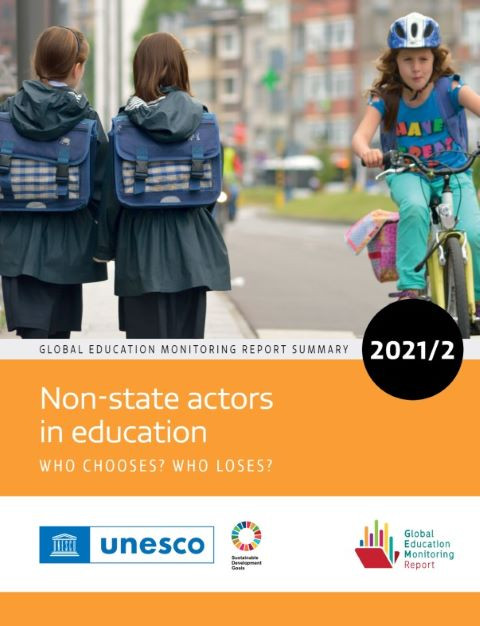 [Resumen] Informe de seguimiento de la educación en el mundo 2021/2: Los actores no estatales en la educación; ¿quién elige? ¿quién pierde? Год публикации: 2022 Организация-автор: UNESCO El papel de los actores no estatales se extiende más allá de la escolarización a las intervenciones en diferentes niveles educativos y esferas de influencia. Junto con su revisión del progreso hacia el ODS 4, incluida la evidencia emergente sobre el impacto de la pandemia de COVID-19, el Informe de Seguimiento de la Educación en el Mundo 2021/2 insta a los gobiernos a considerar a todas las instituciones, estudiantes y docentes como parte de un solo sistema. Los estándares, la información, los incentivos y la rendición de cuentas deberían ayudar a los gobiernos a proteger, respetar y cumplir el derecho a la educación para todos, sin apartar la vista de los privilegios o la explotación. La educación financiada por el estado no tiene que ser proporcionada por el estado, pero se debe abordar la disparidad en los procesos educativos, los resultados de los estudiantes y las condiciones de trabajo de los maestros. La eficiencia y la innovación, en lugar de ser secretos comerciales, deben ser compartidos y practicados por todos. Con este fin, se debe mantener la transparencia e integridad del proceso de formulación de políticas de educación pública para bloquear los intereses creados. El grito de guerra del informe: ¿Quién elige? ¿Quién pierde? – invita a los responsables de la toma de decisiones políticas a cuestionar las relaciones con los actores no estatales en términos de elecciones fundamentales: entre equidad y libertad de elección; entre fomentar la iniciativa y establecer estándares; entre grupos de diferentes medios y necesidades; entre los compromisos inmediatos bajo el ODS 4 y los que se lograrán gradualmente (por ejemplo, educación postsecundaria); y entre la educación y otros sectores sociales. [Résumé] Rapport mondial de suivi sur l’éducation, 2021-2022: Les acteurs non étatiques dans l’éducation; Qui décide? qui est perdant? Год публикации: 2022 Организация-автор: UNESCO Le rôle des acteurs non étatiques s'étend au-delà de la scolarisation à des interventions à différents niveaux d'éducation et sphères d'influence. Parallèlement à son examen des progrès vers l'ODD 4, y compris les preuves émergentes sur l'impact de la pandémie de COVID-19, le Rapport mondial de suivi sur l'éducation 2021/2 exhorte les gouvernements à considérer tous les établissements, étudiants et enseignants comme faisant partie d'un système unique. Les normes, l'information, les incitations et la responsabilité devraient aider les gouvernements à protéger, respecter et réaliser le droit à l'éducation de tous, sans détourner les yeux des privilèges ou de l'exploitation. L'éducation financée par l'État n'a pas à être fournie par l'État, mais la disparité dans les processus éducatifs, les résultats des élèves et les conditions de travail des enseignants doit être abordée. L'efficacité et l'innovation, plutôt que d'être des secrets commerciaux, doivent être diffusées et pratiquées par tous. À cette fin, la transparence et l'intégrité du processus d'élaboration des politiques d'éducation publique doivent être maintenues pour bloquer les intérêts acquis. Le cri de ralliement du rapport – Qui choisit ? Qui perd ? – invite les décideurs politiques à questionner les relations avec les acteurs non étatiques en termes de choix fondamentaux : entre équité et liberté de choix ; entre l'incitation à l'initiative et l'établissement de normes ; entre des groupes aux moyens et aux besoins variés ; entre les engagements immédiats au titre de l'ODD 4 et ceux à concrétiser progressivement (par exemple, l'enseignement postsecondaire) ; et entre l'éducation et les autres secteurs sociaux.