
Ресурсы
Изучайте широкий спектр ценных ресурсов ВГГ, чтобы углубить своё понимание и повысить эффективность исследований, просветительской деятельности, преподавания и обучения.
Найдено: 950
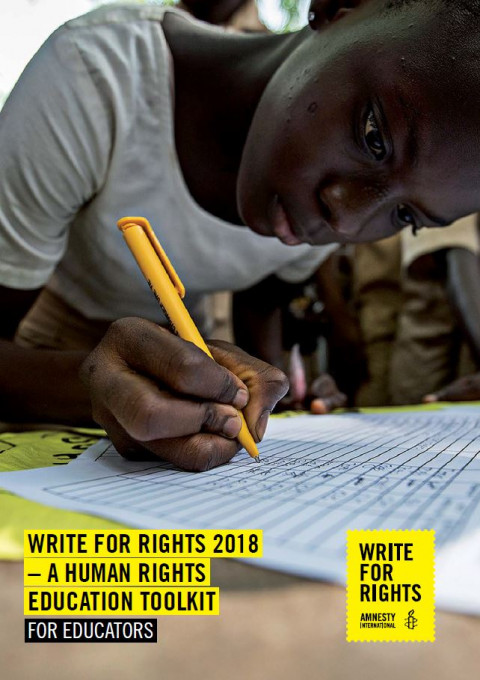 Escribe por los derechos 2018: Carpeta de materiales de educación en derechos humanos para educadores/as Год публикации: 2018 Организация-автор: Amnesty International La campaña anual Escribe por los Derechos es uno de los mayores eventos de derechos humanos de Amnistía Internacional. En 2018, la campaña se centra en defensoras de los derechos humanos que han sufrido violaciones de derechos humanos o corren grave riesgo a causa de la postura que han adoptado respecto a ciertas cuestiones de derechos humanos.Esta carpeta de materiales de Educación en Derechos Humanos se creó para ayudar a profesores y profesoras a participar con sus estudiantes en la campaña Escribe por los Derechos. Ofrece una amplia perspectiva de cuestiones de derechos humanos y brinda la oportunidad de abrir la mente de los y las jóvenes a cuestiones de preocupación mundiales. Al aprender sobre estas cuestiones y escribir cartas convincentes para ayudar a poner fin a las violaciones de derechos humanos y lograr justicia, los profesores y profesoras y sus estudiantes contribuyen al movimiento internacional de derechos humanos y ven con sus propios ojos cómo las palabras pueden hacer cambiar las cosas en el mundo.Esta carpeta se creó para estudiantes de a partir de 13 años y está concebida principalmente para utilizarla en un entorno escolar: tanto dentro del aula como en clubes o eventos de toda la escuela. Las actividades también se pueden adaptar para utilizarlas en otros contextos de educación no formal, como grupos de jóvenes y entornos comunitarios. La carpeta contiene actividades generales sobre derechos humanos y destaca el caso de seis defensoras de los derechos humanos de la campaña Escribe por los Derechos que han hecho contribuciones extraordinarias al progreso de los derechos humanos en todo el mundo.
 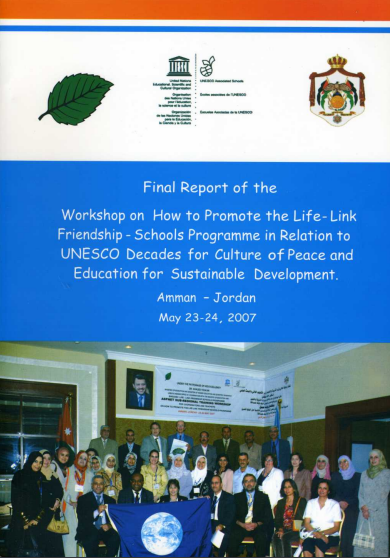 Final report of the workshop on how to promote the life-link friendship-schools programme in relation to UNESCO decades for culture of peace and education for sustainable development, Amman, Jordan, May 23-24, 2007 Год публикации: 2007 Организация-автор: UNESCO Amman This chapter provides a brief summary of the speeches presented at the official opening and closing ceremonies as well as presentations delivered by the experts of Life-Link and UNESCO staff at the two day workshop The sub-regional workshop for ASPnet National Coordinators and Life-Link Friendship Schools Programme, organized in close collaboration with the Ministry of Education, was constructed according to the following format: (i). An organizing Committee was formed comprising of staff from the Ministry of Education and UNESCO Amman Office and Chairperson of Life-Link Programme. The committee oversaw the organization, preparation of documentation, venue, draft agenda, logistic and procedural aspects of the workshop. (ii). The selection of participants for the workshop was done by the National Commissions for UNESCO to Lebanon, Palestine, Iraq, Egypt, Oman and Jordan. The participating Arab Countries were selected by UNESCO Office-Amman and Life-Link. (iii).The selected participants comprised the National Coordinators and teachers for ASPnet in their countries. A member from Life-Link in Jordan was invited as an observer for the workshop. (iv).The resource persons (trainers) for the workshop were carefully selected on the basis of their expertise, experience and relevance to the main subjects of the workshop. The experts came from the Ministry of Education, Life-Link, UNESCO and UNRWA. (v). The format of the workshop was basically structured to firstly provide an overview and background of the Life-Link Friendship Schools Programme and ASPnet, followed by experts' presentations relevant to the main subjects of Life-Link Programme. The workshop also had three sessions of discussion on the different aspects of Life Link Programme. Participants were circulated to these sessions one after another. The workshop also had a session on how to plan for implementing peace actions as Extra Curricula Activities in schools. (vi). The ASPnet national workshop was organized under the patronage of his Excellency Dr. Khaled Toukan, the Minister of Education and the Minister of Higher Education & Scientific Research and Chairman of the Jordan National Commission for UNESCO. Rapport final de l'atelier sur la façon de promouvoir le programme de liaison de vie amitié écoles par rapport aux décennies UNESCO pour la culture de la paix et de l'éducation pour le développement durable, Amman, Jordanie, 23 au 24 mai 2007 Год публикации: 2007 Организация-автор: UNESCO Amman Ce chapitre présente un bref résumé des discours présentés lors de l'ouverture officielle et de clôture ainsi que les présentations faites par les experts de Life-Link et personnel de l'UNESCO à l'atelier de deux jours. L'atelier sous-régional pour réseau des coordonnateurs nationaux et de Life-Link Programme des Écoles Amitié, organisée en étroite collaboration avec le Ministère de l'éducation, a été construit selon le format suivant: (i). Un comité d'organisation a été formé, comprenant des membres du personnel du ministère de l'Education et le Bureau UNESCO à Amman et présidente programme Life-Link. Le comité a supervisé l'organisation, la préparation de la documentation, le lieu, le projet de l'ordre du jour, la logistique et les aspects procéduraux de l'atelier. (Ii). La sélection des participants de l'atelier a été fait par les Commissions nationales pour l'UNESCO au Liban, en Palestine, en Irak, en Egypte, à Oman et en Jordanie. Les pays arabes participants ont été sélectionnés par l'UNESCO Bureau-Amman et Life-Link. (Iii). Les participants sélectionnés comprennent les coordonnateurs nationaux et les enseignants pour Réseau dans leur pays. Un membre de la Life-Link en Jordanie a été invité à titre d'observateur à l'atelier. (Iv). Les personnes ressources (formateurs) pour l'atelier ont été soigneusement sélectionnés sur la base de leur expertise, de l'expérience et de la pertinence des principaux sujets de l'atelier. Les experts provenaient du ministère de l'Education, Life-Link, l'UNESCO et l'UNRWA. (V). Le format de l'atelier a été essentiellement structuré pour fournir d'abord une vue d'ensemble et contexte de Life-Link Programme Amitié Ecoles et Reseau, suivie par les présentations des experts compétents pour les sujets principaux programme Life-Link de. L'atelier a également eu trois séances de discussion sur les différents aspects du Programme Life Link. Les participants ont été distribués à ces sessions un après l'autre. L'atelier a également eu une séance sur la façon de planifier la mise en œuvre des actions de paix en tant Activités extra curricula dans les écoles. (Vi). L'atelier national a été organisé reseau sous le patronage de son excellence Dr. Khaled Toukan, Ministre de l'Éducation et le Ministre de l'Enseignement Supérieur et de la Recherche et Président de la Commission Nationale Jordanienne pour l'UNESCO Scientifique.
  Address by Irina Bokova, Director-General of UNESCO, on the occasion of the Conference: Victims of ethnic and religious violence in the Middle East, Protecting and promoting plurality and diversity; Madrid, 24 May 2017 Год публикации: 2017 Организация-автор: UNESCO. Director-General, 2009-2017 (Bokova, I.G.) This address was presented by Irina Bokova, Director-General of UNESCO, on the occasion of the Victims of Ethnic and Religious Violence conference in the Middle East for protecting and promoting plurality and diversity جهانی شدن و ضرورت آموزشهای شهروندی جهانی Год публикации: 2012 Автор: Yousef Keshavarz Организация-автор: Center for Strategic Studies of the Presidency Today, due to “Globalization”, the fate of all individuals, organizations and governments are more tied together and effects of this process in all areas of human activity is undeniable. By looking at the concept of “Global Citizenship” new expectations of education as a meaningful factor to people’s lives and a tool to develop human character and supplying the social needs, is formed. This paper aims to examine and discuss the characteristics and components of global citizenship, the role, importance and necessity of global citizenship education. If we accept that the current use of existing resources in the world is unfair and unacceptable and the gap between rich and poor (in all aspects) wide and widens, should ponder choice. Training and education of global citizens (especially children and young people) who wish the world as a place full of justice, equality, peace and sustainable development, respect and protection of racial diversity, religious etc… and also possess other characteristic features addressed in this paper seems to be a powerful tool and solution. In this frame work, poverty and identity crisis of Iranian youth and in the other hand being attracted to the Globalization culture of outsiders, are two points that reveal the necessity for paying more attention to the training of global citizens, to adopt a broad and enormous prospective to the global issues. Therefore, according to the valuable Islamic texts and outlined prominent place for human beings and human values, also with consideration to the rich Iranian culture and civilization in direction with an active role in global co-management, living such training in formal and informal education system and also establishment of a center as such in partnership and cooperation with other educational institutions in the country is suggested. جهانی شدن و ضرورت آموزشهای شهروندی جهانی Год публикации: 2012 Автор: Yousef Keshavarz Организация-автор: Center for Strategic Studies of the Presidency Aujourd'hui, en raison de «mondialisation», le sort de tous les individus, les organisations et les gouvernements sont plus attachés ensemble et les effets de ce processus dans tous les domaines de l'activité humaine est indéniable. En regardant le concept de "citoyenneté mondiale" nouvelles attentes de l'éducation comme facteur significatif pour la vie des gens et un outil pour développer le caractère humain et de fournir les besoins sociaux, est formé. Ce document vise à examiner et discuter des caractéristiques et des composantes de la citoyenneté mondiale, le rôle, l'importance et la nécessité de l'éducation à la citoyenneté mondiale.Si nous aCECptons que l'utilisation actuelle des ressources existantes dans le monde est injuste et inaCECptable, et l'écart entre les riches et les pauvres (dans tous les aspects) de large et élargit, devraient méditer choix. La formation et l'éducation des citoyens du monde (en particulier les enfants et les jeunes) qui souhaitent le monde comme un lieu plein de la justice, l'égalité, la paix et le développement durable, le respect et la protection de la diversité raciale, religieuse, etc ... et aussi possèdent d'autres caractéristiques abordées dans le présent papier semble être un outil et une solution puissante. Dans ce cadre de travail, la pauvreté et la crise de la jeunesse iranienne et dans l'autre main identité étant attirés par la culture de la mondialisation de l'extérieur, sont deux points qui révèlent la nécessité d'accorder plus d'attention à la formation des citoyens du monde, d'adopter une vaste et énorme prospective aux enjeux mondiaux. Par conséquent, selon les textes islamiques et une grande place de premier plan décrit pour les êtres humains et les valeurs humaines, également avec considération à la culture iranienne riche et la civilisation dans le sens d'un rôle actif dans la co-gestion globale, vivant une telle formation dans le système éducatif formel et informel et également la création d'un centre en tant que tel en partenariat et de coopération avec d'autres établissements d'enseignement dans le pays est suggéré.
  The Contribution of University Education to Instilling the Concept of Citizenship among Students at the Algerian University (vol.17, no.3; Journal of human resources development) Год публикации: 2022 Автор: Maarcha Dalila Организация-автор: University Mohamed Lamine Debaghine - Setif2 University education endeavors to equip students with the necessary skills and knowledge in scientific research and various disciplines, enabling them to confront the economic, social, and cultural challenges of life. The primary objective of university education is to fulfill societal needs for skilled human resources capable of contributing to societal development and keeping pace with global advancements in education and knowledge. In alignment with this, the University of Algeria aims to instill principles and values of citizenship among its students through its curricula and programs. It aims to foster a sense of belonging and patriotism, as well as to nurture national identity, thereby facilitating the holistic development of students across all dimensions. مساهمة التعليم الجامعي في غرس مفهوم المواطنة لدى الطلبة في الجامعة الجزائرية (vol.17, no.3 مجلة تنمية الملوارد البشرية) Год публикации: 2022 Автор: Maarcha Dalila Организация-автор: University Mohamed Lamine Debaghine - Setif2 يسعى التعليم الجامعي إلى إعداد الطلاب وتنمية قدراتهم في مجال البحث العلمي، وتكوينهم في مجالات التخصصات المختلفة لتحمل ومواجهة مسؤوليات الحياة الاقتصادية والاجتماعية والثقافية، فالهدف الرئيسي للتعليم الجامعي هو تلبية حاجات المجتمع من الموارد البشرية المؤهلة للقيام بدورها التنموي في المجتمع، وتساير التطورات الحديثة في القطاع أي عولمة التعليم والمعرفة، وتمثلت نتائج الدراسة الحالية في ان البرامج الجامعية المدرسة تسعى إلى زرع مبادئ وقيم المواطنة لدى طلبة الجامعة في ميدان العلوم الاجتماعية تخصص علم النفس وعلوم التربية ، والى تعميق روح الانتماء والولاء للوطن وترسيخ الهوية الوطنية في نفوسهم قصد التنمية المتكاملة لشخصياتهم في جوانبها المختلفة، ويبقى نجاحه مرهون بكفاءات طرائق التدريس ونجاعتها.
 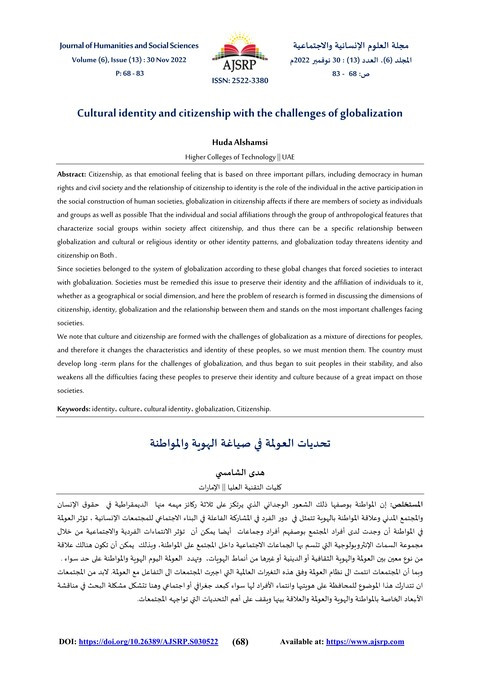 Cultural Identity and Citizenship With the Challenges of Globalization (Journal of Humanities and Social Sciences; Vol.6, No.13) Год публикации: 2022 Автор: Huda Alshamsi Организация-автор: Arab Institute of Science and Research Publishing (AISRP) Citizenship is the emotional feeling that is based on three important pillars, including democracy in human rights, civil society, and the relationship between citizenship and identity, is manifested in the active role of individuals in social construction within human societies. Globalization affects citizenship when it exists among individuals and groups in society. Individual and social affiliations, characterized by anthropological features within social groups, can also impact citizenship. Thus, there may be a specific relationship between globalization and cultural, religious, or other identity patterns. Today, globalization threatens both identity and citizenship. As societies adapt to the global system through these global changes that force interaction with globalization, it becomes essential for communities to address this issue to preserve their identity and individual belonging, whether geographically or socially. This forms the basis for researching the dimensions related to citizenship, identity, globalization, and their interrelationships, which pose significant challenges for societies. تحديات العولمة في صياغة الهوية والمواطنة (مجلة العلوم الإنسانية والإجتماعية; Vol. 6, No. 13) Год публикации: 2022 Автор: Huda Alshamsi Организация-автор: Arab Institute of Science and Research Publishing (AISRP) إن المواطنة بوصفها ذلك الشعور الوجداني الذي يرتكز على ثلاثة ركائز مهمه منها الديمقراطية في حقوق الإنسان والمجتمع المدني وعلاقة المواطنة بالهوية تتمثل في دور الفرد في المشاركة الفاعلة في البناء الاجتماعي للمجتمعات الإنسانية ، تؤثر العولمة في المواطنة أن وجدت لدى أفراد المجتمع بوصفهم أفراد وجماعات أيضا يمكن أن تؤثر الانتماءات الفردية والاجتماعية من خلال مجموعة السمات الإنثروبولوجية التي تتسم بها الجماعات الاجتماعية داخل المجتمع على المواطنة، وبذلك يمكن أن تكون هنالك علاقة من نوع معين بين العولمة والهوية الثقافية أو الدينية أو غيرها من أنماط الهويات، وتهدد العولمة اليوم الهوية والمواطنة على حد سواء . وبما أن المجتمعات انتمت الى نظام العولمة وفق هذه التغيرات العالمية التي اجبرت المجتمعات الى التفاعل مع العولمة. لابد من المجتمعات ان تتدارك هذا الموضوع للمحافظة على هويتيها وانتماء الأفراد لها سواء كبعد جغرافي أو اجتماعي وهنا تتشكل مشكلة البحث في مناقشة الأـبعاد الخاصة بالمواطنة والهوية والعولمة والعلاقة بينها ويقف على أهم التحديات التي تواجهه المجتمعات.