
Ресурсы
Изучайте широкий спектр ценных ресурсов ВГГ, чтобы углубить своё понимание и повысить эффективность исследований, просветительской деятельности, преподавания и обучения.
Найдено: 875
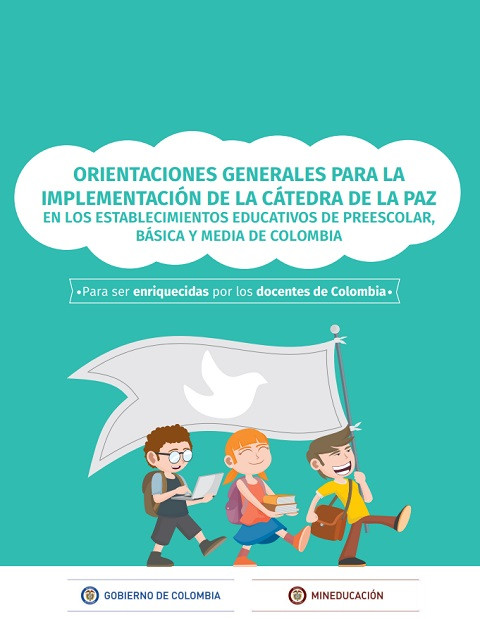 General Guidelines for the Implementation of the Peace Class in Preschool, Elementary and Middle School in Colombia Год публикации: 2016 Автор: Enrique Chaux | Ana María Velásquez Организация-автор: Colombia. Ministerio de Educación Nacional This document presents the general guidelines for educational communities in Colombia to carry out their peace education projects within the framework of the Peace Law. Orientaciones generales para la implementación de la cátedra de la paz: En los establecimientos educativos de preescolar, básica y media de colombia Год публикации: 2016 Автор: Enrique Chaux | Ana María Velásquez Организация-автор: Colombia. Ministerio de Educación Nacional En este documento se presentan las orientaciones generales para que las comunidades educativas de Colombia puedan llevar a cabo sus proyectos de educación para la paz en el marco de la cátedra para la paz.
  IEA 국제시민 교육연구의 초기 결과 Год публикации: 2010 Автор: Wolfram Schulz | John Ainley | Julian Fraillon | David Kerr | Bruno Losito Организация-автор: International Association for the Evaluation of Educational Achievement (IEA) 국제시민교육연구(ICCS)는 시민으로서 자신의 역할을 수행하기 위해서 국가가 그들의 젊은이들을 준비시키는 방법에 대한 연구를 하였다. 여기에서는 학생들의 태도와 인식, 그리고 시민의식 및 시민권과 관련된 그들의 활동과 더불어 학생들의 시민의식과 시민권에 대한 이해와 지식에 대한 조사를 하였다. 또한, 시민교육의 결과와 관련된 국가 간의 차이를 조사하고, 그러한 차이가 학생의 특성, 학교 및 지역사회의 상황, 국가의 특성 사이에서 어떻게 다른가도 탐구하였다. 국제시민교육연구(ICCS)는 다음과 관련된 여섯 가지 연구 문제를 고려한다. 1. 시민 지식의 변화 2. 1999년 이래 교과 지식의 변화 3. 공적이고 정치적인 생활에 참여하는 것에 대한 학생의 관심도 및 실제적 이행 4. 시민 사회를 위협하는 것에 대한 인식 5. 시민교육과 관련된 교실과 학교, 교육 시스템의 특징 6. 시민교육의 결과와 관련된 학생의 배경 국제시민교육연구(ICCS)는 38개국 5,300개 이상의 학교에서 8학년(혹은 동급)의 14만면 이상의 학생들로부터 데이터를 수집하였다. 그리고 이 학생 데이터는 국립 연구 센터와 학교장이 수집한 상황별 데이터와 해당 학교 내 62,000명 이상의 교사들에 의해 증강되었다. 시민교육의 제공에 관한 다른 접근 방법은 국제시민교육연구(ICCS) 국가에서 분명히 드러났다. 이 접근 방식은 특정 주제를 가진 다른 과목과 연관된 콘텐츠를 통합하고, 상호 교육 과정을 테마로 하는 내용이 포함되어 있다. ICSS 38개국 중 21개 국가에서 그들의 교과 과정에 시민교육과 관련된 특정 주제를 포함시켰다. 시민교육은 사회, 지역 커뮤니티의 응집력, 다양성, 환경, 커뮤니케이션, 글로벌 사회와같은 새로운 주제 뿐만 아니라, 인권과 같은 정치적 개념의 이해와 지식을 포함한 폭넓은 범위의 주제도 아우르고 있다.
  Resultados iniciales del estudio Internacional de educación cívica y ciudadana de la IEA Год публикации: 2010 Автор: Wolfram Schulz | John Ainley | Julian Fraillon | David Kerr | Bruno Losito Организация-автор: International Association for the Evaluation of Educational Achievement (IEA) The International Civic and Citizenship Education Study (ICCS) studied the ways in which countries prepare their young people to undertake their roles as citizens. It investigated student knowledge and understanding of civics and citizenship as well as student attitudes, perceptions, and activities related to civics and citizenship. It also examined differences among countries in relation to these outcomes of civic and citizenship education, and it explored how differences among countries relate to student characteristics, school and community contexts, and national characteristics. ICCS considered six research questions concerned with the following:1. Variations in civic knowledge;2. Changes in content knowledge since 1999;3. Student interest in engaging in public and political life and their disposition to do so;4. Perceptions of threats to civil society;5. Features of education systems, schools, and classrooms related to civic and citizenship education; and6. Aspects of student background related to the outcomes of civic and citizenship education.ICCS gathered data from more than 140,000 Grade 8 (or equivalent) students in over 5,300 schools from 38 countries. These student data were augmented by data from more than 62,000 teachers in those schools and by contextual data collected from school principals and the study’s national research centers. Different approaches to provision of civic and citizenship education were evident in the ICCS countries. These approaches included having a specific subject, integrating relevant content into other subjects, and including content as a cross-curricular theme. Twenty-one of the 38 countries in ICCS included a specific subject concerned with civic and citizenship education in their curriculum. Civic and citizenship education covered a wide range of topics, including knowledge and understanding of political institutions and concepts, such as human rights, as well as newer topics covering social and community cohesion, diversity, the environment, communications, and global society. Initial findings from the IEA international civic and citizenship education study Год публикации: 2010 Автор: Wolfram Schulz | John Ainley | Julian Fraillon | David Kerr | Bruno Losito Организация-автор: International Association for the Evaluation of Educational Achievement (IEA) The International Civic and Citizenship Education Study (ICCS) studied the ways in which countries prepare their young people to undertake their roles as citizens. It investigated student knowledge and understanding of civics and citizenship as well as student attitudes, perceptions, and activities related to civics and citizenship. It also examined differences among countries in relation to these outcomes of civic and citizenship education, and it explored how differences among countries relate to student characteristics, school and community contexts, and national characteristics. ICCS considered six research questions concerned with the following:1. Variations in civic knowledge;2. Changes in content knowledge since 1999;3. Student interest in engaging in public and political life and their disposition to do so;4. Perceptions of threats to civil society;5. Features of education systems, schools, and classrooms related to civic and citizenship education; and6. Aspects of student background related to the outcomes of civic and citizenship education.ICCS gathered data from more than 140,000 Grade 8 (or equivalent) students in over 5,300 schools from 38 countries. These student data were augmented by data from more than 62,000 teachers in those schools and by contextual data collected from school principals and the study’s national research centers. Different approaches to provision of civic and citizenship education were evident in the ICCS countries. These approaches included having a specific subject, integrating relevant content into other subjects, and including content as a cross-curricular theme. Twenty-one of the 38 countries in ICCS included a specific subject concerned with civic and citizenship education in their curriculum. Civic and citizenship education covered a wide range of topics, including knowledge and understanding of political institutions and concepts, such as human rights, as well as newer topics covering social and community cohesion, diversity, the environment, communications, and global society. Les premiers résultats de l'étude de l'éducation civique et à la citoyenneté internationale AIE Год публикации: 2010 Автор: Wolfram Schulz | John Ainley | Julian Fraillon | David Kerr | Bruno Losito Организация-автор: International Association for the Evaluation of Educational Achievement (IEA) La Civic Internationale et la Citoyenneté Étude sur l'Éducation (CICÉ) ont étudié les façons dont les pays préparent leurs jeunes à assumer leur rôle en tant que citoyens. Il a étudié les connaissances des élèves et la compréhension de l'éducation civique et la citoyenneté ainsi que les attitudes des élèves, les perceptions et les activités liées à l'éducation civique et la citoyenneté. Il a également examiné les différences entre les pays par rapport à ces résultats de l'éducation civique et à la citoyenneté, et il a exploré comment les différences entre les pays se rapportent aux caractéristiques des élèves, des contextes scolaires et communautaires, et des caractéristiques nationales. CICÉ a examiné six questions de recherche concernés par les suivants: 1. Les variations de connaissances civiques; 2. Modifications de contenu des connaissances depuis 1999; 3. l'intérêt des étudiants dans l'engagement dans la vie publique et politique et leur disposition à le faire; 4. Les perceptions des menaces pour la société civile; 5. Caractéristiques des systèmes d'éducation, les écoles et les salles de classe liées à l'éducation civique et à la citoyenneté; et 6. Les aspects de fond de l'étudiant en rapport avec les résultats de l'éducation civique et à la citoyenneté. CICÉ a recueilli des données provenant de plus de 140.000 8 e année (ou l'équivalent) étudiants dans plus de 5300 écoles de 38 pays. Ces données sur les élèves ont été complétées par des données provenant de plus de 62.000 enseignants dans les écoles et par des données contextuelles recueillies auprès des directeurs d'écoles et de centres de recherche nationaux de l'étude. Différentes approches de l'éducation civique et à la citoyenneté étaient évidentes dans les pays CICÉ. Parmi ces approches ayant un sujet spécifique, intégrant un contenu pertinent dans d'autres matières, et y compris le contenu en tant que thématique transversale. Vingt et un des 38 pays de CICÉ inclus un sujet spécifique concerné par l'éducation civique et à la citoyenneté dans leur curriculum. Éducation civique et à la citoyenneté ont couvert un large éventail de sujets, y compris la connaissance et la compréhension des institutions et des concepts politiques, tels que les droits de l'homme, ainsi que de nouveaux sujets couvrant la cohésion sociale et de la communauté, la diversité, l'environnement, les communications, et de la société mondiale.
  Educational Contexts, Feminism and Gender identities of Adolescents from a Rural Mayan Town in Yucatan (Iberoamerican Journal of Education; vol. 89, no. 1) Год публикации: 2022 Автор: Silvia Montejo Murillo Организация-автор: Organization of Ibero-American States for Education, Science and Culture (OEI) The purpose of this article is to compare and explore the gender identity of adolescent women from a rural Mayan locality, from two of their educational contexts: the telesecundaria school and daily life in the community. Interviews and participant observation were used to obtain qualitative primary data. Among the main findings, it stands out that the institutional structure and rigidity of the school limits adolescents from being able to act at certain times from social attributes different from those offered by their locality. Likewise, the school contributed to the individualization of the participants and trained them to have foreign values as a desirable representation of “development”, aspects that do not necessarily contribute to the idea of “community”. Contextos educativos, educación e identidades de género de adolescentes de una localidad rural maya en Yucatán (Revista Ibero-americana de Educação; vol. 89, núm. 1) Год публикации: 2022 Автор: Silvia Montejo Murillo Организация-автор: Organización de Estados Iberoamericanos para la Educación, la Ciencia y la Cultura (OEI) El propósito de este artículo es comparar y explorar la identidad de género de mujeres adolescentes de una localidad rural maya, desde dos de sus contextos educativos: la escuela telesecundaria y la vida cotidiana en la comunidad. Se utilizaron entrevistas y observación participante para obtener los datos primarios cualitativos. Entre los principales hallazgos se destaca, que la estructura y rigidez institucional de la escuela, limita a las adolescentes poder actuar en ciertos momentos desde atributos sociales distintos a los que les ofrece su localidad. Asimismo, la escuela contribuyó a la individualización de las participantes y las formó para tener como representación deseable del “desarrollo” los valores del exterior, aspectos que no contribuyen necesariamente a la idea de “comunidad”.
  Public Policies on Gender Equality in Latin America and the Caribbean in the 21st Century: New Protagonisms and Old Dilemmas in Times of Uncertainty Год публикации: 2023 Автор: Cinthya Fernández Lépiz | Esteban Zolezzi Организация-автор: Latin American Council of Social Sciences (CLACSO) The III Report of FLACSO on Gender Issues is the result of a collaborative process among the Academic Units of FLACSO. Its chapters aim to identify the main challenges in each country regarding gender equality in the early 21st century and engage them in a dialogue with contributions from the academic community of FLACSO. They seek to provide a general characterization of each country, analyze the main challenges in terms of gender equality, as well as the critical contributions and limitations raised by gender and feminist studies in conjunction with the contributions made by FLACSO. Políticas públicas de igualdad de género en América Latina y el caribe en el siglo XXI: Nuevos protagonismos y viejos dilemas en tiempos de incertidumbre. Год публикации: 2023 Автор: Cinthya Fernández Lépiz | Esteban Zolezzi Организация-автор: Latin American Council of Social Sciences (CLACSO) El III Informe Regional de la FLACSO sobre el tema de Género es el resultado de un proceso colaborativo entre las Unidades Académicas de la FLACSO. Sus capítulos se proponen identificar cuáles son las principales problemáticas en cada país en materia de igualdad en el comienzo del siglo XXI y ponerlas en diálogo con los aportes que se vienen realizando desde la comunidad académica de FLACSO. Procuran dar cuenta de una caracterización general de cada uno de los países, el análisis de las principales problemáticas que se presentan en materia de igualdad de género, así como los aportes críticos y limitaciones que se plantean desde los estudios de género y feministas con los aportes realizados desde la FLACSO.