
Ресурсы
Изучайте широкий спектр ценных ресурсов ВГГ, чтобы углубить своё понимание и повысить эффективность исследований, просветительской деятельности, преподавания и обучения.
Найдено: 1,727
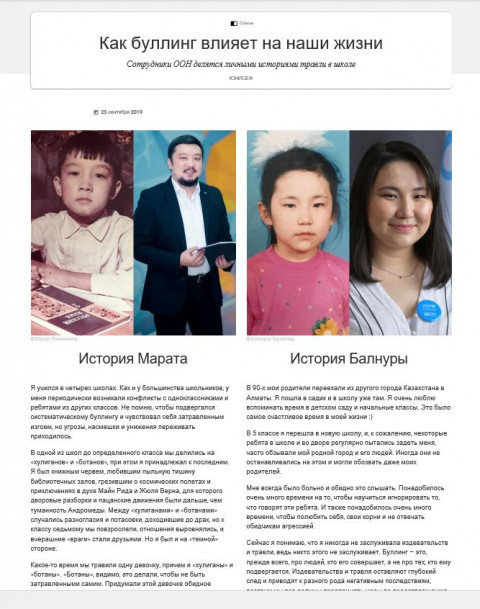 Как буллинг влияет на наши жизни Год публикации: 2019 Организация-автор: UNICEF Kazakhstan В данной статье сотрудники ООН делятся личными историями травли в школе.
  Accountability for Gender Equality Год публикации: 2018 Автор: Elaine Unterhulter | Amy North | Orlanda Ward The aim of this paper is to consider approaches to understanding and evaluating accountability in education from the perspective of concerns with gender equality in education. This task has a number of facets and complexities, because ‘gender’ is not one simple set of relationships, and the notion of gender equality in education can be read in a number of different ways. Thus developing adequate conceptualizations for the key terms (accountability, and gender equality and education) needs to take account of gender as a particularly fluid, contextually located and contested idea signaling processes, which link with different formulations of policy and practice to enhance gender equality and accountability in education.In this paper we look at a range of different meanings of accountability, distilled in the main GEM Report (UNESCO, 2017) and consider their implications in relation to debates about gender and gender equality in education. The aim of the paper is to develop a ‘bespoke’ interpretation of accountability and different forms of gender equality in education through which we can assess a number of research studies and country examples of forms of accountability.This paper is also background paper prepared for the 2018 Global education monitoring report gender review: Meeting our commitments to gender equality in education.
 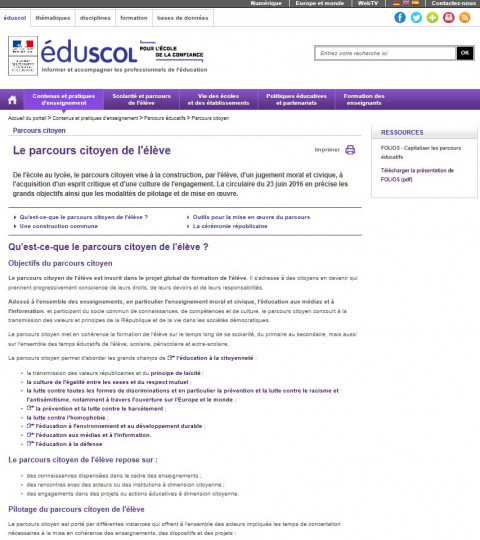 Le parcours citoyen de l'élève Год публикации: 2016 Организация-автор: éducscol De l'école au lycée, le parcours citoyen vise à la construction, par l'élève, d'un jugement moral et civique, à l'acquisition d'un esprit critique et d'une culture de l'engagement. La circulaire du 23 juin 2016 en précise les grands objectifs ainsi que les modalités de pilotage et de mise en œuvre. Qu'est-ce-que le parcours citoyen de l'élève ? Une construction commune Outils pour la mise en œuvre du parcours La cérémonie républicaine
  La fondation Zentrum fir politesch Bildung : Un centre pour l’éducation à la citoyenneté Год публикации: 2016 Организация-автор: Fondation Zentrum fir politesch Bildung | Le Gouvernement du Grand-Duché de Luxembourg L’éducation à la citoyenneté fait partie des priorités du gouvernement dans le cadre de la politique éducative. Il s’agit de préparer le citoyen, durant son enfance et sa jeunesse, à la transition vers sa vie d’adulte responsable, capable de participer activement à une société en constante évolution, en faisant preuve de tolérance, de respect et d’esprit critique.Le gouvernement a opté pour la création d’une structure indépendante, chargée d’élaborer les concepts pour une éducation à la citoyenneté, tant à l’école que dans les structures d’accueil, de centraliser les efforts, de développer des offres pédagogiques, de mettre en place des campagnes d’information et de promouvoir la compréhension de la démocratie et la participation politique des enfants et des jeunes, …Ce Centre pour l’éducation à la citoyenneté - Zentrum fir politesch Bildung – prend la forme d’une fondation de droit privé afin de garantir son autonomie.
 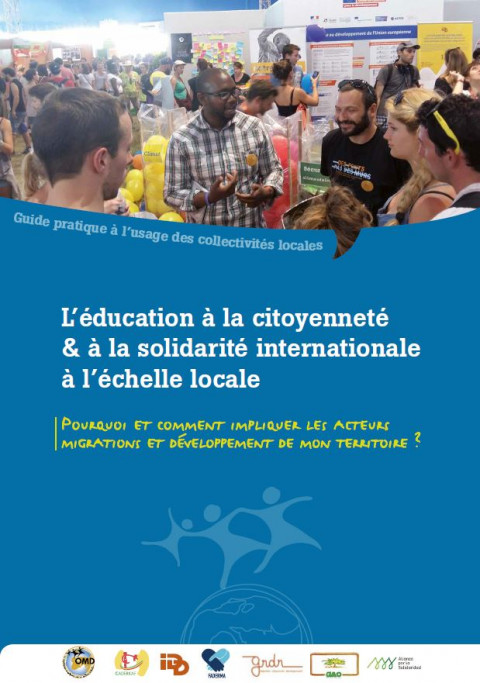 L’éducation à la citoyenneté & à la solidarité internationale à l’échelle locale : Guide pratique à l’usage des collectivités locales Организация-автор: Les OMD pour les OMD Dans le cadre du programme « les OMD pour les OMD », le Grdr et ses partenaires ont édité un guide présentant l’offre d’Education à la Citoyenneté et à la Solidarité Internationale (EADSI) portée par les acteurs migrations & développement. Il est prioritairement destiné aux collectivités territoriales et à tous les acteurs locaux engagés dans la solidarité internationale qui souhaitent mobiliser les associations de migrants. Ce guide a été produit avec le soutien financier de l’Union européenne et de l’Agence française de développement.L’éducation à la citoyenneté et à la solidarité internationale, demeure un canal de communication privilégié entre citoyens et décideurs pour comprendre et agir collectivement. Ce guide entend promouvoir les initiatives engagées par le mouvement associatif de solidarité internationale issu des migrations en France, en Espagne et en Italie. Ces organisations ont définit les contours d’une offre citoyenne qui positionne la migration comme une réponse aux enjeux du développement, témoins de l’interdépendance qui caractérise les échanges mondiaux et pousse les acteurs locaux à s’engager à l’échelle internationale.Ce guide (L’éducation à la citoyenneté & à la solidarité internationale à l’échelle locale) présente en deux grands chapitres les atouts et les pratiques des acteurs de solidarité internationale issus des migrations en matière d’animation territoriale et de plaidoyer. Il se fonde sur l’expérience des partenaires du programme « Les OMD pour les OMD ». Il vise ainsi à renforcer les liens entre les collectivités et leurs partenaires, sur la base d’animations citoyennes qui peuvent être menées conjointement à l’échelle d’un quartier, d’une ville ou d’une région.Ce travail est le fruit d’une coopération étroite entre associations en France, en Espagne et en Italie impliquées dans la construction d’une offre d’EADSI portant sur les enjeux de migrations & développement.
  Education for All: Meeting the Challenges of the 21st Century Год публикации: 2017 Организация-автор: Global Partnership for Education (GPE) In this speech at the London School of Economics on May 22 2017, Julia Gillard, Board Chair of the Global Partnership for Education, described the global education crisis that the world is facing, and how investing in inclusive, quality education is urgently needed to achieve sustainable development.
 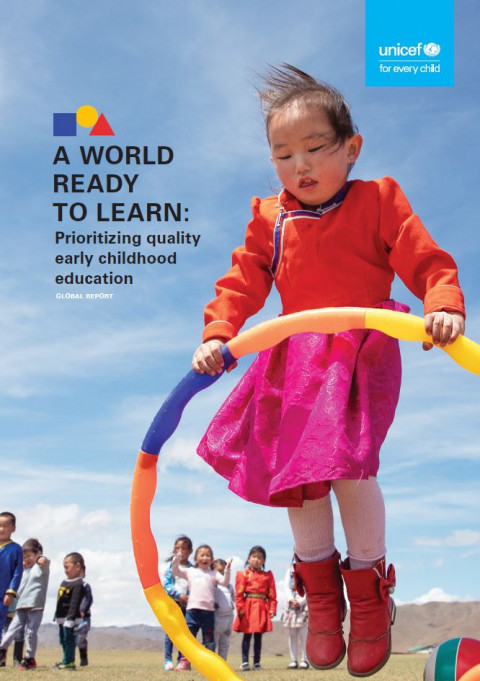 A World Ready to Learn: Prioritizing Quality Early Childhood Education Год публикации: 2019 Организация-автор: United Nations Children's Fund (UNICEF) The Sustainable Development Goals (SDGs), and target 4.2 specifically, convey a clear objective that all girls and boys have access to quality early childhood development, care and pre-primary education so that they are ready for primary education. This global report confirms the importance of early childhood education in achieving SDG 4 and supports a bold challenge: Provide all children with at least one year of quality pre-primary education by 2030.The reasons for this aspiration are clear, as a solid body of evidence shows that the foundations for learning are largely built in the early years of life, before a child ever crosses the threshold of a primary school.In recent proposals on how to achieve universal education at all levels, the International Commission on Financing Global Education Opportunity (the Education Commission), the World Development Report and the Global Education Monitoring Reports3,4,5 have all emphasized that investments in early childhood education have positive returns not only for individual children but also for building more efficient and effective education systems.Yet, currently, both domestic financing and international aid invested in pre-primary education are poorly targeted and grossly inadequate. This represents one of the greatest missed opportunities to nurture the world’s human capital and help children reach their fullest potential.Based on comprehensive, data-driven analysis, this report examines the current status of pre-primary education and offers a practical vision for expanding equitable access and improving quality. Recognizing that many countries, especially low- and lower-middle-income countries, are at the beginning of this journey, providing universal access to pre-primary education in all countries by 2030 requires a realistic yet bold approach.
  [Video] Global Education Week 2018 Highlights Год публикации: 2019 Организация-автор: North-South Centre of the Council of Europe This video clip shows some highlights from the 2018 edition (The world is changing: What about us?) of the Global Education Week (GEW).#GlobalEducationWeek#GEW18
  Programme d’éducation à la citoyenneté mondiale : Guide de présentation des propositions Год публикации: 2018 Организация-автор: Direction de la Francophonie et de la Solidarité internationale La solidarité est l’un des volets prioritaires de la nouvelle Politique internationale du Québec. Le PÉCM favorise une action cohérente et renforce le rayonnement international des actions du Gouvernement du Québec en solidarité internationale.Il appuie les organismes de coopération internationale (OCI) et leurs activités d’ÉCM visant à sensibiliser le public québécois aux Objectifs de développement durable (ODD) et à la solidarité internationale, tout en favorisant l’acquisition de connaissances, de valeurs et de comportements qui contribuent à la mise en place d’un monde plus juste, durable et équitable.Afin d’atteindre cet objectif, le programme se décline en deux volets distincts : Volet 1 – Appui à la mission globale Volet 2 – Soutien aux projets ponctuels
 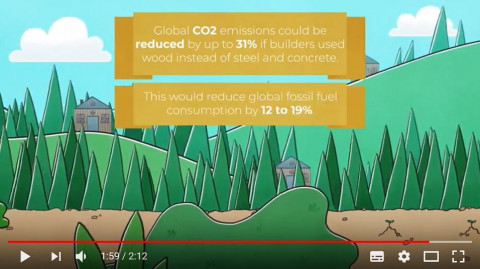 [Video] The Three Little Pigs and Climate Change: The Benefits of Wood as a Low-emission Construction Material Год публикации: 2018 Организация-автор: United Nations Economic Commission for Europe (UNECE) | Poland. Ministry of Environment | State Forests Poland Wood can play a crucial role in cutting down emissions when replacing more carbon-intensive materials in the construction sector. The cartoon entitled “The Three Little Pigs & Climate Change”, reminds us that carbon emissions of concrete and steel respectively are 40 and 30 percent higher than those of wood.This video was a joint production of the Forest, Land and Housing Division of the United Nations Economic Commission for Europe, the Polish Ministry of the Environment and State Forests Poland. The video was launched at the 24th Conference of the Parties to the UN Framework Convention on Climate Change (COP24), held in Katowice, Poland, from 2 to 14 December 2018, where global action to reduce emissions and keep global warming within the temperature limits of the Paris Agreement was discussed.UNECE works to promote sustainable solutions for climate neutral buildings:http://www.unece.org/housing.htmlTogether with FAO, it also works to promote the sustainable management of forests:http://www.unece.org/forests/welcome.html