
Ресурсы
Изучайте широкий спектр ценных ресурсов ВГГ, чтобы углубить своё понимание и повысить эффективность исследований, просветительской деятельности, преподавания и обучения.
Найдено: 89
 Measuring Global Citizenship Education: A Collection of Practice and Tools Год публикации: 2017 Организация-автор: Center for Universal Education at Brookings | UNESCO | UN Global Education First Initiative - Youth Advocacy Group (YAG) The idea of global citizenship has existed for several millennia. In ancient Greece, Diogenes declared himself a citizen of the world,1 while the Mahaupanishads of ancient India spoke of the world as one family.2 Today, education for global citizenship is recognized in many countries as a strategy for helping children and youth prosper in their personal and professional lives and contribute to building a better world.This toolkit is intended to shed light on one aspect of operationalizing global citizenship education (GCED): how it can be measured. This toolkit is the result of the collective efforts of the Global Citizenship Education Working Group (GCED-WG), a collegium of 90 organizations and experts co-convened by the United Nations Educational, Scientific, and Cultural Organization (UNESCO), the Center for Universal Education (CUE) at the Brookings Institution, and the United Nations Secretary General’s Global Education First Initiative’s Youth Advocacy Group (GEFI-YAG). To gather the measurement tools in this collection, the working group surveyed GCED programs and initiatives that target youth (ages 15–24).3 For the purposes of this project, GCED was defined as any educational effort that aims to provide the skills, knowledge, and experiences and to encourage the behaviors, attitudes, and values that allow young persons to be agents of long-term, positive changes in their own lives and in the lives of people in their immediate and larger communities (with the community including the environment).This toolkit begins with a brief review of opinions on why GCED is important and the variety of definitions of GCED. We follow the report with a catalog of 50 profiles of assessment efforts, each describing practices and tools to measure GCED at the classroom, local, and national levels. Note that the survey does not represent an exhaustive list but may be regarded as a living document that will grow as the field of GCED itself grows around the world.Broadly speaking, the assessment efforts in this survey may be categorized across achieving three goals: (1) fostering the values/attitudes of being an agent of positive change; (2) building knowledge of where, why, and how to take action toward positive change; and (3) developing self-efficacy for taking effective actions toward positive change.Today, global challenges such as climate change, migration, and conflict will require people to do more than just think about solutions. They will require effective action, by both individuals and communities. Education for global citizenship is one means to help young people develop the knowledge, skills, behaviors, attitudes, and values to engage in effective individual and collective action at their local levels, with an eye toward a long-term, better future at the global level. We offer this toolkit to provide guidance for educators, policymakers, non-governmental organizations, civil society, and researchers, and to inform this conversation.
  LEARNING to Realize Education’s Promise Организация-автор: World Bank The World Development Report 2018 (WDR 2018)—LEARNING to Realize Education’s Promise—is the first ever devoted entirely to education. And the timing is excellent: education has long been critical to human welfare, but it is even more so in a time of rapid economic and social change. The best way to equip children and youth for the future is to place their learning at the center. The 2018 WDR explores four main themes: 1) education’s promise; 2) the need to shine a light on learning; 3) how to make schools work for learners; and 4) how to make systems work for learning.
  Ending Learning Poverty : What Will It Take? Год публикации: 2019 Организация-автор: World Bank In recent years, it has become clear that many children around the world are not learning to read proficiently. As a major contributor to human capital deficits, the learning crisis undermines sustainable growth and poverty reduction. To spotlight this crisis, we are introducing the concept of Learning Poverty, drawing on new data developed in coordination with the UNESCO Institute for Statistics.
  [Video] Central Asian Kids Share Their Views on Gender Inequality Год публикации: 2020 Организация-автор: World Bank In Central Asia, and around the world, women earn 30% less than men. In anticipation of March 8, we asked the children what they think about it. [Видео] Что говорят дети в Центральной Азии о гендерном неравенстве в оплате труда Год публикации: 2020 Организация-автор: World Bank В Центральной Азии, и по всему миру, женщины зарабатывают на 30% меньше, чем мужчины. В преддверии 8 марта мы спросили детей, что они думают об этом.
 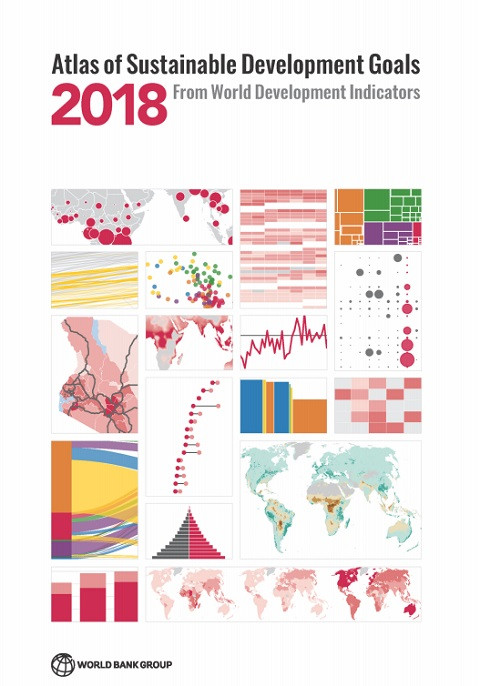 Atlas of Sustainable Development Goals 2018: From World Development Indicators Год публикации: 2018 Организация-автор: World Bank The Atlas of Sustainable Development Goals 2018 is a visual guide to the trends, challenges and measurement issues related to each of the 17 Sustainable Development Goals. The Atlas features maps and data visualizations, primarily drawn from World Development Indicators (WDI) - the World Bank’s compilation of internationally comparable statistics about global development and the quality of people’s lives. Given the breadth and scope of the SDGs, the editors have been selective, emphasizing issues considered important by experts in the World Bank’s Global Practices and Cross Cutting Solution Areas. Nevertheless, The Atlas aims to reflect the breadth of the Goals themselves and presents national and regional trends and snapshots of progress towards the UN’s seventeen Sustainable Development Goals related to: poverty, hunger, health, education, gender, water, energy, jobs, infrastructure, inequalities, cities, consumption, climate, oceans, the environment, peace, institutions, and partnerships. Atlas des Objectifs de développement durable 2018: Des Indicateurs du développement dans le monde Год публикации: 2018 Организация-автор: World Bank L’Atlas 2018 des Objectifs de développement durable s’articule autour des Indicateurs du développement dans le monde – Il s’agit de la compilation par la Banque mondiale de statistiques tirées de plus de 200 économies sur le développement mondial et la qualité de vie des populations. Pour chacun des 17 Objectifs de développement durable, une sélection d’indicateurs ont été identifiés et visualisés, afin d’analyser les tendances et les défis, et de susciter la discussion sur les questions liées aux mesures. Atlas de los Objetivos de Desarrollo Sostenible 2018: Basado en los Indicadores del Desarrollo Mundial Год публикации: 2018 Организация-автор: World Bank El Atlas de los Objetivos de Desarrollo Sostenible 2018 se basa en los Indicadores del Desarrollo Mundial, la compilación de estadísticas del Banco Mundial de más de 200 economías sobre el desarrollo mundial y la calidad de vida de las personas. Para cada uno de los 17 Objetivos de Desarrollo Sostenible, se han identificado y visualizado indicadores seleccionados para analizar tendencias y desafíos, y para catalizar la discusión sobre temas de medición.
  Gender Bias, Citizen Participation, and AI (Policy Research Working Papers; Planet; RRR; 11046) Год публикации: 2025 Автор: Jose Antonio Cuesta Leiva | Natalia Gisel Pecorari Организация-автор: World Bank This paper investigates the role of gender bias in artificial intelligence–driven analyses of citizen participation, using data from the 2023 Latinobarómetro Survey. The paper proposes that gender bias—whether societal, data driven, or algorithmic—significantly affects civic engagement. Using machine learning, particularly decision trees, the analysis explores how self-reported societal bias (machismo norms) interacts with personal characteristics and circumstances to shape civic participation. The findings show that individuals with reportedly low levels of gender bias, who express political interest, have high levels of education, and align with left-wing views, are more likely to participate. The paper also explores different strategies to mitigate gender bias in both the data and the algorithms, demonstrating that gender bias remains a persistent factor even after applying corrective measures. Notably, lower machismo thresholds are required for participation in more egalitarian societies, with men needing to exhibit especially low machismo levels. Ultimately, the findings emphasize the importance of integrated strategies to tackle gender bias and increase participation, offering a framework for future studies to expand on nonlinear and complex social dynamics.
 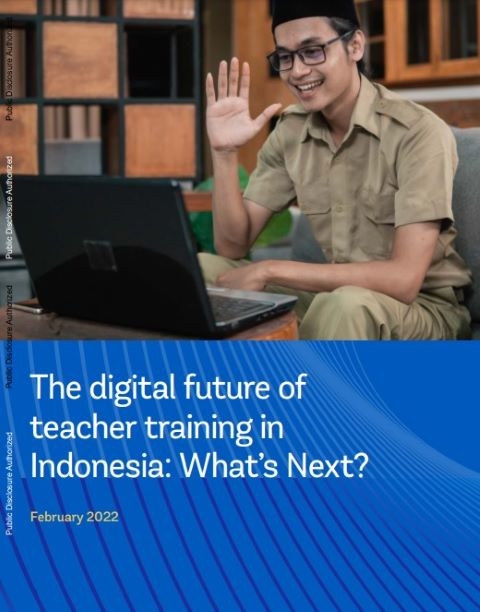 The Digital Future of Teacher Training in Indonesia: What’s Next? Год публикации: 2022 Автор: Noah Yarrow | Noviandri Khairina | Jacobus Cilliers | Indah Dini Организация-автор: World Bank | Government of Australia This report reflects on the Indonesia’s online teacher training ecosystem based on unique data collected from both teachers and providers during the COVID-19 period. A detailed mapping of the eight largest providers of online teacher training in Indonesia was conducted, covering 25 programs. We find that the majority of programs are short in duration and focus on digital literacy skills and remote learning. Training programs were mostly provided using online lectures, few provided individual coaching, while none provided opportunities for personalized learning. Second, we conducted a nationally representative phone survey of 435 primary and junior secondary teachers spanning 30 provinces across Indonesia (66 percent of whom are female teachers). The teacher survey was conducted between February and March 2021 and covered teachers under both the Ministry of Education, Research, and Technology (MoECRT) and the Ministry of Religious Affairs (MoRA). We find that 44 percent of teachers participated in online learning during the pandemic, and that three quarters of these teachers had never participated in online training prior to the pandemic. Many training participants reported challenges in implementing what they learned from online training. Most of the teachers who participated (88 percent) would like to continue receiving training online even after the pandemic ends. These results suggest that demand for online training is expected to persist, but more can be done to improve their quality.