
Ресурсы
Изучайте широкий спектр ценных ресурсов ВГГ, чтобы углубить своё понимание и повысить эффективность исследований, просветительской деятельности, преподавания и обучения.
Найдено: 3,451
 SDG Good Practices: A Compilation of Success Stories and Lessons Learned in SDG Implementation (1st Edition) Год публикации: 2020 Организация-автор: UN. Department of Economic and Social Affairs (UN. DESA) This publication presents 16 SDG Good Practices from across the globe, received in response to the first open call for good practices, success stories and lessons learned in SDG implementation, promoted by UN DESA between 2018 and 2019.Sorted by geographical region, this publication describes the diverse examples in detail, featuring updates and reflections on the impact and adaptations to the COVID-19 pandemic and showcasing results and impact.As the world pursues a transformative recovery from COVID-19 and embarks on the Decade of Action for accelerating the implementation of the SDGs, it is hoped that these examples provide inspiration to Governments and stakeholders in their efforts to address crisis, reduce the risk of future potential emergencies and deliver on the ambitious and inclusive vision of the 2030 Agenda.
  Pathways Towards Quality Primary Education: Improving Completion and Learning Outcomes Год публикации: 2021 Автор: Moizza Binat Sarwar | Susan Nicolai | Diego Benitez Moreno | Olha Homonchuk | Jose Manuel Roche Организация-автор: ODI Global This paper explores pathways towards quality primary education by identifying and analysing strategies used in 38 countries that have made faster progress in primary completion rates (PCR) – and, where discernible, learning outcomes – between 2000 and 2017. It further considers which social and economic groups within these countries are being left behind or excluded from the rise in completion rates, why that may be happening and what governments are doing to address those gaps.
  [Résumé] La crise climatique est une crise des droits de l’enfant: Présentation de l’indice des risques climatiques pour les enfants Год публикации: 2021 Автор: Nicholas Rees | Margaretha Barkhof | Jan Burdziej | Sophie Lee | Harriet Riley Организация-автор: United Nations Children's Fund (UNICEF) La crise climatique est une crise des droits de l’enfant. Les canicules, les incendies et les inondations sans précédent qui viennent de frapper plusieurs pays sont annonciateurs d’une nouvelle normalité climatique particulièrement hostile. L’impact des changements climatiques est connu de tous. Les solutions le sont également. Il est inadmissible que les enfants et les jeunes d’aujourd’hui soient confrontés à un avenir aussi incertain. Partout dans le monde, à travers des manifestations, des interventions sur les réseaux sociaux et un engagement communautaire et citoyen, les enfants et les jeunes revendiquent haut et fort le changement. Les modi operandi classiques ont fait long feu. Le présent rapport s’appuie sur l’Indice des risques climatiques pour les enfants (IRCE) pour fournir un premier aperçu de l’exposition et de la vulnérabilité des enfants aux effets des changements climatiques.
  Reimagining Climate Education and Youth Leadership: Survey Report Год публикации: 2021 Автор: Lucia Rost | Jessica Cooke | Isobel Fergus Организация-автор: Plan International Climate change is a social, intergenerational, gender, and racial injustice. Plan International aims to support children and youth to meaningfully and safely engage in climate policy processes and to reduce the barriers preventing them from engaging in and influencing climate policy and advocacy.With this in mind, Plan International conducted a global online survey to capture the opinions and experiences of young people on climate change education and their participation in climate policy processes. The survey was available in seven languages and was open to 15 to 24-year- olds in all 77 countries where Plan International operates. Over 1,800 adolescents and youth, between the ages of 15 to 24, from 37 countries, participated: more than half (54 per cent) were 15 to 18 years old and 72 per cent were girls. Reimagining Climate Education and Youth Leadership: Survey Report Год публикации: 2021 Автор: Lucia Rost | Jessica Cooke | Isobel Fergus Организация-автор: Plan International El cambio climático es una injusticia social, intergeneracional, racial y de género. Plan International tiene como objetivo ayudar a las niñas, niños y jóvenes a involucrarse de manera significativa y segura en los procesos de formulación de políticas climáticas, así como eliminar los obstáculos que les impiden participar e influir en las políticas y las actividades de promoción relacionadas con el cambio climático. Plan International realizó una encuesta on line a nivel mundial para recopilar las opiniones y las experiencias de jóvenes sobre la educación en materia de cambio climático y su participación en los procesos de formulación de políticas climáticas. La encuesta se ofreció en siete idiomas y estuvo abierta a jóvenes de 15 a 24 años en los 77 países donde trabaja Plan International. En esta encuesta, participaron más de 1800 adolescentes y jóvenes, con edades comprendidas entre los 15 y los 24 años, y procedentes de 37 países: más de la mitad de las personas (54 %) tenían entre 15 y 18 años, y el 72 % eran niñas. Réinventer l’éducation au climat et le leadership des jeunes : Rapport d’enquête Год публикации: 2021 Автор: Lucia Rost | Jessica Cooke | Isobel Fergus Организация-автор: Plan International Le changement climatique est une injustice sociale, intergénérationnelle, de genre et raciale. Plan International vise à aider les enfants et les jeunes à participer de manière significative et en toute sécurité aux processus de politique climatique et à réduire les obstacles qui les empêchent de participer et d’influencer la politique et le plaidoyer climatiques.Dans ce cadre, Plan International a mené une enquête mondiale en ligne pour recueillir les opinions et les expériences des jeunes sur l’éducation au changement climatique et leur participation aux processus politiques climatiques. L’enquête était disponible en sept langues et était ouverte aux jeunes de 15 à 24 ans dans les 77 pays où Plan International intervient. Plus de 1800 adolescent.e.s et jeunes, âgés de 15 à 24 ans, originaires de 37 pays, y ont participé : plus de la moitié (54 %) avaient entre 15 et 18 ans et 72 % étaient des filles.
  School-Related Gender-Based Violence Measurement Toolkit Год публикации: 2020 Автор: Dexis Consulting Group Организация-автор: United States Agency for International Development (USAID) This toolkit delivers practical guidance and resources for measuring the prevalence and extent of students’ experiences of school-related gender-based violence (SRGBV), and provides methods for assessing key risk factors and drivers of SRGBV. This toolkit contains a conceptual framework for measuring SRGBV, a school- based survey for measuring experiences of SRGBV, risk factors, and drivers, as well as practical guidance for implementing the survey.
 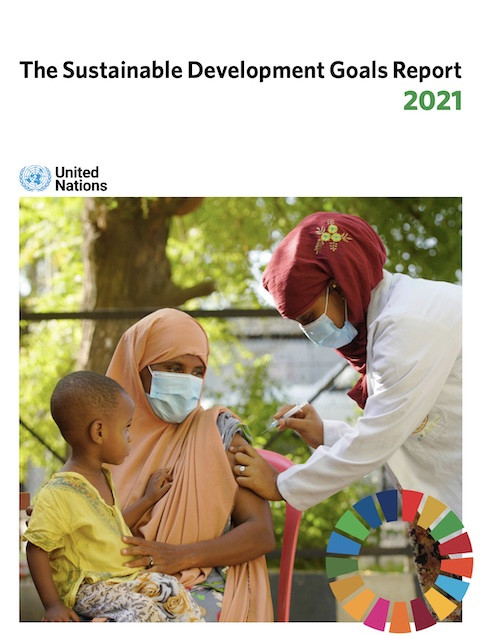 The Sustainable Development Goals Report 2021 Год публикации: 2021 Организация-автор: United Nations (UN) As the pandemic continues to unfold, The Sustainable Development Goals Report 2021 outlines some significant impacts in many areas that are already apparent. The global extreme poverty rate rose for the first time in over 20 years, and 119 to 124 million people were pushed back into extreme poverty in 2020. There is a risk of a generational catastrophe regarding schooling, where an additional 101 million children have fallen below the minimum reading proficiency level, potentially wiping out two decades of education gains. Women have faced increased domestic violence, child marriage is projected to rise after a decline in recent years, and unpaid and underpaid care work is increasingly and disproportionately falling on the shoulders of women and girls, impacting educational and income opportunities and health. Notwithstanding the global economic slowdown, concentrations of major greenhouse gases continue to increase. With the global average temperature reaching about 1.2°C above pre-industrial levels, the climate crisis has well and truly arrived, and its impacts are being felt across the world. The pandemic has also brought immense financial challenges, especially for developing countries – with a significant rise in debt distress and dramatic decreases in foreign direct investment and trade. Yet, with a surge in global solidarity and leadership from the highest political level, countries can still deliver on the 2030 Agenda and the 2015 Paris Agreement on Climate Change. A global vaccination plan, designed and implemented by the countries that can produce vaccines today or will be able to do so if properly supported, is an urgent first step in that direction. A recommitment by Governments, cities, businesses, and industries to ensure that the recovery reduces carbon emissions, conserves natural resources, creates better jobs, advances gender equality and tackles growing poverty and inequalities is a further imperative. Rapport sur les objectifs de développement durable 2021 Год публикации: 2021 Организация-автор: United Nations (UN) Le Rapport sur les objectifs de développement durable pement durable 2021 décrit certains effets importants qui se manifestent déjà dans de nombreux domaines. Le taux mondial d’extrême pauvreté a augmenté pour la première fois en plus de 20 ans, et entre 119 et 124 millions de personnes ont basculé dans l’extrême pauvreté en 2020. Un risque de catastrophe générationnelle se dessine en matière de scolarisation, alors que 101 millions d’enfants de plus sont passés sous le seuil minimum de compétence en lecture, ce qui pourrait réduire à néant deux décennies de progrès scolaires. Les femmes ont été confrontées à une hausse de la violence conjugale, le mariage d’enfants devrait augmenter après des années de baisse, et le travail domestique non rémunéré et sous-payé repose de plus en plus et de façon disproportionnée sur les femmes et les filles, avec des répercussions sur leurs possibilités d’édu- cation et de revenu et leur santé. Malgré le ralentissement économique mondial, la concentration des principaux gaz à effet de serre continue d’augmenter. La température moyenne mondiale s’établissant à environ 1,2 °C au-dessus des niveaux préindustriels, la crise climatique est bel et bien là et ses effets se font sentir partout dans le monde. La pandémie a également engendré d’immenses défis financiers, en particulier pour les pays en développement, avec une augmentation significative du surendettement et une baisse spectaculaire de l’investissement étranger direct et du commerce.Pourtant, avec un élan de solidarité mondiale et un leadership au plus haut niveau politique, les pays peuvent encore réaliser le Programme 2030 et l’Accord de Paris sur les changements climatiques adopté en 2015. Un plan mondial de vaccination, conçu et mis en œuvre par les pays qui peuvent aujourd’hui produire des vaccins ou qui le pourront dans le futur avec le soutien adéquat, est une première étape urgente pour y parvenir.Il est également impératif que les gouvernements, les villes, les entreprises et les industries s’engagent de nouveau à assurer une reprise qui prises et les industries s’engagent de nouveau à assurer une reprise qui réduise les émissions de carbone, préserve les ressources naturelles, crée de meilleurs emplois, fasse progresser l’égalité entre les sexes et fasse reculer la pauvreté et les inégalités croissantes.
  SDG 4 Data Digest 2020: Using Household Survey Data to Monitor SDG 4 Год публикации: 2020 Организация-автор: UNESCO Institute for Statistics (UIS) The 2020 edition of the SDG 4 Data Digest by the UNESCO Institute for Statistics focuses on household surveys as an important and underutilized tool to collect the data needed to track progress towards Sustainable Development Goal 4 and to ensure that no one is left behind. The Digest describes existing survey programmes and offers advice on the design and implementation of new surveys. The Digest identifies a number of advantages to using household surveys and describes the categories of indicators best suited for monitoring with survey data. Data from household surveys complement administrative data collected in schools and can be disaggregated to a greater extent than administrative data to facilitate the monitoring of exclusion in education. The definitions and calculation methods of selected indicators are laid out and the combination of household survey data with data from other sources is explained. This issue of the Digest is aimed at government officials, national planners, donors and others who make decisions about the implementation of nationally representative household surveys. It describes the requirements for conducting a household survey and the steps that must be followed from questionnaire design to data collection and analysis, and it gives advice on presentation of the findings. A section on COVID-19 summarizes the impact of the current pandemic on data collection. Additional resources, with suggested survey questions for the collection of education data through household surveys, are also included.