
Ресурсы
Изучайте широкий спектр ценных ресурсов ВГГ, чтобы углубить своё понимание и повысить эффективность исследований, просветительской деятельности, преподавания и обучения.
Найдено: 89
 Advancing Arabic Language Teaching and Learning: A Path to Reducing Learning Poverty in the Middle East and North Africa Год публикации: 2021 Автор: Laura Gregory | Hanada Taha Thomure | Amira Kazem | Anna Boni | Mahmoud Abduh A. Elsayed | Nadia Taibah Организация-автор: World Bank The purpose of the present report is to identify and explore the evidence on factors that are leading to high rates of learning poverty in MENA countries. In addition, the report proposes a path for countries of the region to make the teaching and learning of the Arabic language—which are critical foundations for children in Arabic-speaking countries—more effective. The intended audience of the report is education stakeholders in the MENA region, including officials in ministries of education across the region, those responsible for education decision-making, teachers, academics, education administrators, parents, and nongovernmental organizations, as well as World Bank and partner organization staff tasked with supporting countries in their efforts to raise learning and human capital.The intention of the report is not to provide an Arabic literacy strategy for each country since countries of the region differ and each would need to have their own national dialogue. Instead, the report collates the relevant literature from the region and beyond, as well as local and regional initiatives, and offers guidance to countries to advance the teaching and learning of MSA. As such, the report does not focus on the broader issues of language use within each country. As part of the process of developing the report, a summary of the emerging evidence and recommendations was shared with a small group of teachers from two countries across the region in advance of a focus group discussion to explore local views. Unanimous agreement on the key findings and recommendations were expressed by these teachers. Further discussions on the topics raised in this report are expected to take place during the dissemination of this report and in the months and years to come, leading to greater consensus across stakeholders on the best ways to advance Arabic language teaching and learning.The report is structured in a way that first explores the incidence of learning poverty in the MENA region, followed by international evidence on the science of learning to read, and factors that are influencing Arabic language learning outcomes. The report then looks at some of the national strategies, policies, and initiatives already in place for Arabic language education, and proposes a path for advancing Arabic language teaching and learning, along with suggestions for regional collaboration efforts that could further support MENA countries.
  Ending Violence in Schools : An Investment Case Год публикации: 2021 Автор: Quentin Wodon | Chloë Fèvre | Chata Malé | Ada Nayihouba | Hoa Nguyen Организация-автор: World Bank Preventing violence in and through school is a prerequisite for girls and boys getting the education they need and deserve, and acquiring the skills, knowledge and values that provide the foundations for strong and inclusive societies. This report demonstrates that violence in and around schools negatively impacts educational outcomes, and society pays a heavy price as a result (with an estimate of $11 trillion in lost lifetime earnings). Cost-benefit analyses suggest that implementing interventions to prevent violence in and through schools from early childhood to secondary education is a smart economic investment. Rigorously evaluated programs and policies aimed at preventing violence at different levels of the education system show that action is feasible. The benefits of investing in preventing violence in and through schools is likely to far outweigh the costs.
 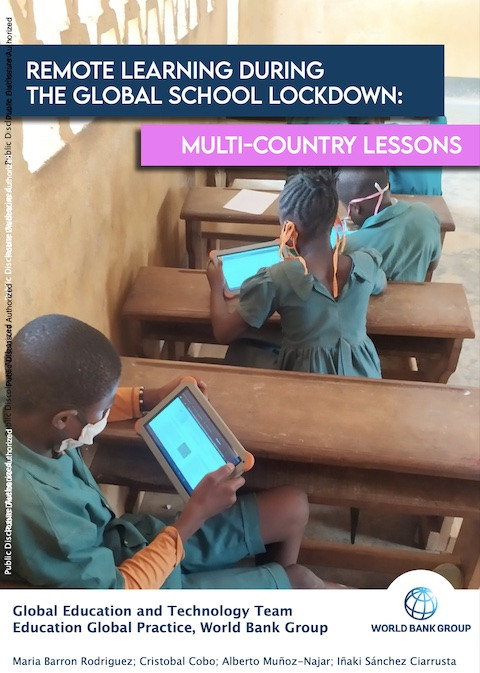 Remote Learning During the Global School Lockdown: Multi-Country Lessons Год публикации: 2020 Автор: Maria Barron Rodriguez | Cristobal Cobo | Alberto Muñoz-Najar | Iñaki Sánchez Ciarrusta Организация-автор: World Bank This study includes three main sections that have been organized in a chronological order within this report: the first one, “What can we learn from education emergency responses in low- and middle-income countries?” analyzes the emergency education responses to the COVID-19 pandemic of over 120 governments from April until May, 2020. The second section, “Is remote learning perceived as effective? An in-depth analysis across five countries” discusses the main national education responses deployed by Brazil, Kenya, Nigeria, Sierra Leone, and Peru, as well as the perceived effectiveness of these strategies conducted from May until August, 2020. The third section, “What works with remote and remedial strategies? an analysis across 13 countries” builds on key lessons learned during the analysis of the five multi-country experiences and presents global trends of remote learning implemented during school closures and the actions governments adopted to get ready for remedial learning, conducted from August until December 2020. The countries prioritized for the third section are IDA borrowing countries of which six are low-income countries: Afghanistan, Haiti, Malawi, Mozambique, Niger, and Rwanda; and five are lower-middle-income countries: Cambodia, Cameroon, Kenya, Nepal, and Pakistan. Additionally, two high-income countries, Estonia and Uruguay, have been included in the report. The main trends across this report are discussed below and have been grouped in five themes: (1) Adopt delivery systems with an inclusive approach; (2) Adjust the curriculum to ensure effectiveness; (3) Secure sustained teacher training and in-service support; (4) Leverage institutional capacities while ensuring sustained monitoring and evaluation; and (5) Consolidate national strategies to remediate learning losses.
 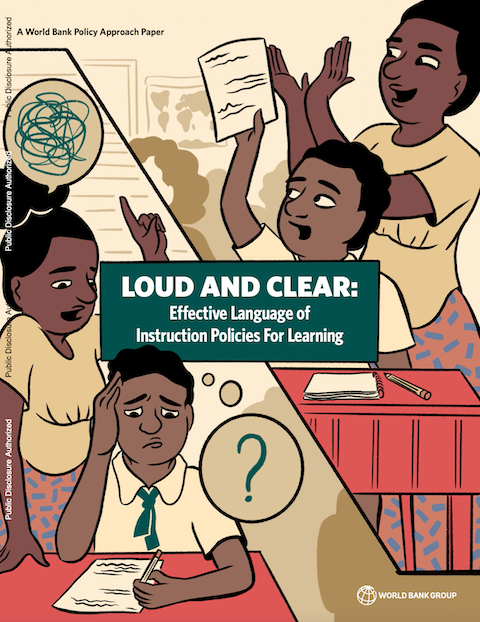 Loud and Clear: Effective Language of Instruction Policies for Learning Год публикации: 2021 Организация-автор: World Bank This paper describes the new World Bank policy approach on language of instruction(LoI), as part of the operationalization of the literacy policy package in support of the Bank’s new learning target. This new approach aims to support progress on language of instruction(LoI) Policies and interventions, as loi-based challenges are identified and addressed in light of each country’s context. Haut et fort: Politiques efficaces de Langue d’Enseignement Pour l’Apprentissage Год публикации: 2021 Организация-автор: World Bank Ce document décrit la nouvelle approche de la politique de la Banque mondiale en matière de langue d’enseignement, en tant que composante dans l’opérationnalisation du paquet de politique de littératie en appui au nouvel objectif d’apprentissage de la banque. Cette nouvelle approche vise à soutenir les progrès dans le domaine des politiques et des interventions en matière de LE (Langue d'Enseignement), dans la mesure où les défis liés à la PLE(Politique de Langue d'Enseignement) sont identifiés et traités à la lumière du contexte de chaque pays.
 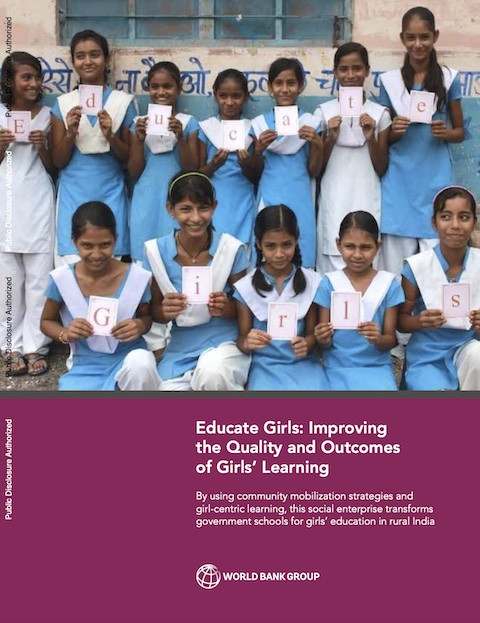 Educate Girls: Improving the Quality and Outcomes of Girls’ Learning Год публикации: 2017 Организация-автор: World Bank In India, women and girls, especially in rural areas, are particularly affected by the country’s illiteracy problem, since they face discrimination based on their sex and need for childbearing. In Rajasthan, the north- western Indian state that borders Pakistan, 9 out of 26 districts have the worst gender gap in India for girls’ education.Established in 2007, Educate Girls is holistically tackling issues at the root cause of gender inequality in India’s education system that has helped to ensure over 90% enrollment and significantly higher attendance for all girls as well as improved school infrastructure, quality of education and learning outcomes for all children.As a result of Educate Girls’ efforts to date, an army of “girls champions” has been created to combat cultural issues and support systemic change. More than 150,000 out-of-school girls have been enrolled in school and the program has benefitted around 3.8 million of beneficiaries. Continuing to address the social and cultural barriers in girls’ education can bring about real transformation, such as improvement in health, income levels, and overall livelihoods in rural populations.
  Realizing the Future of Learning: From Learning Poverty to Learning for Everyone, Everywhere Год публикации: 2020 Автор: Jaime Saavedra | Cristian Aedo | Omar Arias | Adelle Pushparatnam | Halsey Rogers | Marcela Gutierrez Bernal Организация-автор: World Bank Education is a right with immense inherent value. As an essential building block for a country’s human capital, it is also a key driver of growth, competitiveness, and economic development. For societies to be inclusive and fair, they need to prepare all their children to succeed as citizens and give them the tools to participate in their countries’ development. This has become increasingly challenging, because students must have the skills and competencies to adapt and be successful in a rapidly changing, uncertain world, especially as the world grapples with the effects of the COVID19 pandemic. At the same time, our understanding of how children best learn and what the most effective education delivery mechanisms are has grown. Armed with this knowledge, countries that are serious about living up to this challenge will invest in their people to build their human capital; take action to show that learning really matters to them; and commit not only the financial, but also the political and managerial resources necessary to build an education system that serves all with quality. Urgent action is needed to realize a new vision for education: one in which learning happens for everyone, everywhere. Too many education systems are not delivering even basic skills for all children, let alone preparing them for the demanding world they will live in as adults. As the World Bank expands its support for countries to invest more, and more effectively, in education, it has developed a renewed policy approach to address the educational challenges of today while helping countries lay the groundwork to seize tomorrow’s opportunities. The Bank’s 2018 World Development Report urged action to address the global learning crisis and examined the policies needed to tackle it (World Bank 2018a). To support efforts to improve foundational learning, last year the Bank launched a global target: to cut the Learning Poverty rate—the fraction of 10-year-olds in low- and middle-income countries who cannot read and understand an age-appropriate text—at least in half by 2030 (World Bank 2019a). It was also a recognition of the severity of the learning crisis that we are living through: that more than half of children lack these fundamental skills at the end-of-primary age shows that their future is at stake. And now the pandemic has generated a crisis within a crisis.
  Acting Now to Protect the Human Capital of Our Children: The Costs of and Response to COVID-19 Pandemic’s Impact on the Education Sector in Latin America and the Caribbean Год публикации: 2021 Организация-автор: World Bank The sanitary and economic shocks caused by the COVID-19 pandemic brought about the most significant disruption in the history of the education sector in Latin America and the Caribbean region, leading to school closures at all levels and affecting over 170 million students throughout the region. Despite the tremendous efforts made by countries to mitigate the lack of in-person education through remote learning, education is taking a serious hit and outcomes are plummeting in the region. Learning poverty by the end of primary education could increase by more than 20 percent. Over 2 in 3 lower secondary education students could fall below minimum proficiency levels, and learning losses will be substantially larger for the most disadvantaged students. There is no time to lose. All countries must act now to make sure schools are ready to reopen safely and effectively country-wide so as to speed up the recovery process from the dramatic effects of the pandemic. They can leverage many emerging lessons and evidence, and must protect public funding for education, to enable this reopening process. While education systems face a challenge like no other, this exceptionally difficult situation also opens a window of opportunity to build back better their education systems to become more effective, equitable and resilient. Actuemos ya para proteger el capital human de nuestros ninos: Los costos y la respuesta ante el impacto de la pandemia de COVID-19 en el sector educativo de América Latina y el Caribe Год публикации: 2021 Организация-автор: World Bank El doble shock, sanitario y económico, generado por la pandemia COVID-19 provocó, sin duda alguna, la mayor disrupción en la historia del sector educativo en la región de América Latina y el Caribe, llevando al cierre masivo de escuelas en todos los niveles educativos y afectando a más de 170 millones de estudiantes en toda la región. A pesar de los enormes esfuerzos realizados por los países para tratar de mitigar la falta de educación presencial a través de sistemas de educación a distancia, el impacto sobre la educación está siendo demasiado alto y los aprendizajes se están desplomando en la región. La “pobreza de aprendizaje” al final de la educación primaria podría aumentar en más del 20 por ciento. Más de 2 de cada 3 estudiantes de educación secundaria podrían caer por debajo de los niveles mínimos de rendimiento esperados, y las pérdidas de aprendizaje serán sustancialmente mayores para los estudiantes más desfavorecidos. Realmente no hay tiempo que perder. Todos los países deberían actuar ya mismo para asegurarse que las escuelas estén listas para reabrir de manera segura y eficaz en todo el país a fin de acelerar el proceso de recuperación de los dramáticos efectos de la pandemia. Hay muchas lecciones y evidencias de experiencias positivas que van emergiendo y que pueden ser aprovechadas por los países, los cuales también deben asegurarse de proteger el financiamiento público de la educación, para facilitar este proceso de reapertura. Aun cuando los sistemas educativos de toda la región enfrentan un desafío jamás experimentado, esta situación excepcionalmente difícil también abre una ventana de oportunidad para poder ayudar a reconstruir los sistemas educativos para lograr que sean más efectivos, más equitativos y más resilientes.
  Internationalization of Tertiary Education in the Middle East and North Africa Год публикации: 2020 Автор: Giulia Marchesini Организация-автор: World Bank Conceived in order to provide a crucial baseline in research on internationalization in MENA, this report draws on available data to respond to both a real need for regional analysis and a direct demand from stakeholders, including tertiary education institutions in the region. Encouraging internationalization to be mainstreamed throughout MENA is the objective that this report seeks to achieve by way of stimulating regional policy dialogue on the subject. The report presents some global trends in internationalization and details its main benefits, before providing an overview of the current status of internationalization in the MENA region, including an in-depth analysis of student mobility. In its reflections on the way forward for the region, the report situates its recommendations in the context of COVID-19, within which, despite serious challenges due to a lack of attractiveness of the region, MENA may find a key opportunity. It suggests that adapting to the “new normal” through the deeper implementation of internationalization “at home” – a dimension that does not require physical mobility and, being implemented within domestic environments, has a much wider reach – may help enable the region to make strides towards catching up on the internationalization agenda.