
Ресурсы
Изучайте широкий спектр ценных ресурсов ВГГ, чтобы углубить своё понимание и повысить эффективность исследований, просветительской деятельности, преподавания и обучения.
Найдено: 1,322
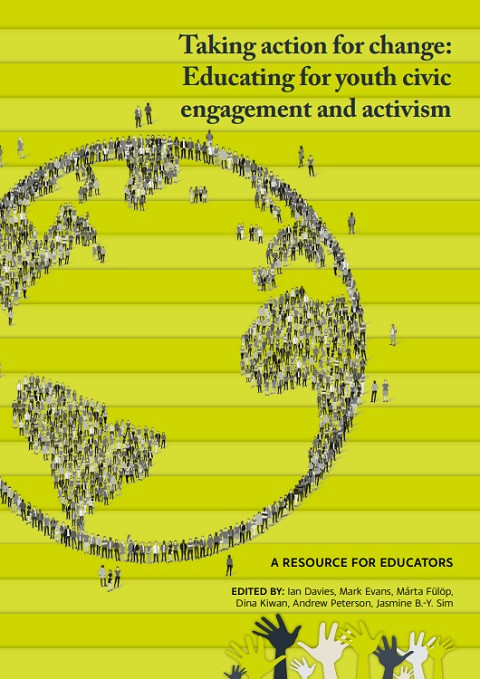 Taking Action for Change: Youth Civic Engagement and Activism; A Resource for Educators Год публикации: 2019 Автор: Ian Davies | Mark Evans | Márta Fülöp | Dina Kiwan | Andrew Peterson | Jasmine B.-Y. Sim Организация-автор: University of York ‘Youth activism, engagement and the development of new civic learning spaces’ was a project funded by the Leverhulme Trust and developed by an international network of researchers. The project took place between 2016 and 2019.In this resource for education, each member of the project team discusses developments in their own country and identifies key ideas and issues about how young people participate in society and what implications have for education. This book gives several examples that have already been done in different geographical areas and educational perspectives and includes promising practices that begin to illustrate ways in which educators may act.
 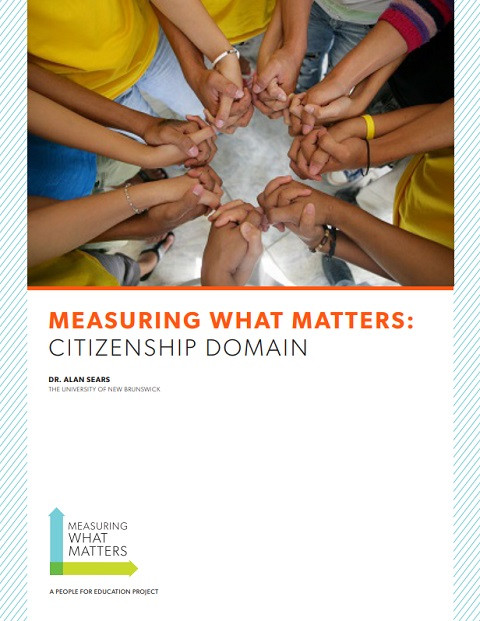 Measuring What Matters: Citizenship Domain Год публикации: 2014 Автор: Alan Sears Организация-автор: People for Education This report examines why citizenship is a core value for long term success for students and a cohesive, democratic society.
  Attempts in and Experiences of the Cultivation of Civic Literacy in Modern China (Contemporary Education and Culture; Vol. 11, No. 2) Год публикации: 2019 Автор: Zhai Nan Организация-автор: Northwest Normal University The educational reform in modern China takes place in a special context of strong impact of foreign ideas and deep-rooted local culture where the importance is attached to the cultivation of Chinese citizens’ civic literacy. The concept of the citizen and its educational form reflect the influence of western educational thought, while the contents of education stick to the features of the Chinese nationality and modern times. Through an analysis of the publications in the Republic China period, it is found that the scheme was permeated with a strong local awareness, and reflected the combination of the native moral consciousness and the modern western civic concept. This not only reflects the particularity of the cultivation of civic literacy in the period of social transformation in modern China, but also is of methodological significance to the localization of citizen education. 近代中国公民素养培育的本土化尝试及经验 (当代教育与文化; Vol. 11, No. 2) Год публикации: 2019 Автор: Zhai Nan Организация-автор: Northwest Normal University 近代中国的教育变革处在一个外来思想强烈冲击、而本土文化根深蒂固的特殊背景之下,对公民素养的重 视和培育就产生在这一背景下。在对公民的概念理解及其教育形式上体现了西方教育思想的影响,但在内容上并没有 放弃本国教育所背负的民族性和时代性。通过对民国时期相关文本的分析发现,当时提出的公民培养方案渗透着强烈 的本土意识,体现了本土道德意识与现代西方公民观念的交织。这既反映出了近代中国社会转型时期公民素养培育的 特殊性,又对公民教育的本土化提供了方法论上的意义。
  Anti-Semitism in Europe up to 1945 (Vol 1) Организация-автор: Anne Frank House | OSCE. Office for Democratic Institutions and Human Rights (ODIHR) These teaching materials were developed by ODIHR and the Anne Frank House in Amsterdam, in co-operation with experts from several OSCE participating States. Part 1 examines the history of anti-Semitism. The version available here is an English translation of the Lithuanian version. L'antisémitisme en Europe jusqu'en 1945 (Vol 1) Организация-автор: Anne Frank House | OSCE. Office for Democratic Institutions and Human Rights (ODIHR) Ces matériels pédagogiques ont été élaborés par le BIDDH (Bureau des Institutions Démocratiques et des Droits de l'Homme) et la Maison d'Anne Frank à Amsterdam, en coopération avec des experts de plusieurs Etats participants de l'OSCE. Partie 1 examine l'histoire de l'antisémitisme. La version disponible ici est une traduction anglaise de la version lituanienne.
  L'utilisation des médias sociaux dans l'éducation de l'Holocauste Организация-автор: International Holocaust Remembrance Alliance (IHRA) Les médias sociaux est une forme en pleine expansion de la communication et de la communauté dans notre monde et dans l'éducation plus spécifiquement. éducateurs Holocauste sont chargés de déterminer la meilleure façon d'utiliser cet outil dans leur programmation sans programme ou l'intégrité objet compromettant. Ces lignes directrices décrivent les considérations et les pratiques dans le déploiement de médias sociaux dans l'environnement éducatif de l'Holocauste. Using social media in Holocaust Education Организация-автор: International Holocaust Remembrance Alliance (IHRA) Social media is a rapidly expanding form of communication and community in our world and in education more specifically. Holocaust educators are tasked with determining how best to use this tool in their programming without compromising programme or subject integrity. These guidelines outline considerations and practices in deploying social media in the Holocaust educational environment.
  Quand l’art et la citoyenneté mondiale se rencontrent: Histoire d’une expérience menée au Conservatoire Royal de Bruxelles; Section arts de la parole 2019-2020 Год публикации: 2020 Организация-автор: Annoncer la Couleur (ALC) | Enabel Aujourd’hui, le monde scolaire entame un grand réaménagement de son fonctionnement avec la mise en place du Pacte pour un Enseignement d’Excellence. Dans cette nouvelle architecture se dessine l’ECA, Éducation Culturelle et Artistique, qui renforce les liens entre les disciplines traditionnelles et le monde artistique.Au cour de l’année scolaire 2019-2020, Annoncer la couleur s’est demandé comment pratiquement mettre en lien les artistes avec les nouvelles attentes des écoles. Il lui a semblé que l’enjeu pourrait être de familiariser les futur·e·s artistes avec les nouveaux fonctionnements du monde scolaire, et de conscientiser le lien entre une approche artistique et des thématiques de citoyenneté mondiale abordées dans les écoles. Elle s’est donc dirigée vers l’Enseignement Supérieur Artistique et plus précisément vers le Conservatoire royal de Bruxelles, section arts de la parole, où le projet s’est construit en partenariat avec les professeur.e.s. La brochure « Quand l’art et la citoyenneté mondiale se rencontrent » retrace cette expérience, en détaille la genèse, les étapes les résultats et les extensions possibles.
  초등학교 교사를 위한 디지털 시민교육 활용 가이드북: 온-오프라인을 연결하는 디지털 시민교육 Год публикации: 2019 Автор: 김양은 | 배은주 | 박정원 | 김형태 | 김영환 | 심성호 Организация-автор: 방송통신위원회 | 한국정보화진흥원 초등교사들의 디지털시민교육 이해도를 높이고 교육현장에서 학생들과 함께 디지털시민역량을 기르기 위한 안내서이다. 본 교재에서는 디지털시민역량을 정체성, 웰빙, 권리와 책임, 소통과 관계, 정보리터러시, 사회참여 6가지로 제시한다.