
Ресурсы
Изучайте широкий спектр ценных ресурсов ВГГ, чтобы углубить своё понимание и повысить эффективность исследований, просветительской деятельности, преподавания и обучения.
Найдено: 1,448
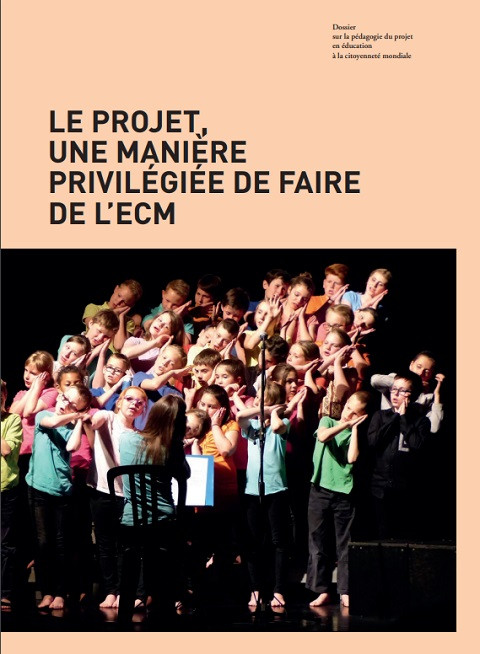 Le projet, une manière privilégiée de faire de l’ECM : Dossier sur la pédagogie du projet en éducation à la citoyenneté mondiale Год публикации: 2019 Организация-автор: Annoncer la Couleur (ALC) | Enabel Ce dossier montre les avantages de faire de l’éducation à la citoyenneté mondiale par la mise en projet. Cela donne aussi les bonnes méthodes pédagogiques pour adopter l’enseignement par projet génère une nouvelle dynamique dans la pratique de l’enseignant. Intéressé∙e par les thèmes de l’éducation à la citoyenneté mondiale, il ou elle les intégrera, en tout ou en partie, dans son cours à condition d’y trouver des avantages.
  Moral Education and the Cultivation of Positive Citizen: Insights from Isaiah Berlin’s Conceptualization of Two Types of Freedom Год публикации: 2019 Автор: Ye Fei Организация-автор: 苏州大学 On the basis of a binary model of freedom, Isaiah Berlin distinguished two types of citizenship: “negative citizen” and “active citizen”. “Negative citizens” tend to place individual freedom and rights above the community, and to defend the individual freedom as the top priority, which readily leads to the division and alienation between the individual and the community. “Active citizens”, on the other hand, tend to place a greater emphasis on the close relationship between freedom and responsibility and the integration of individual and the society, advocating that individuals shall have the courage to assume public responsibility while defending their individual rights. In the ongoing social transformation, moral education shall guide the cultivation of “active citizens” and promote the development of moral responsibility and public spirit, which is valid practice with relation to individual personality improvement, school moral education reform, and social development. To this end, moral education should be devoted to constructing a public living space in the classroom, developing the concept of democratic co-governance in schools, and meanwhile establishing an effective connection between schools and communities. Thus, students can be expected to become responsible and positive citizens who treasure such public virtues as equality, cooperation, respect, and tolerance, and who shall contribute to the progress of public life in building a respectable character.
  Migration, citoyenneté et inégalités globales Год публикации: 2012 Автор: Martin Provencher Организация-автор: Les ateliers de l'éthique | Centre de recherche en éthique de l’Université de Montréal La migration est un phénomène qu’on ne peut comprendre qu’à partir d’une perspective globale. Les êtres humains se sont toujours déplacés pour améliorer leur sort, c’est-à-dire dès qu’ils ont eu des raisons de croire que le fait d’aller vivre ailleurs leur procurerait de meilleures chances. On s’entend cependant pour admettre que l’ampleur de ce phénomène est aujourd’hui inédite. Certes, seul un faible pourcentage de la population mondiale se déplace encore, à peine 3 %, mais cela représente plus de 214 millions d’individus. Et l’on estime que ce nombre augmentera. Qui plus est, plusieurs de ces individus migrent et continueront de migrer vers les pays riches du Nord dans lesquels la proportion de personnes nés à l’étranger a augmenté de 10% au cours des dernières années. Cette intensification de la mobilité internationale des individus intervient dans un contexte économique dominé par la globalisation néolibérale du monde qui accentue les inégalités entre les pays et où les États riches rivalisent entre eux pour attirer les migrants qualifiés et non qualifiés. Ces circonstances auraient pu inciter les gouvernements à reconnaître la migration comme un phénomène normal que rien ne saurait arrêter et à adapter leurs politiques publiques en conséquence. Mais elles se sont produites à un moment où la souveraineté des États, mise à mal par le développement des technologies de la communication, la densification des réseaux transnationaux, l’émergence d’une multitude de nouveaux acteurs sur la scène internationale et la formation d’entités politiques inédites, effectuait un retour en force. L’obsession de la sécurité, alimentée par les attentats terroristes, la récession économique et le populisme, a en effet servi de prétexte aux États pour resserrer le contrôle de leurs frontières en adoptant des mesures très restrictives qui ont contribué à fragiliser la condition des migrants les plus vulnérables, notamment les irréguliers et les demandeurs d’asile.
  Young Children’s Citizenship Education in Canada: Background, Content and Values; Based on the Analysis of Early Learning Guidelines in Alberta, British Columbia and Nova Scotia Год публикации: 2019 Автор: Xu Peng Организация-автор: Primary and Secondary Education in Foreign Countries Citizenship education for young children has been growingly emphasized by western countries. With the influence of global policy discourses, curriculum reform in early childhood education and studies of young children’s citizenship, citizenship education has become a key aspect in Canadian early childhood curriculum. Based on recent studies, this research forms a theoretical framework for citizenship education, which covers four dimensions of citizenship (political education, social education, subjectivity education and civic practice education). The early learning frameworks in Alberta, British Columbia and Nova Scotia are analyzed through thematic analysis. In general, citizenship education for young children in these three provinces reveal the following features: emphasizing young children’s rights and responsibilities, and advocating young children’s subject positions as citizens; the traditional citizenship is being changed and young children’s participation is highlighted as the root of democracy; young children’s citizenship lies in multiple discursive fields with indigenous perspective emerging. 加拿大学前儿童公民教育: 时代背景、内容向度与价值导向; 基于阿尔伯塔等三省早期学习框架的分析 Год публикации: 2019 Автор: Xu Peng Организация-автор: Primary and Secondary Education in Foreign Countries 当下,学前儿童公民教育愈发受到西方各国的关注。在国际政策话语、学前教育 课程改革以及儿童公民研究的共同推动下,公民教育逐渐成为加拿大各省学前教育课程的 重要组成部分。在近期儿童公民研究的基础上,形成以政治教育、社会性教育、主体性教育 和公民实践教育为内容向度的理论分析框架。通过主题分析,对阿尔伯塔省、不列颠哥伦比 亚省和新斯科舍省学前教育阶段的公民教育内容进行了分析。总的来看,三省的学前儿童 公民教育凸显了如下价值导向:强调儿童公民权责,倡导儿童为公民主体;变革传统公民身 份,视儿童参与为社会民主的根基;儿童公民话语多元,国际语境下凸显本土立场。
  Action Civics: A New Mode of Civic Education in American Schools Год публикации: 2020 Автор: Li Xiaojun Организация-автор: International and Comparative Education In recent years, a new experimental civic education, action civics, was advocated by both researchers and practitioners. It derives educational philosophies from positive youth development, social and emotional Learning, and service learning. Based on the Theory of Change, it focuses on youth voice, youth expertise, collective action and reflection, so as to promote a new mode of civic education featuring student-centered, project-based and high-quality. In practice, it is gradually becoming the mainstream mode of civic education in current schools in the US by being introduced into state standards of curriculum and action civics projects. 公民行动: 美国学校公民教育的新模式 Год публикации: 2020 Автор: Li Xiaojun Организация-автор: International and Comparative Education 近年来,美国公民教育学界和教育实践者倡导一种新的体验式公民教育策略——“公民行动”,它集合了公民教育中的积极青年发展、社会- 情感学习、服务学习等思想,基于以“变革”为核心的理论,聚焦观点表达、专业技能、集体行动、反思意识四个核心要素,旨在推动一种“以学生为中心的、基于项目的、高质量的”公民教育。在实践层面,这种教育模式被纳入美国国家和各州的课程标准,并依托相关“公民行动”项目,逐渐成为美国学校公民教育的主流模式。 道德教育与“积极公民”的培育—从以赛亚・伯林的两种自由概念谈起 Год публикации: 2019 Автор: Ye Fei Организация-автор: Soochow University 以赛亚·伯林在两种自由概念的基础上提出了“消极公民”和“积极公民”两种人格观念。“消极公民”倾向于将个体的自由和权利置于共同体之上,把捍卫个体的自由视为第一要务,这容易导致个体与共同体之 间的分裂与疏离; 而“积极公民”则更强调自由与责任、个体与社会的交融,主张个体在捍卫个人权利的同时也要勇于担当公共责任。在当前的社会转型期,不论是从个体品格完善、学校德育改革还是从社会发展等角度而言,道德教育都有必要引导“积极公民”的培育,推动道德责任感和公共精神的发展。为此,道德教育应致力于建构课堂的公共生活空间,发展学校的民主共治理念,同时实现学校生活与社区生活的有效联结,从而培育学生的平等、合作、尊重、宽容等公共道德品质,使其成长为负责任的积极公民,在实现自我的品格完善的同时促进公共社会的发展。
 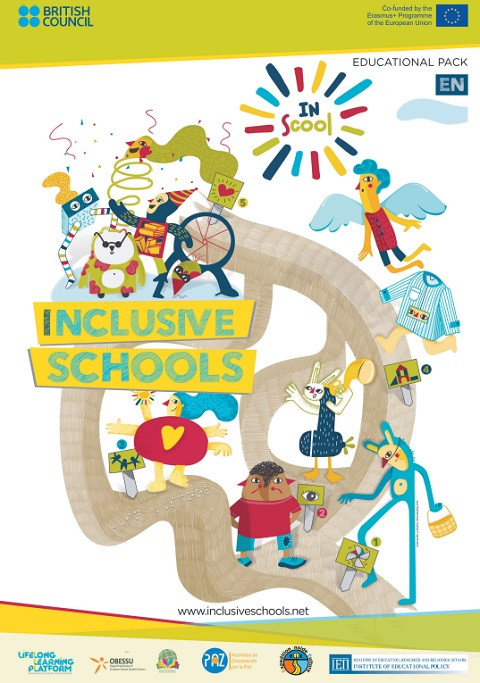 Inclusive Schools: Educational Pack (Inscool) Год публикации: 2019 Автор: Sian Williams Организация-автор: British Council | European Union (EU) This toolkit is designed to guide you flexibly, in ways that suit your school, through the start of a journey towards inclusion: improving personal and academic outcomes for all children and young people by focusing on their access to and participation in quality, relevant education. A key point to remember about this journey is that it does not have a final destination. Rather, it is about cumulative change that has, at its heart, a continuous focus on including more children and young people in learning and life at school: “an inclusive school is one that is on the move.” Inclusive Schools: Material Educativo (Inscool) Год публикации: 2019 Автор: Sian Williams Организация-автор: British Council | European Union (EU) Este kit de herramientas se diseñó para orientarle de una manera más flexible, con métodos adaptables a su centro educativo, en el inicio de un viaje hacia la inclusión: en este proceso se mejorarán los resultados personales y académicos de todos las/los menores y jóvenes poniendo el foco en su acceso a una educación de calidad y pertinente, y en su participación en ella. Un aspecto clave que cabe recordar respecto a este viaje es que no tiene un destino definitivo. Más bien, se trata de un cambio acumulativo que alberga, en su núcleo, un propósito constante de incluir a más niñas/os y jóvenes en el aprendizaje y en la vida cotidiana del centro educativo: «una escuela inclusiva es aquella que está siempre en un proceso de evolución».