
Ресурсы
Изучайте широкий спектр ценных ресурсов ВГГ, чтобы углубить своё понимание и повысить эффективность исследований, просветительской деятельности, преподавания и обучения.
Найдено: 1,407
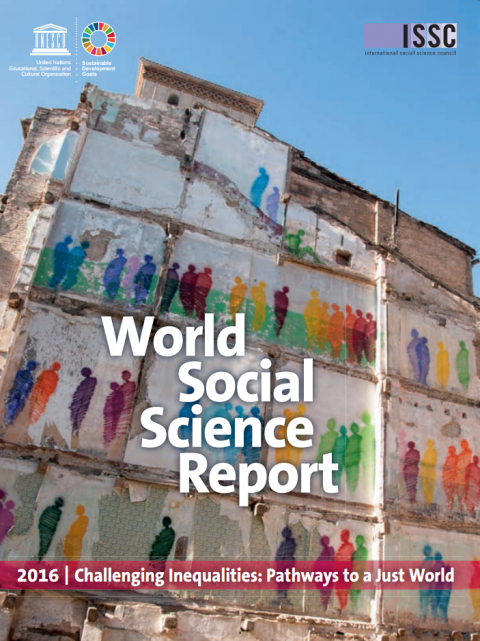 World social science report, 2016: Challenging inequalities; pathways to a just world Год публикации: 2016 Организация-автор: UNESCO Never before has inequality been so high on the agenda of policy-makers worldwide, or such a hot topic for social science research. More journal articles are being published on the topic of inequality and social justice today than ever before. This Report draws on the insights of over 100 social scientists and other thought leaders from all over the world, across various disciplines, to emphasize transformative responses to inequality at all levels, from the grass roots to global governance. Too many countries are investing too little in researching the long-term impact of inequality on the sustainability of their economies, societies and communities. Unless we address this urgently, inequalities will make the cross-cutting ambition of the Sustainable Development Goals (SDGs) to ‘leave no one behind’ by 2030 an empty slogan.
 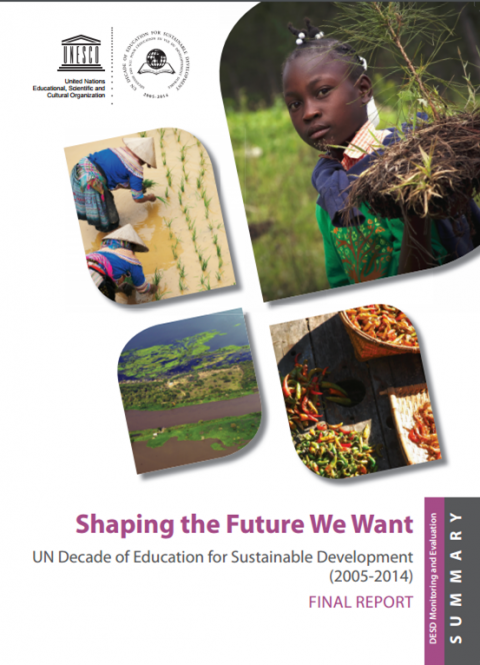 Shaping the future we want: UN decade of education for sustainable development (2005-2014); final report; summary Год публикации: 2014 Автор: Carolee Buckler | Heather Creech Организация-автор: UNESCO This summary for policy- and decision-makers provides a brief overview of the key findings and trends, a synopsis of highlights, challenges and actions across all levels and areas of education, and steps for scaling up actions presented in the UNESCO 2014 Global Monitoring and Evaluation Final Report, Shaping the Future We Want – UN Decade of Education for Sustainable Development (2005-2014). The Final Report provides an assessment of progress towards embedding education for sustainable development (ESD) into education systems and into sustainable development efforts. Building on the findings of the past two DESD Global Monitoring and Evaluation reports, and based upon Member States’ and other stakeholders’ assessments of the current state of ESD, the Final Report maps the achievements and challenges of a decade of progress and action on ESD at the global, national, regional and local levels, and within all areas and levels of education. The Final Report concludes that a solid foundation has been laid for ESD at the end of the DESD, achieved by raising awareness, influencing policies and generating significant numbers of good practice projects in all areas of education and learning. At the end of 10 years of work, 10 key findings and trends have emerged that will guide ESD into the future. The report also shows that despite the successes, a full integration of ESD into education systems has yet to take place in most countries. Façonner l’avenir que nous voulons: Décennie des Nations Unies pour l’éducation au service du développement durable (2005-2014) RAPPORT FINAL Год публикации: 2014 Автор: Carolee Buckler | Heather Creech Организация-автор: Organisation des Nations Unies pour l'éducation, la science et la culture (UNESCO) Destiné aux responsables politiques et aux décideurs, ce document résume les principales conclusions et les grandes tendances, présente une synthèse des points clés, des défis et des initiatives à tous les niveaux et dans tous les domaines de l’éducation, ainsi que les mesures à adopter pour intensifier les actions décrites dans le Rapport final de suivi et d’évaluation 2014, Façonner l’avenir que nous voulons − Décennie des Nations Unies pour l’éducation au service du développement durable (2005-2014). Le Rapport final de suivi et d’évaluation examine les progrès qui ont été accomplis afin d’intégrer l’Éducation au développement durable (EDD) aux systèmes éducatifs et aux efforts déployés en faveur du développement durable. À partir des conclusions des deux précédents rapports mondiaux de suivi et d’évaluation de la Décennie et de l’évaluation de l’état actuel de l’EDD par les États membres et autres parties prenantes, ce rapport final décrit les résultats obtenus et les problèmes rencontrés au terme de dix années de progrès et d’action sur le plan de l’EDD aux niveaux mondial, national, régional et local, ainsi que dans tous les domaines et à tous les niveaux de l’éducation. Le rapport note en conclusion qu’au terme de la Décennie, l’EDD repose désormais sur des fondements solides et ce, grâce à une prise de conscience renforcée, à l’influence exercée sur les politiques et à la réalisation d’un grand nombre de projets respectueux des bonnes pratiques dans tous les domaines de l’éducation et de l’apprentissage. Les dix conclusions et tendances clés qui se dégagent à l’issue de ces dix années de travail serviront à l’avenir de guide à l’EDD. Le rapport montre également qu’en dépit des progrès accomplis, dans la plupart des pays, l’EDD n’a toujours pas été pleinement intégrée aux systèmes éducatifs.
 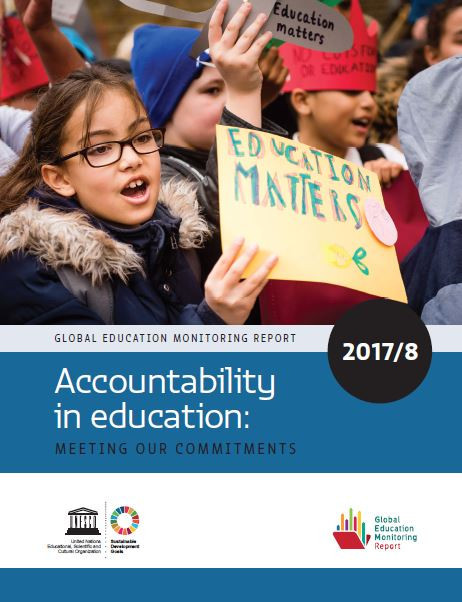 Accountability in Education: Meeting Our Commitments: Global Education Monitoring Report, 2017/8 Год публикации: 2017 Организация-автор: UNESCO The second edition of the Global Education Monitoring Report (GEM Report) presents the latest evidence on global progress towards the education targets of the UN Sustainable Development Goals.With hundreds of millions of people still not going to school, and many not achieving minimum skills at school, it is clear education systems are off track to achieve global goals. The marginalized currently bear the most consequences but also stand to benefit the most if policy-makers pay sufficient attention to their needs. Faced with these challenges, along with tight budgets and increased emphasis on results-oriented value for money, countries are searching for solutions. Increased accountability often tops the list.The 2017/8 GEM Report shows the entire array of approaches to accountability in education. It ranges from countries unused to the concept, where violations of the right to education go unchallenged, to countries where accountability has become an end in itself instead of a means to inclusive, equitable and high-quality education and lifelong learning for all.The report emphasizes that education is a shared responsibility. While governments have primary responsibility, all actors – schools, teachers, parents, students, international organizations, private sector providers, civil society and the media – have a role in improving education systems.The report emphasizes the importance of transparency and availability of information but urges caution in how data are used. It makes the case for avoiding accountability systems with a disproportionate focus on narrowly defined results and punitive sanctions. In an era of multiple accountability tools, the report provides clear evidence on those that are working and those that are not.
 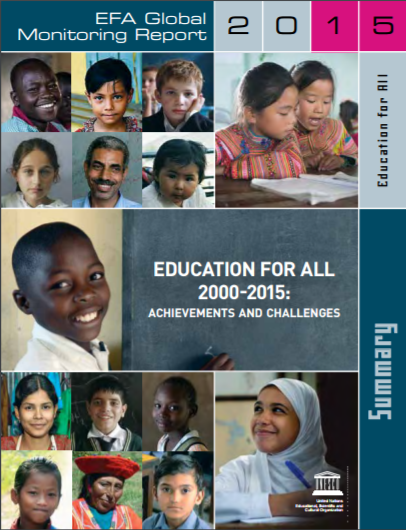 Education for All 2000-2015: Achievements and Challenges; EFA Global Monitoring Report, 2015; Summary Год публикации: 2015 Организация-автор: UNESCO At the World Education Forum in Dakar, Senegal, in 2000, governments from 164 countries, together with representatives of regional groups, international organizations, donor agencies, non-government organizations (NGOs) and civil society, adopted a Framework for Action to deliver Education for All (EFA) commitments. The Dakar Framework comprised 6 goals and their associated targets to be achieved by 2015, and 12 strategies to which all stakeholders would contribute. The EFA Global Monitoring Report (GMR) has monitored progress on an almost annual basis towards the EFA goals and the two education-related Millennium Development Goals (MDGs). The 2015 GMR provides a complete assessment of progress since 2000 towards the target date for reaching the Dakar Framework’s goals. It takes stock of whether the world achieved the EFA goals and stakeholders upheld their commitments. It explains possible determinants of the pace of progress. Finally, it identifies key lessons for shaping the post-2015 global education agenda. L'Education pour tous 2000-2015: progrès et enjeux, rapport mondial de suivi sur l'EPT, 2015, résumé Год публикации: 2015 Организация-автор: Organisation des Nations Unies pour l'éducation, la science et la culture (UNESCO) At the World Education Forum in Dakar, Senegal, in 2000, governments from 164 countries, together with representatives of regional groups, international organizations, donor agencies, non-government organizations (NGOs) and civil society, adopted a Framework for Action to deliver Education for All (EFA) commitments. The Dakar Framework comprised 6 goals and their associated targets to be achieved by 2015, and 12 strategies to which all stakeholders would contribute. The EFA Global Monitoring Report (GMR) has monitored progress on an almost annual basis towards the EFA goals and the two education-related Millennium Development Goals (MDGs). The 2015 GMR provides a complete assessment of progress since 2000 towards the target date for reaching the Dakar Framework’s goals. It takes stock of whether the world achieved the EFA goals and stakeholders upheld their commitments. It explains possible determinants of the pace of progress. Finally, it identifies key lessons for shaping the post-2015 global education agenda.
 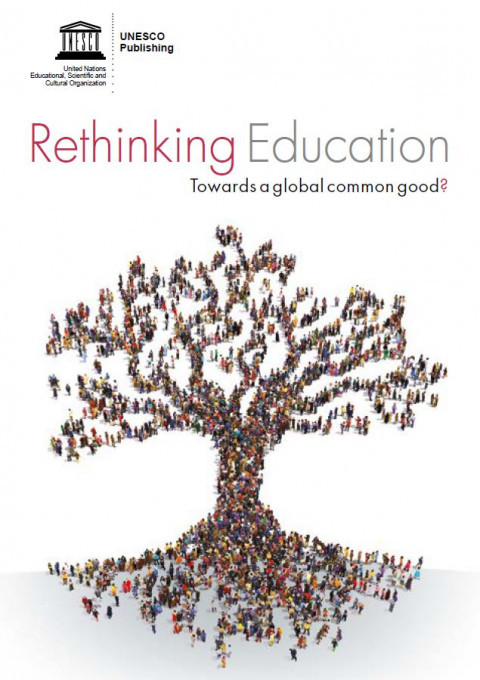 Rethinking Education: Towards a Global Common Good? Год публикации: 2015 Организация-автор: UNESCO The changes in the world today are characterized by new levels of complexity and contradiction. These changes generate tensions for which education is expected to prepare individuals and communities by giving them the capability to adapt and to respond. This publication contributes to rethinking education and learning in this context. It builds on one of UNESCO’s main tasks as a global observatory of social transformation with the objective of stimulating public policy debate.It is a call for dialogue among all stakeholders. It is inspired by a humanistic vision of education and development, based on respect for life and human dignity, equal rights, social justice, cultural diversity, international solidarity, and shared responsibility for a sustainable future. These are the fundamentals of our common humanity. This book enhances the vision provided by the two landmark UNESCO publications: Learning to Be: The world of education today and tomorrow (1972), the ‘Faure Report’, and Learning: The treasure within (1996), the ‘Delors Report’.
  Orientaciones Técnicas Internacionales sobre Educación en Sexualidad: un enfoque basado en evidencia orientado a escuelas, docentes y educadores de la salud Год публикации: 2009 Организация-автор: Organización de las Naciones Unidas para la Educación, la Ciencia y la Cultura (UNESCO) El presente documento Orientaciones Técnicas Internacionales, basado en un riguroso análisis de la evidencia existente sobre programas de educación en sexualidad, está orientado a profesionales y a personas responsables de la toma de decisiones de los sectores salud y educación. Este documento (Volumen 1) se centra en aquellos elementos que justifican la educación en sexualidad y ofrece sólidas recomendaciones técnicas sobre las características que todo programa efectivo debe tener. El documento acompañante (Volumen 2) cubre los temas y objetivos de aprendizaje que se deben abordar en los diferentes tramos etarios en un programa básico de educación en sexualidad destinado a niños, niñas y jóvenes entre las edades de 5 a 18 y más años e incluye una bibliografía de referencias. El documento Orientaciones Técnicas Internacionales es relevante no sólo para los países más afectados por el VIH y el SIDA, sino también para los que exhiben una epidemia de baja prevalencia y alta concentración. Principes directeurs internationaux sur l'éducation sexuelle: une approche factuelle à l'intention des établissements scolaires, des enseignants et des professionnels de l'éducation à la santé Год публикации: 2009 Организация-автор: Organisation des Nations Unies pour l'éducation, la science et la culture (UNESCO) S’appuyant sur un examen rigoureux et actuel des donnees de programmes d’education sexuelle, ces Principes directeurs internationaux sur l’education sexuelle s’adressent aux decideurs et professionnels des secteurs de l’education et de la sante. Ils sont destines a aider les autorites en charge de ces deux secteurs et autres secteurs connexes a elaborer et mettre en oeuvre des programmes et des materiels d’education sexuelle en milieu scolaire. Le Volume I met l’accent sur le bien-fonde d’une education sexuelle et fournit des conseils techniques avises sur les caracteristiques des programmes efcaces. Il s’accompagne d’un document parallele (Volume II) qui decrit les themes a aborder et les objectifs d’apprentissage a atteindre dans le cadre d’un ‘cours de base minimum’ d’education sexuelle destine aux enfants et aux jeunes ages de 5 a 18 ans et plus, et qui contient une bibliographique de ressources utiles. Ces Principes directeurs internationaux sont d’une grande utilite non seulement pour les pays les plus affectes par le VIH et le SIDA, mais aussi pour les pays qui connaissent une prevalence faible et un contexte d’epidemie concentree.
  All human beings... a manual for human rights education Год публикации: 1998 Автор: Kaisa Savolainen | Francine Best | Patrice Meyer-Bisch | Betty Reardon Организация-автор: UNESCO The World Conference on Human Rights (Vienna, 1993) took the position that human rights education, training and public information were essential in order to create and promote stable and harmonious relations among different communities and to foster mutual understanding, tolerance and peace.UNESCO has prepared this Manual for Human Rights Education as a contribution to the fiftieth anniversary of the Universal Declaration of Human Rights on 10 December 1998 and to the United Nations Decade for Human Rights Education (1995–2004). While intended mainly for educators, it may also be useful to secondary-school students and in the context of non-formal education.The Manual is the result of teamwork, with participation by numerous educators and experts from various regions of the world. A preliminary version was submitted to the delegates of UNESCO Member States at the 29th session of the Organization’s General Conference and has since been tested in several schools throughout the world.The Manual is addressed to primary- and secondary-school teachers and to instructors in non-formal education for children and adults. It is a teaching aid providing both theory and practical advice. However, parts of it can be used directly, without any teacher, by young people from the age of 14 upwards.Part 1 sets out an approach to the concepts essential if human rights education is to be rigorous, have a scientific basis, expand knowledge and promote thought. This part is to be read by teachers who wish to impart human rights education. It can be understood by secondary students aged 14 and over. It incorporates the basic components of the Declaration and Integrated Framework of Action on Education for Peace, Human Rights and Democracy (1994).Part 2 is addressed to schoolteachers and those in positions of responsibility. It is essentially a tool for teaching. It opens up avenues, makes suggestions and gives advice on how all educational disciplines can embrace the objectives inherent in human rights education. Obviously all teachers are free, in the light of their own cultures and individual pedagogical choices, to invent and create approaches and situations different from those suggested here.Part 3 presents a number of pedagogical examples that have been tried out and that provide an approach for educational work concerning a specific right. The plan follows that of the Universal Declaration of Human Rights, which is quoted and referred to at length. This part may be regarded as an educational demonstration of the features of this declaration, the fiftieth anniversary of which is being celebrated by UNESCO and the United Nations in 1998.All teachers and organizers can be guided by the experiments presented here to encourage information, training and reflection. There is no need to follow any particular order. As the need arises, a particular right (such as the right to health care or the right to live in a well-balanced environment) can be introduced before or after another right, or the focus may be on a single right.The Manual does not seek to be exhaustive but rather to propose material which can be developed and supplemented in an ongoing process. It will be for educators and learners, in their own cultural contexts, to discover how human rights can acquire meaning in their daily lives.