
Ресурсы
Изучайте широкий спектр ценных ресурсов ВГГ, чтобы углубить своё понимание и повысить эффективность исследований, просветительской деятельности, преподавания и обучения.
Найдено: 1,407
 La enseñanza del Holocausto en América Latina - Los desafios para los educadores y legisladores Год публикации: 2015 Организация-автор: Organisation des Nations Unies pour l'éducation, la science et la culture (UNESCO) L'Holocauste est devenu un point de référence dans le monde entier afin de sensibiliser sur les violations des droits de l'homme et de la violence de l'État. Quelle est l'importance de l'enseignement de l'Holocauste dans les régions du monde qui ont aucun rapport direct avec l'histoire du peuple juif et les crimes du nazisme, en particulier en Amérique latine? Y at-il une augmentation des pratiques éducatives pertinentes au niveau international en raison de l'expansion de l'éducation sur l'Holocauste? Comment les enseignants peuvent aborder un sujet si complexe et chargé d'émotion dans l'évolution des sociétés multiculturelles? Cette publication de l'UNESCO rassemble les contributions d'historiens et éducateurs du monde entier et les cadres débats actuels dans le domaine importants, en insistant sur les questions que les éducateurs en Amérique latine sont confrontés et révéler les raisons pour lesquelles il est essentiel de continuer à enseigner l'histoire de l'Holocauste dans le monde aujourd'hui , peu importe où nous vivons. (Par l'éditeur - traduction)
 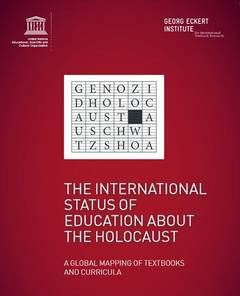 The International status of education about the Holocaust : A global mapping of textbooks and curricula Год публикации: 2015 Организация-автор: UNESCO This publication by UNESCO and the Georg Eckert Institute documents ways in which the Holocaust is presented in secondary school level history and social studies curricula worldwide, and conceptualized and narrated in textbooks from twenty-six countries, with all continents represented. Historical understandings of the Holocaust are defined in terms of the spatial and temporal scales with which the event is portrayed, the protagonists involved, interpretative patterns (according to definitions, comprehensiveness, causes, relativization or banalization), narrative techniques and viewpoints, didactic methods, and national idiosyncrasies. The study is based on 272 currently valid curricula from 135 countries, and on 89 textbooks published in 26 countries since 2000. The aim of the study is primarily to document information in such a way that it reflects local understandings of the Holocaust, principally by recording concepts and narratives of the Holocaust found in educational media currently in use in schools. The findings show both convergence and divergence in the representations analysed. The Holocaust is subject to shared patterns of representation, which include selectivity, personalization, appropriation, screening and omission. It is also subject to narrative idiosyncrasies. One of the main trends worldwide is domestication, a process whereby countries place emphasis on the local significance of the event or appropriate them in the interests of local populations. Drawing on such national and international patterns of representation, the publication concludes by formulating recommendations for future curricula and textbook narratives about the Holocaust. These recommendations relate to such issues as the use of terms, the comprehensiveness of historical facts, the definition of causes, the combination of universal and local approaches, and the development of historical literacy. (By the publisher) Le statut international de l'éducation sur l'Holocauste: Une cartographie mondiale des manuels et des programmes Год публикации: 2015 Организация-автор: Organisation des Nations Unies pour l'éducation, la science et la culture (UNESCO) Cette publication par l'UNESCO et l'Institut Georg Eckert documente façons dont l'Holocauste est présenté dans l'histoire du niveau de l'école et de programmes d'études sociales secondaire dans le monde, et conceptualiser et narré dans les manuels de vingt-six pays, avec tous les continents représentés. compréhensions historiques de l'Holocauste sont définis en fonction des échelles spatiales et temporelles avec laquelle l'événement est dépeint, les acteurs impliqués, les modèles d'interprétation (selon les définitions, l'intégralité, causes, relativisation ou banalisation), les techniques narratives et des points de vue, des méthodes didactiques, et les particularités nationales. L'étude est basée sur 272 programmes en cours de validité à partir de 135 pays, et 89 manuels publiés dans 26 pays depuis 2000. L'objectif de l'étude est d'abord de documenter l'information de façon à ce qu'il reflète la vision locale de l'Holocauste, principalement par l'enregistrement les concepts et les récits de la Shoah trouvés dans les médias éducatifs actuellement en usage dans les écoles. Les résultats montrent à la fois la convergence et de divergence dans les représentations analysées. L'Holocauste est soumis à des modèles communs de représentation, qui comprennent la sélectivité, la personnalisation, l'appropriation, le dépistage et l'omission. Il est également soumis à des particularités narratives. L'une des principales tendances dans le monde est la domestication, un processus par lequel les pays mettent l'aCECnt sur l'importance locale de l'événement ou les approprient dans l'intérêt des populations locales. Dessin sur ces modèles nationaux et internationaux de représentation, de la publication conclut en formulant des recommandations pour les futurs programmes et manuels scolaires récits sur l'Holocauste. Ces recommandations portent sur des questions telles que l'utilisation des termes, l'exhaustivité des faits historiques, la définition des causes, la combinaison des approches universelles et locales, ainsi que le développement de l'alphabétisation historique. (Par l'éditeur)
 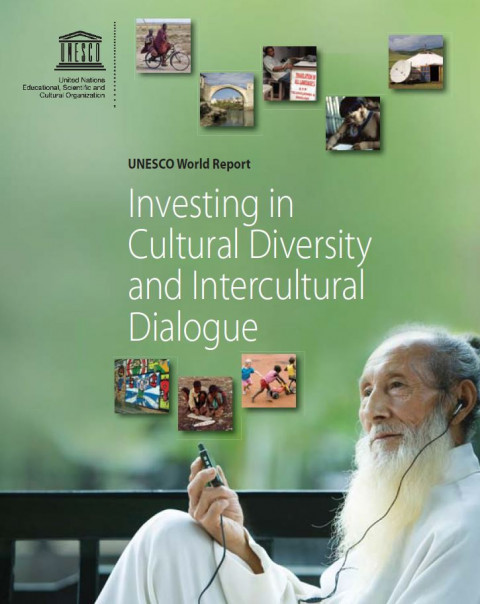 Investing in Cultural Diversity and Intercultural Dialogue: UNESCO World Report Год публикации: 2009 Организация-автор: UNESCO This report analyzes all aspects of cultural diversity, which has emerged as a key concern of the international community in recent decades, and maps out new approaches to monitoring and shaping the changes that are taking place. It highlights, in particular, the interrelated challenges of cultural diversity and intercultural dialogue and the way in which strong homogenizing forces are matched by persistent diversifying trends. The report proposes a series of ten policy-oriented recommendations, to the attention of States, intergovernmental and non-governmental organizations, international and regional bodies, national institutions and the private sector on how to invest in cultural diversity.Emphasizing the importance of cultural diversity in different areas (languages, education, communication and new media development, and creativity and the marketplace) based on data and examples collected from around the world, the report is also intended for the general public. It proposes a coherent vision of cultural diversity and clarifies how, far from being a threat, it can become beneficial to the action of the international community. Investir dans la diversité culturelle et le dialogue interculturel: rapport mondial de l'UNESCO Год публикации: 2009 Организация-автор: Organisation des Nations Unies pour l'éducation, la science et la culture (UNESCO) Au carrefour de la réflexion intellectuelle, scientifique et politique, ce second Rapport mondial vise à faire le point sur tout ce qui se dit, se pense et se fait au nom de la diversité culturelle, et à identifier les conditions nécessaires pour faire de la diversité un atout et non une menace, une source de renouveau pour les politiques publiques au service du développement, de la cohésion sociale et de la paix.Ce Rapport mondial vise à dresser un état des lieux des enjeux de la diversité culturelle, à examiner un certain nombre d’idées reçues et à proposer des recommandations opérationnelles dans un certain nombre de domaines transversaux tels que les identités et le dialogue, l’avenir des langues et l’éducation interculturelle, le pluralisme des médias et des industries culturelles, le monde de l’entreprise, les savoirs locaux, la biodiversité, le développement durable, la gouvernance et les droits de l’homme. Invertir en la diversidad cultural y el diálogo intercultural: informe mundial de la UNESCO Год публикации: 2009 Организация-автор: Organización de las Naciones Unidas para la Educación, la Ciencia y la Cultura (UNESCO) La diversidad cultural ha comenzado a suscitar un interés fundamental al iniciarse el nuevo siglo. Sin embargo, los significados que se le asignan a esta expresión "comodín" son tan variados como cambiantes. Algunos consideran que la diversidad cultural es intrínsecamente positiva, en la medida en que se refiere a un intercambio de la riqueza inherente a cada cultura del mundo y, por ende, a los vínculos que nos unen en los procesos de diálogo e intercambio. Para otros, las diferencias culturales son la causa de que perdamos de vista lo que tenemos en común en cuanto seres humanos y, por lo tanto, constituyen la raíz de numerosos conflictos.Este segundo diagnóstico resulta hoy tanto más digno de crédito cuanto que la mundialización ha aumentado los puntos de interacción y fricción entre las culturas, originando tensiones, repliegues y reivindicaciones en relación con la identidad, en particular de índole religiosa, que se convierten en fuentes potenciales de conflicto. Por consiguiente, el desafío fundamental consistiría en proponer una perspectiva coherente de la diversidad cultural y, por su conducto, aclarar cómo, lejos de ser una amenaza, puede contribuir a las medidas que adopte la comunidad internacional. Éste es el objetivo esencial del presente informe.
 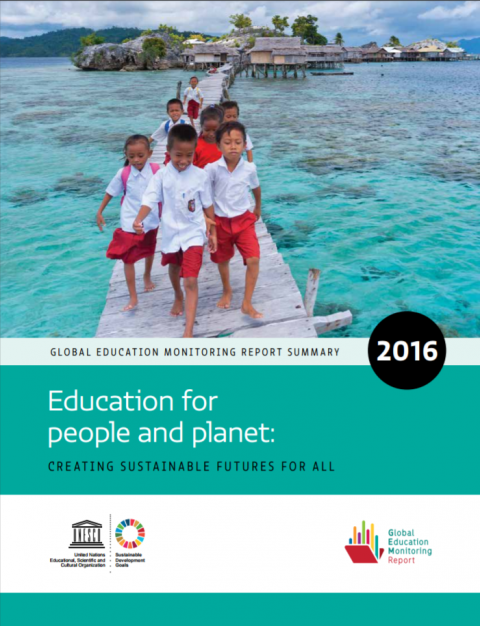 [Summary] Education for People and Planet: Creating sustainable Futures for All, Global Education Monitoring Report, 2016; Summary Год публикации: 2016 Организация-автор: UNESCO Education for People and Planet: Creating Sustainable Futures for All explores the complex relationship between education and the new 2030 Agenda for Sustainable Development, covering six fundamental pillars – Planet, Prosperity, People, Peace, Place and Partnerships. This report shows that education will not deliver its full potential unless participation rates increase dramatically and sustainable development guides education system reform. It also warns of the destructive impact that climate change, conflict, unsustainable consumption and the increasing gap between rich and poor have on education. A huge transformation is needed if we are to create sustainable futures for all.
  [Резюме] Подотчетность в образовании: выполнение обязательств. Резюме всемирного доклада по мониторингу образования Год публикации: 2017 Организация-автор: Организация Объединенных Наций по вопросам образования, науки и культуры (UNESCO) Во второй публикации из серии Всемирного доклада по мониторингу образования (ВДМО) за 2017 год был продолжен анализ прогресса в достижении цели в области устойчивого развития, касающейся образования (ЦУР 4) и выполнения десяти предусмотренных в рамках этой цели задач. Кроме этого, задач, связанных с образованием и включенных в Повестку дня в области устойчивого развития.Наряду с этим в документе рассматриваются аспекты, касающиеся подотчетности в сфере образования, в частности, анализируются возможности повышения всеми вовлеченными сторонами эффективности, действенности и справедливости предоставляемых образовательных услуг. Доклад включает обзор различных механизмов, используемых для обеспечения подотчетности правительств, школ, учителей, родителей, международных организаций и частных структур в интересах всеохватности, справедливости и качества образования.На основе оценки эффективности подходов, существующих в вопросах подотчетности, и анализа внешних факторов, которые могут влиять на эту эффективность, в ВДМО 2017/18 гг. были сформулированы конкретные рекомендации, направленные на укрепление систем образования. [요약본] 교육의 책무성: 우리의 공약을 어떻게 이행할 것인가; 세계 교육 현황 보고서 2017/8 Год публикации: 2017 Организация-автор: 유네스코 두 번째로 발간되는 세계 교육 현황 보고서는 유엔 지속가능발전목표의 교육 목표를 향한 전 세계적 이행 현황에 대한 최신 증거를 제시합니다.여전히 수억 명의 사람들이 학교에 다니지 못하고, 많은 이들이 학교에서 최소한의 기술을 습득하지 못하고 있습니다. 이것은 현 교육 시스템이 글로벌 목표를 달성하기 위한 올바른 방향으로 나아가지 못하고 있음을 나타냅니다. 현재 소외 계층이 이러한 여파를 가장 크게 받고 있지만, 정책 입안자가 이들의 필요에 충분히 주의를 기울인다면 이들이 가장 큰 혜택을 받을 수도 있습니다. 이러한 과제에 직면해 있고 예산 부족 및 돈에 합당한 결과 지향적 가치의 강조에 어려움을 겪고 있는 국가들은 해결책을 모색하고 있습니다. 대부분의 경우 책무성 증진이 최우선 해결책으로 명시되고 있습니다.2017/8 세계 교육 현황 보고서 요약본은 교육의 책무성에 대한 모든 접근법을 보여 줍니다. 이 보고서는 책무성에 대한 개념이 낯선 국가 및 교육에 대한 권리 침해가 문제시 되지 않는 국가에서부터 책무성이 그 자체로 포괄적이고 공평한 양질의 교육과 평생 학습을 위한 수단이 아닌 목적이 된 국가까지를 포괄합니다.본 보고서는 교육이 공동의 책임이라는 점을 강조합니다. 교육에 대한 기본적인 책임은 정부에 있지만, 학교, 교사, 학부모, 학생, 국제기구, 민간 부문 제공자, 시민사회 및 미디어 등 모든 주체는 교육제도 향상을 위한 역할을 지닙니다. 본 보고서는 투명성과 정보 가용성의 중요성을 강조하지만 자료 사용 방법에 대한 주의를 촉구합니다. 협소하게 정의된 결과와 처벌적 제재에 대한 불균형적 집중은 책무성 시스템을 회피하게 만드는 경우를 만듭니다. 여러 책무성 도구들이 존재하는 시대에 본 보고서는 어떠한 도구가 효과가 있고 그렇지 않은지에 대한 분명한 증거를 제시하고 있습니다. Sandwatch: adapting to climate change and educating for sustainable development Год публикации: 2010 Автор: Gillian Cambers | Paul Diamond Организация-автор: UNESCO Sandwatch provides a framework for children, youth and adults, with the help of teachers and local communities, to work together to critically evaluate the problems and conflicts facing their beach environments, and to develop sustainable approaches to address these issues. It also helps beaches become more resilient to climate change. The preliminary chapters of this publication focus on how to get started with Sandwatch activities and examine ways to address climate change impacts. The principle aim of this publication is to document the Sandwatch methodology: monitoring, analysing, sharing and taking action. An activities-orientated approach is used to provide step-by-step instructions to cover monitoring methods and data analysis, including observation and recording, erosion and accretion, beach composition, human activities, beach debris, water quality, waves, longshore currents, plants and animals. The activities are related to (a) sustainable development issues, including: beach ownership, mining beaches for construction material, conflict resolution between different beach users, pollution, conservation of endangered species, and (b) climate change adaptation issues: sea level rise, rising temperatures, ocean acidification and increased extreme events. Ways to share findings and create a Sandwatch network are detailed including methods such as the use of local media, websites, social networking and video production. Finally, ways are discussed to design, plan and implement a Sandwatch project to fulfill one or all of the following criteria: (a) addressing a particular beach-related issue, (b) enhancing the beach, and (c) promoting climate change adaptation. Sandwatch stands as an example of Education for Sustainable Development in action, and is being targeted as one of several flagship projects for the United Nations Decade of Education for Sustainable Development (2005–2014). As the world confronts the growing threat of climate change, Sandwatch presents an opportunity to help people and ecosystems respond to present and future changes in a practical manner. Beaches are among the ecosystems most at risk from climate change as they face rising sea levels and increased more intense storms. By contributing to ecosystem health and resilience, Sandwatch can help people from all walks of life learn about climate change and how their actions can contribute to the adaptation process.