
Ресурсы
Изучайте широкий спектр ценных ресурсов ВГГ, чтобы углубить своё понимание и повысить эффективность исследований, просветительской деятельности, преподавания и обучения.
Найдено: 875
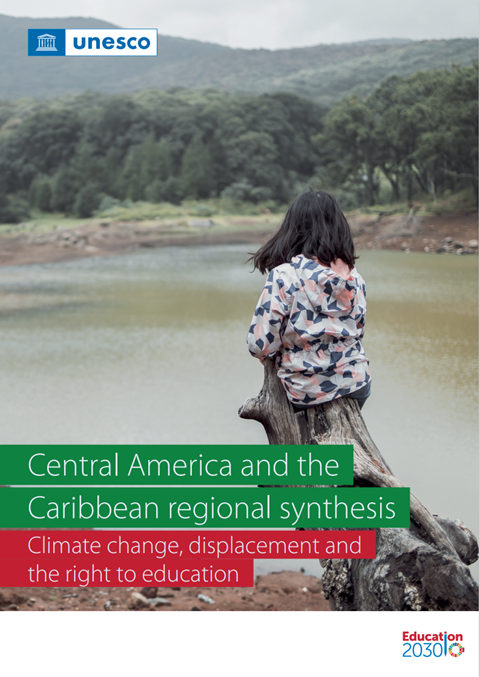 Central America and the Caribbean regional synthesis: climate change, displacement and the right to education Год публикации: 2023 Организация-автор: UNESCO From rising sea level to drought and increasingly frequent natural disasters - the effects of climate change are well-known today. However, its effect on human mobility is just coming to the forefront of the political discussion. In 2020 alone, 30.7 million people globally were displaced by natural disasters. Central America and the Caribbean region is prone to the effects of climate change and displacement due to its socioeconomic characteristics and geographic location. Country case studies were carried out in the Bahamas, Cuba, the Dominican Republic, Guatemala, and Jamaica to examine the impacts on the right to education in the region. The research shows that climate change directly threatens education through the destruction of schools and property. It also leads people across borders where their legal residency and right to education are not guaranteed. This report aims to guide policy-makers on how to ensure education is protected in the face of climate change and displacement. The report is one of four being developed and will contribute to UNESCO’s global initiative on climate change, displacement and the right to education. It will inform the development of a Global Report with policy recommendations.
 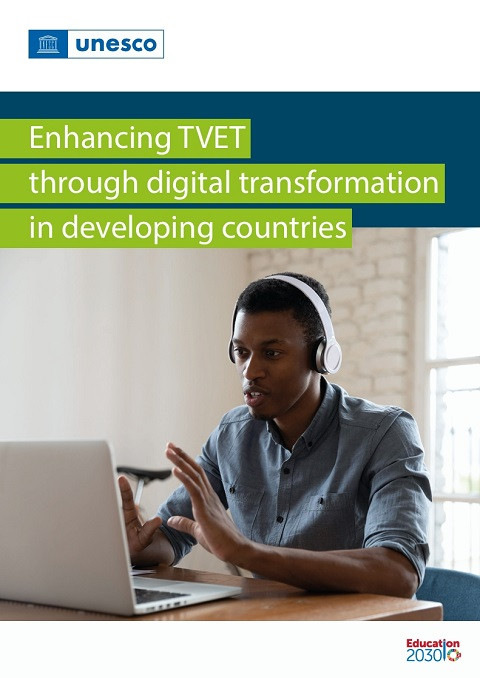 Enhancing TVET through Digital Transformation in Developing Countries Год публикации: 2023 Организация-автор: UNESCO Technological advancements and digitalization are profoundly reshaping our work and lifestyle, business models and operations, and government policy choices. Digital transformation in technical and vocational education and training (TVET) is the planned and structured introduction of automated and streamlined processes within institutions and national technical and vocational education and training (TVET) systems through digital technology, with the goal of enhancing their scope, scale, efficiency and effectiveness and ultimately, driving their more sustainable development. This document provides overall perspective and five country case studies on digital transformation in TVET. Most countries studied face similar enabling factors: the digital infrastructure available; legal and policy frameworks; focused institutional change to improve the acquisition of digital skills; and the promotion of equality and inclusivity. To understand how digital transformation in TVET is occurring, the report analyses it at four levels: technical and technological development; curriculum and qualifications; teaching and learning using technology; and its contribution to the sustainability and resilience of societies.
  Chile: Artificial Intelligence Readiness Assessment Report Год публикации: 2023 Организация-автор: UNESCO The Readiness Assessment Methodology (RAM) is a diagnostic tool intended to assist Member States in upholding their commitment to the Recommendation by helping them understand how prepared they are to implement AI ethically and responsibly for all their citizens. The RAM questionnaire forms the basis for the first section of this readiness assessment report, providing a comprehensive but detailed overview of laws, institutions, and the cultural, social, and human capital landscape shaping AI. This is then complemented in the second section by a summary of concerns and priorities raised during a national multistakeholder consultation that was conducted in 2023. Finally, the third section presents a roadmap and recommendations for building capacities across national institutions, laws and policies, and human capital, to achieve a responsible AI ecosystem aligned with the UNESCO Recommendation. As the very first country to complete the RAM and the country report, Chile is blazing the trail not only for Latin America but the world. We applaud the initiative the Chilean government has taken to update its AI strategy putting ethics and governance front and centre, and thank them for inviting UNESCO to assist in this endeavour. The report presented here reveals a complex and rapidly-changing landscape. In the legal and regulatory dimension, the 2021 National Artificial Intelligence Policy (NAIP) represents a substantive and wide-ranging commitment to developing AI. One of the key recommendations of this report is to fully integrate the UNESCO Recommendation into the NAIP’s axis of Ethics, Regulation, and Socioeconomic Impacts. Notably, the RAM reveals the pressing need to update legislation around data protection and cybersecurity to meet the challenges of AI. It also highlights several areas the Chilean government is actively working to develop. [...] Overall, this report presents a fundamentally optimistic vision that we at UNESCO share: that ethical governance and responsible regulation of AI is entirely consistent with innovation and economic growth, and is essential for ensuring a technological ecosystem that benefits the public good. In drawing a clear line from the RAM data through to the multistakeholder consultations and the recommendations, Chile has a clear roadmap for how to get there. (This text has been extracted from the Foreword of the publication)
  Solidarity as the Future of Education: Perspectives From the Ibero-American Experience of Service-Learning Год публикации: 2024 Автор: Elena Massat Организация-автор: UNESCO | Latin American Center for Service-Learning (CLAYSS) With this work we have proposed to put into dialogue the recent UNESCO document “Reimagining our futures together. A new social contract for education. Report of the international commission on the futures of education” with the theory and practice of service-learning in Ibero-America. We would like to show how UNESCO's proposal for education for the future can already be verified as a practice in many educational institutions in the region, which develop solidarity service-learning projects even in the most vulnerable contexts. In these experiences, solidarity ceases to be just learning content, to become an educational process, a pedagogy to learn to solve complex problems of reality, and to use the SDGs as a “curriculum” for the education of the future (UNESCO, 2022:54). These practices are deeply innovative, as the experts who comment on them point out, and we hope that they can be inspiring for many other educational institutions. La solidaridad como futuro de la educación: Perspectivas desde la experiencia iberoamericana del aprendizaje-servicio Год публикации: 2024 Автор: Elena Massat Организация-автор: Organización de las Naciones Unidas para la Educación, la Ciencia y la Cultura (UNESCO) | Latin American Center for Service-Learning (CLAYSS) Con esta obra nos hemos propuesto poner en diálogo el reciente documento de la UNESCO “Reimaginar juntos nuestros futuros. Un nuevo contrato social para la educación. Informe de la comisión internacional sobre los futuros de la educación.” con la teoría y práctica del aprendizaje-servicio en Iberoamérica. Quisiéramos evidenciar de qué manera la propuesta de educación para el futuro de UNESCO se puede ya verificar como práctica en muchas instituciones educativas de la región, que desarrollan proyectos de aprendizaje-servicio solidario aún en los contextos de mayor vulnerabilidad. En estas experiencias, la solidaridad deja de ser sólo contenido de aprendizaje, para transformarse en proceso educativo, en pedagogía para aprender a solucionar problemas complejos de la realidad, y usar a los ODS como “currículo” de la educación del futuro (UNESCO, 2022:54). Estas prácticas son profundamente innovadoras, como lo señalan los expertos que las comentan, y esperamos que puedan ser inspiradoras para muchas otras instituciones educativas.
 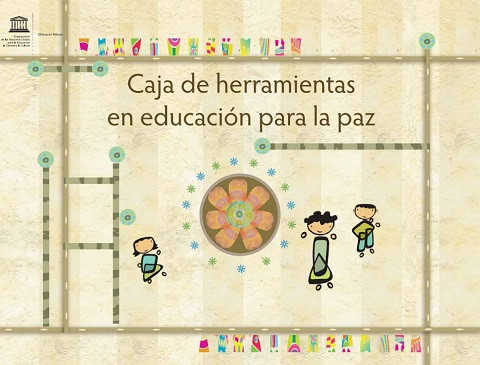 Peace Education Toolkit Год публикации: 2013 Автор: Luz Marfa Chapela Организация-автор: UNESCO The Peace Education Toolkit is made up of a series of recommended materials for basic education students and teachers. It includes books, stories and various pedagogical tools. Caja de herramientas en educación para la paz Год публикации: 2013 Автор: Luz Marfa Chapela Организация-автор: Organización de las Naciones Unidas para la Educación, la Ciencia y la Cultura (UNESCO) La caja de herramientas en educación para la paz se compone de una seria de materiales recomendados para estudiantes y maestros de educación básica. Incluye libros, historias y diversas herramientas pedagógicas.
  Homophobic and Transphobic Bullying in Educational Centers: Awareness Workshop for its Prevention; Facilitation Guide Год публикации: 2015 Организация-автор: UNESCO This publication presents strategies for teachers and educational authorities with the aim of addressing homophobic and transphobic violence from a Human Rights perspective. Through lessons that incorporate concepts, activities and reflections, it underlines the importance of respect for sexual diversity through the acquisition of knowledge, and the strengthening of teaching skills to overcome stigmas and prejudices. El Bullying Homofóbico y Transfóbico en los Centros Educativos: Taller de Sensibilización Para Su Prevención; Guía de Facilitación Год публикации: 2015 Организация-автор: UNESCO Esta publicación formula estrategias de apoyo a los docentes y las autoridades educativas con el objetivo de abordar la violencia homofóbica y transfóbica desde un enfoque de Derechos Humanos. A través de lecciones que incorporan conceptos, actividades y reflexiones, subraya la importancia del respeto a la diversidad sexual mediante la adquisición de conocimientos, y el fortalecimiento de competencias docentes para superar estigmas y prejuicios.
  Textbooks and Inclusive Education: Background Paper Prepared for the 2020 Global Education Monitoring Report, Inclusion and Education Год публикации: 2020 Автор: Eckhardt Fuchs | Marcus Otto | Simiao Yu Организация-автор: UNESCO | Global Education Monitoring Report Team This report, based on an analysis of a sample of textbooks from 28 countries, shows that the subject of inclusion has become increasingly significant in terms of both structure and subject matter, and particularly in the contexts of human rights and citizenship. Social diversity is also increasingly taken into account and reflected upon, albeit with varying emphasis on the differing dimensions of diversity, given that genuinely intersectional perspectives via which these are linked only occur in isolated and rudimentary cases. With regard to inclusiveness in the gender-related dimension, the overall picture of the textbook sample under analysis here is a heterogeneous one; further, the incorporation of LGTBQIA+ perspectives remains insufficient. Nevertheless, the textbooks examined here do show increasing critical reflection on the social discrimination of different groups, and, ultimately, we do observe a significant trend towards a more pronounced consideration and representation of different social groups and minorities.