
Ресурсы
Изучайте широкий спектр ценных ресурсов ВГГ, чтобы углубить своё понимание и повысить эффективность исследований, просветительской деятельности, преподавания и обучения.
Найдено: 1,407
 Fostering peaceful co-existence through analysis and revision of history curricula and textbooks in Southeast Europe: preliminary stocktaking report Год публикации: 2006 Автор: Jean Damascène Gasanabo | Jade Maître Организация-автор: UNESCO To accomplish this aim, the study reviews policies and processes for developing history curricula and producing history textbooks in ten participating countries: Albania, Bosnia and Herzegovina, Bulgaria, Croatia, Greece, Romania, Montenegro, Serbia, Slovenia and The Former Yugoslav Republic of Macedonia (FYROM). The resulting report has been compiled for the dual purpose of (1) presenting a composite picture of the educational policies and practices in these countries with regard to history teaching and textbook production, distribution and use; (2) laying the groundwork for the development of national and/or sub-regional initiatives aimed at improving the processes currently in place. Favoriser la coexistence pacifique par l'analyse et la révision des programmes et manuels d'histoire en Europe du Sud-Est: rapport préliminaire d'inventaire Год публикации: 2006 Автор: Jean Damascène Gasanabo | Jade Maître Организация-автор: Organisation des Nations Unies pour l'éducation, la science et la culture (UNESCO) Pour atteindre cet objectif, l'étude examine les politiques et les processus d'élaboration des programmes d'histoire et de la production de manuels d'histoire dans dix pays participants: Albanie, Bosnie-Herzégovine, Bulgarie, Croatie, Grèce, Roumanie, Monténégro, Serbie, Slovénie et l'ancienne République yougoslave de Macédoine (ARYM). Le rapport qui en résulte a été compilé dans le double but de (1) présentant une image composite des politiques et pratiques éducatives dans ces pays en ce qui concerne l'enseignement de l'histoire et de la production de manuels scolaires, la distribution et l'utilisation; (2) jeter les bases pour le développement d'initiatives nationales et / ou sous-régionaux visant à améliorer les processus actuellement en place.
 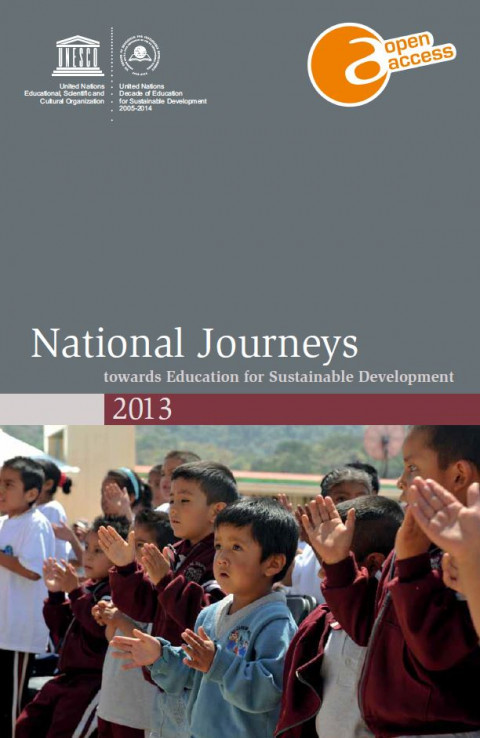 National journeys towards education for sustainable development, 2013: reviewing national ESD experiences from Costa Rica, Morocco, South Africa, Sweden, VietNam Год публикации: 2013 Организация-автор: UNESCO This publication has sourced information from a series of national reviews commissioned by UNESCO in 2011/2012 and was written by experts in Costa Rica, Morocco, South Africa, Sweden and Viet Nam. The countries presented in this report are not necessarily the ‘best’ examples of the region, as many other countries are also progressing effectively towards implementing Education for Sustainable Development (ESD). Rather, the countries selected illustrate the wide diversity of ESD approaches and initiatives taking place in different parts of the world. The national studies were then edited and harmonized before common themes and lessons learnt were identified to support other national efforts in moving towards the end of the UN Decade of Education for Sustainable Development. Voyages nationaux vers l'éducation pour le développement durable, 2013: examen des expériences nationales EDD du Costa Rica, Maroc, Afrique du Sud, Suède, Vietnam Год публикации: 2013 Организация-автор: Organisation des Nations Unies pour l'éducation, la science et la culture (UNESCO) Cette publication a source d'informations à partir d'une série d'examens nationaux mandatés par l'UNESCO en 2011/2012 et a été rédigé par des experts au Costa Rica, Maroc, Afrique du Sud, la Suède et le Viet Nam. Les pays présentés dans ce rapport ne sont pas nécessairement les exemples «meilleurs» de la région, comme beaucoup d'autres pays progressent également de manière efficace pour mettre en œuvre l'éducation pour le développement durable (EDD). Au contraire, les pays sélectionnés illustrent la grande diversité des approches et des initiatives qui se déroulent dans différentes parties du monde EDD. Les études nationales ont ensuite été modifiés et harmonisés avant les thèmes et les enseignements tirés ont été identifiés pour soutenir d'autres efforts nationaux dans le déplacement vers la fin de la Décennie des Nations Unies pour l'éducation au développement durable communs. التربية من أجل التنمية المستدامة: كتاب مرجعي Год публикации: 2013 Организация-автор: منظمة الأمم المتحدة للتربية والعلم والثقافة (UNESCO) The target audiences for the Education for Sustainable Development Sourcebook are primary and secondary teachers and mid-level decision-makers, who have responsibility for primary and secondary education. Another primary audience is teacher educators who work with pre-service and in-service primary and secondary school teachers. The purpose of the publication is to describe ways in which education for sustainable development (ESD) can be integrated into primary and secondary schooling. This collection of briefs is designed to complement other ESD materials published by UNESCO. The topics for the briefs were selected in consultation with UNESCO Field Offices and Institutes. The briefs for primary and secondary teachers are specifically written for professional educators who work in formal education settings. The briefs for teachers as well as those for decision-makers address “gaps” in the UNESCO ESD literature. Educación para el desarollo sostenible: libro de consulta Год публикации: 2012 Организация-автор: Organización de las Naciones Unidas para la Educación, la Ciencia y la Cultura (UNESCO) The target audiences for the Education for Sustainable Development Sourcebook are primary and secondary teachers and mid-level decision-makers, who have responsibility for primary and secondary education. Another primary audience is teacher educators who work with pre-service and in-service primary and secondary school teachers. The purpose of the publication is to describe ways in which education for sustainable development (ESD) can be integrated into primary and secondary schooling. This collection of briefs is designed to complement other ESD materials published by UNESCO. The topics for the briefs were selected in consultation with UNESCO Field Offices and Institutes. The briefs for primary and secondary teachers are specifically written for professional educators who work in formal education settings. The briefs for teachers as well as those for decision-makers address “gaps” in the UNESCO ESD literature. L'Education pour le développement durable: ouvrage de référence Год публикации: 2012 Организация-автор: Organisation des Nations Unies pour l'éducation, la science et la culture (UNESCO) The target audiences for the Education for Sustainable Development Sourcebook are primary and secondary teachers and mid-level decision-makers, who have responsibility for primary and secondary education. Another primary audience is teacher educators who work with pre-service and in-service primary and secondary school teachers. The purpose of the publication is to describe ways in which education for sustainable development (ESD) can be integrated into primary and secondary schooling. This collection of briefs is designed to complement other ESD materials published by UNESCO. The topics for the briefs were selected in consultation with UNESCO Field Offices and Institutes. The briefs for primary and secondary teachers are specifically written for professional educators who work in formal education settings. The briefs for teachers as well as those for decision-makers address “gaps” in the UNESCO ESD literature. Education for sustainable development: sourcebook Год публикации: 2012 Организация-автор: UNESCO The target audiences for the Education for Sustainable Development Sourcebook are primary and secondary teachers and mid-level decision-makers, who have responsibility for primary and secondary education. Another primary audience is teacher educators who work with pre-service and in-service primary and secondary school teachers. The purpose of the publication is to describe ways in which education for sustainable development (ESD) can be integrated into primary and secondary schooling. This collection of briefs is designed to complement other ESD materials published by UNESCO. The topics for the briefs were selected in consultation with UNESCO Field Offices and Institutes. The briefs for primary and secondary teachers are specifically written for professional educators who work in formal education settings. The briefs for teachers as well as those for decision-makers address “gaps” in the UNESCO ESD literature. 塑造明天的教育:联合国可持续发展教育十年2012年报告,简写本 Год публикации: 2012 Организация-автор: 联合国教科文组织 (UNESCO) As the lead agency for the UN Decade of Education for Sustainable Development (DESD, 2005 – 2014), UNESCO is responsible for monitoring and evaluating progress during the DESD. UNESCO is publishing three reports during the DESD – in 2009, 2012 and 2014. This second report focuses specifically on processes and learning in the context of Education for Sustainable Development (ESD). What kinds of learning processes have emerged in the course of the DESD? What is the role of ESD in supporting them? What changes in ESD have occurred since the early years of the Decade? The report is informed by a broad consultation process that includes input from hundreds of policy makers, scholars and practitioners engaged in ESD around the world. Каким быть образованию завтрашнего дня Доклад 2012 года о проводимом ООН Десятилетии образования в интересах устойчивого развития Сокращенный вариант Год публикации: 2013 Организация-автор: Организация Объединенных Наций по вопросам образования, науки и культуры (UNESCO) As the lead agency for the UN Decade of Education for Sustainable Development (DESD, 2005 – 2014), UNESCO is responsible for monitoring and evaluating progress during the DESD. UNESCO is publishing three reports during the DESD – in 2009, 2012 and 2014. This second report focuses specifically on processes and learning in the context of Education for Sustainable Development (ESD). What kinds of learning processes have emerged in the course of the DESD? What is the role of ESD in supporting them? What changes in ESD have occurred since the early years of the Decade? The report is informed by a broad consultation process that includes input from hundreds of policy makers, scholars and practitioners engaged in ESD around the world.