
Ресурсы
Изучайте широкий спектр ценных ресурсов ВГГ, чтобы углубить своё понимание и повысить эффективность исследований, просветительской деятельности, преподавания и обучения.
Найдено: 3,380
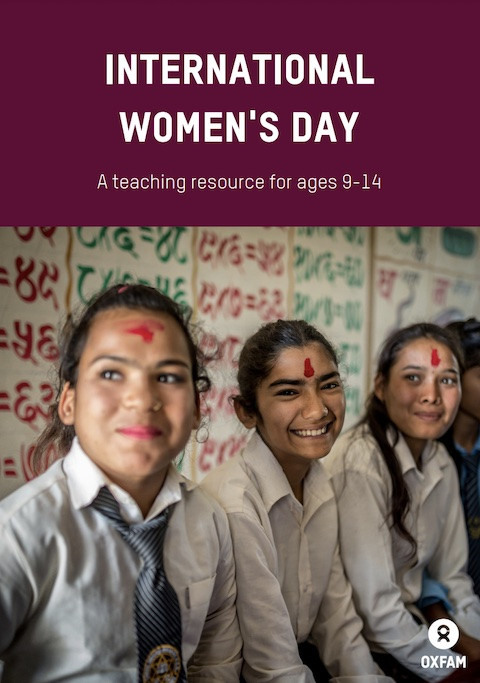 International Women’s Day: A Teaching Resource for Ages 9-14 Год публикации: 2022 Организация-автор: Oxfam GB This teaching resource could be used on International Women's Day or on any day of the year, to introduce issues related to gender equality, support critical thinking, and encourage young people to consider possible action they might like to take in response. These cross-curricular activities are designed to be flexible and easily adapted for use in an assembly, form time or to support more in-depth classroom learning. Depending on the availability of time and other learning taking place, the activities could be taught sequentially over a series of lessons or selected and delivered as standalone sessions. The suggested age range is 9-14 but some of the activities could be adapted to suit the needs of younger and older learners. Depending on learners’ age and the context, teachers may also wish to acknowledge and discuss inequality issues connected to LGBT+.
 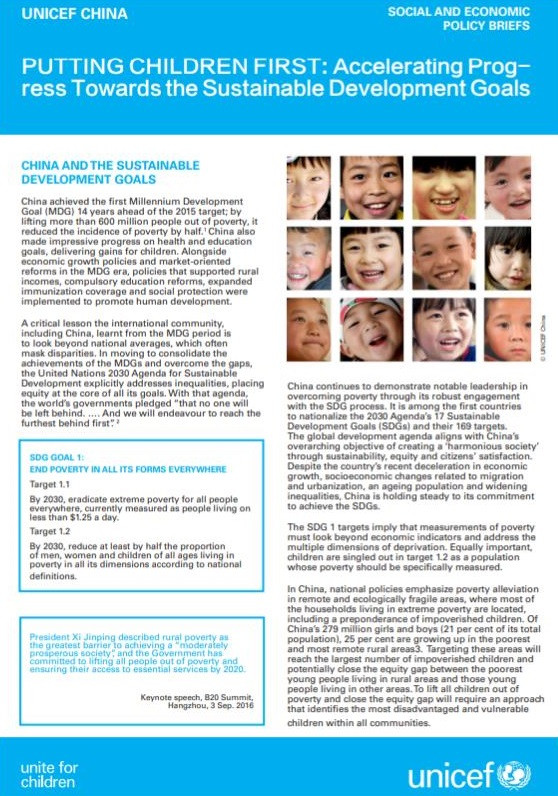 Putting Children First Accelerating Progress Towards the Sustainable Development Goals Год публикации: 2016 Организация-автор: UNICEF China This report summarises the challenges and achievements in implementing the Sustainable Development Goals and safeguarding children's rights in China, and makes policy recommendations. 将儿童置于首位:加快实现可持续发展目标 Год публикации: 2016 Организация-автор: UNICEF China 本报告总结了中国在落实可持续发展目标与保障儿童权益方面所面临的挑战与取得的成就,并提出政策建议。
 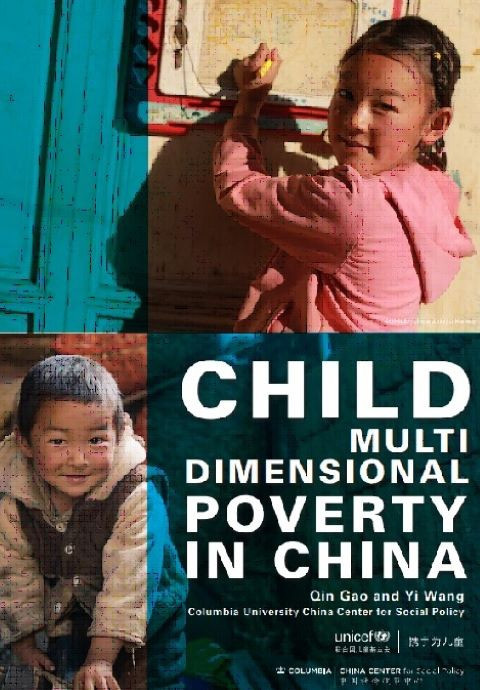 Child Multidimensional Poverty in China:From 2013 to 2018 Год публикации: 2022 Автор: Qin Gao | Yi Wang Организация-автор: China Center for Social Policy | UNICEF China This study measures the levels, trends and patterns of child poverty in China from an income and multidimensional perspective, providing adequate data analysis for policy makers and the public. 中国的儿童多维贫困:2013—2018 年 Год публикации: 2022 Автор: Qin Gao | Yi Wang Организация-автор: China Center for Social Policy | UNICEF China 本研究报告从收入和多维角度衡量中国的儿童贫困的水平、趋势和模式,为决策者和公共提供充分的数据分析。
  Feminist Perspectives on Security and the Role of Women in Peacebuilding - Interview with Feminist Scholar Priscyll Anctil Avoine Год публикации: 2022 Организация-автор: United Nations (UN) This audio is an interview with Priscyll Anctil, a feminist researcher on security at Lund University in Sweden. It focuses on feminist security research, which examines the various forms and impacts of security through a gender lens. 《专题报道》安全议题中的女权主义视角和女性在和平建设中的作用 — 专访女权学者普里西尔.安克蒂尔 Год публикации: 2022 Организация-автор: United Nations (UN) 本音频是对瑞典隆德大学的女权主义安全问题研究学者普里西尔.安克蒂尔的专访,主要讨论女权主义安全研究,即通过性别视角研究安全的各种形式及影响。
 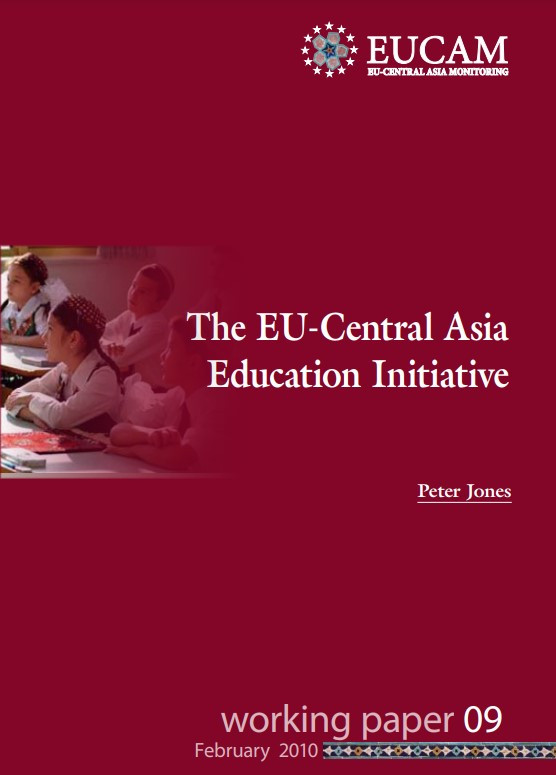 The EU Education Initiative in Central Asia Год публикации: 2010 Автор: Peter Jones This report will examine: 1) the selective and limited experiences and expertise offered by the EU to its partners in Central Asia; 2) the content, processes, and relevance of the contents, processes, and the Education Initiative; 3) the balance achieved between regional and bilateral approaches; and 4) The validity of the EU's approach, taking into account the different needs Central Asian countries. Образовательная Инициатива ЕС в Центральной Азии Год публикации: 2010 Автор: Peter Jones Данный доклад рассмотрит: 1) выборочный и ограниченный опыт и знания, предложенные Евросоюзом его партнерам в Центральной Азии; 2) содержание, процессы и значимость Образовательной Инициативы; 3) равновесие, достигнутое между региональными и двусторонними подходами и 4) обоснованность подхода ЕС с учетом различных потребностей стран Центральной Азии.
  How to Understand the Educatee in Educational Development: Based on G. C. Spivak's Practice of “Subaltern” and Her Philosophy of Education (Modern Education Review; no. 6) Год публикации: 2021 Автор: Jiaqi Yu This article introduces Spivak's theoretical reflections on educational assistance and explores the ethical dilemmas in educational aid, based on the concept of the 'subaltern'.