
Ресурсы
Изучайте широкий спектр ценных ресурсов ВГГ, чтобы углубить своё понимание и повысить эффективность исследований, просветительской деятельности, преподавания и обучения.
Найдено: 2,790
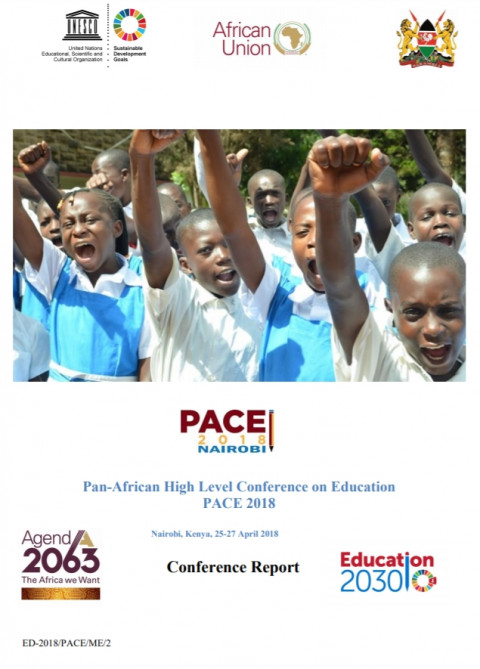 Pan-African High Level Conference on Education, PACE 2018: conference report Год публикации: 2018 Организация-автор: African Union | Government of the Republic of Kenya The Pan-African High-level Conference on Education (PACE 2018) was held in Nairobi, Kenya from 25th to 27th April 2018. PACE 2018 was convened by UNESCO, the Government of Kenya and the African Union, with the collaboration of the Association for the Development of Education in Africa (ADEA) and contributions from the Sustainable Development Goal 4 (SDG4) co-conveners. The initiative to organise the PACE 2018 came in the wake of a number of regional consultations organised in Sub Saharan Africa and the Arab states regions to focus attention on the way forward, following the adoption in 2015 of the United Nations’ Sustainable Development Goal 4 on Education (SDG 4) and of the African Union’s Continental Education Strategy for Africa 2016-2025 (CESA 16-25). Conférence panafricaine de haut niveau sur l'éducation, PACE 2018: rapport de la conférence Год публикации: 2018 Организация-автор: African Union | Government of the Republic of Kenya La Conférence panafricaine de haut niveau sur l’éducation (PACE 2018) s’est déroulée à Nairobi, au Kenya, du 25 au 27 avril 2018. Elle a été convoquée par l’UNESCO, le Gouvernement du Kenya et l’Union africaine, avec la collaboration de l’Association pour le Développement de l’Éducation en Afrique (ADEA) et des contributions des coorganisateurs de l’Objectif de développement durable 4 (ODD 4). L’initiative d’organiser la conférence PACE 2018 s’inscrit à la suite de plusieurs consultations régionales organisées dans les régions d’Afrique subsaharienne et des États arabes pour appeler l’attention sur la voie à suivre après l’adoption en 2015 de l’Objectif de développement durable 4 (ODD 4) sur l’éducation et de la Stratégie continentale de l’éducation pour l’Afrique de l’Union africaine (CESA 2016-2025) (CESA 16-25).
 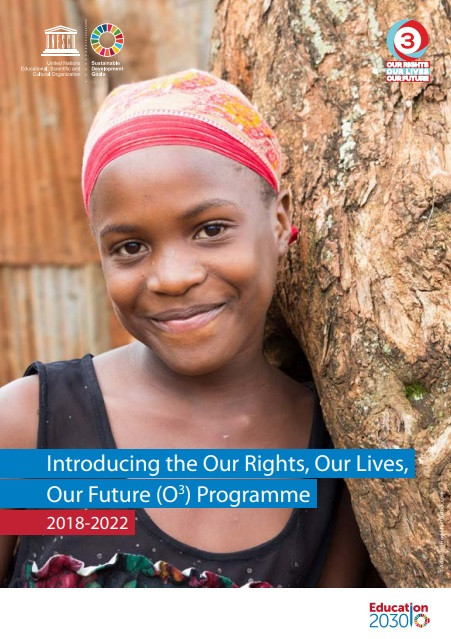 Introducing the Our Rights, Our Lives, Our Future (O3) Programme 2018-2022 Год публикации: 2019 Организация-автор: UNESCO Harare Comprehensive sexuality education is a curriculum-based process of teaching and learning about the cognitive, emotional, physical, and social aspects of sexuality. It aims to equip children and young people with the knowledge, skills, attitudes, and values that will empower them to protect their health, well-being, and dignity, as well as to develop respectful social relationships and consider the well-being of others affected by their choices. Importantly, it also helps them to understand and act upon their rights throughout their lives.
 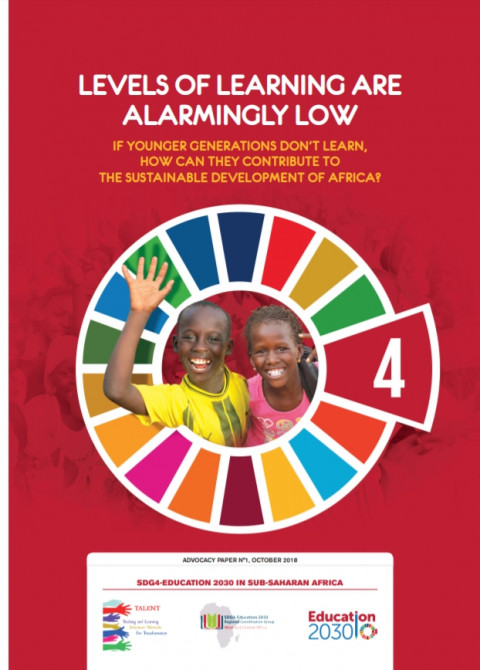 Levels of learning are alarmingly low: if younger generations don't learn, how can they contribute to the sustainable development of Africa? Год публикации: 2018 Организация-автор: UNESCO Dakar | Regional Coordination Group on SDG 4-Education 2030 in West and Central Africa | Teaching and Learning Educators’ Network for Transformation With the adoption of The 2030 Agenda for Sustainable Development, UN member states and partner organizations have agreed to ensure inclusive and equitable quality education and promote lifelong learning opportunities for all by 2030. Building on the unfinished agendas of the Millennium Development Goals and Education for All, quality education and learning are at the very core of both SDG4 and CESA 16-25 (see box 1). Five of the seven SDG4 targets are specifically designed with the intention of addressing the global learning crisis. Moreover, CESA 16-25 specifically calls on African Union member states to address issues of quality and equity in education, particularly at the pre-primary level, a neglected area in terms of investment and policy, and at the primary level where geographical disparities indicate that girls and women, the poorest and those leaving in remote areas are still left behind. The next question is whether these international and regional commitments have been translated into national policies and strategies that can address the alarmingly low levels of learning. Les niveaux d'apprentissage sont alarmants: si les jeunes générations n'apprennent pas, peuvent-elles contribuer au développement durable de l'Afrique? Год публикации: 2018 Организация-автор: UNESCO Dakar | Regional Coordination Group on SDG 4-Education 2030 in West and Central Africa | Teaching and Learning Educators’ Network for Transformation Avec l’adoption de le Programme pour le développement durable à l’horizon 2030, les États membres de l’ONU et les organisations partenaires ont convenu d’assurer, d’ici 2030, une éducation inclusive et équitable de qualité et de promouvoir des possibilités d’apprentissage tout au long de la vie pour tous. S’appuyant sur les programmes inachevés des Objectifs du Millénaire pour le développement et de l’Éducation pour tous, l’éducation et les apprentissages de qualité sont au cœur même de l’ODD4 et de la CESA 16-25 (voir l’encadré 1 dans la section suivante). En effet, cinq des sept cibles de l’ODD4 sont spécifiquement formulées pour s’attaquer à la crise mondiale de l’apprentissage. En outre, la CESA 16-25 appelle spécifiquement les États membres de l’Union Africaine à aborder les questions de qualité et d’équité dans l’éducation, en particulier au niveau pré-primaire, un domaine négligé en termes d’investissements et de politiques, et au niveau primaire où les disparités géographiques laissent sur le côté les filles et les femmes, les plus pauvres et ceux qui vivent dans les zones reculées. La question est désormais de savoir si ces engagements internationaux et régionaux ont été traduits en politiques et stratégies nationalesqui peuvent s’attaquer aux niveaux alarmants des résultats d’apprentissage.
 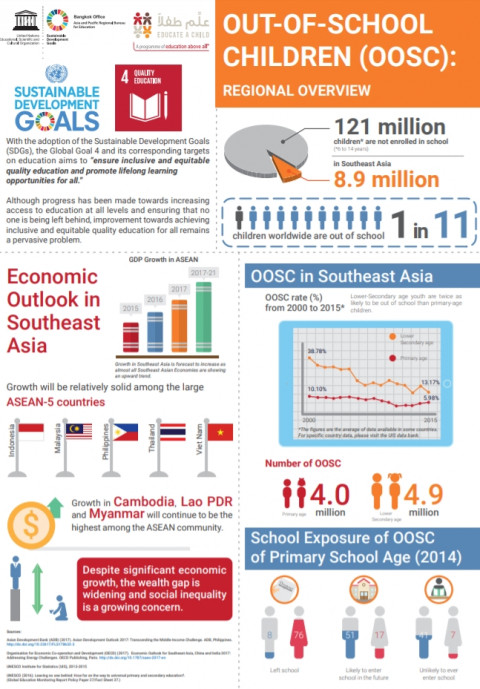 Out-of-School Children (OOSC): regional overview Год публикации: 2017 Организация-автор: UNESCO Bangkok This leaflet provides a regional overview of out-of-school children (OOSC) situation in Southeast Asia including school exposure of OOSC of primary school age. To provide learning opportunities for OOSC in the region, UNESCO Bangkok has launched the project titled “Strengthening Education Systems for Out of School Children” with the support of Educate a Child (EAC). Information on country activities implemented under the project is included in the leaflet.
  Intégrer le genre dans la coopération non gouvernementale Год публикации: 2019 Организация-автор: Solidarité mondiale Solidarité Mondiale place l’attention et la prise en compte du genre au cœur de ses pratiques et ses programmes. Ainsi, notre organisation s’emploie à créer une culture institutionnelle sensible au genre, tant au sein de notre équipe que dans la coopération avec nos partenaires d’ici et d’ailleurs. En effet, l’égalité des genres est essentielle pour garantir le caractère durable et inclusif de la coopération. Tant au niveau des droits du travail que de la protection sociale, les femmes se trouvent souvent dans les positions les plus précaires. C’est pourquoi Solidarité Mondiale s’est engagée pour l’égalité des genres au sein de la coopération non gouvernementale et a signé la "Charte Genre" le 29 novembre 2018. La "Charte Genre" a été signée par 56 organisations qui se sont engagées à soutenir un élan positif en leur sein autour de l’égalité et à mettre en place les actions nécessaires pour que les intentions se matérialisent. Elle inclut l’égalité des sexes (entre hommes et femmes) ainsi que la reconnaissance des droits des personnes LGBQTI (lesbiennes, gays, bisexuelles, queer, transgenres, intersexuées). Toutefois, comme nous vous l’expliquions en 2018, cette charte est issue d’un processus plus large, auquel Solidarité Mondiale a pris activement part, visant notamment à créer un guide d’inspiration. Bonne nouvelle, depuis peu, ce guide d’inspiration « Intégrer le genre dans la coopération non gouvernementale » est finalisé et accessible à tou.te.s ! Celui-ci regroupe des bonnes pratiques et des pistes d’intégration du genre dans les différentes activités propres à l’Éducation à la citoyenneté mondiale et solidaire (ECMS) en Belgique (communication, plaidoyer, mobilisation, etc.). Il a été conçu à l’aide d’un processus participatif et piloté par les 5 structures fédératives (11.11.11, ACODEV, CNCD-11.11.11, ngo-federatie et FIABEL) accompagnées du Monde selon les femmes.
  Multiculturalism as a nation-building theory in Kazakhstan Год публикации: 2016 Автор: Nazira E. Kukusheva In the article, the author explores the pressing problems of the nation-building of Kazakhstan as an independent state-gifts.The main problems considered are: 1) the process of formation of a new national identity; 2) the experience of building a multicultural society.The views of supporters and opponents of the policy of multiculturalism in Kazakhstan are given. From the author’s point of view, for the design and implementation of new multicultural ideologies in the practice of Kazakhstan, the creation of scientific centers for the study of interethnic processes is necessary. Мультикультурализм как теория нациестроительства в Казахстане Год публикации: 2016 Автор: Nazira E. Kukusheva В статье автор исследует актуальные проблемы нациестроительства Казахстана как независимого госу- дарства.В качестве основных проблем рассматриваются:1) процесс формирования новой национальной идентичности; 2) опыт построения мультикультурного общества.Приведены взгляды сторонников и противников политики мультикультурализма в Казахстане. С точки зрения автора, для конструирования и внедрения новых мультикультурных идеологем в практику Казахстана необходимо создание научных центров по исследованию межэтнических процессов.
  Gender in Education Network in Asia-Pacific (GENIA) Toolkit: Promoting Gender Equality in Education Год публикации: 2019 Организация-автор: UNESCO Bangkok The GENIA Toolkit was originally designed in 2003 when the Gender in Education Network in Asia Pacific was established. The fifth edition of the GENIA Toolkit (25 tools) is designed for use by gender focal points and education planners and implementers. It introduces key concepts and theoretical debates, and outlines practical approaches for mainstreaming gender equality throughout the education system, and within education policy.The toolkit is designed to be used selectively, depending on the user’s needs. It can be used as a self-study tool. Readers can select topics that they have identified as priority learning areas to help them improve their own understanding and practical capacity. The toolkit can also be used by trainers to facilitate training sessions. Trainers can choose tools from the kit that best match the needs of their trainees.