
Ресурсы
Изучайте широкий спектр ценных ресурсов ВГГ, чтобы углубить своё понимание и повысить эффективность исследований, просветительской деятельности, преподавания и обучения.
Найдено: 1,448
 Preparing teachers to educate for 21st century global citizenship:envisioning and enacting Год публикации: 2014 Автор: Linyuan Guo Организация-автор: Centennial College The changing educational landscape in the global context and the increasing interconnectedness and interdependence of the world have placed unprecedented demands on teacher education programs in preparing teachers to educate for 21st century global citizenship in K-12 schools. To chart the course of preparing global educators for an interconnected world, the Faculty of Education at the University of Prince Edward Island (UPEI) and UNICEF Canada have collaboratively developed an undergraduate course, entitled Educating for Global Citizenship. It focuses on preparing educators to teach for 21st century global citizenship and has been integrated into UPEI’s teacher preparation program as a compulsory course. This paper is based on a three-year study examining teacher candidates' experiences in learning to educate for global citizenship, the changes of their perceptions on global citizenship education, and the challenges and achievements they experienced in educational practices. Findings from this study indicate the unique opportunities and challenges teachers face in learning to educate for global citizenship and suggest the necessity of integrating global citizenship education in teacher education programs through a holistic approach.
 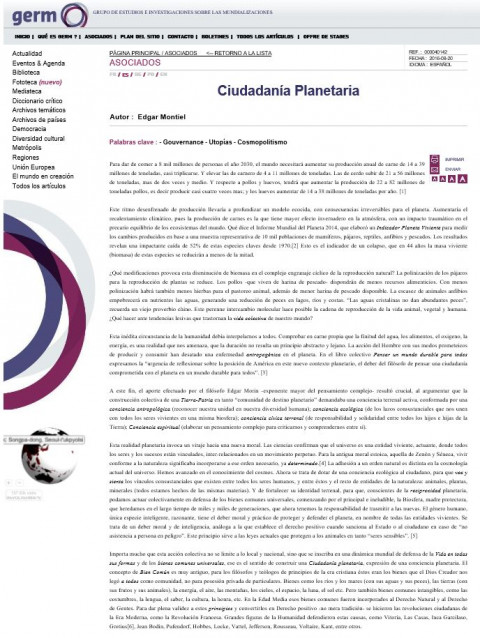 Planetary Citizenship Год публикации: 2016 Автор: Edgar Montiel The blog contains and article where many worldiwide problems that humans are facing are described, and it states that it is necessary to modifiy the way in which we live by adopting a practical education that will enable sustainable life in the planet as it would consider environmental sustainability and peaceful international cooperation from diverse perspectives. Ciudadanía Planetaria Год публикации: 2016 Автор: Edgar Montiel El blog contiene un artículo donde se describen los problemas actuales que enfrenta la humanidad a escala planetaria y se arguye que se precisas modificar la forma en que vivimos adoptando una educación práctica de vida sostenible que tenga en cuenta el medio ambiente y la cooperación internacional pacífica desde la diversidad.
 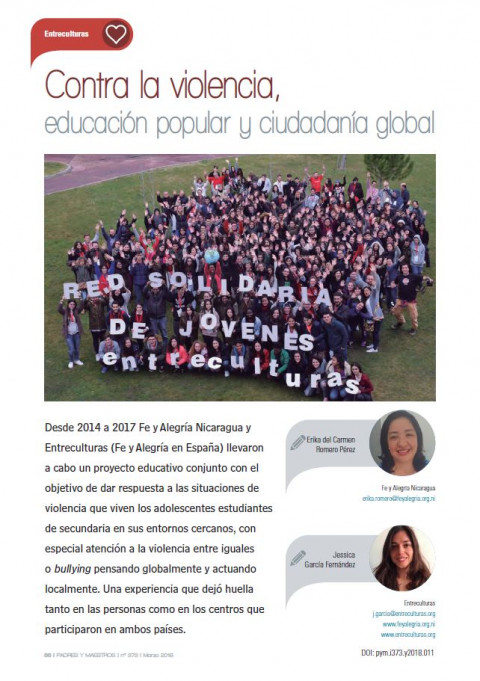 Against Violence, Popular Education and Global Citizenship Год публикации: 2018 Автор: Erika del Carmen Romero Pérez | Jessica García Fernández The article is about a project that was carried out between 2014 and 2017 by two countries: Nicaragua and Spain, on behalf of the organizations "Fe y alegría Nicaragua" and "Entreculturas (Fe y Alegría España)". It was an educative project among both nations that had two main objectives: promoting both local and global citizenship, and to give answer to violent situations that adolescent students hae to face in secondary education contexts, with special attention to the violence among equals or bullying. Contra la violencia, educación popular y ciudadanía global Год публикации: 2018 Автор: Erika del Carmen Romero Pérez | Jessica García Fernández El artículo habla sobre un proyecto que se llevó a cabo entre 2014 y 2017 por medio de dos países: Nicaragua y España, a través de las organizaciones "Fe y alegría Nicaragua" y "Entreculturas (Fe y Alegría España)". Fue un proyecto educativo conjunto entre los dos países, y tenía dos objetivos principales: el fomentar una ciudadanía tanto local como global, y el de dar respuesta a las situaciones de violencia que viven los adolescentes estudiantes de secundaria en sus entornos cercanos, con especial atención a la violencia entre iguales o bullying. Educación Multilingüe e Intercultural en América Latina: México, Guatemala, Colombia, Brazil, Ecuador, Perú, Bolivia y Paraguay y Noruega Год публикации: 2011 Организация-автор: Internacional de la Educación para Latinoamerica This document deals with Intercultural Bilingual Education (IBE), its current status and the concepts and processes driving it today – and in a certain way the conflicts encompassing it. It contains information on Mexico, Guatemala, Colombia, Brazil, Ecuador, Peru, Bolivia and Paraguay, and includes some data and comments on Norway. Certainly all Latin America is involved in the topic, one way or another, but for now this is the geographical scope of the paper. It seeks to give an overview of the whole and profile a few specific aspects by country. Multilingue et éducation interculturelle en Amérique latine: le Mexique, le Guatemala, la Colombie, le Brésil, l'Équateur, le Pérou, la Bolivie et le Paraguay et la Norvège Год публикации: 2011 Организация-автор: Internacional de la Educación para Latinoamerica Ce document traite de l'éducation interculturelle bilingue (BIE), son état actuel et les concepts et les processus de conduite aujourd'hui - et d'une certaine manière les conflits englobant elle. Il contient des informations sur le Mexique, le Guatemala, la Colombie, le Brésil, l'Équateur, le Pérou, la Bolivie et le Paraguay, et comprend quelques infomations et commentaires sur la Norvège. Certes, toute l'Amérique Latine est impliqué dans le sujet, d'une façon ou d'une autre, mais pour l'instant c'est la portée géographique du papier. Il vise à donner un aperçu de l'ensemble et le profil de quelques aspects spécifiques par pays.
 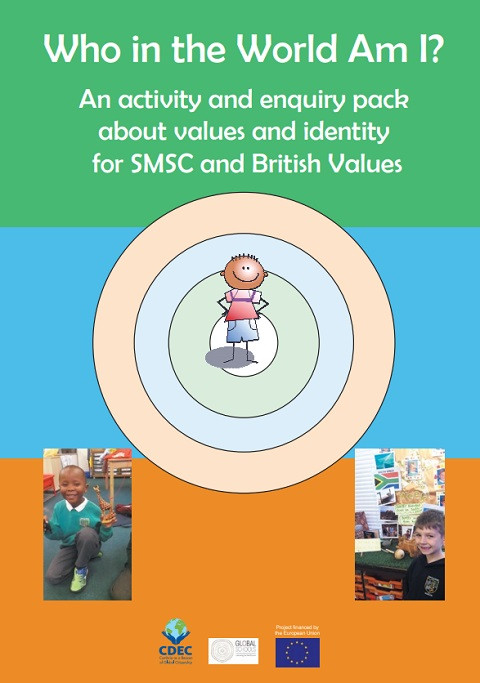 Who in the World Am I?: An Activity and Enquiry Pack about Values and Identity for SMSC and British Values Год публикации: 2018 Автор: Caroline Harmer Организация-автор: European Union (EU) | Global Schools Program | Cumbria Development Education Centre(CDEC) Who in the World Am I is a resource pack for teachers and children who want to actively explore their own identity from the personal right through to being part of a family, a community, a country and becoming a global citizen. The activities develop progressively through the global learning themes of valuing diversity and skills of self-awareness and reflection.
 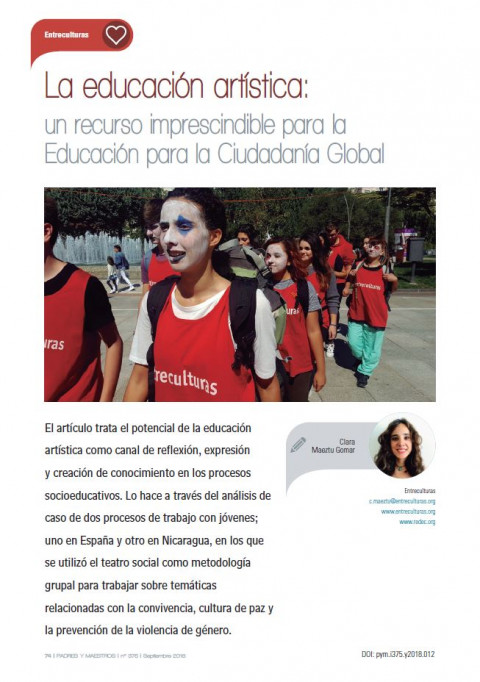 Artistic Education: An Essential Resource for Global Education Год публикации: 2018 Автор: Clara Maeztu Gomar The article is about the potential of artistic education as a means of reflection, expression and production of knowledge in socioeducative processes. It details a case study were two working processes with youth are explained: one in Spain and the other one in Nicaragua. In both cases social theatre was used as a group methodology to work on thematics related with coexistence, culture of peace, and prevention of gender violence. La educación artística: un recurso imprescindible para la Educación para la Ciudadanía Global Год публикации: 2018 Автор: Clara Maeztu Gomar El artículo trata el potencial de la educación artística como canal de reflexión, expresión y creación de conocimiento en los procesos socioeducativos. Lo hace a través del análisis de caso de dos procesos de trabajo con jóvenes; uno en España y otro en Nicaragua, en los que se utilizó el teatro social como metodología grupal para trabajar sobre temáticas relacionadas con la convivencia, cultura de paz y la prevención de la violencia de género.