
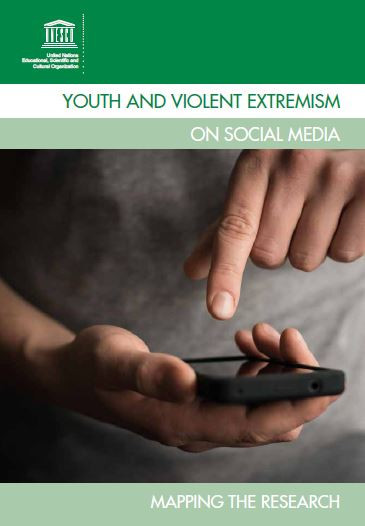
Youth and Violent Extremism on Social Media: Mapping the Research
- 机构作者
- 联合国教科文组织 (UNESCO)
- ISBN
- ISBN 978-92-3-100245-8 (eng); ISBN 978-92-3-200150-4 (fre); ISBN 9-789234-000284 (rus)
- 载体形态
- 161 p.
- 资源语言
- 英语法语俄语
- 出版年份
- 2017
Does social media lead vulnerable individuals to resort to violence? Many people believe it does. And they respond with online censorship, surveillance and counter-speech. But what do we really know about the Internet as a cause, and what do we know about the impact of these reactions? All over the world, governments and Internet companies are making decisions on the basis of assumptions about the causes and remedies to violent attacks. The challenge is to have analysis and responses firmly grounded. The need is for a policy that is constructed on the basis of facts and evidence, and not founded on hunches or driven by panic and fearmongering.
It is in this context that UNESCO has commissioned the study titled Youth and Violent Extremism on Social Media: Mapping the Research. This work provides a global mapping of research (mainly during 2012-16) about the assumed roles played by social media in violent radicalization processes, especially when they affect youth and women. The research responds to the belief that the Internet at large is an active vector for violent radicalization that facilitates the proliferation of violent extremist ideologies.
相关资源
-
 Digital Empowerment for Lifelong Learning and Transformative Andragogy (DELTA) for Adult Educators: Introduction to the DELTA Framework and Resources
 -
 Bridging the Grey Digital Divide: Enhancing ICT Learning for Older Adults; Research Report
 -
 Addressing Violent Pasts through Education: A Policy Guide
 -
 The Representation of Jews, Judaism and Antisemitism in School Textbooks and Curricula in Europe