
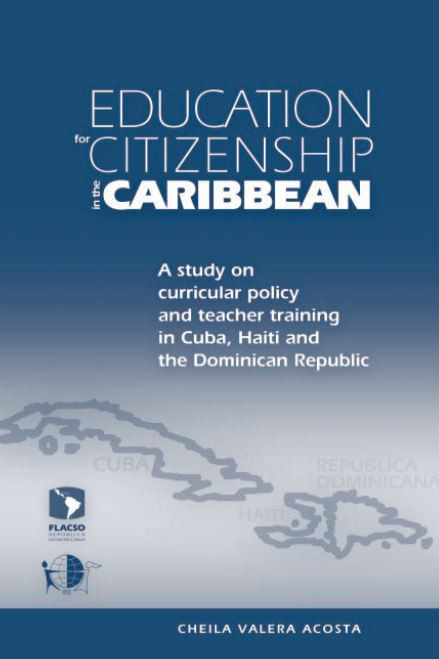
Education for Citizenship in the Caribbean: A Study on Curricular Policy and Teacher Training in Cuba, Haiti and the Dominican Republic
- 机构作者
- UNESCO International Bureau of Education (IBE)Facultad Latinoamericana de Ciencias Sociales (FLACSO)
- ISBN
- ISBN 978-99934-239-3-5
- 载体形态
- 81 p.
- 资源语言
- 英语西班牙语
- 出版年份
- 2005
- 地区
- 拉丁美洲和加勒比地区
- 电子书 URL
- [E-BOOK]
This study aims to describe teacher training and curricular policy for the primary and secondary levels in relation to education for citizenship in Cuba, Haiti and the Dominican Republic and make practical recommendations for improvements in the quality of design and implementation of these initiatives in the three countries.
The following are some of the conclusions:
- At the start of the twenty-first century, Cuba, the Dominican Republic and Haiti share a context in which the processes of democratization have encountered obstacles connected with their colonial heritage, the hegemony of the European nations and the influence and direct interference from United States geopolitical, economic and cultural power.
- These democracies have developed from long and violent political dictatorships, which established authoritarian and restrictive institutional mechanisms for the day-to-day administration of public affairs. Public policies on education for citizenship should therefore take account of the contradictions faced by the democratizing processes and of the complex cultural impact on the development of social identities brought about by the phenomenon of mass migration.
- These issues and the tensions arising from social and economic inequalities are inadequately addressed in the three countries’ curricula and teacher training policies.
- There are legal bases integrating education for citizenship as part of the State’s educational responsibilities in all three countries. Education for citizenship is intended as a specific subject for the primary and secondary school levels.
- Educational proposals are required that can provide the population with greater understanding of community life, skills for confronting traditional ideological indoctrination, and for learning to live together while recognizing differences, and for helping to educate the imagination for a broader view of human affairs and our responsibilities with regard to them.
- The actors involved in teacher training in the three countries consider it a key tool for the democratic development of societies. Their main criticisms indicate that there is a need to improve the contents and the approaches to teacher training so that they can respond to the current challenges of these societies from an interdisciplinary standpoint consistent with the stated educational goals.
相关资源
-
 IIEP-UNESCO 12th Medium-Term Strategy: 2026–2029
 -
 Advancing Intergenerational Learning: Identifying Challenges and Opportunities for Older Adults; Integrated Case Study Report
 -
 Digital Empowerment for Lifelong Learning and Transformative Andragogy (DELTA) for Adult Educators: Introduction to the DELTA Framework and Resources
 -
 Bridging the Grey Digital Divide: Enhancing ICT Learning for Older Adults; Research Report