
相关资源
探索丰富的全球公民教育资源,深化理解,促进研究、倡导、教学与学习。
共找到2条结果
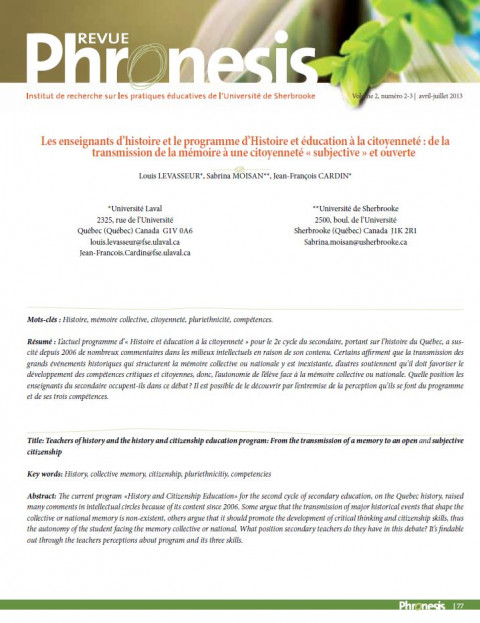 Teachers of History and the History and Citizenship Education Program: From the Transmission of a Memory to an Open and Subjective Citizenship 出版年份: 2013 作者: Louis LeVasseur | Sabrina Moisan | Jean-François Cardin 机构作者: Phronesis The current program «History and Citizenship Education» for the second cycle of secondary education, on the Quebec history, raised many comments in intellectual circles because of its content since 2006. Some argue that the transmission of major historical events that shape the collective or national memory is non-existent, others argue that it should promote the development of critical thinking and citizenship skills, thus the autonomy of the student facing the memory collective or national. What position secondary teachers do they have in this debate? It’s findable out through the teachers perceptions about program and its three skills. Les enseignants d’histoire et le programme d’Histoire et éducation à la citoyenneté: de la transmission de la mémoire à une citoyenneté « subjective » et ouverte 出版年份: 2013 作者: Louis LeVasseur | Sabrina Moisan | Jean-François Cardin 机构作者: Phronesis L’actuel programme d’« Histoire et éducation à la citoyenneté » pour le 2e cycle du secondaire, portant sur l’histoire du Québec, a suscité depuis 2006 de nombreux commentaires dans les milieux intellectuels en raison de son contenu. Certains affirment que la transmission des grands événements historiques qui structurent la mémoire collective ou nationale y est inexistante, d’autres soutiennent qu’il doit favoriser le développement des compétences critiques et citoyennes, donc, l’autonomie de l’élève face à la mémoire collective ou nationale. Quelle position les enseignants du secondaire occupent-ils dans ce débat ? Il est possible de le découvrir par l’entremise de la perception qu’ils se font du programme et de ses trois compétences.