UNESCO CLEARINGHOUSE ON
GLOBAL CITIZENSHIP EDUCATION
HOSTED BY APCEIU
English
Français
Español
Русский
العربية
中文
한국어
关于我们
全球公民教育
全球公民教育信息库
相关资源
活动
新闻
English
Français
Español
Русский
العربية
中文
한국어
Search
Advanced Search
关于我们
全球公民教育
全球公民教育信息库
相关资源
活动
新闻
相关资源
探索丰富的全球公民教育资源,深化理解,促进研究、倡导、教学与学习。
搜索
Searching...
高级搜索
© APCEIU
共找到
1
条结果
相关度
最新
年份
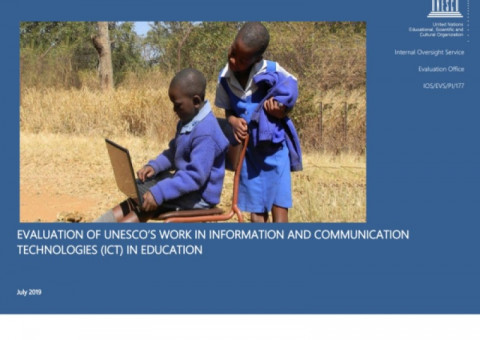
Evaluation of UNESCO's work in information and communication technologies (ICT) in education
出版年份:
2019
作者:
Seán Ó Siochru and Graham Attwell
机构作者:
UNESCO
ICT in Education is a fast-growing area globally that offers many strategic opportunities. As the leader and coordinator of the SDG 4 – Education 2030 with the aim to “Ensure inclusive and equitable quality education and promote lifelong learning opportunities for all”, UNESCO has the mandate and expertise needed to strategically position itself as a world leader in this field. UNESCO’s work in ICT in Education aims at enhancing the quality and relevance of learning and at strengthening inclusion. While technology can facilitate wider access to education and bridge learning divides, can advance gender equality and inclusion as well as digital skills development, the rapidly changing technologies and work processes require the development of new pedagogies, both for the use of ICT for teaching and learning in the classroom and through open access and distance learning. Compared to other players, UNESCO leverages its comparative strengths in its ICT in Education interventions - especially its impartiality, convening power, and policy expertise - through an inclusive and humanistic approach to achieving quality education in coherence with Sustainable Development Agenda 2030. Its expertise across all levels of Education and its multidisciplinary potential of working across its Programme Sectors are also considered among UNESCO’s specific strengths. The evaluation revealed that UNESCO achieved important results, at the level of the learning environment, at the policy level and in institutional capacity building, but it also showed that UNESCO still needs to strengthen its positioning and visibility within the wider landscape of ICT in Education. For example, UNESCO has to continue positioning itself for producing forward-looking knowledge on ICT in Education and as a laboratory of ideas for future-oriented thinking. While the evaluation came across various specific interventions successfully addressing the needs of disadvantaged groups, the evaluation found that considerations of inclusion and gender equality were not consistently mainstreamed into policy-related and capacity building interventions. Other challenges are mainly linked to the current dispersion of resources and fragmentation of expertise across different entities within the Organization, which also leads to reduced visibility. While the key entities active in this area recognize that they are working within a common theme, collaboration and coordination still needs to be improved. The strategic measures proposed by the evaluation towards an overall organizational framework for ICT in Education aim at establishing an enabling environment for inter- and multidisciplinary approaches and greater coherence and collaboration.
本网站使用Cookie以提升用户体验。详情请查看Cookie政策。
Cookie政策
.