
相关资源
探索丰富的全球公民教育资源,深化理解,促进研究、倡导、教学与学习。
共找到190条结果
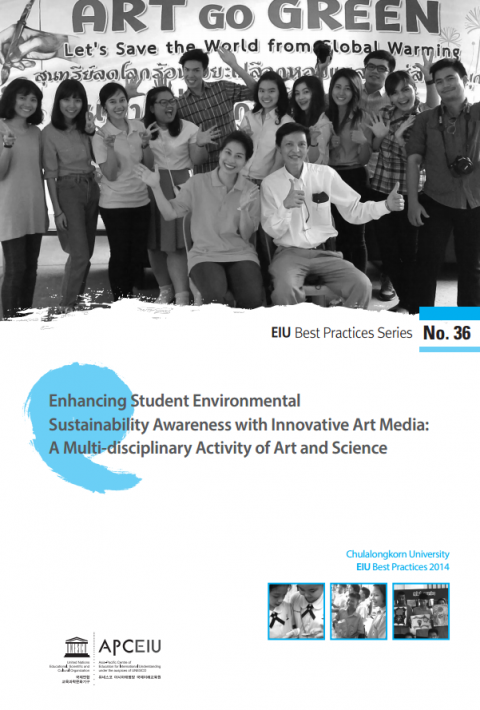 EIU Best Practices Series No. 36: Enhancing Student Environmental Sustainability Awareness with Innovative Art Media: A Multidisciplinary of Art and Science Activities 出版年份: 2014 作者: Poonarat Pichayapaiboon 机构作者: APCEIU This issue is one of APCEIU's EIU Best Practices Series, which aims to encourage educators, scholars, and activists to implement and share local initiatives on EIU. The Series No.36 introduces a multidisciplinary programme of art and science activities implemented in Thailand’s Chulalongkorn University to raise students’ awareness of environmental sustainability. Given the country’s large volume of green mussels, there is increasing concern for shell waste management and global warming. As students of varied age learn how shells can be transformed into pigment and clay, and use to create artwork as part of “Turning Waste into Art to Live a Sustainable Life” project, students come to appreciate the value of environmental protection and management. The programme is an exemplary case in which children are educated to live in harmony with the earth, following one of the key pillars of EIU.
 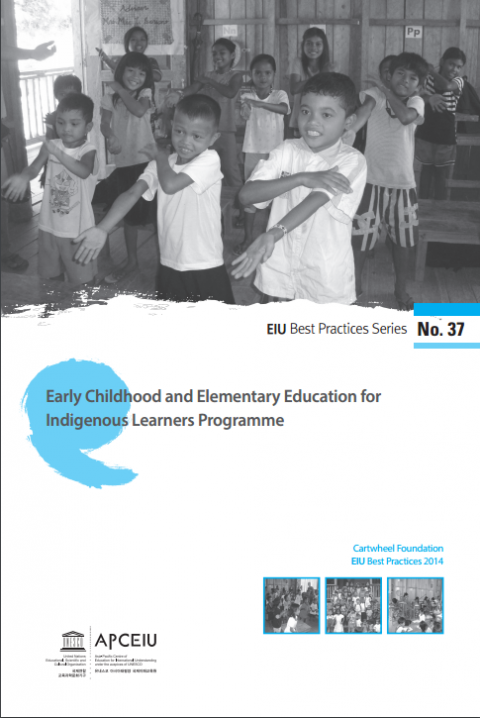 EIU Best Practices Series No. 37: Early Childhood and Elementary Education for Indigenous Learners Programme 出版年份: 2014 作者: Bricks Sabella Sintaon 机构作者: APCEIU This monograph is one of APCEIU's EIU Best Practices Series, which aims to encourage educators, scholars, and activists to implement and share local initiatives on EIU. The Series No.37 introduces the Early Childhood and Elementary Education (ECEE) for Indigenous Learners Programme initiated in the Philippines. The indigenous peoples (IP) reside in the mountainous regions, away from basic social services and struggling with poverty, malnutrition, and lack of proper education. The aim of ECEE is to facilitate access to quality and culturally-relevant early childhood and elementary education for the Higaonon indigenous children. To achieve this, activities such as curriculum indigenization and teacher training are provided in collaboration with the community members. As the program creates learning process for all through openness, sharing, and collaboration, this is an exemplary case of EIU/GCED pedagogical approach.
 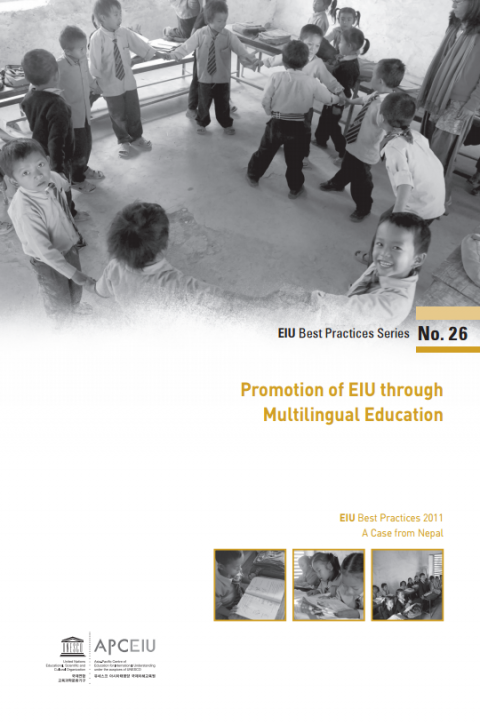 EIU Best Practices Series No. 26: Promotion of EIU through Multilingual Education 出版年份: 2011 作者: Narayan Prasad Subedi 机构作者: APCEIU This monograph is one of APCEIU's EIU Best Practices Series, which aims to encourage educators, scholars, and activists to implement and share local initiatives on EIU. The Series No.26 showcases a Multilingual Education Programme initiated by the Magar community in Nepal, that fosters EIU and multiculturalism. As there are over 200 local languages within Nepal, the MEP seeks to address the educational needs of non-Nepali speaking population. The program helps to enhance teacher capacity building, training manual development, and curriculum development, thereby allowing non-Nepali students to study in respective mother tongue.
 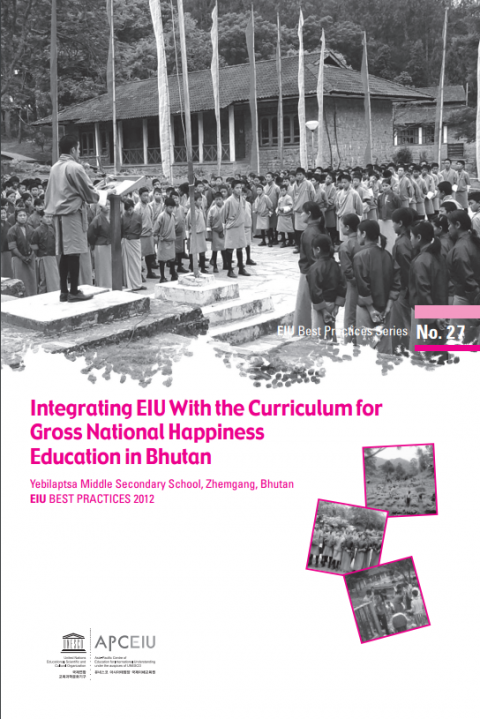 EIU Best Practices Series No. 27: Integrating EIU with the Curriculum for Gross National Happiness Education in Bhutan 出版年份: 2012 作者: Udhim Subba 机构作者: APCEIU This monograph is one of APCEIU's EIU Best Practices Series, which aims to encourage educators, scholars, and activists to implement and share local initiatives on EIU. The Series No.27 introduces Bhutan’s Yebilaptsa Middle Secondary School, in its effort to promote values of EIU as a complementary component of the Gross National Happiness Education efforts. Activities such as UNESCO club community activities, environmental learning, EIU cultural night, international exchange altogether exemplify effective ways to integrate EIU practices in the curriculum and extracurricular programs of schools.
 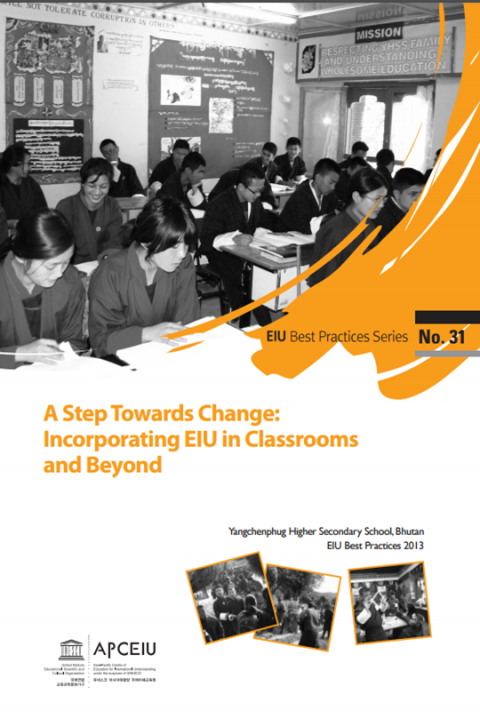 EIU Best Practices Series No.31: A Step towards Change: Incorporating EIU in Classrooms and Beyond 出版年份: 2013 机构作者: APCEIU This monograph is one of APCEIU's EIU Best Practices Series, which aims to encourage educators, scholars, and activists to implement and share local initiatives on EIU. The Series No.31 introduces a case study in which Bhutanese school carried out activities and curriculum development to successfully promote EIU and ESD for students and teachers. While the school’s curriculum already embodies a degree of EIU, the school strived to be more creative in upholding the existing content by exploring newer issues of media ethics, human rights, culture, and environmental conservation for fruitful engagement. This in turn allowed the target audience to learn the values of EIU/ESD for a culture of peace.
 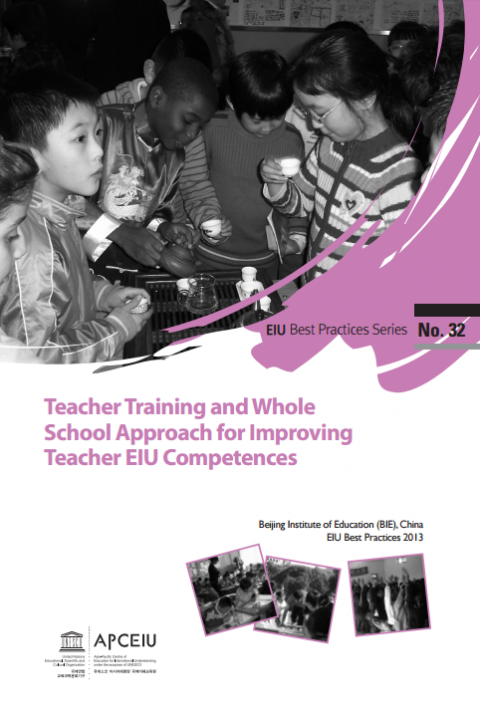 EIU Best Practices Series No.32: Teacher Training and Whole School Approach for Improving Teacher EIU Competences 出版年份: 2013 机构作者: APCEIU This monograph is one of APCEIU's EIU Best Practices Series, which aims to encourage educators, scholars, and activists to implement and share local initiatives on EIU. The Series No.32 introduces two cases in which primary and secondary school teachers in Beijing were trained to promote EIU in respective communities. As teachers developed their EIU competence and awareness, students learned to be more open-minded, respectful, and tolerant. The issue highlights the important role educators have in instilling EIU values and shaping perception.
 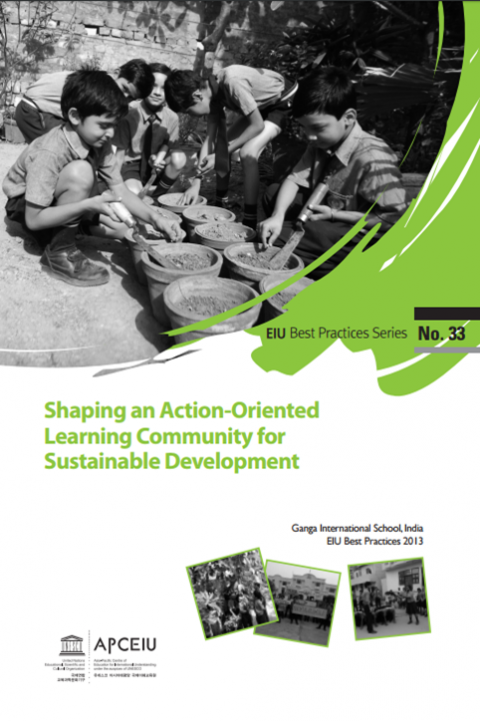 EIU Best Practices Series No.33: Shaping an Action-Oriented Learning Community for Sustainable Development 出版年份: 2013 机构作者: 유네스코 아시아태평양 국제이해교육원 This monograph is one of APCEIU's EIU Best Practices Series, which aims to encourage educators, scholars, and activists to implement and share local initiatives on EIU. The Series No.33 introduces a program implemented at the Ganga International School in India to promote eco-friendly and multicultural society. Teachers, students, and local community members engaged in awareness raising events such as Recycled Paper Art exhibition, Tree Plantation Drive, and Anti-Malaria Project, allowing everyone to absorb the meaning of EIU and sustainable development. Furthermore, students partook in seed exchange program and video conferences to discuss environmental issues with students of partner schools, which amplified impact at local and global levels.
 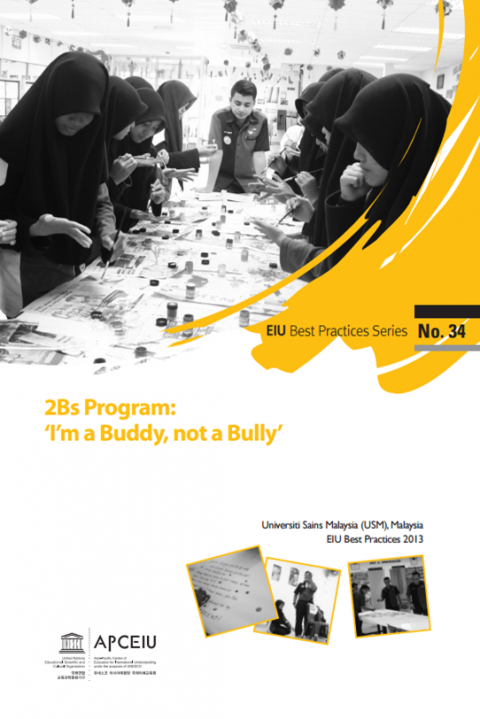 EIU Best Practices Series No.34: 2Bs Program: 'I'm a Buddy, not a Bully' 出版年份: 2013 机构作者: Азиатско-Тихоокеанский центр образования для международного понимания (APCEIU) This issue is one of APCEIU's EIU Best Practices Series, which aims to encourage educators, scholars, and activists to implement and share local initiatives on EIU. The Series No.34 introduces the 2Bs Program implemented in boarding schools in Malaysia, highlighting the importance of education in preventing bullying behavior. The program involves three phases, such as employing creative and fun pedagogy approaches, rehabilitation, and student potential development to effectively raise awareness surrounding the issue and encourage behavior change. Such initiative is exemplary in combatting challenges that arise from cultural differences, and in fostering understanding.
 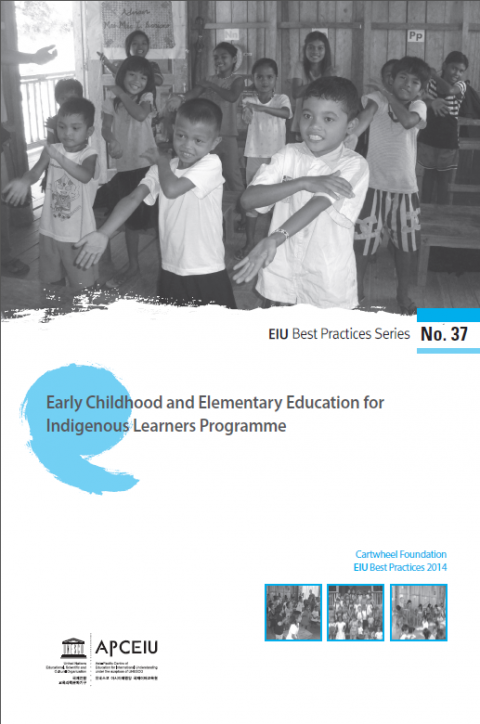 EIU Best Practices Series No.37: Early Childhood and Elementary Education for Indigenous Learners Programme 出版年份: 2014 机构作者: APCEIU This monograph is one of APCEIU's EIU Best Practices Series, which aims to encourage educators, scholars, and activists to implement and share local initiatives on EIU. The Series No.37 introduces the Early Childhood and Elementary Education (ECEE) for Indigenous Learners Programme initiated in the Philippines. The indigenous peoples (IP) reside in the mountainous regions, away from basic social services and struggling with poverty, malnutrition, and lack of proper education. The aim of ECEE is to facilitate access to quality and culturally-relevant early childhood and elementary education for the Higaonon indigenous children. To achieve this, activities such as curriculum indigenization and teacher training are provided in collaboration with the community members. As the program creates learning process for all through openness, sharing, and collaboration, this is an exemplary case of EIU/GCED pedagogical approach.
 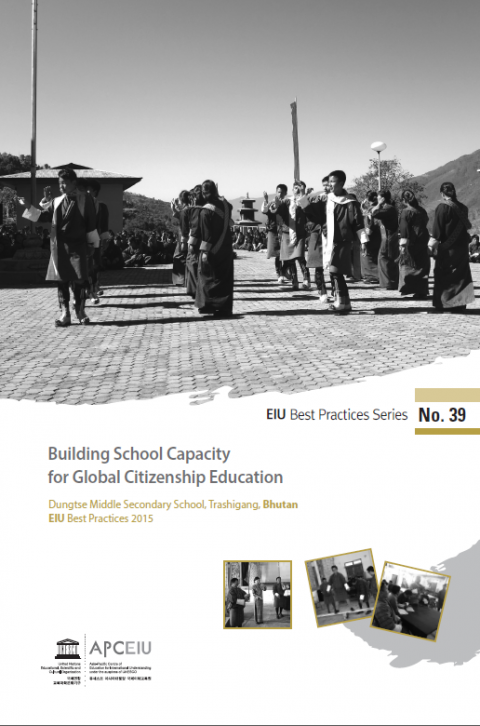 EIU Best Practices Series No.39: Building School Capacity for Global Citizenship Education: Dungtse Middle Secondary School, Trashigang, Bhutan 出版年份: 2015 机构作者: APCEIU This monograph is one of APCEIU's EIU Best Practices Series, which aims to encourage educators, scholars, and activists to implement and share local initiatives on EIU. The Series No.39 introduces the Training of Trainers (TOT) program, a workshop for teachers to better incorporate GCED/EIU concepts into respective curriculum and school environment. Upon participating in the APCEIU training workshop, Mr. Yeshi Dorji from Dungtse Middle Secondary School in Bhutan sought to create a forum in which teachers and school officials can learn to incorporate GCED. Such exemplary initiative not only enhances capacity building of educators in the school, but also has potential to have larger impact in the local and regional communities.