
相关资源
探索丰富的全球公民教育资源,深化理解,促进研究、倡导、教学与学习。
共找到9条结果
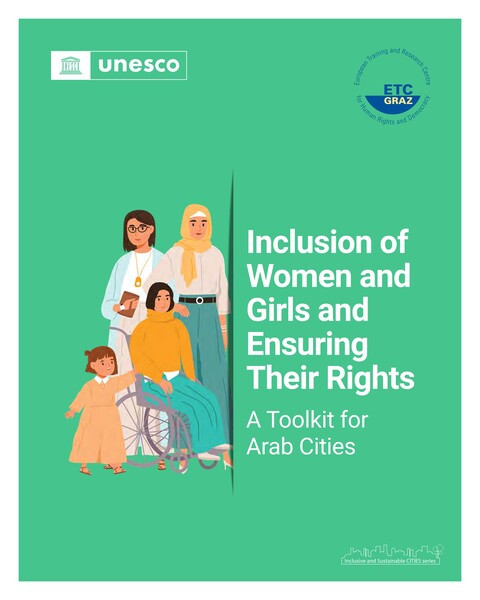 Inclusion of Women and Girls and Ensuring Their Rights: A Toolkit for Arab Cities 出版年份: 2023 机构作者: UNESCO Cairo | European Training and Research Centre for Human Rights and Democracy (Austria) Even though women and girls represent close to or more than half of the population of most Arab cities, they are one of the groups that are historically and structurally excluded from decision-making and development planning in the cities. They face many barriers in accessing cities services, and inequality participating in cities activities. Developed on the basis of a virtual regional consultation workshop, as well as in-depth interviews with cities officials and representatives from the Coalition of Arab Cities against Racism, Discrimination, Xenophobia and Intolerance, this Toolkit provides tools and practical advice to enable Arab cities achieve a better inclusion of women and girls, and ensure their full right to benefit from local development programs. The toolkit mainly targets local authorities in Arab cities including Mayors, Members of Municipality Councils, Municipal executives, and Entities concerned with the design, implementation, follow-up, and evaluation of local projects and programs. “Since wars begin in the minds of men andwomen it is in the minds of men and womenthat the defences of peace must be constructed”Inclusion of women and girls in Arab cities: challenge or opportunity?This publication is the result of a joint effort involving the European Training and Research Centre for Human Rights and Democracy in Graz, UNESCO Coalition of Arab Cities against Racism, Discrimination, Xenophobia and Intolerance, and UNESCO Cairo Office. إدماج وضمان حقوق النساء والفتيات: دليل المدن العربية 出版年份: 2023 机构作者: UNESCO Cairo | European Training and Research Centre for Human Rights and Democracy (Austria) إدماج النساء والفتيات في المدن العربية، تح ٍد أم فرصة؟يشكل إدماج النساء والفتيات عنصرا محوريا في مسألة الإدماج الحضري. فعلى الرغم من أن النساء والفتياتي مثلن ما يقرب من أو يزيد عن نصف السكان في أغلب المدن العربية، فإنهن من أكثرالفئات المستبعدة تاريخيا وهيكلًيا من عملية صنع القرار والتخطيط الإنمائي في المدن العربية. ويواجهن العديد من العوائقل لاستفادة من خدمات المدن ويعانين من عدم المساواة فيفرص المشاركة في أنشطتها.كان إعداد هذا الدليل على أساس ورشة عمل استشارية إقليمية افتراضية، بالإضافة إلى مقابلات متعمقة مع مسؤولي المدن وممثلي تحالف المدن العربية ضد العنصرية والتمييز وكراهية الأجانب والتعصب. ويوفر الدليل أدوات ونصائح عملية لتمكين المدن العربية من تحقيق إدماج النساء والفتيات بشكل أفضل، وضمان حقهن الكامل في الاستفادة من برامج التنمية المحلية.يستهدف هذا الدليل بشكل أساسي السلطات المحلية في المدن العربية بما في ذلك رؤساء البلديات وأعضاء المجالس البلدية والمديرين التنفيذيين في البلديات والهيئات المعنية بتصميم المشاريع والبرامج المحلية وتنفيذها ومتابعتها وتقييمها.يأتي هذا المنشور نتيجة جهد مشترك ساهم فيه كل من المركز الأوروبي للتدريب والبحوث لحقوق الإنسان والديمقراطية في جراتس، وتحالف اليونسكو للمدن العربية ضد العنصرية والتمييز وكراهية الأجانب والتعصب، ومكتب اليونسكو بالقاهرة.
  Study on measures taken by municipalities and recommendations for further action to challenge racism through education 出版年份: 2006 作者: Klaus Starl 机构作者: European Training and Research Centre for Human Rights and Democracy (Austria) Commitment 8 of the Ten-Point Plan of Action of the European Coalition of Cities against Racism requires the measures “Challenging Racism and Discrimination through Education”. This point aims to improve the access to and enjoyment of all forms of education, as well as the promotion of education in mutual tolerance and understanding. To reach this goal, the members of the coalition have been called to undertake activities, elaborate strategies and establish relevant institutions to influence society and train attitudes, behaviour and skills within the population. They are called to find out causes for racist tendencies among their population and to involve all stakeholders, particularly parents and school officials. As an external expert, the European Training and Research Centre for Human Rights and Democracy in Graz, Austria, (ETC Graz) was commissioned by UNESCO to carry out a study on the measures against racism already in place at a local level and serve as good illustration of “Commitment 8”. A major source of information was the written material provided by the selected cities. Additional or missing information could be obtained through direct exchanges and/or interviews with officers responsible for the municipalities and some NGOs. The material should not to be considered as complete. On the basis of the contributions sent in by the participating cities, the ETC assessed whether these actions/activities meet the objectives of Commitment 8. The authors used the following criteria to make this assessment: Does the action undertaken contribute to a) the improvement of access to education and promote equal opportunities; b) the impact of educational measures on individuals (potential victims and offenders) and on the atmosphere at school and in society. The following recommendations are derived from the eight selected measures documented in Chapter II, and the analysis on their “replicability” in Chapter III. The 12 recommendations explicitly or implicitly refer to the replicable documented measures. Where “replicability” requires specific conditions, or it is recommended to fulfil these conditions firstly, i.e. structural and institutional conditions, these are stated. The 12 recommendations are addressed to municipalities in Europe irrespective of their current membership in the European Coalition of Cities against Racism. As already mentioned the recommendations focus on meeting the requirements of Commitment 8, challenging racism through education.
  Study on challenges in the development of local equality indicators: a human-rights-centred model; Commitment 2 of the Ten-Point Plan of Action 出版年份: 2010 作者: Klaus Starl | Jennifer Pinno 机构作者: UNESCO | European Training and Research Centre for Human Rights and Democracy (Austria) The study aims at: Providing a theoretical fundament of ECCAR Indicators to measure racism or (in)equality1 and to evaluate municipal anti-discrimination policies (framework concept), and Discussing related legal and practical issues such as legality and reliability of available ‘ethnic’ data (legal and practical preconditions) in the context of ECCAR’s endeavours to set up an ECCAR-wide applicable system of monitoring racism, discrimination, equality and respective municipal policies. The study is structured in three parts. In the first part, preliminary questions concerning legality and practical feasibility of ‘ethnic’ data collection as a prerequisite for the development of and work with adequate indicators will be discussed. The second part deals with the conceptualization of human rights law as the constructing principle of ECCAR Indicators. It includes the discussion of the proposed model of the ECCAR-ADIX. The third part of the study describes practical examples of indicator use in selected ECCAR member cities. The section shows various approaches and gives evidence on different attempts by municipalities to set up fact-based anti-racism policies but also highlights the variety of methods, data, measurement topics, goals, etc.
  Study on measures taken by municipalities and recommendations for further action to achieve greater vigilance against racism: Commitment 1 of the Ten-Point Plan of Action 出版年份: 2006 作者: Klaus Starl 机构作者: UNESCO | European Training and Research Centre for Human Rights and Democracy (Austria) Commitment 1 of the Ten-Point Plan of Action of the European Coalition of Cities against Racism requires ‘Greater Vigilance against Racism’. This point aims at setting up a monitoring, vigilance and solidarity network against racism at the municipal level. To reach this goal, the members of the coalition are called to undertake activities, elaborate strategies and establish relevant institutions to monitor the local situation concerning structures in society, attitudes within the population and racist incidents. They are called to find out causes for racist tendencies among their population and establish solidarity networks involving all stakeholders, particularly civil society organisations. As an external expert, the European Training and Research Centre for Human Rights and Democracy in Graz, Austria, (ETC Graz) was commissioned by UNESCO to carry out a study on the measures already taken against racism at the local level that serve as good illustration of ‘Commitment 1’. Major information resource was the written material provided by the selected cities. Through direct exchange and/or interviews with responsible officers of the municipalities and some NGOs, additional or missing information could be obtained. The material is not to be considered as complete. On the basis of the contribution sent in by the participating cities, the ETC made an assessment whether these actions/activities meet the objective of the Commitment 1. The authors used the following criteria to make this assessment: does the action undertaken contribute to a) creating and promoting vigilance directly; b) creating and promoting vigilance indirectly through awareness raising; c) creating and promoting vigilance through a monitoring measure or d) the establishment and maintenance of a solidarity network. The authors presumed that c) and d) will lead directly to greater vigilance. The following recommendations are derived from the eight selected measures documented in Chapter II, and the analysis on their replicability in Chapter III. The 10 recommendations expicitly or implicitly refer to the replicable documented measures. Where the replicability requires specific conditions, these are stated or it is recommended to fulfil these conditions firstly, i.e. structural and institutional conditions. The 10 recommendations are addressed to municipalities in Europe irrespective of their current membership in the European Coalition of Cities against Racism. As already mentioned the recommendations focus on meeting the requirement of Commitment 1, creating greater vigilance against racism.
  Media Literacy in Finland: National Media Education Policy 出版年份: 2019 机构作者: European Training and Research Centre for Human Rights and Democracy (Austria) | UNESCO Media literacy in Finland is the media literacy policy and the national media education policy document, published by the Ministry of Education and Culture in 2019. The document updates and extends the cultural policy guidelines for media literacy published in 2013. The need to update the policy arose from the changes that have taken place in media culture and the broader than before target groups of media education in particular. The Program of the Government also highlights the need for media skills for all age groups, from children to seniors. The vision of the policy is to improve everyone’s opportunities to develop their media literacy.
  لعربية للإدماج الحضري: تعزيز الإدماج الحضري من خلال المشاركة العامة، والوصول إلى المعلومات، والرياضة والتربية على المواطنة وحقوق الإنسان 出版年份: 2020 作者: Kareem Ibrahim | Deena Khalil | Marwa Barakat | Salwa Salman 机构作者: UNESCO | European Training and Research Centre for Human Rights and Democracy (Austria) | UNESCO Cairo ً ً ـا متسـارع ّ ا، حيـث باتـت تسـتضيف أكـر مـن نصـف سـكان املنطقـة. وتحولـت معظـم املـدن العربيـة ً تشـهد املـدن العربيـة توسـعا حرضي ّـات والثقافـات واألعـراق. وميكـن لهـذه التحـوالت أن تسـهم يف تحقيـق الرخـاء ِبف ّ عـل عوامـل مختلفـة إىل فضـاءات مختلطـة، تتنـوع فيهـا الهوي ًــا محــوره اإلنســان، وتطبيــق سياســات وتدابــر دامجــة مــن شــأنها توفــر الفــرص االجتامعــي بــرط اعتــا ً د مســؤويل املــدن نهجــا حقوقي املتسـاوية لجميـع السـكان. ُقـدم مجموعـة مـن األدوات والنصائـح العمليـة ليسرتشـد بهـا قـادة املـدن عـى هـذه الخلفيـة، يـأيت دليـل املـدن العربيـة لإلدمـاج الحـري لي العربيــة واملســؤولون بالحكومــات املحليــة يف مســعاهم نحــو إقامــة مــدن شــاملة ومســتدامة. ينطلــق الدليــل مــن خــرات وتجــارب املــدن ّ املنتسـبة لتحالـف املـدن العربيـة ضـد ّ العنرصيـة والتمييـز وكراهيـة األجانـب والتعصـب يف تخطيـط وتنفيـذ وتقييـم برامـج ومشـاريع تُعـزز اإلدمـاج الحـري وتتصـدى لإلقصـاء بأشـكاله كافـة. ويركّـز الدليـل عـى أربعـة موضوعـات اعتربتهـا املـدن األعضـاء يف التحالـف مـن ضمـن أولوياتهـا، وهـي: املشـاركة العامـة، والوصـول إىل املعلومـات، والرياضـة مـن أجـل إدمـاج الشـباب، والرتبيـة عـى املواطنـة وحقـوق اإلنسـان. Toolkit for Urban Inclusion in Arab Cities: Cities Promoting Inclusion Through Public Participation, Access to Information, Sport, and Citizenship and Human Rights Education 出版年份: 2020 作者: Kareem Ibrahim | Deena Khalil | Marwa Barakat | Salwa Salman 机构作者: UNESCO | European Training and Research Centre for Human Rights and Democracy (Austria) | UNESCO Cairo Arab cities are witnessing an unprecedented expansion. Home to more than half of the region’s population, Arab cities have transformed into heterogeneous spaces that host diverse identities, cultures, and ethnicities. In order for this transformation to lead to prosperity, city officials must adopt a rights-based, human-centred approach, and implement inclusive policies and measures that provide equal opportunities for all.In this context, the Toolkit for Urban Inclusion in Arab Cities provides Arab city leaders and local government officials with practical tools and advice to guide their efforts towards establishing inclusive and sustainable cities. The Toolkit is based on the real experiences and practices of cities members of the Coalition of Arab Cities against Racism, Discrimination, Xenophobia and Intolerance in planning, implementing and evaluating programs and projects that promote urban inclusion and combat exclusion in all its forms.The Toolkit focuses on four topics of high priority to the Arab Coalition member cities: public participation, access to information, sport for youth inclusion, and citizenship and human rights education. Manuel des villes arabes pour l’inclusion urbaine: Promouvoir l’inclusion urbaine par la participation publique, l’accès à l’information, le sport, et l’éducation à la citoyenneté et aux droits de l’homme 出版年份: 2020 作者: Kareem Ibrahim | Deena Khalil | Marwa Barakat | Salwa Salman 机构作者: UNESCO | European Training and Research Centre for Human Rights and Democracy (Austria) | UNESCO Cairo Les villes arabes connaissent un développement urbain accéléré qui les a amenées à réunir plus de la moitié de la population régionale. Une combinaison de nombreux facteurs a transformé la majorité des villes arabes en lieux de brassage où abondent les identités, les cultures et les ethnies variées. Ces transformations peuvent contribuer à la réalisation de la prospérité sociale, à condition que les responsables des villes adoptent un programme législatif centré sur les droits de l’homme, et qu’ils mettent en œuvre des politiques et des dispositions susceptibles de réaliser l’inclusion de manière à assurer l’égalité des chances à tous leurs habitants. Dans ce contexte, le Manuel des villes arabes pour l’inclusion urbaine propose un ensemble d’outils et de conseils pratiques susceptibles de servir de guide aux édiles des villes arabes et aux responsables des gouvernements locaux dans leur quête pour la mise en place de villes inclusives et durables. Le Manuel prend pour base les acquis et expériences de la Coalition des villes arabes contre le racisme, la discrimination, la xénophobie et l’intolérance dans la planification, la réalisation et l’évaluation de programmes et de projets pour favoriser l’inclusion sociale et pour s’opposer à l’exclusion sous toutes ses formes. Le Manuel est centré sur quatre questions désignées par les villes membres parmi leurs priorités : La Participation publique, l’Accès à l’information, le Sport pour l’inclusion des jeunes, l’Éducation à la citoyenneté et aux droits de l’homme.