
相关资源
探索丰富的全球公民教育资源,深化理解,促进研究、倡导、教学与学习。
共找到14条结果
 Aprender a vivir juntos: un programa intercultural e interreligioso para la educacion ética 出版年份: 2008 机构作者: Arigatou Foundation (Switzerland) | Interfaith Council on Ethics Education for Children Learning to Live Together has been developed for use in different religious and secular contexts as a resource for everyone concerned with promoting ethics and values. The objective has been to develop a resource that is relevant on a global level and yet flexible enough to be interpreted within different cultural and social contexts. The resource has been tested in many different regions and cultural contexts to assure that it is relevant in regional and local contexts (see ‘We did it like this’, p.187). Test workshops have been held in 10 different countries, where the GNRC was able to bring together various religious and secular organisations working with children. During the test workshops, this resource manual was used to the benefit of more than 300 children and youth, representing African Traditional Religions, Bahá’í Faith, Buddhism, Christianity, Hinduism, Islam, Judaism, members of Brahma Kumaris and a number of people of secular thinking. Test workshops as well as input and comments from experts in the area of education, ethics, spirituality, intercultural and interfaith learning and child rights have contributed important experiences and opportunities for learning for the development of this resource. Learning to Live Together is already having an impact. In a GNRC programme in Israel, the resource material was used during a six-day journey made by a group of Jewish, Christian, and Muslim youth to the historical sites of Israel and Palestine, all of which have symbolic relevance to the conflict in their region. At each stop, youth participants discussed their values and their differing perceptions of their shared history. Learning to Live Together is an adaptable resource that can be used with children from many different cultural, religious and social contexts to nurture common values and a mutual respect for different backgrounds and traditions. The resource provides space for enhancing children’s innate potential for spirituality and hope for a better world, as a contribution to changing the situation for children worldwide. The Users Guide provides all necessary information for its use. UNESCO and UNICEF have been closely involved in developing Learning to Live Together and have endorsed the material as an important contribution to a quality education, which takes a multicultural and multi-religious society into consideration. UNESCO’s Guidelines for Intercultural Education underpin the philosophy and the approach of the resource: “Religious education can be described as learning about one’s own religion or spiritual practices, or learning about other religions or beliefs. Interfaith education, in contrast, aims to actively shape the relations between people from different religions”. Apprendre à vivre ensemble: un programme interculturel et interreligieux pour l'enseignement de l'éthique 出版年份: 2008 机构作者: Arigatou Foundation (Switzerland) | Interfaith Council on Ethics Education for Children Learning to Live Together has been developed for use in different religious and secular contexts as a resource for everyone concerned with promoting ethics and values. The objective has been to develop a resource that is relevant on a global level and yet flexible enough to be interpreted within different cultural and social contexts. The resource has been tested in many different regions and cultural contexts to assure that it is relevant in regional and local contexts (see ‘We did it like this’, p.187). Test workshops have been held in 10 different countries, where the GNRC was able to bring together various religious and secular organisations working with children. During the test workshops, this resource manual was used to the benefit of more than 300 children and youth, representing African Traditional Religions, Bahá’í Faith, Buddhism, Christianity, Hinduism, Islam, Judaism, members of Brahma Kumaris and a number of people of secular thinking. Test workshops as well as input and comments from experts in the area of education, ethics, spirituality, intercultural and interfaith learning and child rights have contributed important experiences and opportunities for learning for the development of this resource. Learning to Live Together is already having an impact. In a GNRC programme in Israel, the resource material was used during a six-day journey made by a group of Jewish, Christian, and Muslim youth to the historical sites of Israel and Palestine, all of which have symbolic relevance to the conflict in their region. At each stop, youth participants discussed their values and their differing perceptions of their shared history. Learning to Live Together is an adaptable resource that can be used with children from many different cultural, religious and social contexts to nurture common values and a mutual respect for different backgrounds and traditions. The resource provides space for enhancing children’s innate potential for spirituality and hope for a better world, as a contribution to changing the situation for children worldwide. The Users Guide provides all necessary information for its use. UNESCO and UNICEF have been closely involved in developing Learning to Live Together and have endorsed the material as an important contribution to a quality education, which takes a multicultural and multi-religious society into consideration. UNESCO’s Guidelines for Intercultural Education underpin the philosophy and the approach of the resource: “Religious education can be described as learning about one’s own religion or spiritual practices, or learning about other religions or beliefs. Interfaith education, in contrast, aims to actively shape the relations between people from different religions”. تعلم العيش معا: برنامج التواصل بين الثقافات والأديان لتعليم الأخلاق 出版年份: 2008 机构作者: Interfaith Council on Ethics Education for Children | Arigatou Foundation (Switzerland) Learning to Live Together has been developed for use in different religious and secular contexts as a resource for everyone concerned with promoting ethics and values. The objective has been to develop a resource that is relevant on a global level and yet flexible enough to be interpreted within different cultural and social contexts. The resource has been tested in many different regions and cultural contexts to assure that it is relevant in regional and local contexts (see ‘We did it like this’, p.187). Test workshops have been held in 10 different countries, where the GNRC was able to bring together various religious and secular organisations working with children. During the test workshops, this resource manual was used to the benefit of more than 300 children and youth, representing African Traditional Religions, Bahá’í Faith, Buddhism, Christianity, Hinduism, Islam, Judaism, members of Brahma Kumaris and a number of people of secular thinking. Test workshops as well as input and comments from experts in the area of education, ethics, spirituality, intercultural and interfaith learning and child rights have contributed important experiences and opportunities for learning for the development of this resource. Learning to Live Together is already having an impact. In a GNRC programme in Israel, the resource material was used during a six-day journey made by a group of Jewish, Christian, and Muslim youth to the historical sites of Israel and Palestine, all of which have symbolic relevance to the conflict in their region. At each stop, youth participants discussed their values and their differing perceptions of their shared history. Learning to Live Together is an adaptable resource that can be used with children from many different cultural, religious and social contexts to nurture common values and a mutual respect for different backgrounds and traditions. The resource provides space for enhancing children’s innate potential for spirituality and hope for a better world, as a contribution to changing the situation for children worldwide. The Users Guide provides all necessary information for its use. UNESCO and UNICEF have been closely involved in developing Learning to Live Together and have endorsed the material as an important contribution to a quality education, which takes a multicultural and multi-religious society into consideration. UNESCO’s Guidelines for Intercultural Education underpin the philosophy and the approach of the resource: “Religious education can be described as learning about one’s own religion or spiritual practices, or learning about other religions or beliefs. Interfaith education, in contrast, aims to actively shape the relations between people from different religions”.
 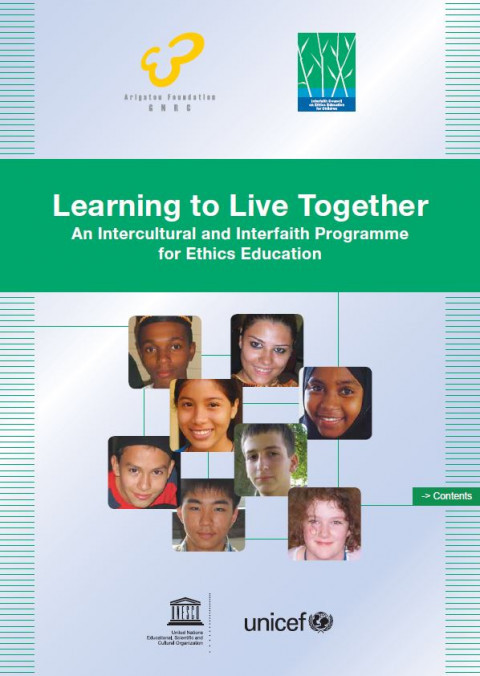 Learning to live together: an intercultural and interfaith programme for ethics education 出版年份: 2008 机构作者: Interfaith Council on Ethics Education for Children | Arigatou Foundation (Switzerland) Learning to Live Together has been developed for use in different religious and secular contexts as a resource for everyone concerned with promoting ethics and values. The objective has been to develop a resource that is relevant on a global level and yet flexible enough to be interpreted within different cultural and social contexts. The resource has been tested in many different regions and cultural contexts to assure that it is relevant in regional and local contexts (see ‘We did it like this’, p.187).Test workshops have been held in 10 different countries, where the GNRC was able to bring together various religious and secular organisations working with children. During the test workshops, this resource manual was used to the benefit of more than 300 children and youth, representing African Traditional Religions, Bahá’í Faith, Buddhism, Christianity, Hinduism, Islam, Judaism, members of Brahma Kumaris and a number of people of secular thinking. Test workshops as well as input and comments from experts in the area of education, ethics, spirituality, intercultural and interfaith learning and child rights have contributed important experiences and opportunities for learning for the development of this resource. Learning to Live Together is already having an impact. In a GNRC programme in Israel, the resource material was used during a six-day journey made by a group of Jewish, Christian, and Muslim youth to the historical sites of Israel and Palestine, all of which have symbolic relevance to the conflict in their region. At each stop, youth participants discussed their values and their differing perceptions of their shared history.Learning to Live Together is an adaptable resource that can be used with children from many different cultural, religious and social contexts to nurture common values and a mutual respect for different backgrounds and traditions. The resource provides space for enhancing children’s innate potential for spirituality and hope for a better world, as a contribution to changing the situation for children worldwide. The Users Guide provides all necessary information for its use. UNESCO and UNICEF have been closely involved in developing Learning to Live Together and have endorsed the material as an important contribution to a quality education, which takes a multicultural and multi-religious society into consideration. UNESCO’s Guidelines for Intercultural Education underpin the philosophy and the approach of the resource: “Religious education can be described as learning about one’s own religion or spiritual practices, or learning about other religions or beliefs. Interfaith education, in contrast, aims to actively shape the relations between people from different religions”.
 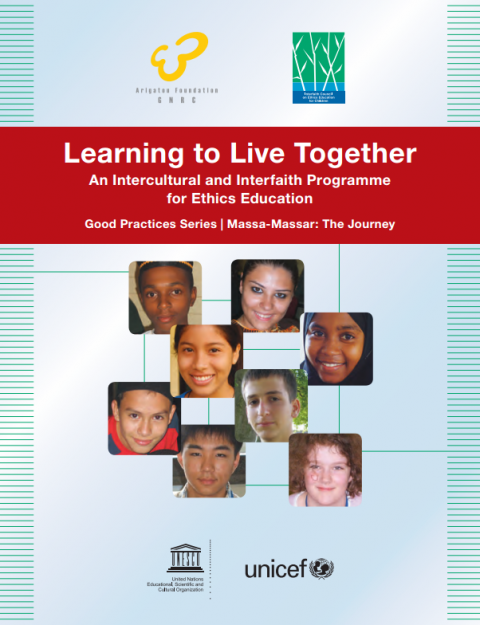 Learning to live together: an intercultural and interfaith programme for ethics education: Good Practices Series; Massa-Massar: The Journey 出版年份: 2012 机构作者: United Nations Children's Fund (UNICEF) | Interfaith Council on Ethics Education for Children | Arigatou Foundation The Massa-Massar programme creates opportunities for Jews and Palestinians to meet, learn from one another, challenge their prejudices and stereotypes, listen to new narratives and reflect on their relations with others and their role in their societies. Aprender a vivir juntos: Un programa intercultural e interreligioso para la educación ética: Serie de buenas prácticas; Massa-Massar: el viaje 出版年份: 2012 机构作者: United Nations Children's Fund (UNICEF) | Interfaith Council on Ethics Education for Children | Arigatou Foundation The Massa-Massar programme creates opportunities for Jews and Palestinians to meet, learn from one another, challenge their prejudices and stereotypes, listen to new narratives and reflect on their relations with others and their role in their societies.
 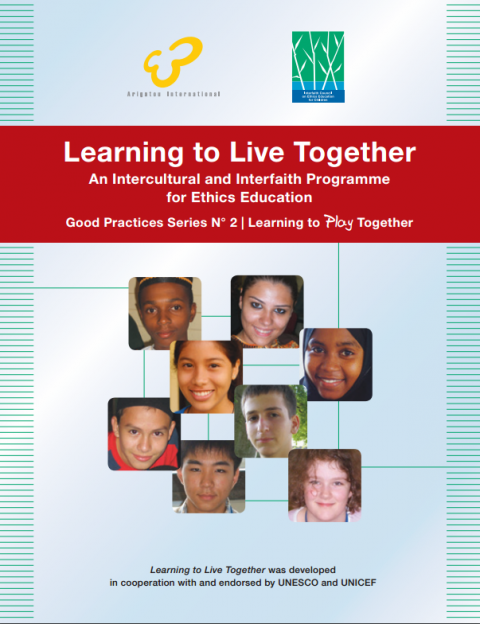 Learning to live together: an intercultural and interfaith programme for ethics education; Good Practices Series 2; Learning to Play Together 出版年份: 2014 机构作者: United Nations Children's Fund (UNICEF) | Interfaith Council on Ethics Education for Children | Arigatou Foundation Learning to live together: an intercultural and interfaith programme for ethics education; Good Practices Series 2; Learning to Play Together Aprender a vivir juntos Un programa intercultural e interreligioso para la educación ética: Series de Buenas Prácticas 2; Aprender a jugar juntos 出版年份: 2014 机构作者: United Nations Children's Fund (UNICEF) | Interfaith Council on Ethics Education for Children | Arigatou Foundation Aprender a vivir juntos Un programa intercultural e interreligioso para la educación ética: Series de Buenas Prácticas 2; Aprender a jugar juntos
 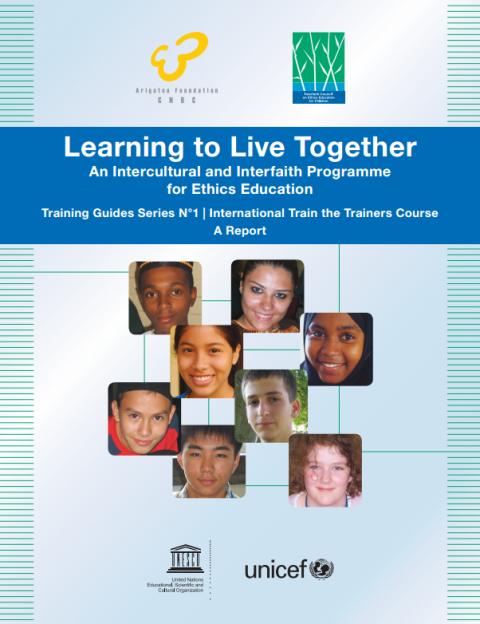 Learning to live together: an intercultural and interfaith programme for ethics education: Traning guides series 1; international train the trainers course; a report 出版年份: 2012 机构作者: United Nations Children's Fund (UNICEF) | Interfaith Council on Ethics Education for Children | Arigatou Foundation In 2010, Arigatou International offered an International Train the Trainers course designed to help those providing training programmes on the use of the Learning to Live Together. The University of Edinburgh helped develop and evaluate the Train the Trainers as a pilot project.
 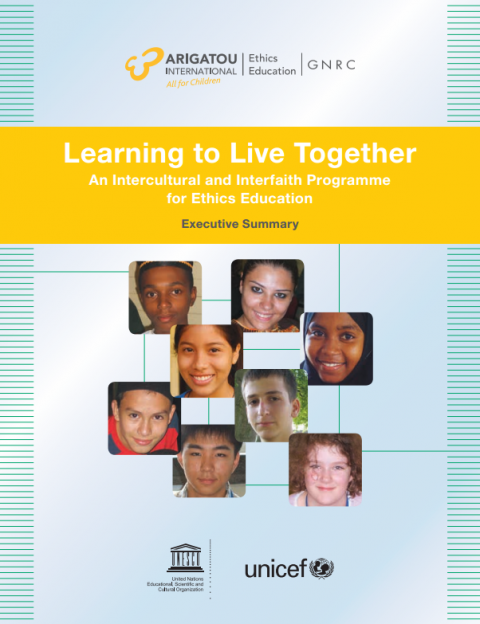 Learning to live together: an intercultural and interfaith programme for ethics education: Executive Summary 出版年份: 2015 机构作者: United Nations Children's Fund (UNICEF) | Interfaith Council on Ethics Education for Children | Arigatou Foundation What is the Learning to Live Together? How was it developed? Where and how can it be used? In the Executive Summary you can find answers to all these questions, as well as information about outstanding projects that show the potential of the programme.