
相关资源
探索丰富的全球公民教育资源,深化理解,促进研究、倡导、教学与学习。
共找到1,578条结果
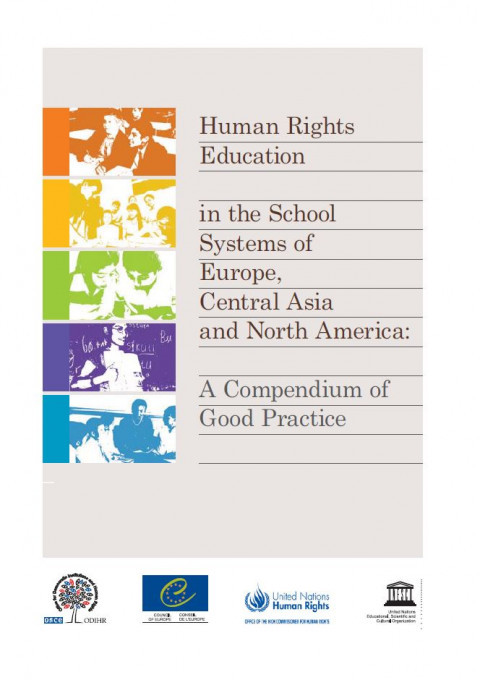 Human rights education in the school systems of Europe, Central Asia and North America: a compendium of good practice 出版年份: 2009 机构作者: Council of Europe | OSCE. Office for Democratic Institutions and Human Rights | UNESCO | UN. Office of the United Nations High Commissioner for Human Rights (UN. OHCHR) “Human Rights Education in the School Systems of Europe, Central Asia and North America: A Compendium of Good Practice” is a compilation of 101 examples of good practice in human rights education in primary schools, secondary schools and teacher training institutions in the Organization for Security and Co-operation in Europe (OSCE) area, which is also covered by the United Nations Educational, Scientific and Cultural Organization (UNESCO), the Office of the United Nations High Commissioner for Human Rights (OHCHR) and, partially, the geographical mandate of the Council of Europe (CoE).The term “human rights education” is often used in this resource in a broader sense, to also include educationfor democratic citizenship and education for mutual respect and understanding, which are all based on internationally agreed human rights standards. These three areas are seen as interconnected and essential within educational systems in order to prepare youth to be active, responsible and caring participants in their communities, as well as at the national and global levels.Human rights education has been defined as education, training and information aimed at building a universal culture of human rights. A comprehensive education in human rights not only provides knowledge about human rights and the mechanisms that protect them, but also imparts the skills needed to promote, defend and apply human rights in daily life. Education for democratic citizenship focuses on educational practices and activities designed to help young people and adults to play an active part in democratic life and exercise their rights and responsibilities in society. Education for mutual respect and understanding highlights self-respect, respect for others, and the improvement of relationships between people of differing cultural traditions.This book aims to support quality teaching in these areas and to inspire educational policymakers (those working in education ministries and local school boards) and administrators, teachers, teacher trainers, non-formal educators and all other interested actors, as well as to facilitate networking and the exchange of experience among education professionals.
 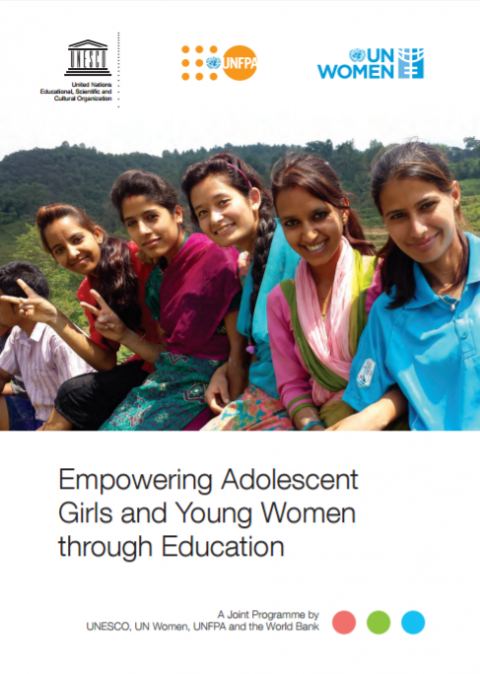 Empowering Adolescent Girls and Young Women through Education 出版年份: 2015 机构作者: UNESCO L'Autonomisation des adolescentes et des jeunes femmes par l'éducation 出版年份: 2015 机构作者: UNESCO
 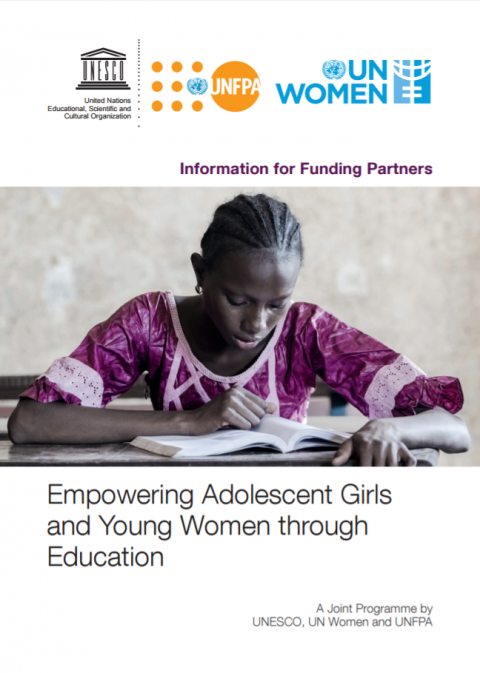 Empowering Adolescent Girls and Young Women through Education: Information for Funding Partners 出版年份: 2016 机构作者: UNESCO | United Nations Population Fund (UNFPA) | United Nations Entity for Gender Equality and the Empowerment of Women (UN Women) Empowering Adolescent Girls and Young Women through Education: Information for Funding Partners
  Out in the Open: Education Sector Responses to Violence Based on Sexual Orientation or Gender Identity/Expression: Summary Report 出版年份: 2016 机构作者: UNESCO Violence in schools and other educational settings is a worldwide problem. Students who are perceived not to conform to prevailing sexual and gender norms, including those who are lesbian, gay, bisexual or transgender (LGBT), are more vulnerable. Violence based on sexual orientation and gender identity/expression, also referred to as homophobic and transphobic violence, is a form of school-related gender-based violence. It includes physical, sexual and psychological violence and bullying and, like other forms of school-related violence, can occur in classes, playgrounds, toilets and changing rooms, on the way to and from school and online. This report summarises the findings of a global review, commissioned by UNESCO, of homophobic and transphobic violence in schools and education sector responses.
 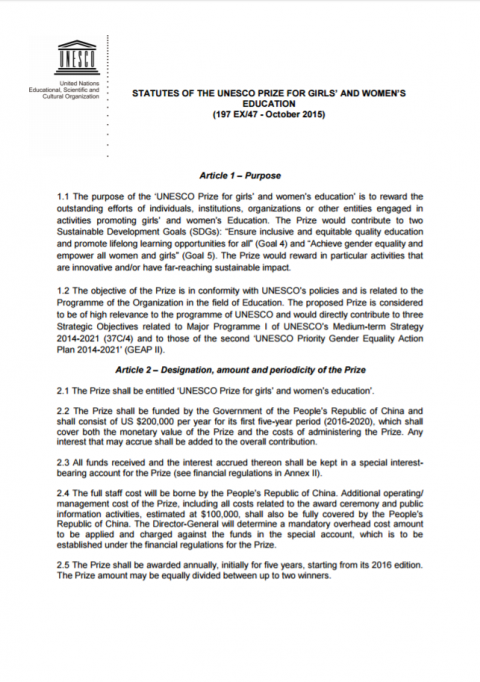 Statutes of the UNESCO Prize for Girls' and Women's Education (197 EX/47, October 2015) 出版年份: 2016 机构作者: UNESCO The purpose of the ‘UNESCO Prize for girls’ and women’s education’ is to reward the outstanding efforts of individuals, institutions, organizations or other entities engaged in activities promoting girls’ and women’s Education. The Prize would contribute to two Sustainable Development Goals (SDGs): “Ensure inclusive and equitable quality education and promote lifelong learning opportunities for all” (Goal 4) and “Achieve gender equality and empower all women and girls” (Goal 5). The Prize would reward in particular activities that are innovative and/or have far-reaching sustainable impact. Statuts du Prix UNESCO pour l'éducation des filles et des femmes (197 EX/17, 14 octobre 2015) 出版年份: 2016 机构作者: UNESCO The purpose of the ‘UNESCO Prize for girls’ and women’s education’ is to reward the outstanding efforts of individuals, institutions, organizations or other entities engaged in activities promoting girls’ and women’s Education. The Prize would contribute to two Sustainable Development Goals (SDGs): “Ensure inclusive and equitable quality education and promote lifelong learning opportunities for all” (Goal 4) and “Achieve gender equality and empower all women and girls” (Goal 5). The Prize would reward in particular activities that are innovative and/or have far-reaching sustainable impact.
 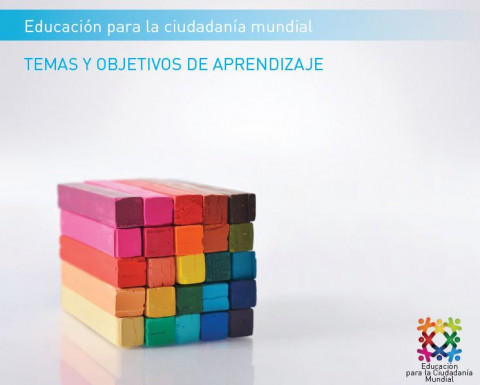 Educación para la ciudadanía mundial: temas y objetivos de aprendizaje 出版年份: 2015 机构作者: UNESCO This publication, titled Global Citizenship Education: Topics and learning objectives, is the first pedagogical guidance from UNESCO on global citizenship education. It is the result of an extensive research and consultation process with experts from different parts of the world. This guidance draws on the UNESCO publication Global Citizenship Education: Preparing learners for the challenges of the 21st century and the outcomes of three key UNESCO events on global citizenship education: the Technical Consultation on Global Citizenship Education (September 2013), as well as the First and Second UNESCO Fora on Global Citizenship Education, organized in December 2013 and January 2015 respectively. Before it was finalized, the guidance was field-tested by education stakeholders in selected countries in all regions to ensure its relevance in different geographical and socio-cultural contexts. Following the foundational work of UNESCO to clarify the conceptual underpinnings of global citizenship education and provide policy and programmatic directions, this document has been developed in response to the needs of Member States for overall guidance on integrating global citizenship education in their education systems. It presents suggestions for translating global citizenship education concepts into practical and age-specific topics and learning objectives in a way that allows for adaptation to local contexts. It is intended as a resource for educators, curriculum developers, trainers as well as policy-makers, but it will also be useful for other education stakeholders working in non-formal and informal settings.
 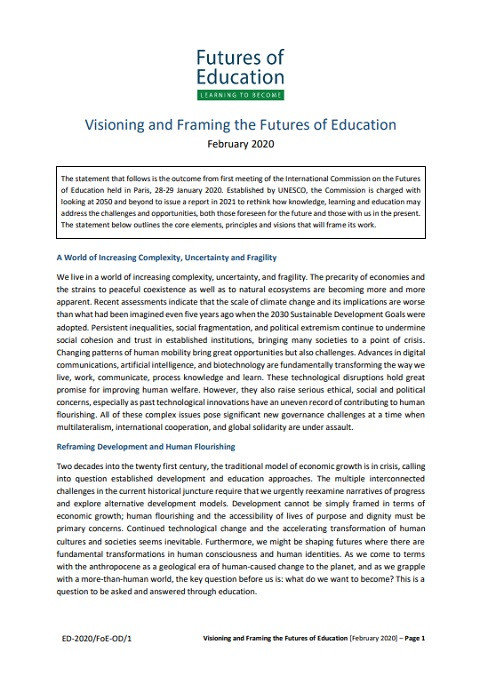 Концептуальное осмысление и определение перспектив развития образования: Февраль 2020года 出版年份: 2020 机构作者: UNESCO Представленное ниже заявление является итоговым документом первого заседания Международной комиссии по перспективам развития образования, состоявшегося 28-29 января 2020 года в Париже. Ко-миссия была создана решением ЮНЕСКО с задачей проанализировать перспективы развития образо-вания до 2050 года и в последующий период с целью подготовки к публикации в 2021 году доклада, в котором будет по-новому осмыслено то, каким образом знания, обучение и образование могли бы со-действовать использованию возможностей и решению сложных проблем, причем не только прогнози-руемых, но и уже существующих. 展望并构筑教育的未来: 2020年2月 出版年份: 2020 机构作者: UNESCO 以下是关于教育的未来国际委员会第一次会议(2020年1月28–29日,巴黎)成果的声明。该委员会由教科文组织创设,其任务是展望2050年及以后,在2021年发布一份报告,重新思考知识、学习和教育可如何应对挑战、把握机遇,包括未来可预见的以及当前存在的挑战和机遇。