
相关资源
探索丰富的全球公民教育资源,深化理解,促进研究、倡导、教学与学习。
共找到795条结果
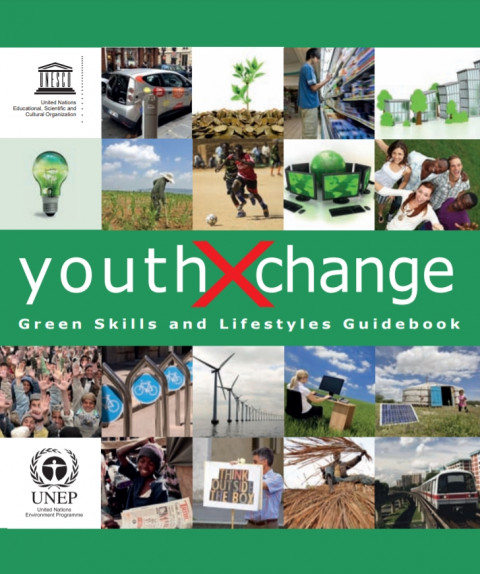 YouthXchange: green skills and lifestyles guidebook 出版年份: 2016 作者: Ryder. Guy, Steiner. Achim 机构作者: UNESCO | United Nations Environment Programme (UNEP) | UNESCO. Director-General, 2009-2017 (Bokova, I.G.) The YouthXchange Green Skills and Lifestyles Guidebook fills this gap. Developed by UNEP and UNESCO, in collaboration with the International Labour Organization (ILO), this Guidebook helps young people connect the talk about the green economy, green societies and green jobs to theirlifestyles. It focuses on the skills required to make these transitions – providing case studies and insight on green jobs and the skills they will require in terms of social innovation and entrepreneurship, the role of different stakeholders (government and private sector) and life skills. Young men and women are already driving change across the world. We must provide them with the skills they need to create new lifestyles and develop green jobs. Building a green future must start with training and education. It must start by listening to young people, by engaging their creativity and acting together.
 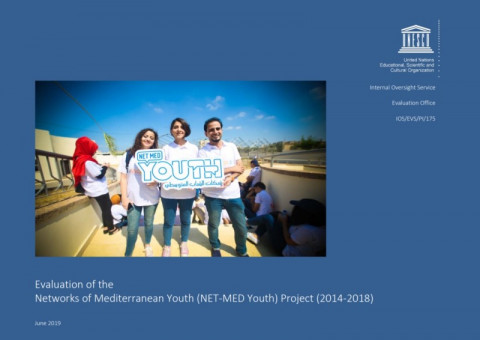 Evaluation of the Networks of Mediterranean Youth (NET-MED Youth) Project (2014-2018) 出版年份: 2019 作者: Maksymilian Fras | Yael Ohana | Kimiko Hibri Pedersen | Christophe Dietrich | Mamoun Besaiso 机构作者: UNESCO The Networks of Mediterranean Youth (NET-MED Youth) Project is a regional project funded by the European Union and implemented by UNESCO from 2014 until 2018. It followed a comprehensive approach through interdisciplinary activities in different thematic areas aimed at advancing youth legal and policy frameworks, enhancing youth representation in media, and reinforcing youth employability and skills in response to the challenges experienced by young women and men in the region regarding their transition to full autonomous citizenship in the civic, political, economic, social and cultural spheres. NET-MED Youth contributed to the creation of an enabling environment for young women and men from nine of the Southern countries of the European Neighbourhood Policy (i.e. Algeria, Israel, Jordan, Lebanon, Libya, Morocco, Palestine, Syria and Tunisia) to develop their competencies, to exercise their rights and meaningfully engage as active citizens in the development and implementation of national strategies on youth. The evaluation found that, overall, the NET-MED Youth Project was a successful initiative and created a momentum for Youth empowerment in the respective beneficiary countries. Its high relevance in the context of the Agenda 2030 resulted not least from UNESCO’s longstanding experience and good practices in working with youth organizations and youth-related stakeholders through youth engagement as partners and beneficiaries. The Project thus constituted a significant contribution to the UNESCO Operational Strategy on Youth 2014-2021. Gender equality was a central concern of NET-MED Youth, and systematically embedded throughout all activities as a transversal feature. In line with the Agenda 2030 commitment of leaving no one behind, several activities focused on issues of disadvantaged or traditionally underserved groups, such as youth with disabilities. Challenges identified are mainly related to the often difficult and in some countries unstable political environments. Together with the needs-based and rather context-specific approach in each country, this also affected to some extent the full implementation of the regional perspective. Furthermore, in the absence of a coherent and explicit longer-term exit strategy, the structures and results achieved risk not to be maintained, or scaled up over time, despite the strong local commitment and ownership created over the project duration. Through successfully incorporating youth aspirations in its design and implementation, the NET-MED Youth Project represented a new and innovative approach to youth engagement and empowerment in an interdisciplinary fashion, and should thus be considered as a basis for new thinking on which to build in the future. The high potential for replication of the NET-MED Youth Project, as a continuation or as an example of good practice for a comprehensive and interdisciplinary approach is thus to be further explored.
 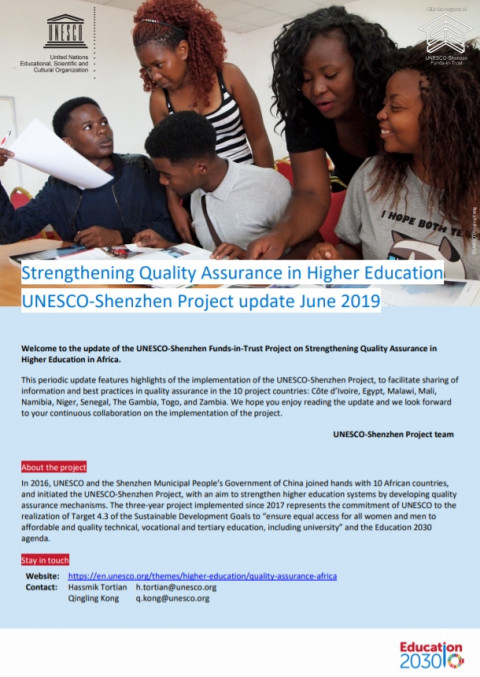 Strengthening Quality Assurance in Higher Education UNESCO-Shenzhen Project Update, June 2019 出版年份: 2019 机构作者: UNESCO In 2016, UNESCO and the Shenzhen Municipal People’s Government of China joined hands with 10 African countries, and initiated the UNESCO-Shenzhen Project, with an aim to strengthen higher education systems by developing quality assurance mechanisms. The three-year project implemented since 2017 represents the commitment of UNESCO to the realization of Target 4.3 of the Sustainable Development Goals to “ensure equal access for all women and men to affordable and quality technical, vocational and tertiary education, including university” and the Education 2030 agenda.
 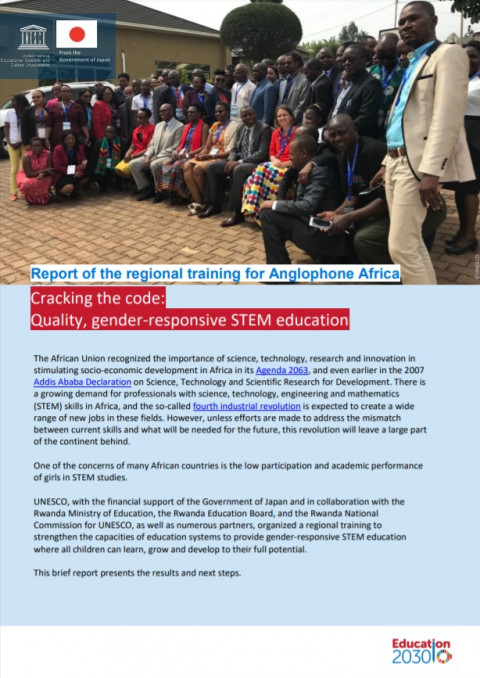 Report of the regional training for Anglophone Africa, Cracking the code: quality, gender-responsive STEM education 出版年份: 2019 机构作者: UNESCO The African Union recognized the importance of science, technology, research and innovation in stimulating socio-economic development in Africa in its Agenda 2063, and even earlier in the 2007 Addis Ababa Declaration on Science, Technology and Scientific Research for Development. There is a growing demand for professionals with science, technology, engineering and mathematics (STEM) skills in Africa, and the so-called fourth industrial revolution is expected to create a wide range of new jobs in these fields. However, unless efforts are made to address the mismatch between current skills and what will be needed for the future, this revolution will leave a large part of the continent behind. One of the concerns of many African countries is the low participation and academic performance of girls in STEM studies. UNESCO, with the financial support of the Government of Japan and in collaboration with the Rwanda Ministry of Education, the Rwanda Education Board, and the Rwanda National Commission for UNESCO, as well as numerous partners, organized a regional training to strengthen the capacities of education systems to provide gender-responsive STEM education where all children can learn, grow and develop to their full potential. This brief report presents the results and next steps.
 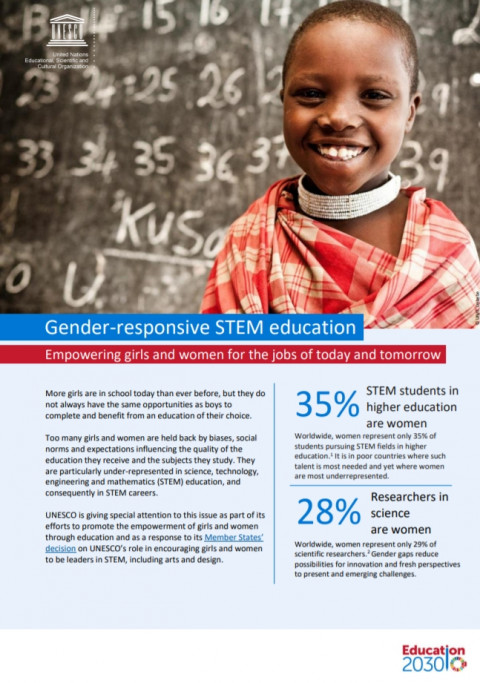 Gender-responsive STEM education: Empowering girls and women for the jobs of today and tomorrow 出版年份: 2019 机构作者: UNESCO More girls are in school today than ever before, but they do not always have the same opportunities as boys to complete and benefit from an education of their choice. Too many girls and women are held back by biases, social norms and expectations influencing the quality of the education they receive and the subjects they study. They are particularly under-represented in science, technology, engineering and mathematics (STEM) education, and consequently in STEM careers. UNESCO is giving special attention to this issue as part of its efforts to promote the empowerment of girls and women through education and as a response to its Member States’decisionon UNESCO’s role in encouraging girls and women to be leaders in STEM, including arts and design.
  Teaching and Learning Transformative Engagement 出版年份: 2019 机构作者: UNESCO While there is a large body of literature on citizenship and civic education, there is less clarity about the meaning of ‘responsible transformative engagement’ for young learners in relation to GCED and ESD – notably, the types of transformative engagement and the meaning of ‘responsible’. Understanding better the connection between learners’ engagement and education can clarify the knowledge, skills and competencies that schools may provide, as well as how the role of education can vary depending on context. In this light, this paper explores the meaning of ‘responsible transformative engagement’ with a view to clarifying the role of education in ways that may be reflected by UNESCO and other education stakeholders.
 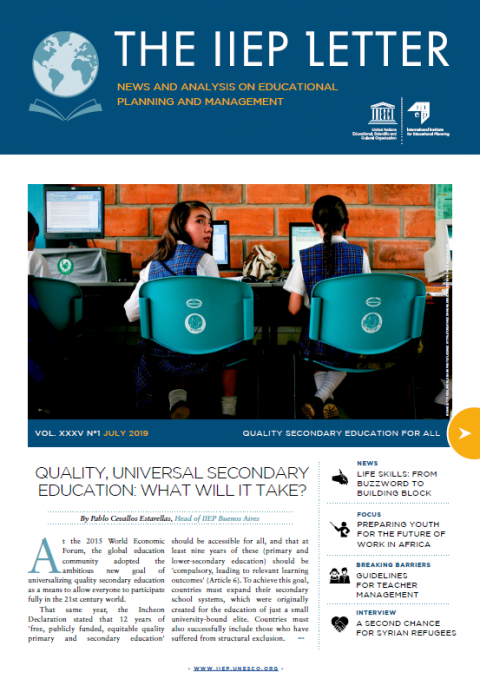 The IIEP letter: news and analysis on educational planning and management, vol. 35, no. 1 出版年份: 2019 机构作者: UNESCO This issue is dedicated to addressing the challenges and opportunities for quality secondary education for all. It addresses the necessary structural and curricular changes secondary education must undergo in order to address long histories of segregation and inequality. Experiences from Latin America illustrate some key takeaways on how to match commitment with meaningful change.
  Her education, our future: snapshots of UNESCO's work 出版年份: 2019 机构作者: UNESCO This collection provides snapshots of some of UNESCO’s efforts to empower women and girls through education. It highlights core areas of work undertaken, as profiled on the next page. The aim is to give the reader a flavour of what it is that UNESCO, including its 53 field offices and specialized institutes, is doing to transform her education and our future.
 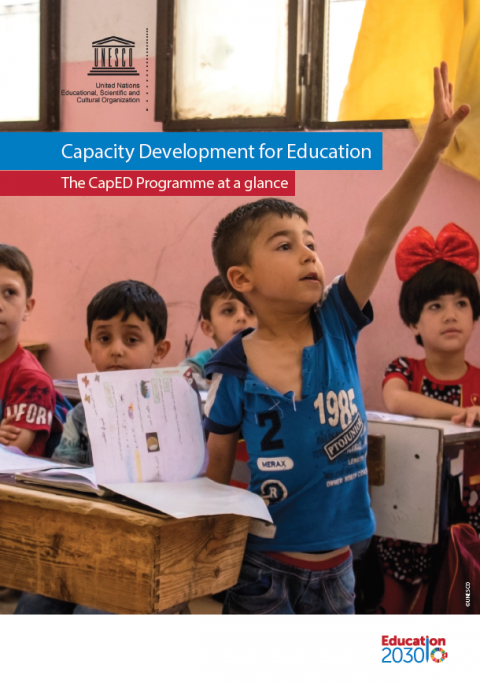 Capacity Develoment for Education: the CapED Programme at a glance 出版年份: 2019 机构作者: UNESCO Education has the power to transform lives and is at the heart of UNESCO’s mission to build peace, eradicate poverty and drive sustainable development. Right now, 750 million adults – two-thirds women – still lack basic literacy skills. Around 264 million children and youth are out of school and the international community must have almost 69 million new teachers to reach the 2030 education goals. These challenges can be tackled effectively through education reforms. However, these can only take place when countries have the capacities to put this change into action. As well as trained staff, countries need efficient organizational processes, functioning institutions and the tools and resources to design, implement and manage tailored education policies and plans. This is where the CapED Programme steps in. By mobilizing UNESCO’s global network, the Programme provides selected countries with a cohesive package of support. It works alongside stakeholders to reinforce national capacities to undertake evidence-based education reforms that fit into their national priorities and respond to SDG4 commitments, in order to offer quality education opportunities to all.
 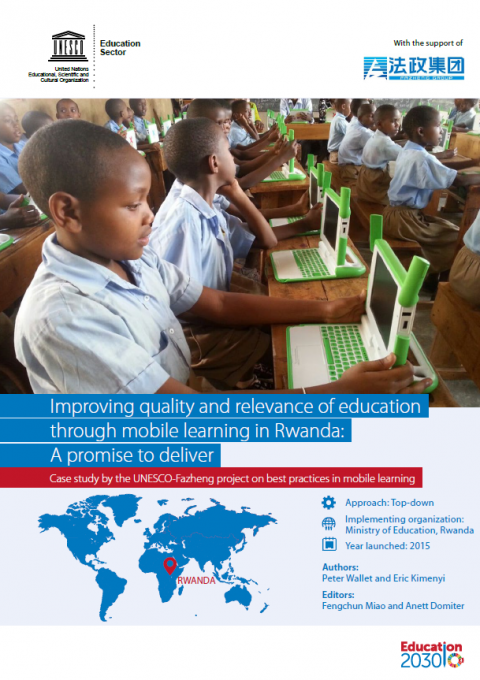 Improving quality and relevance of education through mobile learning in Rwanda: a promise to deliver: case study by the UNESCO-Fazheng project on best practices in mobile learning 出版年份: 2019 作者: Wallet, Peter | Kimenyi, Eric | Miao, Fengchun | Domiter, Anett 机构作者: UNESCO Rwanda’s education sector is evolving through the adoption of information and communication technology (ICT ). Whereas the focus was previously on the extensive deployment of laptop devices, it is shifting towards advancing adaptive child-centred learning and the use of ICT augmented environments to enrich teaching and learning. In developing countries, however, an orientation frequently remains to select strategies which have previously shown to be successful in developed contexts without taking into account the full range of elements required for effective implementation including a comprehensive assessment of the financial implications required to ensure longer term sustainability. This case study aims to showcase Rwanda’s customised approach to the integration of ICT in classrooms adapted to meet the particular needs of the Rwandan education system. The SMARTRwanda Master Plan lays out a vision to transform Rwanda’s economy by leveraging the use of ICT. Aligned to SMART Rwanda, the Ministry of Education (MINEDUC) is implementing the SMARTClassroominitiative under its ICT in Education Master Plan to reach all schools by 2020. Although there have been several challenges encountered during the various phases of implementation, more than half of all schools across the country are now equipped with ICT devices and many teachers have undergone various capacity-building initiatives to make better use of ICT in teaching and learning. More work is required in order to develop a fully functioning ICT in education ecosystem in Rwanda; nevertheless, this case study demonstrates progress made thus far and describes the various system stakeholders, their roles, responsibilities and contributions to date to improve access, quality and relevance of education through ICT adoption.