
相关资源
探索丰富的全球公民教育资源,深化理解,促进研究、倡导、教学与学习。
共找到16条结果
 联合国教科文组织世界可持 续发展教育大会, 会议记录 出版年份: 2009 机构作者: German Federal Ministry of Education and Research (BMBF) | German Commission for UNESCO As the United Nations Decade of Education for Sustainable Development (DESD) approached its midpoint, the “UNESCO World Conference on Education for Sustainable Development – Moving into the Second Half of the UN Decade” was held from 31 March to 2 April 2009 in Bonn, Germany. It brought together 900 participants from 147 countries, among them 49 Ministers and Deputy-Ministers. Participants included representatives of UNESCO Member States, UN agencies, civil society organizations, education institutions, youth, and the private sector, as well as individual experts. The Conference was organized by UNESCO and the German Federal Ministry of Education and Research, in cooperation with the German Commission for UNESCO. The programme was developed in consultation with an international advisory group.
 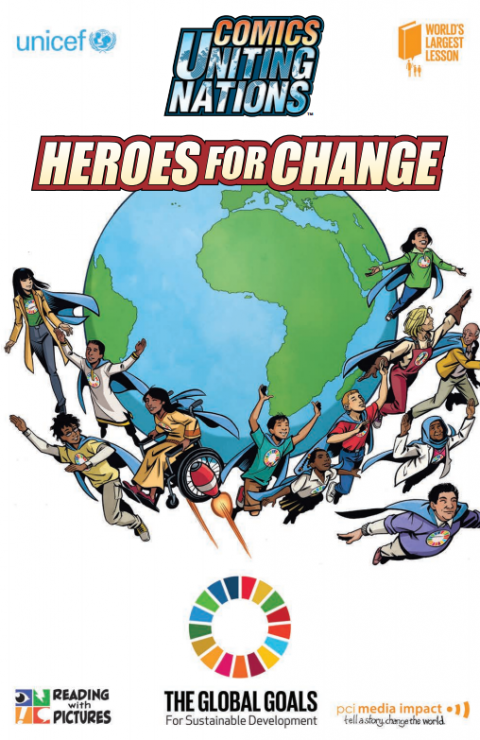 改革英雄 出版年份: 2015 作者: Josh Elder | Natabara Rollosson | Sean Southey | Grace Allison | Karl Kesel | Grace Allison 机构作者: Project Everyone | PCI Media Impact | Reading With Pictures Heroes for Change has been created for the World's Largest Lesson Initiative to share information on the global goals.
 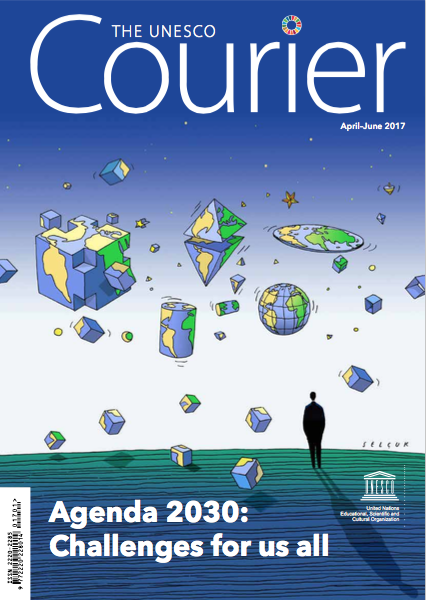 联合国教科文组织 信使 共同迎接 2030年的挑战 出版年份: 2017 Since 1948, the UNESCO Courier has served as a platform for international debates on issues that concern the entire planet. This first issue of 2017, which marks the Courier’s revival after
a five-year break, is no exception to the rule: experts, public figures, artists and journalists from around the world have come together to discuss topical issues.Climate change and sustainable energy (p. 23), the future of cities and Smart Cities (p. 15), access to water and the state of groundwater (p. 19), educational policies and the importance they give to girls (p. 8), new technologies and their role in establishing efficient democratic institutions (p. 27), alliances and partnerships that must be forged to advance towards a better world
(p. 31) — these are some of the subjects that constitute the main dossier,
Wide angle, of this issue dedicated to Sustainable Development Goals (SDGs).UNESCO is closely associated with the development and implementation of this international road map that aims
to achieve the seventeen objectives established by the UN, which is convinced that culture, though officially absent from the SDGs, is at the heart of sustainable development policies (p. 12). Elyx, the jovial character created by Yacine Ait Kaci (YAK) and designated virtual ambassador of the UN, supports the Courier in its mission to make palpable the different realities around the world. These are illustrated by a number of SDGs and highlight the players who participate in achieving this agenda for everyone. These include the international community, states, civil society, local communities and authorities, the private sector, and the partnerships that these players set up between each other.The Ideas section, which is dedicated
to another highly topical issue — the current perception of Islam — suggests considering a reinterpretation of the Koran (p. 42) and the sharia (p. 48).
This issue of the Courier also features a reference text on the Different Aspects of Islamic Culture. Launched in 1977, in the wake of a monumental work produced by UNESCO Publishing on general and regional histories, this comprehensive work was completed in November 2016, with the publication of two volumes that constitute an important contribution to the current debate on Islam.In the Current affairs section for the April-June 2017 quarter, the Courier
will celebrate the launch of the World Book Capital programme in Conakry
on 23 April (p. 70) and the International Jazz Day, with the Cuban pianist Chucho Valdés (p. 58) on 30 April in Havana.The Courier will also participate in the celebration of several other international days such as the World Press Freedom Day on 3 May (p. 62), the World Oceans Day on 8 June (p. 65), and the International Day for the Elimination of Sexual Violence in Conflict on 19 June (p. 61).This issue of the Courier also invites you to delve into the peculiar and largely unknown world of Jeju Island’s haenyeo, the women divers from the Republic of Korea. Discover, through the stunning images in the Zoom section, the exceptional destinies of these extraordinary women (p. 36).We hope you enjoy reading this issue!
联合国教科文组织 信使 共同迎接 2030年的挑战 出版年份: 2017 Since 1948, the UNESCO Courier has served as a platform for international debates on issues that concern the entire planet. This first issue of 2017, which marks the Courier’s revival after
a five-year break, is no exception to the rule: experts, public figures, artists and journalists from around the world have come together to discuss topical issues.Climate change and sustainable energy (p. 23), the future of cities and Smart Cities (p. 15), access to water and the state of groundwater (p. 19), educational policies and the importance they give to girls (p. 8), new technologies and their role in establishing efficient democratic institutions (p. 27), alliances and partnerships that must be forged to advance towards a better world
(p. 31) — these are some of the subjects that constitute the main dossier,
Wide angle, of this issue dedicated to Sustainable Development Goals (SDGs).UNESCO is closely associated with the development and implementation of this international road map that aims
to achieve the seventeen objectives established by the UN, which is convinced that culture, though officially absent from the SDGs, is at the heart of sustainable development policies (p. 12). Elyx, the jovial character created by Yacine Ait Kaci (YAK) and designated virtual ambassador of the UN, supports the Courier in its mission to make palpable the different realities around the world. These are illustrated by a number of SDGs and highlight the players who participate in achieving this agenda for everyone. These include the international community, states, civil society, local communities and authorities, the private sector, and the partnerships that these players set up between each other.The Ideas section, which is dedicated
to another highly topical issue — the current perception of Islam — suggests considering a reinterpretation of the Koran (p. 42) and the sharia (p. 48).
This issue of the Courier also features a reference text on the Different Aspects of Islamic Culture. Launched in 1977, in the wake of a monumental work produced by UNESCO Publishing on general and regional histories, this comprehensive work was completed in November 2016, with the publication of two volumes that constitute an important contribution to the current debate on Islam.In the Current affairs section for the April-June 2017 quarter, the Courier
will celebrate the launch of the World Book Capital programme in Conakry
on 23 April (p. 70) and the International Jazz Day, with the Cuban pianist Chucho Valdés (p. 58) on 30 April in Havana.The Courier will also participate in the celebration of several other international days such as the World Press Freedom Day on 3 May (p. 62), the World Oceans Day on 8 June (p. 65), and the International Day for the Elimination of Sexual Violence in Conflict on 19 June (p. 61).This issue of the Courier also invites you to delve into the peculiar and largely unknown world of Jeju Island’s haenyeo, the women divers from the Republic of Korea. Discover, through the stunning images in the Zoom section, the exceptional destinies of these extraordinary women (p. 36).We hope you enjoy reading this issue! 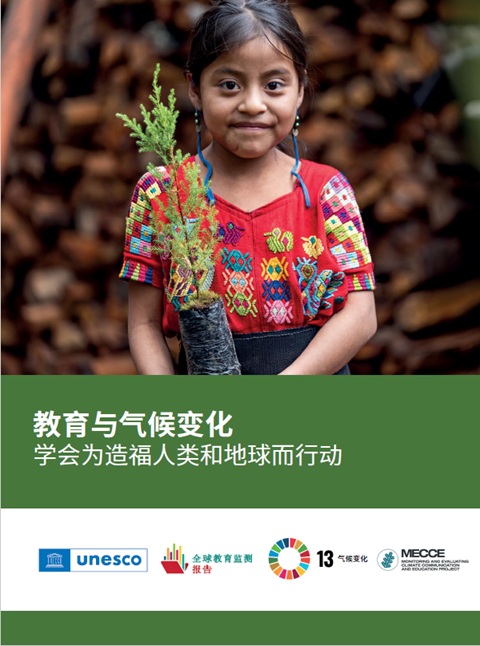 教育与气候变化 学会为造福人类和地球而行动 出版年份: 2024 机构作者: Global Education Monitoring Report Team | Monitoring and Evaluating Climate Communication and Education Project (MECCE) | University of Sakatchewan 教育如何促成气候变化行动?尽管有强有力的证据表明教育可以影响其他发展成果,并在培养促进可持续发展转型的专业能力方面发挥着重要作用,但在其他部门的战略、政策、规划和筹资考量中,却常常看不到教育的踪影。《全球教育监测报告》现推出一个新的出版物系列,以推动关于教育与其他可持续发展目标之间相互关系的对话。该系列的第一份出版物聚焦气候变化。其中首先分析了气候变化对教育日渐增强的影响,随后探讨了教育在气候行动中的作用。教育在培养促进向绿色经济转型的专业能力方面的贡献,在某种程度上未得到充分重视。人们普遍认为,正规、非正规和非正式学习在推动采取减缓和适应气候变化的行动方面也发挥着关键作用。然而,由于受教育程度与不可持续的消费水平之间存在正相关关系,而且关于教育对气候变化适应和减缓行动的直接影响方面的许多研究尚无定论,这在一定程度上导致教育在全球和国家气候变化议程中不受重视。本出版物认为,需要对气候变化教育作出调整,以充分发挥其潜力。教育模式不能仅仅依靠知识传授,还需要注重社会情感和行动导向学习。大部分研究都侧重于受教育程度和认知学习的影响。因此,需要开展更多研究,以评估教育还可以借由哪些其他驱动因素来影响行为并推动气候变化行动。需要借助此类研究来制定可行的教育改革方案,以完善课程设置,加强学校和教育系统的气候行动准备工作,让学习者参与进来,并使教育工作者做好相应的准备。 审查可持续发展教育的背景和结构,2009年:重要发现与前行之路 2009 出版年份: 2009 机构作者: 联合国教科文组织 (UNESCO) This document suggests key findings and ways forward in review of the contexts and strctures of education for sustainable development. 联合国 可持续发展教育十年 后半期战略 出版年份: 2010 机构作者: 联合国教科文组织 (UNESCO) The UNESCO Strategy for the Second Half of the United Nations (UN) Decade of Education for Sustainable Development (DESD) draws on the findings and lessons learnt from the first phase of the DESD monitoring and evaluation (M&E) process (as reflected in the 2009 DESD M&E report Learning for a Sustainable World: Review of Contexts and Structures for Education for Sustainable Development. It also builds on the UNESCO World Conference on ESD and the Bonn Declaration as well as on the outcomes of other key international ESD meetings. The Bonn Declaration gives particular emphasis to the importance of education for the global development agenda and underlines the essential contribution of ESD to shaping the purpose, content and quality of all education. The UNESCO strategy will be implemented in line with the International Implementation Scheme (IIS), which, along with the Bonn Declaration, will provide the global strategic framework for UNESCO and its DESD partners during the second half of the Decade. The Strategy takes into account key DESD regional challenges and opportunities. It is also shaped by the shared vision of education emerging from the four 2008-2009 UNESCO international education conferences: one of education systems that encourage equity and inclusion, quality learning, flexibility and innovation. While UNESCO puts highest emphasis on achieving Education for All (EFA), the Organization’s actions in education extend beyond this, to pay explicit attention to inclusion, social cohesion and social justice, to lifelong learning and to the crucial role of higher education and research. The overall goal of the UNESCO Strategy for the Second Half of the DESD is to support Member States and other stakeholders in addressing global sustainable development challenges at regional, national and global level through ESD, thus addressing the challenges of learning for bringing about a more sustainable world. 可持续发展教育(ESD)为21世纪建设一个更加美好和更加公平的世界 出版年份: 2012 机构作者: UNESCO Education for Sustainable Development allows every human being to acquire the knowledge, skills, attitudes and values necessary to shape a sustainable future. Education for Sustainable Development means including key sustainable development issues into teaching and learning; for example, climate change, disaster risk reduction, biodiversity, poverty reduction, and sustainable consumption. It also requires participatory teaching and learning methods that motivate and empower learners to change their behaviour and take action for sustainable development. Education for Sustainable Development consequently promotes competencies like critical thinking, imagining future scenarios and making decisions in a collaborative way. Education for Sustainable Development requires far-reaching changes in the way education is often practised today. UNESCO is the lead agency for the UN Decade of Education for Sustainable Development (2005-2014). 反思教育:向“全球共同利益”的理念转变? 出版年份: 2015 机构作者: UNESCO The changes in the world today are characterized by new levels of complexity and contradiction. These changes generate tensions for which education is expected to prepare individuals and communities by giving them the capability to adapt and to respond. This publication contributes to rethinking education and learning in this context. It builds on one of UNESCO’s main tasks as a global observatory of social transformation with the objective of stimulating public policy debate.It is a call for dialogue among all stakeholders. It is inspired by a humanistic vision of education and development, based on respect for life and human dignity, equal rights, social justice, cultural diversity, international solidarity, and shared responsibility for a sustainable future. These are the fundamentals of our common humanity. This book enhances the vision provided by the two landmark UNESCO publications: Learning to Be: The world of education today and tomorrow (1972), the ‘Faure Report’, and Learning: The treasure within (1996), the ‘Delors Report’. 塑造我们希望的未来: 联合国可持续发展教育十年(2005-2014年); 最后报告; 概要 出版年份: 2014 作者: Carolee Buckler | Heather Creech 机构作者: 联合国教科文组织 (UNESCO) This summary for policy- and decision-makers provides a brief overview of the key findings and trends, a synopsis of highlights, challenges and actions across all levels and areas of education, and steps for scaling up actions presented in the UNESCO 2014 Global Monitoring and Evaluation Final Report, Shaping the Future We Want – UN Decade of Education for Sustainable Development (2005-2014). The Final Report provides an assessment of progress towards embedding education for sustainable development (ESD) into education systems and into sustainable development efforts. Building on the findings of the past two DESD Global Monitoring and Evaluation reports, and based upon Member States’ and other stakeholders’ assessments of the current state of ESD, the Final Report maps the achievements and challenges of a decade of progress and action on ESD at the global, national, regional and local levels, and within all areas and levels of education. The Final Report concludes that a solid foundation has been laid for ESD at the end of the DESD, achieved by raising awareness, influencing policies and generating significant numbers of good practice projects in all areas of education and learning. At the end of 10 years of work, 10 key findings and trends have emerged that will guide ESD into the future. The report also shows that despite the successes, a full integration of ESD into education systems has yet to take place in most countries.
 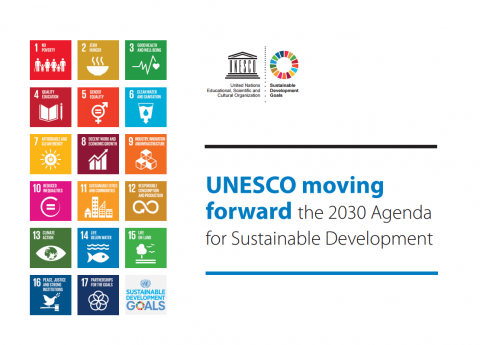 教科文组织助力 《2030年可持续发展议程》 出版年份: 2017 机构作者: 联合国教科文组织 (UNESCO) The United Nations 2030 Agenda for Sustainable Development, with its 17 Sustainable Development Goals, sets forth a bold new framework for development cooperation over the next 15 years. This agenda aspires to ensure prosperity and well-being for all women and men, while protecting our planet and strengthening the foundations for peace.