
相关资源
探索丰富的全球公民教育资源,深化理解,促进研究、倡导、教学与学习。
共找到88条结果
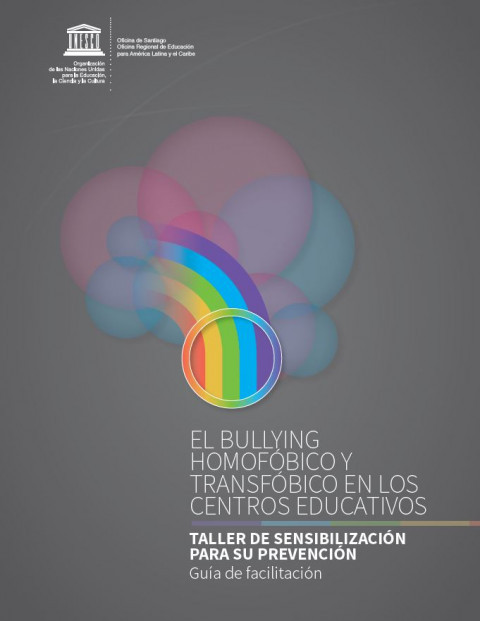 El Bullying Homofobico y Transfobico en los Centros Educativos: Taller de Sensibilizacion para su Prevencion; Guía de facilitación 出版年份: 2015 作者: María C. Arango-Restrepo | José Angel Aguilar-Gil | Esther Corona-Vargas 机构作者: UNESCO Santiago Este manual práctico se presenta como una estrategia de apoyo a docentes y autoridades educativas con el objetivo de abordar la violencia de carácter homofóbico y transfóbico desde un enfoque de derechos humanos. A través de una serie de lecciones conformadas de conceptos, actividades y reflexiones, se busca hacer énfasis en la importancia de visibilizar y respetar la diversidad sexual mediante la adquisición de conocimientos, procesos de sensibilización y el fortalecimiento de competencias que necesitan los y las docentes para superar los estigmas y prejuicios.
 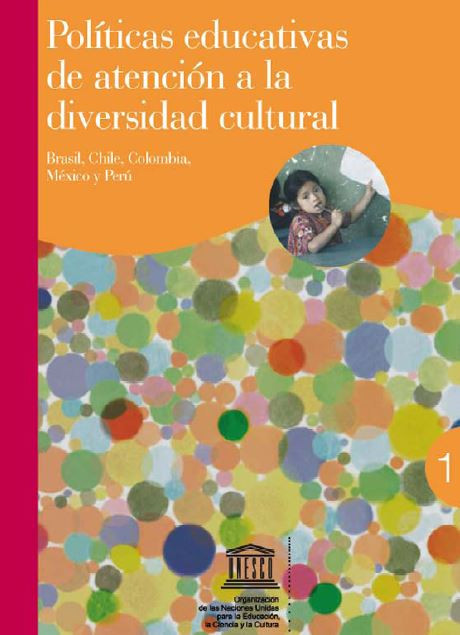 Educational Policies for Attention to Cultural Diversity: Brazil, Chile, Colombia, Mexico and Peru; volume 1 出版年份: 2005 作者: Carolina Hirmas R. | Ricardo Hevia R. | Ernesto Treviño | Pablo Marambio V. 机构作者: UNESCO Santiago This publication consists of three volumes. The first is an analysis of how the educational policies of five countries in the region -Brazil, Chile, Colombia, Mexico and Peru- address the issue of cultural diversity, both through its legislation and its curricular policies. teacher training and institutional management. The second presents a set of ethnographic studies conducted in these same countries in order to show how the phenomenon of "cultural discrimination" occurs in the daily life of the school, the opposite side of the "cultural pluralism" that the school is called to build. The third volume is a compendium of educational materials on five relevant topics about cultural diversity to be worked with teachers and students in schools.
 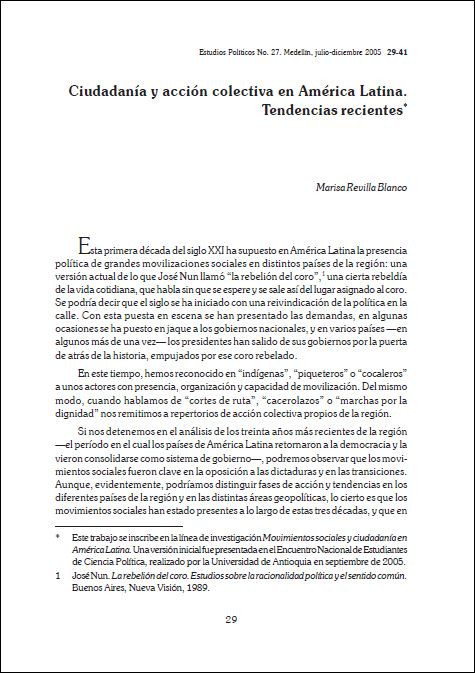 Citizenship and Collective Action in Latin America. Recent Trends 出版年份: 2005 作者: Marisa Revilla Blanco The following text intends to analyze those forms of collective action through which citizens have been present in the streets of the region during the last thirty years. It seeks to understand the actors and the conditions of their appearance and continuity; In this way, it is also intended to make a small contribution to the theoretical development of the analysis of social movements in Latin America. Ciudadanía y Acción Colectiva en América Latina. Tendencias Recientes 出版年份: 2005 作者: Marisa Revilla Blanco En el siguiente texto se pretende analizar esas formas de acción colectiva mediante las cuales la ciudadanía se ha estado haciendo presente en las calles de la región durante los treinta años más recientes. Se busca comprender los actores y las condiciones de su aparición y continuidad; de este modo, también se pretende hacer un pequeño aporte al desarrollo teórico del análisis de los movimientos sociales en América Latina.Este artículo está publicado en Estudios Políticos. [en linea] 2005, (Julio-Diciembre) Políticas educativas de atención a la diversidad cultural: Brasil, Chile, Colombia, México y Perú; volumen 1 出版年份: 2005 作者: Carolina Hirmas R. | Ricardo Hevia R. | Ernesto Treviño | Pablo Marambio V. 机构作者: UNESCO Santiago Esta publicación consta de tres volúmenes. El primero da cuenta de un análisis de cómo las políticas educativas de cinco países de la región –Brasil, Chile, Colombia, México y Perú- abordan el tema de la diversidad cultural, tanto a través de su legislación como de sus políticas curriculares, de formación de maestros y de gestión institucional.El segundo presenta un conjunto de estudios etnográficos realizados en estos mismos países con el fin de mostrar cómo se da en la vida cotidiana de la escuela el fenómeno de la “discriminación cultural”, la cara opuesta del “pluralismo cultural” que la escuela está llamada a construir. El tercer volumen es un compendio de materiales educativos sobre cinco temas relevantes acerca de la diversidad cultural para ser trabajados con docentes y estudiantes en los centros educativos.
  التعليم من آجل المشاركه: مدارس الديمقراطية 出版年份: 2015 机构作者: Civic Education for Participation Project (CEFP) Egyp الفيديو يعرض فكرة مدارس الديمقراطية وما هي مرتكزاتها. الطلبة المستفيدين من هذه المدارس يستطيعون الخوض في التجارب السياسية والديمقراطية. Education for Participation: Democracy Schools 出版年份: 2015 机构作者: Civic Education for Participation Project (CEFP) Egyp This video shows the idea of democratic schools and their foundations. Students who benefit from these schools can delve into political and democratic experiences.
  Fostering national and global citizenship: an example from South Africa (Social Studies and the Young Learner, vol 21, no. 1, september/october 2008) 出版年份: 2008 作者: Omiunota Nelly Ukpokodu 机构作者: National Council for the Social Studies Multicultural and global scholars urge that we prepare the young for national and global democratic citizenship given the increasing interdependence and challenging realities for today. Young people desire to be a part of the solution to global problems, but they must be educated about what those problems are and how solutions can be arrived at. As has been seen in the U.S. presidential campaign, young people care about their communities, country, and planet, and they are volunteering and voting at record rates. We must take responsibility to plant the seeds of critical citizenship if we are to foster a more sustainable, peaceful, just, and prosperous world. Educator Sheldon Berman sums it up by writing: It is important for teachers to tell young people about the success stories of others, students who have reclaimed forests, cleaned up rivers, improved their school environment, helped the homeless. They need to hear about the Mother Teresas and the Martin Luther Kings, of course, but also about the people who live down the street who are doing what they can to improve the neighbourhood and about the many organizations that make a difference in our communities. We must put students in touch with these people and organizations so that they can see how deeply people care about their world and how worthwhile it is to participate in creating change.
 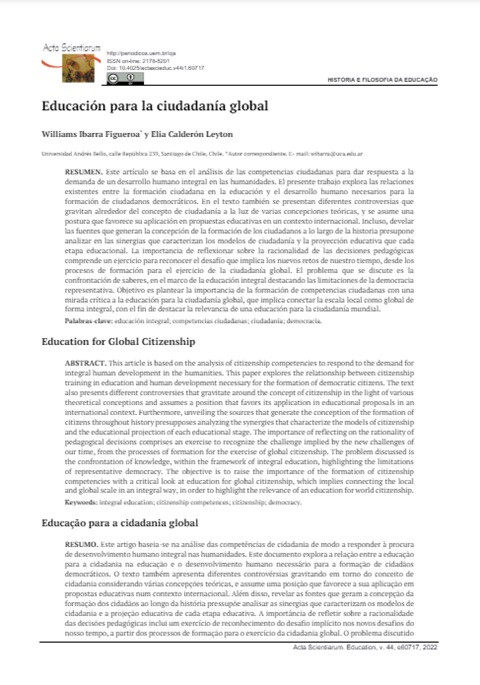 Education for Global Citizenship(Acta Scientiarum. Education; vol. 44) 出版年份: 2022 作者: Williams Ibarra Figueroa | Elia Calderón Leyton 机构作者: Maringá State University Press This work explores the relationships between citizen training in education and the human development necessary for the formation of democratic citizens. The text also presents different controversies that revolve around the concept of citizenship in light of various theoretical conceptions, and a position is assumed that favors its application in educational proposals in an international context. Even revealing the sources that generate the conception of the formation of citizens throughout history presupposes analyzing the synergies that characterize the models of citizenship and the educational projection of each educational stage. The importance of reflecting on the rationality of pedagogical decisions includes an exercise to recognize the challenge that the new challenges of our time imply, from the training processes for the exercise of global citizenship. Educación para la ciudadanía global(Acta Scientiarum. Education; vol. 44) 出版年份: 2022 作者: Williams Ibarra Figueroa | Elia Calderón Leyton 机构作者: Maringá State University Press El presente trabajo explora las relaciones existentes entre la formación ciudadana en la educación y el desarrollo humano necesarios para la formación de ciudadanos democráticos. En el texto también se presentan diferentes controversias que gravitan alrededor del concepto de ciudadanía a la luz de varias concepciones teóricas, y se asume una postura que favorece su aplicación en propuestas educativas en un contexto internacional. Incluso, develar las fuentes que generan la concepción de la formación de los ciudadanos a lo largo de la historia presupone analizar en las sinergias que caracterizan los modelos de ciudadanía y la proyección educativa que cada etapa educacional. La importancia de reflexionar sobre la racionalidad de las decisiones pedagógicas comprende un ejercicio para reconocer el desafío que implica los nuevos retos de nuestro tiempo, desde los procesos de formación para el ejercicio de la ciudadanía global.