
相关资源
探索丰富的全球公民教育资源,深化理解,促进研究、倡导、教学与学习。
共找到2条结果
 Climate Risk Informed Decision Analysis (CRIDA): Collaborative Water Resources Planning for an Uncertain Future 出版年份: 2024 机构作者: UNESCO Intergovernmental Hydrological Programme (IHP) | International Center for Integrated Water Resources Management (ICIWaRM) | Alliance for Global Water Adaptation (AGWA) | Deltares The importance of integrating climate change considerations into water resources planning is recognized on a global scale. Various frameworks, such as the Sendai Framework for Disaster Risk Reduction, the United Nations Sustainable Development Goals, and the Paris Agreement, emphasize the need for proper planning, policy-making, and adaptation strategies. The Climate Risk Informed Decision Analysis (CRIDA) methodology was launched in 2018 as a response to these international agendas, bridging the gap between climate change uncertainty and water resource planning.
 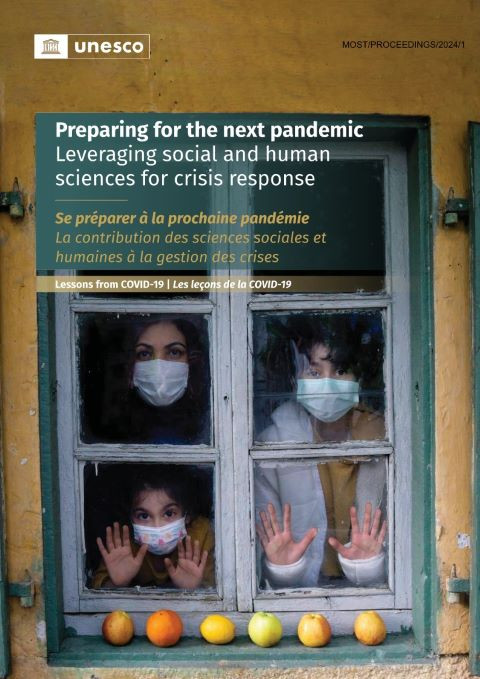 Preparing for the Next Pandemic Leveraging Social and Human Sciences for Crisis: Lessons from COVID-19 出版年份: 2024 作者: Erwan Dianteill | N'Dri Thérèse Assié-Lumumba 机构作者: UNESCO The Social Sciences Response to COVID-19 Understanding the social impact of the COVID-19 pandemic is crucial for crafting effective and inclusive recovery policies. Prior to the pandemic, growing gaps in well-being were already undermining environmental sustainability, the social fabric, and progress worldwide. Fragile and unequal systems proved to be a pre-existing aggravating condition that fuelled the pandemic on a global scale. COVID-19 widened the gap between developed countries—which already had the financial means to respond to the crisis and had easy access to the vaccine—and the rest of humanity, resulting in devastating effects in the Global South, with more than 130 million people crossing the poverty line. Addressed to policymakers and scholars, this publication presents a comprehensive state of knowledge of the social science perspectives on the COVID-19 pandemic, covering a wide range of topics from its impact on mental health, education, climate change, economy, governance, migration, demography, digitalization, and more. The authors analyse the challenges faced by society during the pandemic and present actionable proposals for policymakers and practitioners. This publication is a reminder of the importance of Social Sciences and Humanities in addressing global challenges and provides a roadmap for future research and policy action to build more resilient societies.