
相关资源
探索丰富的全球公民教育资源,深化理解,促进研究、倡导、教学与学习。
共找到249条结果
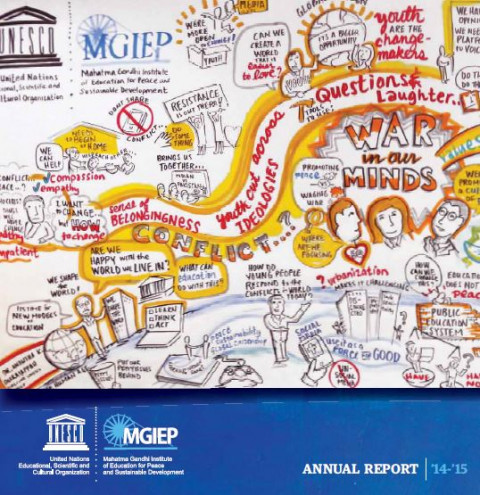 MGIEP Annual Report '14-'15 出版年份: 2016 机构作者: Mahatma Gandhi Institute of Education for Peace and Sustainable Development (MGIEP) The Mahatma Gandhi Institute of Education for Peace and Sustainable Development (MGIEP) is UNESCO’s first Category I institute in the Asia-Pacific region, established with the generous support of the Government of India. UNESCO MGIEP focuses on transforming current education policies and practices by developing innovative teaching and learning methods.Their objective is to build generations of young people equipped to create peaceful and sustainable societies. This annual report describes MGIEP’s main works and various educational programmes for peace and sustainable development.
  MGIEP Annual Report 2015-2016 出版年份: 2017 机构作者: Mahatma Gandhi Institute of Education for Peace and Sustainable Development (MGIEP) The Mahatma Gandhi Institute of Education for Peace and Sustainable Development (MGIEP) is UNESCO’s first Category I institute in the Asia-Pacific region, established with the generous support of the Government of India.UNESCO MGIEP focuses on transforming current education policies and practices by developing innovative teaching and learning methods. Their objective is to build generations of young people equipped to create peaceful and sustainable societies.This annual report describes MGIEP’s main works and various educational programmes for peace and sustainable development.
 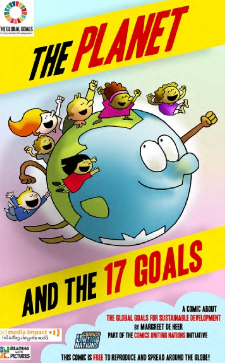 The Planet and the 17 Goals 作者: Margreet De Heer 机构作者: United Nations Children's Fund (UNICEF) UNICEF has teamed up with the Comics UnitingNations initiative to use the creative and exciting medium of comics to bring the messages of sustainable development to comics fans globally! Comics have been developed by world renown illustrators, writers and comics developers from around the world.Dutch illustrator Margreet de Heer has lent her talents to the Comics United Nations project to help inform children and youth about the new global goals.
 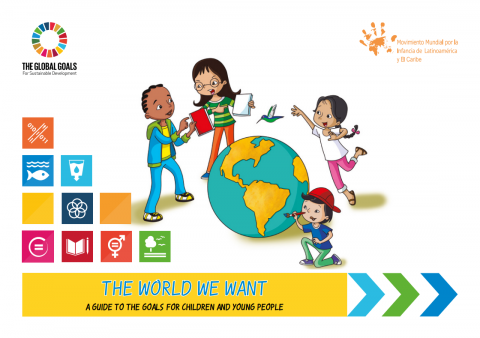 The World We Want: A Guide to the Goals for Children and Young People 出版年份: 2015 作者: Dora Bardales | Paola Arenas 机构作者: Global Movement for Children of Latin America and Caribbean | United Nations Children's Fund (UNICEF) The purpose of this guide is to help children and young people understand the Sustainable Development Goals, how they impact their life and what they can do every day to help their government achieve the Goals.
  The Road to the SDGs: A discussion with students 出版年份: 2015 机构作者: United Nations Children's Fund (UNICEF) Animated video to help children learn about important concepts for people and planet as covered in the Sustainable Development Goals (SDGs)
 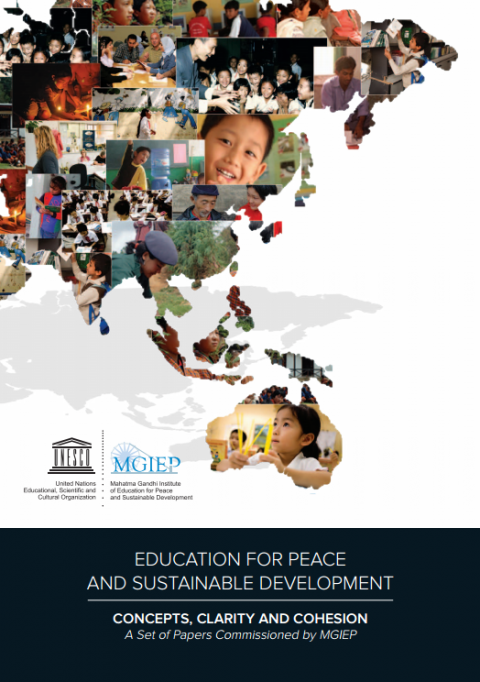 Education for peace and sustainable development: concepts, clarity and cohesion 出版年份: 2013 机构作者: Mahatma Gandhi Institute of Education for Peace and Sustainable Development (MGIEP) UNESCO MGIEP's focus lies in exploring and engaging with the strong interlinkages between peace and sustainable development and making interventions in the education systems to impart these principles. The first publication from the Institute Education for Peace and Sustainable Development: Concepts, Clarity and Cohesion explores the interlinkages and interdependencies of Education for Peace and Education for Sustainable Development. The monograph contains four concept papers which elaborate on the interlinkages between education, peace and sustainable development, define the gaps in the current approach to education for peace and sustainable development and argue for a comprehensive approach to issues of peace and sustainability to be incorporated in education systems. UNESCO MGIEP aims to develop a theoretical framework to look at the interlinkages between peace and sustainability in a holistic manner and this monograph is the first exercise towards building this discourse.
  Mahatma Gandhi Institute of Education for Peace and Sustainable Development: a joint initiative by UNESCO and the government of India 出版年份: 2013 机构作者: Mahatma Gandhi Institute of Education for Peace and Sustainable Development (MGIEP) The United Nations Educational, Scientific and Cultural Organization (UNESCO) and the Government of India are embarking on a major new partnership to create the Mahatma Gandhi Institute of Education for Peace and Sustainable Development. Through research and capacity-building, the Institute aims to develop and promote new approaches to education, empowering learners to transform their lives and build a more peaceful and sustainable world. Based in New Delhi, this will be the first UNESCO specialized education Institute in India, and the first in the Asia-Pacific region. It is particularly fitting that the Institute is hosted by India, the birthplace of Mahatma Gandhi and a country that has made a significant commitment to education over the past decades. Mahatma Gandhi Institute of Education for Peace and Sustainable Development: UNESCO's first category 1 Institute in the Asia-Pacific 出版年份: 2014 机构作者: Mahatma Gandhi Institute of Education for Peace and Sustainable Development (MGIEP) The Mahatma Gandhi Institute of Education for Peace and Sustainable Development (MGIEP) is UNESCO’s first Category 1 Institute in the Asia-Pacific. The Institute will be a key strategic player in UNESCO’s work towards quality Education for All and the transformative shift envisioned for the Post 2015 agenda. Established in cooperation with the Government of India, MGIEP has been created to play a leading role in research, knowledge sharing, capacity building and policy formulation in the area of peace and sustainability education. The Institute aims to promote, assimilate and generate high quality research to lead the intellectual and policy discourse for education and global citizenship in the region. It was named after Mahatma Gandhi, as a tribute to his ideas of non-violence and sustainable living. The President of India and the Director-General of UNESCO jointly announced the establishment of the Institute in November, 2012. It is located in New Delhi. Mahatma Gandhi Institute of Education for Peace and Sustainable Development: UNESCO's first category 1 institute in the Asia-Pacific brochure 出版年份: 2014 机构作者: Mahatma Gandhi Institute of Education for Peace and Sustainable Development (MGIEP) The Mahatma Gandhi Institute of Education for Peace and Sustainable Development (MGIEP) is UNESCO’s first Category 1 Institute in the Asia-Pacific. The Institute will be a key strategic player in UNESCO’s work towards quality Education for All and the transformative shift envisioned for the Post 2015 agenda. Established in cooperation with the Government of India, MGIEP has been created to play a leading role in research, knowledge sharing, capacity building and policy formulation in the area of peace and sustainability education. The Institute aims to promote, assimilate and generate high quality research to lead the intellectual and policy discourse for education and global citizenship in the region. It was named after Mahatma Gandhi, as a tribute to his ideas of non-violence and sustainable living. The President of India and the Director-General of UNESCO jointly announced the establishment of the Institute in November, 2012. It is located in New Delhi. Integrating education for sustainable development & education for international understanding: conceptual issues and pedagogical principles for teacher education to address sustainability 出版年份: 2006 作者: Swee-Hin Toh 机构作者: UNESCO Bangkok It is in this spirit that this essay seeks to “integrate” two active and expanding fields of 2 educational innovation and transformation worldwide, namely ESD (education for sustainable development or sustainability) and EIU (education for international understanding). The key conceptual issues and themes of both of these movements will be clarified and shared values and understandings highlighted. It will also be argued that both ESD and EIU , in order to effectively fulfill their goals of building a peaceful, just and sustainable world order, rests on some key common pedagogical principles and processes. Another introductory caveat is also essential here, namely the question of paradigm. Among policy-makers, theorists and practitioners, there may well be and often are distinct differences in conceptualization according to their paradigmatic interpretations, with consequently alternative implications for policies and practices.