
相关资源
探索丰富的全球公民教育资源,深化理解,促进研究、倡导、教学与学习。
共找到249条结果
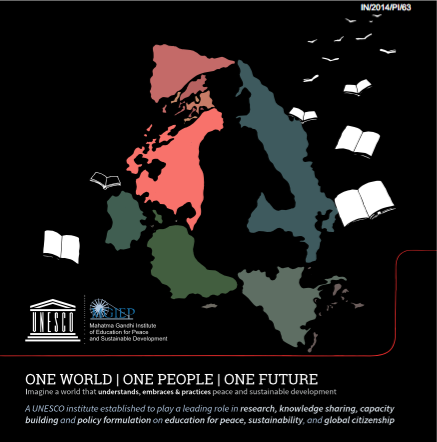 One World, One People, One Future: Imagine a World that Understands, Embraces & Practices Peace and Sustainable Development 出版年份: 2014 机构作者: Mahatma Gandhi Institute of Education for Peace and Sustainable Development (MGIEP) One World, One People, One Future: Imagine a World that Understands, Embraces & Practices Peace and Sustainable Development
  Address by Irina Bokova, Director-General of UNESCO, on the occasion of the Global Citizen Forum; Monaco, 8 October 2015 机构作者: UNESCO. Director-General, 2009-2017 (Bokova, I.G.) This address was delivered by Irina Bokova, Director-General of UNESCO, on the occasion of the Global Citizen Forum.
  Citizenship, Identity, and Education: Examining the Public Purposes of Schools in an Age of Globalization 出版年份: 2006 作者: Fernando Reimers 机构作者: UNESCO International Bureau of Education (IBE) One of the purposes of educational institutions is to develop citizenship. In the 21st century, citizenship includes global citizenship. Addressing the challenges of globalization will require making citizenship education and the development of global values an explicit objective of efforts to improve quality throughout the world, critically examining theories and evidence about the effectiveness of various approaches to developing citizenship and global citizenship and supporting activities aligned with this public purpose. In this article, the author does not argue for an exclusive effort to focus schools on civic education, but rather for a balanced effort to elevate educational quality making it more relevant to address global challenges and opportunities, of which civic education and global education are components, much neglected at present. The author also does not suggest making civic education the only purpose of the curriculum or making it a priority to the expense of science, math, arts or physical and health education, but he thinks that helping students develop a sense of purpose, situated within broader civic and global purposes, would also facilitate high level engagement with science, mathematical and artistic pursuits.
 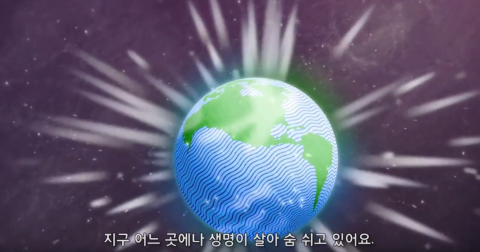 World's Largest Lesson 出版年份: 2016 机构作者: United Nations Children's Fund (UNICEF) World's Largest Lesson (WLL) is an educational campagin that students participate from all around the world.With this campaign, students can understand SDGs, think about global problems and act for finding solutions. UNICEF provides teaching materials and guides to teachers for participatting World's Largest Lesson.
  Curriculum in the Education 2030 Agenda: Latin America and the Caribbean 出版年份: 2017 作者: Renato Opertti 机构作者: UNESCO International Bureau of Education (IBE) “Curriculum in the Education 2030 Agenda: Latin America and the Caribbean”1 discusses the importance of rethinking the curriculum in light of a transformational, humanistic and holistic vision of education. The Education 2030 Agenda, which emerged from the World Education Forum (WEF) 2015 held in Incheon, Republic of Korea, positions curriculum as a powerful education policy tool leading the way to effective, relevant and sustainable learning opportunities, processes and outcomes. Curricula have a positive effect as levers for the sustainable, inclusive, fair and cohesive development of a country. They reflect and help to construct the type of society envisioned. The article provides recommendations to strengthen the positioning of curriculum toward an inclusive and equitable quality education in Latin America and the Caribbean. It therefore addresses the following questions: 1) How is curriculum currently conceived?; 2) What role does it play in the reforms aimed at improving equity and quality of the learning processes?; 3) What are the main regional challenges in relation to curriculum development?; and 4) How could countries align their curricula with their development needs?
  Rethinking Schooling for the 21st Century: The State of Education for Peace, Sustainable Development and Global Citizenship in Asia 出版年份: 2017 机构作者: Mahatma Gandhi Institute of Education for Peace and Sustainable Development (MGIEP) Calls to gear up schools for the 21st century are ubiquitous today. Dominant international educational discourse hails the potential of 'the youth dividend' and digital technology for enhancing growth. Some Asian education systems are held up as models for an innovation-led utopian future. But across much of Asia, neither the reality of schooling nor the patterns of development with which it is associated give cause for blithe optimism.This study is informed by UNESCO’s commitment to realising the Sustainable Development Goals (SDGs) through educational reform worldwide. Since its inception, UNESCO has championed a humanistic vision of education — a vision today encapsulated in SDG 4.7. These ideals need to be strongly restated and defended in an era when educational debate worldwide has come to be framed by a narrowly economistic and instrumentalist agenda.Deriving urgent significance from this broader context, the present report analyses how far the ideals of SDG 4.7 – of 'education for peace, sustainable development and global citizenship' - are embodied in policies and curricula across 22 Asian societies. At one level, it seeks to develop benchmarks against which future progress can be assessed. It also argues forcefully that conceptions of the fundamental purposes of schooling need to be reconfigured, if the ideals to which the global community has subscribed are actually to be realised.
  Pacific education for sustainable development framework; endorsed by the Pacific Ministers of Education, 27 September 2006, Nadi Fiji 出版年份: 2006 机构作者: UNESCO Apia This paper presents a Pacific developed and driven Framework as a mechanism to assist in the implementation of the Pacific Plan and the basis for a regional approach to coordinating actions to achieve its vision of a prosperous region where “all people can lead free and worthwhile lives.” It further recognises the commitment made by Pacific countries in adopting the UN Decade of Education for Sustainable Development. The Framework can be adapted for national policy as well as regional strategy documents. The Framework can also be used by both national and regional organisations to identify priority initiatives for implementation in Education for Sustainable Development (ESD) within the Pacific.
  Education for Sustainable Development Policy for the Education Sector 出版年份: 2017 机构作者: Kenya. Ministry of Education | UNESCO Nairobi This ESD Policy provides for the incorporation of key themes of sustainable development such as poverty alleviation, human rights, innovation, health and environmental protection and climate change into the Kenyan education system. It promotes competencies such as critical thinking, crativity and making decisions in a collaborative way.
  International conference: reorienting TVET policy towards education for sustainable development: final report 出版年份: 2010 机构作者: UNESCO International Centre for Technical and Vocational Education and Training (UNEVOC) | Internationale Weiterbildung und Entwicklung | Colombo Plan Staff College for Technician Education This publication reports on the ESD review-responsive and future-oriented programme on “Reorienting TVET Policy Towards Education for Sustainable Development”, jointly organized by the UNESCO-UNEVOC International Centre in Bonn, Germany, InWEnt – Capacity Building International, Germany and Colombo Plan Staff College for Technician Education in Manila, Philippines.
  Six ways to ensure higher education leaves no one behind 出版年份: 2017 机构作者: UNESCO International Institute for Educational Planning (IIEP) This policy paper, written in partnership with the UNESCO International Institute for Education Planning (IIEP), makes policy recommendations for equitable and affordable higher education to better support the implementation of the SDG agenda. To do this, it reviews recent trends in higher education expansion, identifies disparities in student participation, examines policy tools and practices for fostering equity, and explores ways to target assistance at those who need it most.