
相关资源
探索丰富的全球公民教育资源,深化理解,促进研究、倡导、教学与学习。
共找到114条结果
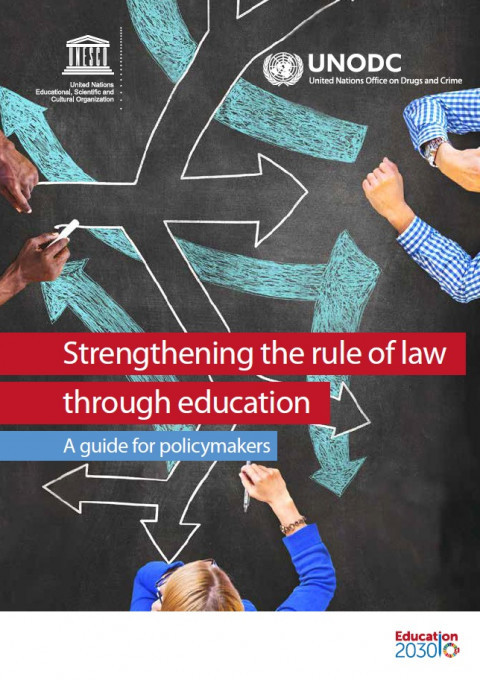 Fortalecimiento del estado de derecho mediante la educación: guía para los encargados de la formulación de políticas 出版年份: 2019 机构作者: UN. Office on Drugs and Crime (UNODC) | UNESCO La nueva publicación conjunta de la UNESCO y la Oficina de las Naciones Unidas contra la Droga y el Delito (UNODC): Fortalecimiento del estado de derecho mediante la educación: guía para los encargados de la formulación de políticas, explora el rol que pueden jugar las instituciones educativas en la promoción del estado de derecho y en la creación de nuevas formas de participación basadas en ciudadanía global, derechos humanos e inclusión – cuestiones que son vitales para promocionar el 4to Objetivo sobre educación para el Desarrollo Sostenible, en el corazón de la Agenda 2030 para el Desarrollo Sostenible. Fortalecimiento del estado de derecho mediante la educación: guía para los encargados de la formulación de políticas, está dirigido a los creadores de políticas educativas y a otros profesionales que trabajan en el sector formal de educación, dentro o fuera de los Ministerios de Educación, y que estén procurando promocionar el estado de derecho y la cultura de la legalidad.La guía también puede ser de interés para profesionales trabajando en contextos educativos no formales y otros sectores – como ser en los sectores sociales, de justicia o de salud – en las áreas de prevención de violencia y crimen, que estén buscando trabajar más cerca al área educativa. En particular, la guía ofrece: Una explicación de conceptos claves, como ser la cultura de derecho o la cultura de la legalidad, a la vez que detalla el rol de la educación en sostener y promover el estado de derecho;Orientaciones sobre cómo el sector educativo es capaz de fortalecer y promocionar el estado de derecho, por ejemplo, abordando las necesidades reales de niños y jóvenes, y asegurándose que los lugares de enseñanza “practican lo que predicen”;Un mapa de los sistemas de soporte necesarios para fortalecer el estado de derecho en la escuela, a nivel del aula y fuera de los contextos de educación formal, incluyendo soporte curricular, pedagogía de aula, desarrollo y capacitación docente y asociaciones entre la escuela, la familia y la comunidad. تعزيز سيادة القانون عن طريق التعليم: دليل لواضعي السياسات 出版年份: 2019 机构作者: UN. Office on Drugs and Crime (UNODC) | UNESCO لمنشور المشترك الجديد لليونسكو ومكتب الأمم المتحدة المعني بالمخدرات والجريمة بعنوان "تعزيز سيادة القانون من خلال التعليم: دليل لواضعي السياسات" يستكشف الدور الذي يمكن أن تلعبه المؤسسات التعليمية في تعزيز سيادة القانون وبناء أشكال جديدة من المشاركة على أساس المواطنة العالمية وحقوق الإنسان والإدماج - - جميعها حيوية للمضي قدمًا في تحقيق الهدف 4 من أهداف التنمية المستدامة بشأن التعليم ، في صميم خطة التنمية المستدامة لعام 2030.تعزيز سيادة القانون من خلال التعليم: دليل صانعي السياسات موجه لواضعي السياسات التعليمية وغيرهم من المهنيين العاملين في قطاع التعليم الرسمي ، داخل وزارات التعليم وخارجها ، والذين يسعون إلى تعزيز سيادة القانون وثقافة احترام القانون.قد يكون الدليل مفيدًا أيضًا للمهنيين العاملين في أماكن التعليم غير النظامي أو القطاعات الأخرى - وبالتحديد قطاعات العدالة والاجتماعية والصحية - في مجال منع الجريمة والعنف ، الذين يسعون إلى العمل بشكل أوثق مع قطاع التعليم.
  Documento final de la consulta técnica sobre educación para la ciudadanía mundial: Educación para la ciudadanía mundial: una perspectiva emergente 出版年份: 2013 机构作者: UNESCO This document draws on inputs to, and common perspectives emerging from, a Technical Consultation on Global Citizenship Education organized by UNESCO and the Republic of Korea (i.e., the Ministries of Foreign Affairs and of Education, and the Asia-Pacific Centre of Education for International Understanding) in Seoul on 9-10 September 2013 . Informing this draft document are: a) responses from the expert participants to a questionnaire circulated by UNESCO in advance of the consultation; b) presentations from experts during the consultation; c) discussions during the consultation; and d) reference material contributing to, and prepared for, the consultation. The final draft of this document was prepared by UNESCO’s Division of Education for Peace and Sustainable Development at Headquarters in Paris, with the assistance of a drafting team. Document final de la Consultation technique sur l'éducation à la citoyenneté mondiale: Education à la citoyenneté mondiale: une nouvelle vision 出版年份: 2013 机构作者: UNESCO This document draws on inputs to, and common perspectives emerging from, a Technical Consultation on Global Citizenship Education organized by UNESCO and the Republic of Korea (i.e., the Ministries of Foreign Affairs and of Education, and the Asia-Pacific Centre of Education for International Understanding) in Seoul on 9-10 September 2013 . Informing this draft document are: a) responses from the expert participants to a questionnaire circulated by UNESCO in advance of the consultation; b) presentations from experts during the consultation; c) discussions during the consultation; and d) reference material contributing to, and prepared for, the consultation. The final draft of this document was prepared by UNESCO’s Division of Education for Peace and Sustainable Development at Headquarters in Paris, with the assistance of a drafting team. Stratégie du réSEAU pour 2014-2021 Un réseau mondial d’ecoles pour répondre aux défis mondiaux: renforcer la citoyenneté mondiale et promouvoir le développement durable 出版年份: 2014 机构作者: UNESCO Associated Schools Project Network (ASPnet) Over the next 8 years (2014-2021), ASPnet needs to respond to the needs of education in a rapidly changing and increasingly complex world. The following strategy, therefore, has to remain flexible and requires regular re-evaluation in the light of a changing environment. Globalization and growing interconnectedness ask for increased networking and cooperation. ASPnet has proven to have a great potential for global school networking and educational innovations, which remain largely untapped. UNESCO can make much fuller use of ASPnet in its quest for and implementation of a successful Post-2015 Global Education Agenda.
  The Role of Education Towards Enhancing the Peaceful Coexistence Culture and Devoting the Citizenship Values of Postmodern Society 出版年份: 2019 作者: Lilia Bensouilah 机构作者: Research & Development of Human Resources Center REMAH This study aims to examine the role of education in creation the peaceful coexistence culture, promote opportunities for cosmopolitan openness to the other, preserve mutual respect and legitimize culture of difference, tolerance and pluralism of religions, beliefs and ideologies away from all manifestations of intolerance, hatred and destructive conflicts that violate human rights. دور التعليم في تعزيز ثقافة التعايش السلمي وتكريس قيم المواطنة في سياق مجتمع ما بعد الحداثة 出版年份: 2019 作者: Lilia Bensouilah 机构作者: Research & Development of Human Resources Center REMAH تركز الورقة على تحليل دور التعليم وبحث المجهودات العالمية والمساعي الدولية في سياق مجتمعي لما بعد الحداثة نحو تعزيز ثقافة التعايش السلمي وتكريس قيم المواطنة بما يتوافق مع المنظور الحقوقي الإنساني، وما ينبثق عنه من احترام وتقبل لتعددية واختلاف المذاهب والأديان والأيديول وجيات والثقافات بعيدا عن كل مظاهر التعصب الفكري المذهبي والعرقي والذي يمكن أن يهيأ بيئة محفزة لنشوب النزاعات المسلحة والصراعات المدمرة المنتهكة الكيان الحقوقي للبشرية قاطبة.
 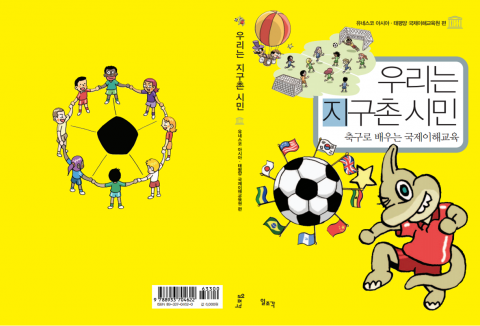 우리는 지구촌 시민: 축구로 배우는 국제이해교육 出版年份: 2004 机构作者: 유네스코 아시아태평양 국제이해교육원 『우리는 지구촌 시민—축구로 배우는 국제이해교육』은 세계화 시대에 우리 학생들이 세계 이웃의 다른 모습을 이해하고, 함께 살아가는 가치관을 깨우칠 수 있도록 도움을 주기 위하여 만들어진 교재입니다.세계적인 석학들과 교육 전문가들로 구성된 유네스코 21세기 세계교육위원회는 「들로르 보고서」에서 ‘함께 살기 위한 교육’을 21세기 교육의 핵심 과제로 제시하였습니다. 점차 증가하고 있는 여러가지 갈등 문제를 교육을 통하여 해결해 나가기 위한 시도인 것입니다. 이러한 세계적인 흐름 속에서 우리나라도 이에 발맞추어 제 7차 교육과정에서 '국제이해교육'을 창의적 재량학습 과목의 하나로 채택하였습니다. 이제는 국제이해교육의 하나의 독립된 학습 과목으로 자리잡을 수 있게 되었고, 이에 걸맞은 전문 교재와 교육 자료들이 필요하게 되었습니다. 하지만 안타깝게도 이러한 시대적인 요구를 만족시켜 줄만한 교재나 교육 자료는 그다지 많지 않습니다. 또한 '국제이해교육'이라는 제목을 통해서도 알 수 있듯이, 그 범위가 아주 넓어 어디서부터 어떻게 시작해야 할 지 막막한 기분이 드는 것도 사실입니다.유네스코 아시아태평양 국제이해교육원은 이러한 교육 현장의 요구에 부응하기 위해 『우리는 지구촌 시민—축구로 배우는 국제이해교육』을 발간하게 되었습니다. 유네스코 아시아태평양 국제이해교육원은 아시아·태평양 지역의 45개 나라들과 함께 '국제이해교육'을 강화하고 발전시킬 책임을 완수하기 위해 학교와 시민사회에서 다양한 활동을 이어오고 있습니다. 이러한 활동의 일환으로 우리 교육원은 다양한 분야의 전문가들과 함께 국제이해교육의 교육과정을 연구하는 동시에, 교원들에 대한 연수와 교육자료 개발에 온 힘을 쏟고 있습니다. 이번에 발간된 『우리는 지구촌 시민—축구로 배우는 국제이해교육』은 일곱 개의 장으로 구성되어 있으며, 각 장은 학생들이 세계 여러 나라의 저마다 다른 문화에 대한 이해를 통해서 문화간 이해, 인권, 평화, 세계화, 지속가능한 발전 등의 범세계적인 가치관을 배울 수 있도록 짜여졌습니다. 학생들이 일상 생활에서 쉽게 접할 수 있는 '축구'라는 작고 친근한 소재를 통해 '나와 다른 모습에 대한 이해'와 '함께 만들어가는 세상'을 체험하고 배울 수 있도록 꾸몄으며, 각 단원마다 다양한 <함께해보기>를 수록하여 학생들이 직접 참여함으로써 자신들이 가지고 있던 편견과 선입견을 발견하고 스스로 깨우쳐 나갈 수 있도록 구성하였습니다. 이 교재를 통하여 학생들이 편견에서 벗어나 세계의 친구들과 함께 살아갈 수 있는 올바른 가치관과 태도를 배울 수 있게 되기를 바랍니다.
 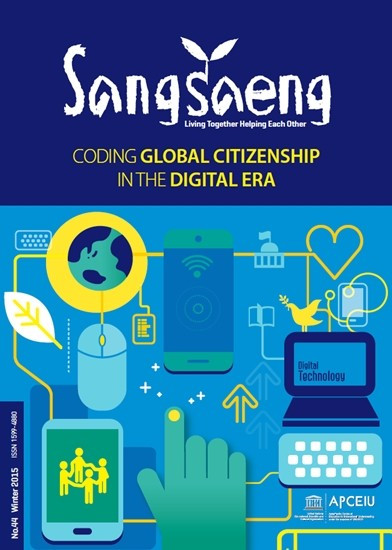 Coding global citizenship in the digital era (SangSaeng no. 44 winter 2015) 出版年份: 2015 机构作者: APCEIU Summary:The 44th issue of SangSaeng, “Coding Global Citizenship in the Digital Era,” has been released. The advancement of digital technology has connected the world, accelerating globalization. In this global digital age, Global Citizenship Education (GCED) is drawing enormous attention. Recognizing its significance, this Winter edition brings out the topic of GCED for digital citizens through the lens of education policymakers, children and youth, and corporations. In particular, the articles suggest actively participating in and contributing to the information society through ethical, safe, and responsible use of digital technology as the core competency for global citizens in the digital era.8 Striking a Balance Between Digital Opportunities & Related Risks12 Young People as Active Citizens in the Digital Age16 Empowering Children to Become Creative Digital Leaders20 Fostering Inclusive Innovation for a Better World38 Interview38 Understanding Culture through Media and Language40 Embracing Diversity to Live Together42 Peace in My MemoryTo achieve Peace, Must Understand Peace46 Understanding the Asia-Pacific RegionGlimpse into Ancient Healing Ritual of Ulik Mayang50 APCEIU in Action Codage de la citoyenneté mondiale à l'ère du numérique (SangSaeng no 44 hiver 2015) 出版年份: 2015 机构作者: Centre Asie-Pacifique d'éducation pour la compréhension internationale (APCEIU) Le 44e numéro de SangSaeng, intitulé «Codage de la citoyenneté mondiale à l'ère numérique», a été publié. L'avancement de la technologie numérique a connecté le monde, l'accélération de la mondialisation. À l'ère numérique mondiale, l'éducation à la citoyenneté mondiale (ECM) attire l'attention. Reconnaissant son importance, cette édition d'hiver met en évidence le thème du ECM pour les citoyens numériques à travers l'optique des responsables de l'éducation, des enfants et des jeunes et des entreprises. En particulier, les articles proposent de participer activement à la société de l'information et de contribuer à celle-ci par une utilisation éthique, sûre et responsable des technologies numériques comme compétence fondamentale pour les citoyens du monde à l'ère du numérique.8 Trouver un équilibre entre les Débouchés Numériques et les Risques Connexes12 Les Jeunes en tant que Citoyens Actifs à l'ère du Numérique16 Permettre aux enfants de devenir des leaders numériques créatifs20 Favoriser l'innovation inclusive pour un monde meilleur38 Entretien38 Comprendre la Culture par le biais des Médias et de la Langue40 Adopter la Diversité pour Vivre Ensemble42 La Paix dans ma MémoirePour atteindre la paix, il faut comprendre la paix46 Comprendre la région Asie-PacifiqueDécouvrez le rituel de guérison antique d'Ulik Mayang50 APCEIU en action