
相关资源
探索丰富的全球公民教育资源,深化理解,促进研究、倡导、教学与学习。
共找到451条结果
 خطة العمل: البرنامج العالمي لل تثقيف في مجال حقوق الإنسان؛ المرحلة الأولى 出版年份: 2006 机构作者: UN Office of the High Commissioner for Human Rights The Plan of Action for the first phase (2005-2007) of the World Programme was adopted by all United Nations Member States in July 2005. It proposes a concrete strategy and practical guidance for implementing human rights education in primary and secondary schools. On 10 December 2004, the General Assembly of the United Nations proclaimed the World Programme for Human Rights Education (2005-ongoing) to advance the implementation of human rights education programmes in all sectors. Building on the foundations laid during the United Nations Decade for Human Rights Education (1995-2004), this new initiative reflects the international community’s increasing recognition that human rights education produces far-reaching results. By promoting respect for human dignity and equality and participation in democratic decision-making, human rights education contributes to the long-term prevention of abuses and violent conflicts. To help make human rights a reality in every community, the World Programme seeks to promote a common understanding of the basic principles and methodologies of human rights education, to provide a concrete framework for action and to strengthen partnerships and cooperation from the international level down to the grass roots. План действий Всемирная программа образования в области прав человека : Первый этап 出版年份: 2006 机构作者: UN Office of the High Commissioner for Human Rights The Plan of Action for the first phase (2005-2007) of the World Programme was adopted by all United Nations Member States in July 2005. It proposes a concrete strategy and practical guidance for implementing human rights education in primary and secondary schools. On 10 December 2004, the General Assembly of the United Nations proclaimed the World Programme for Human Rights Education (2005-ongoing) to advance the implementation of human rights education programmes in all sectors. Building on the foundations laid during the United Nations Decade for Human Rights Education (1995-2004), this new initiative reflects the international community’s increasing recognition that human rights education produces far-reaching results. By promoting respect for human dignity and equality and participation in democratic decision-making, human rights education contributes to the long-term prevention of abuses and violent conflicts. To help make human rights a reality in every community, the World Programme seeks to promote a common understanding of the basic principles and methodologies of human rights education, to provide a concrete framework for action and to strengthen partnerships and cooperation from the international level down to the grass roots. Programa Mundial para Educação em Direitos Humanos: segunda fase, plano de ação 出版年份: 2012 机构作者: UN Office of the High Commissioner for Human Rights According to Human Rights Council resolution 12/4, the second phase of the World Programme (2010–2014) will focus “on human rights education for higher education and on human rights training programmes for teachers and educators, civil servants, law enforcement officials and military personnel at all levels” and “Member States should also continue the implementation of human rights education in primary and secondary school systems”. The plan of action focuses on human rights education in two broadly defined sectors, i.e. higher education and training for civil servants, law enforcement officials and the military. Plano de ação: Programa Mundial para Educação em Direitos Humanos 出版年份: 2012 机构作者: UN Office of the High Commissioner for Human Rights The Plan of Action for the first phase (2005-2007) of the World Programme was adopted by all United Nations Member States in July 2005. It proposes a concrete strategy and practical guidance for implementing human rights education in primary and secondary schools. On 10 December 2004, the General Assembly of the United Nations proclaimed the World Programme for Human Rights Education (2005-ongoing) to advance the implementation of human rights education programmes in all sectors. Building on the foundations laid during the United Nations Decade for Human Rights Education (1995-2004), this new initiative reflects the international community’s increasing recognition that human rights education produces far-reaching results. By promoting respect for human dignity and equality and participation in democratic decision-making, human rights education contributes to the long-term prevention of abuses and violent conflicts. To help make human rights a reality in every community, the World Programme seeks to promote a common understanding of the basic principles and methodologies of human rights education, to provide a concrete framework for action and to strengthen partnerships and cooperation from the international level down to the grass roots.
  World programme for human rights education: second phase; plan of action 出版年份: 2012 机构作者: UN Office of the High Commissioner for Human Rights According to Human Rights Council resolution 12/4, the second phase of the World Programme (2010–2014) will focus “on human rights education for higher education and on human rights training programmes for teachers and educators, civil servants, law enforcement officials and military personnel at all levels” and “Member States should also continue the implementation of human rights education in primary and secondary school systems”. The plan of action focuses on human rights education in two broadly defined sectors, i.e. higher education and training for civil servants, law enforcement officials and the military. Programme mondial en faveur de l'Éducation aux droits de l'Homme: deuxième phase, plan d'action 出版年份: 2012 机构作者: UN Office of the High Commissioner for Human Rights According to Human Rights Council resolution 12/4, the second phase of the World Programme (2010–2014) will focus “on human rights education for higher education and on human rights training programmes for teachers and educators, civil servants, law enforcement officials and military personnel at all levels” and “Member States should also continue the implementation of human rights education in primary and secondary school systems”. The plan of action focuses on human rights education in two broadly defined sectors, i.e. higher education and training for civil servants, law enforcement officials and the military. L'éducation pour une culture de la paix, les droits de l'homme, la citoyenneté, la démocratie et l'intégration régionale: manuel de référence de la CEDEAO, pour une utilisation par le formateur de formateurs 出版年份: 2013 机构作者: UNESCO Dakar | Economic Community of West African States (ECOWAS) Le manuel comprend sept modules traitant de la culture de la paix et gestion des conflits; Droits de l'homme; Civisme et citoyenneté; Démocratie et bonne gouvernance; Genre et développement; La santé publique, l'environnement et le développement durable; et l'intégration régionale. Chaque module comporte des sous-thèmes avec des introductions, des documents de référence, des objectifs généraux pour guider le formateur et tables pédagogiques génériques qui sont suffisamment souples pour être adaptés aux ressources pédagogiques disponibles dans les différents pays de la CEDEAO. Il est également adapté et adaptable à la formation des enseignants impliqués à la fois dans la prestation de l'éducation formelle et non formelle à différents niveaux d'enseignement et d'apprentissage. Le but ultime du Manuel est de construire une masse critique de citoyens de la CEDEAO dotés de compétences compétentes, non seulement pour les domaines cognitif et psycho-moteur de l'éducation, mais aussi des habiletés affectives pour les valeurs positives, les attitudes et les comportements qui favorisent la paix, la tolérance et pacifique co-existence des citoyens communautaires. Ответные меры системы образования на буллинг, вызванный гомофобией 出版年份: 2014 机构作者: UNESCO This publication is part of a Good Policy and Practice series that addresses key themes of UNESCO’s work with the education sector including HIV and AIDS and safe, healthy educational environments for all learners. This volume, on the theme of homophobic bullying in educational institutions, builds on UNESCO’s work on gender, discrimination and violence in schools.
 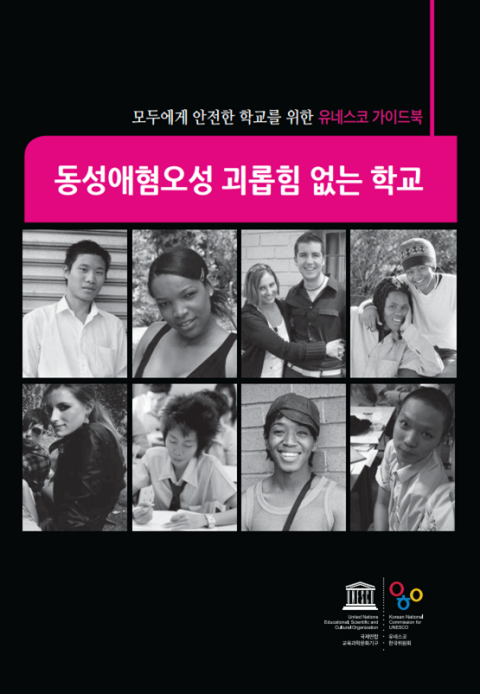 동성애혐오성 괴롭힘 없는 학교 出版年份: 2013 机构作者: UNESCO 이 책은 2012년 유네스코가 발간한 ‘HIV 및 보건 교육 우수 정책과 사례’ 시리즈(전8권) 중 제8권 『Education Sector Responses to Homophobic Bullying』을 번역한 것입니다. 이 책은 동성애혐오성 괴롭힘을 '모두를 위한 교육'을 실현하기 위해 해소해야 하는 걸림돌 중 하나로 지적하면서 그 해결방법을 제시하고 있습니다. Plan de acción: programa Mundial para la Educación en Derechos Humanos, primera etapa 出版年份: 2006 机构作者: UN Office of the High Commissioner for Human Rights The Plan of Action for the first phase (2005-2007) of the World Programme was adopted by all United Nations Member States in July 2005. It proposes a concrete strategy and practical guidance for implementing human rights education in primary and secondary schools. On 10 December 2004, the General Assembly of the United Nations proclaimed the World Programme for Human Rights Education (2005-ongoing) to advance the implementation of human rights education programmes in all sectors. Building on the foundations laid during the United Nations Decade for Human Rights Education (1995-2004), this new initiative reflects the international community’s increasing recognition that human rights education produces far-reaching results. By promoting respect for human dignity and equality and participation in democratic decision-making, human rights education contributes to the long-term prevention of abuses and violent conflicts. To help make human rights a reality in every community, the World Programme seeks to promote a common understanding of the basic principles and methodologies of human rights education, to provide a concrete framework for action and to strengthen partnerships and cooperation from the international level down to the grass roots.