
相关资源
探索丰富的全球公民教育资源,深化理解,促进研究、倡导、教学与学习。
共找到33条结果
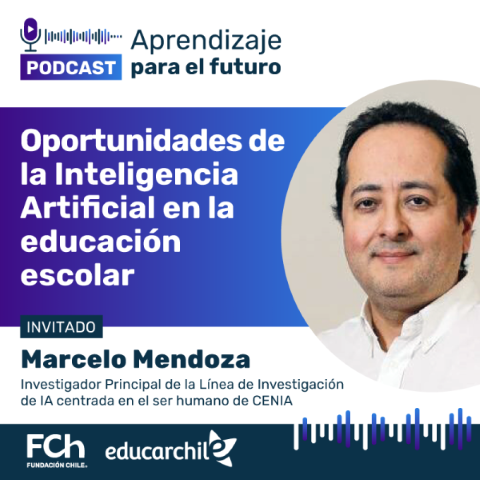 Podcast: Learning for the Future; Opportunities of Artificial Intelligence in School Education 出版年份: 2024 作者: Marcelo Mendoza 机构作者: Chile Foundation | Educarchile In this edition of the podcast: Learning for the Future, we spoke with Marcelo Mendoza, Principal Investigator of the Human-Centered AI Research Line at CENIA, with whom we developed the topic: Opportunities for Artificial Intelligence in school education. We also learned about the experience of the Bicentennial People Help People High School in Pilmaiquén using AI in various processes, together with teacher Cristóbal Morales. Podcast: Aprendizaje para el futuro; Oportunidades de la Inteligencia Artificial en la educación escolar 出版年份: 2024 作者: Marcelo Mendoza 机构作者: Chile Foundation | Educarchile En esta edición del podcast: Aprendizaje para el Futuro, conversamos con Marcelo Mendoza, Investigador Principal de la Línea de Investigación de IA centrada en el ser humano de CENIA, con quien desarrollamos el tema: Oportunidades de la Inteligencia Artificial en la educación escolar. También, conocimos la experiencia del Liceo Bicentenario People Help People de Pilmaiquén usando la IA en diversos procesos, junto al docente Cristóbal Morales.
  Guía para el uso de IA generativa en educación e investigación 出版年份: 2023 作者: Fengchun Miao | Wayne Holmes 机构作者: UNESCO Esta guía apunta a apoyar la planificación de regulaciones, políticas y programas de desarrollo de capacidades humanas apropiados para garantizar que la lAGen se convierta en una herramienta que genuinamente beneficie y empodere a docentes, estudiantes e investigadores. Explica las técnicas de IA utilizadas por la lAGen y elabora una lista de modelos de GPT puestos a disposición del público, especialmente aquellos con licencias de código abierto. También abre un debate sobre el surgimiento de EdGPT: los modelos de lAGen entrenados con datos específicos para servir a fines educativos. Además, resume algunas de las controversias clave en torno a la lAGen, desde el empeoramiento de la pobreza digital a la homogeneización de opiniones, y desde los más profundos deepfakes a cuestiones de derechos de autor. Con base en una visión humanista, la guía sugiere pasos clave para la regulación de las herramientas de lAGen, que incluyen la obligación de proteger la privacidad de los datos y el establecimiento de un límite de edad para las conversaciones independientes con las plataformas de lAGen. Para guiar el uso adecuado de las herramientas en la educación y la investigación, esta guía propone un enfoque humano-agente y adecuado a la edad para los procesos de validación ética y diseño pedagógico. Orientations pour l’intelligence artificielle générative dans l’éducation et la recherche 出版年份: 2023 作者: Fengchun Miao | Wayne Holmes 机构作者: UNESCO Ces recommandations ont pour objectif de soutenir l'élaboration de réglementations, de politiques et de programmes visant à développer les capacités humaines, dans le but de garantir que l'intelligence artificielle générative (GenAI) devienne un outil qui profite réellement aux enseignants, aux apprenants et aux chercheurs et leur donne les moyens d'agir. Il explique les techniques d'IA utilisées par la GenAI et dresse une liste des modèles de GPT qui sont mis à la disposition auprès du public, en particulier ceux qui font l'objet d'une licence à source ouverte. Il ouvre également une discussion sur l'émergence de l'EdGPT - les modèles GenAI qui sont entraînés avec des données spécifiques pour se mettre au service des objectifs dans le domaine de l'éducation. En outre, il résume certaines des principales controverses formées autour de l'IA générative, de l'aggravation de la pauvreté numérique à l'homogénéisation des opinions, en passant par les trucages (deepfakes) et les questions liées aux droits d'auteur. Fondé sur une vision humaniste, le présent document propose des étapes-clefs pour la réglementation des outils de la GenAI, notamment en rendant obligatoire la protection de la confidentialité des données et en fixant une limite d'âge pour les conversations autonomes avec les plateformes de la GenAI. Pour accompagner l'utilisation pertinente des outils dans l'éducation et la recherche, ce guide propose une approche holistique et adaptée à tout âge pour les processus de validation éthique et de conception pédagogique. Руководство по использованию генеративного искусственного интеллекта в образовании и научных исследованиях 出版年份: 2023 作者: Fengchun Miao | Wayne Holmes 机构作者: UNESCO Данное руководство направлено на поддержку разработки соответствующих правил, политик и программ развития человеческого потенциала с целью обеспечения того, чтобы генеративный искусственный интеллект (ИИ) стал инструментом, действительно приносящим пользу и расширяющим возможности учителей, учащихся и исследова телей. В нем объясняются методы искусственного интеллекта, используемые в генеративном ИИ, а также приводится список моделей СРТ, которые становятся общедоступными, особенно модели с открытым исходным кодом. Руководство также открывает обсуждение о появлении ЕсІСРТ - моделей генеративного ИИ, обученных на конкретных данных для образовательных целей. Кроме того, в нем суммируются некоторые ключевые противоречия вокруг генеративного ИИ - от ухудшения цифрового неравенства до гомогенизации мнений, от более сложных дипфейков до вопросов авторского права. Исходя из гуманистического подхода, руководство предлагает ключевые шаги по регулированию инструментов генеративного ИИ, включая обязательную защиту конфиденциальности данных и установку возрастных ограничений для самостоятельного взаимодействия с платформами генеративного ИИ. Для обеспечения правильного использования инструментов в сфере образования и исследований, в руководстве затронуты вопросы этики и проектирования педагогического процесса и заложен подход, ориентированный на человека и учитывающий возрастные особенности.
  Readiness Assessment Methodology: A Tool of the Recommendation on the Ethics of Artificial Intelligence 出版年份: 2023 机构作者: UNESCO In November 2021, the 193 Member States of UNESCO signed the Recommendation on the Ethics of Artificial Intelligence, the first global normative instrument in its domain. The Recommendation serves as a comprehensive and actionable framework for the ethical development and use of AI, encompassing the full spectrum of human rights. It does so by maintaining focus on all stages of the AI system lifecycle. Beyond elaborating the values and principles that should guide the ethical design, development and use of AI, the Recommendation lays out the actions required from Member States to ensure the upholding of such values and principles, through advocating for effective regulation and providing recommendations in various essential policy areas, such as gender, the environment, and communication and information. With these values, principles, and policy areas in mind, the UNESCO Secretariat elaborated a programme for the implementation of the Recommendation, with the core aim of building national capacities to discharge the actions set out in the Recommendation and bolster regulatory frameworks. The Recommendation mandated the development of two key tools, the Readiness Assessment Methodology (RAM) and the Ethical Impact Assessment (EIA), which form the core pillars of the implementation. These tools both aim to assess and promote the resilience of existing laws, policies and institutions to AI implementation in the country, as well as the alignment of AI systems with the values and principles set out in the Recommendation. The goal of this document is to provide more information on the Readiness Assessment Methodology, lay out its various dimensions, and detail the work plan for the implementing countries, including the type of entities that need to be involved, responsibilities of each entity, and the split of work between UNESCO and the implementing country. ارشادات استخدام الذكاء الاصطناعي التوليدي في التعليم والبحث 出版年份: 2023 作者: Fengchun Miao | Wayne Holmes 机构作者: UNESCO تهدف هذه الإرشادات إلى دعم تخطيط اللوائح والسياسات وبرامج تنمية القدرات البشرية المناسبة ً لضمان أن يصبح الذكاء الاصطناعي التوليدي أداة تفيد المعلمين والمتعلمين والباحثين وتمكنهم حقا. وهو يشرح تقنيات الذكاء الاصطناعي التي يستخدمها الذكاء الاصطناعي التوليدي ويرسم قائمة بنماذج ً المحولات التوليدية المدربة مسبقا المتاحة للجمهور، خاصة تلك التي تخضع لترخيص مفتوح المصدر. كما ً ً حول ظهور نماذج المحولات التوليدية التعليمية المدربة مسبقا - التي يتم تدريبها باستخدام يفتح نقاشا بيانات محددة لخدمة الأغراض التعليمية. علاوة على ذلك، فهو يلخص بعض الخلافات الرئيسية حول ً الذكاء الاصطناعي التوليدي، بدءا من تفاقم الفقر الرقمي إلى تجانس ً الآراء، ومن التزييف العميق إلى قضايا حقوق الطبع والنشر. واستنادا إلى رؤية إنسانية، تقترح الإرشادات خطوات أساسية لتنظيم أدوات الذكاء الاصطناعي التوليدي، بما في ذلك فرض حماية خصوصية البيانات ووضع حد عمري للمحادثات المستقلة مع منصات الذكاء الاصطناعي التوليدي. ً لتوجيه الاستخدام السليم للأدوات في التعليم والبحث، تقترح هذه الإرشادات نهج ً ا مناسبا للعامل البشري والعمر للتحقق من الصحة الأخلاقية وعمليات التصميم التربوي. Guidance for Generative AI in Education and Research 出版年份: 2023 作者: Fengchun Miao | Wayne Holmes 机构作者: UNESCO This Guidance aims to support the planning of appropriate regulations, policies and human capacity development programmes to ensure that generative artificial intelligence (GenAI) becomes a tool that genuinely benefits and empowers teachers, learners and researchers. It explains the Al techniques used by GenAI and maps out a list of GPT models that are made publicly available, especially those under open-source licences. It also opens a discussion on the emergence of EdGPT - GenAI models that are trained with specific data to serve educational purposes. Furthermore, it summarizes some of the key controversies around GenAI, from worsening digital poverty to the homogenization of opinions, and from deeper deepfakes to issues of copyright. Based on a humanistic vision, the Guidance proposes key steps for the regulation of GenAI tools, including mandating the protection of data privacy and setting an age limit for independent conversations with GenAI platforms. To guide the proper use of the tools in education and research, this Guidance proposes a human-agent and age-appropriate approach to the ethical validation and pedagogical design processes.
  Harnessing the Era of Artificial Intelligence in Higher Education: A Primer for Higher Education Stakeholders 出版年份: 2023 作者: Bosen Lily Liu | Diana Morales | Jaime Roser-Chinchilla | Emma Sabzalieva | Arianna Valentini | Daniele Vieira do Nascimento | Clarisa Yerovi 机构作者: UNESCO | UNESCO International Institute for Higher Education in Latin America and the Caribbean (IESALC) The International Institute for Higher Education in Latin America and the Caribbean (UNESCO IESALC) is one of UNESCO’s key education-focused institutes and is the only institute in the United Nations with a specific mandate for higher education. Taking a holistic and integrated intersectoral and cross-sectoral approach to higher education, UNESCO IESALC provides support to Member States through policy-driven and action-oriented research and publications, capacity development, training, advocacy and networking. Following the release of a Quick Start Guide on using ChatGPT and Artificial Intelligence (AI) in higher education, UNESCO IESALC is pleased to offer to the wider community of higher education stakeholders worldwide this Primer on AI and higher education. Providing information and tips for developing further thinking and policies related to the use of AI processes and outcomes in higher education institutions, the Primer is a comprehensive and comprehensible introduction to AI. It also serves as a practical tool for guidance and reference with recommendations for its use in higher education. Oportunidades y desafíos de la era de la inteligencia artificial para la educación superior: Una introducción para los actores de la educación superior 出版年份: 2023 作者: Bosen Lily Liu | Diana Morales | Jaime Roser-Chinchilla | Emma Sabzalieva | Arianna Valentini | Daniele Vieira do Nascimento | Clarisa Yerovi 机构作者: UNESCO | UNESCO International Institute for Higher Education in Latin America and the Caribbean (IESALC) El Instituto Internacional de la UNESCO para la Educación Superior en América Latina y el Caribe (UNESCO IESALC) es uno de los institutos clave de la UNESCO centrado en la educación y es el único instituto de las Naciones Unidas con un mandato específico para la educación superior. Adoptando un enfoque holístico e integrado de manera intersectorial y transectorial de la educación superior, el IESALC presta apoyo a los Estados miembros mediante investigaciones y publicaciones orientadas a la formulación de políticas y a la acción, al desarrollo de capacidades, la formación, la abogacía y la creación de redes. Tras la publicación de una Guía de inicio rápido sobre el uso de ChatGPT y la Inteligencia Artificial (IA) en la educación superior, UNESCO IESALC se complace en ofrecer a la comunidad en general interesada en la educación superior global este Manual en IA y educación superior. Proporcionando información y consejos para el desarrollo de pensamiento y de políticas relacionadas con el uso de la IA en las instituciones de educación superior, este Manual es una introducción comprensible y exhaustiva a la IA. También sirve como herramienta práctica de orientación y referencia con recomendaciones para su uso en la enseñanza superior.