
相关资源
探索丰富的全球公民教育资源,深化理解,促进研究、倡导、教学与学习。
共找到9条结果
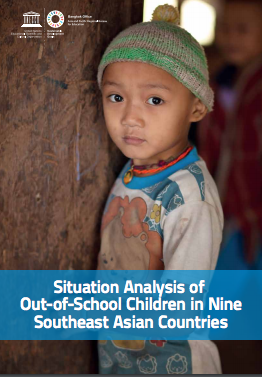 Situation analysis of out-of-school children in nine southeast Asian countries 出版年份: 2017 机构作者: UNESCO Bangkok In a world that continually aspires for every child and youth to have access to education, there are still large numbers of out-of-school children (OOSC) who are yet to claim their right to basic education. In 2013, the number of children who are not in school, who have dropped out, and who have never been to school have risen to 124 million after seeing the numbers continuously drop for much of the first decade of the 21st century. In much of Southeast Asia, close to seven million children of both primary and lower secondary school-age find themselves in the same situation. In an effort to assist the countries in Southeast Asia to develop more robust policies and programmes for OOSC in their respective countries, this report was commissioned to map out the current legislations, policies, characteristics, and interventions on out-of-school children in nine countries across the region, which include Cambodia, Indonesia, Lao PDR, Malaysia, Myanmar, the Philippines, Thailand, Timor-Leste and Vietnam. Using a desk review of available and relevant secondary data, the study covered OOSC of primary and lower secondary school-age. Situation analysis of out-of-school children in nine southeast Asian countries 出版年份: 2017 机构作者: UNESCO Bangkok In a world that continually aspires for every child and youth to have access to education, there are still large numbers of out-of-school children (OOSC) who are yet to claim their right to basic education. In 2013, the number of children who are not in school, who have dropped out, and who have never been to school have risen to 124 million after seeing the numbers continuously drop for much of the first decade of the 21st century. In much of Southeast Asia, close to seven million children of both primary and lower secondary school-age find themselves in the same situation. In an effort to assist the countries in Southeast Asia to develop more robust policies and programmes for OOSC in their respective countries, this report was commissioned to map out the current legislations, policies, characteristics, and interventions on out-of-school children in nine countries across the region, which include Cambodia, Indonesia, Lao PDR, Malaysia, Myanmar, the Philippines, Thailand, Timor-Leste and Vietnam. Using a desk review of available and relevant secondary data, the study covered OOSC of primary and lower secondary school-age. Situation analysis of out-of-school children in nine southeast Asian countries 出版年份: 2017 机构作者: UNESCO Bangkok In a world that continually aspires for every child and youth to have access to education, there are still large numbers of out-of-school children (OOSC) who are yet to claim their right to basic education. In 2013, the number of children who are not in school, who have dropped out, and who have never been to school have risen to 124 million after seeing the numbers continuously drop for much of the first decade of the 21st century. In much of Southeast Asia, close to seven million children of both primary and lower secondary school-age find themselves in the same situation. In an effort to assist the countries in Southeast Asia to develop more robust policies and programmes for OOSC in their respective countries, this report was commissioned to map out the current legislations, policies, characteristics, and interventions on out-of-school children in nine countries across the region, which include Cambodia, Indonesia, Lao PDR, Malaysia, Myanmar, the Philippines, Thailand, Timor-Leste and Vietnam. Using a desk review of available and relevant secondary data, the study covered OOSC of primary and lower secondary school-age.
 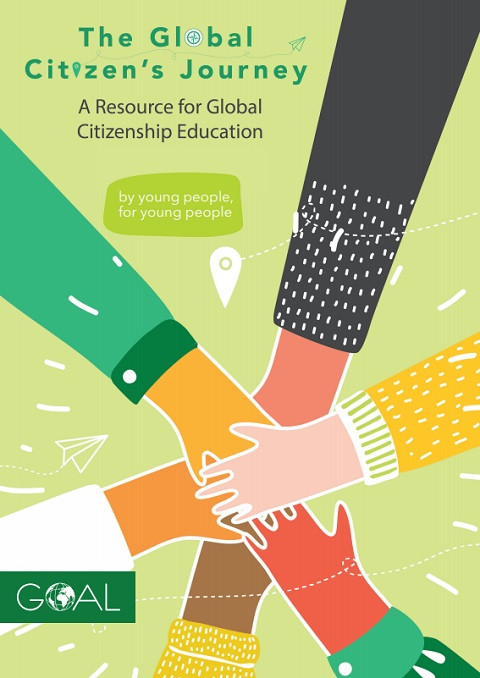 The Global Citizen's Journey: A Resource for Global Citizenship Education 出版年份: 2021 机构作者: GOAL Global This resource for Global Citizenship Education is designed by our Global Youth Programme for educators and leaders of 14–18-year-olds all over the world. Centring on the themes of interconnectedness, development, power and inequality this free, downloadable booklet of activities encourages critical thinking, reflection, and empower the pursuit of positive change.To find out more, watch our introductory video here.
  Bridge Zambia Project Report 出版年份: 2019 机构作者: Korean National Commission for UNESCO | Zambia National Commission for UNESCO The Bridge Zambia Project (the Project) has been implemented jointly between the Korean National Commission for UNESCO (KNCU) and its partners in Zambia since October 2010. In March 2019, KNCU’s involvement in the Project will come to an end and Zambia will take over full responsibility for the Project as it goes forward. The Project has supported grassroots activities through the establishment of a Community Learning Centre (CLC), which acts as a hub of community-led development activities in non-formal education. The Project has mobilized and empowered communities and local leadership to take charge of non-formal education programmes with the aim of assisting Zambia to attain UNESCO’s Education for All goals and UN Sustainable Development Goal 4 (SDG 4), concerning education quality.
  Handbuch Nationalsozialismus und Holocaust. Historisch-politisches Lernen in Schule, außerschulischer Bildung und Lehrerbildung. The educational field of National Socialism and the Holocaust is an indispensable part of historical-political learning in schools, non-formal education and teacher training. This manual gives new impetus to the theoretical discussion as well as to the practical educational work. Basic theoretical texts are complemented by methodological suggestions as well as by accounts based on personal experience and presentations of projects with national and international perspectives. The fact that today, more than sixty years after the events, adolescents have hardly any direct access to this phase of German and European history, and the question of how to deal with this challenge, are here of central importance. The contributions in the manual focus on the following themes: The fundamentals of National Socialism and the Holocaust as an educational field. School practices: Learning from classroom instruction. School practices: Learning from projects. Practices in teacher education. Practices in memorial sites and non-formal educational institutions. International approaches. (By the publisher)
  Regional handbook on life skills programmes for non-formal education 出版年份: 2012 机构作者: UNESCO Bangkok The Regional Handbook on Life Skills Programme for Non-formal Education (NFE) was developed for education policy makers, experts in curriculum development, materials development and trainers of personnel in the field of NFE, NFE practitioners such as Community Learning Centres (CLCs) personnel, teachers and facilitators, and researchers. It aims to provide information about life skills programmes and to serve as a practical guide to implement educational programmes to enhance life skills. It is expected to help NFE personnel with adopting, adapting and integrating life skills programmes in NFE. This Handbook consists of two parts as follows: Part one- overview of Life Skills Programme for Non-formal Education (NFE), Part Two- Practical Guide on Integrating Life Skills Programme in NFE. Part One provides answers to various questions related to life skills and life skills progrmmes. Part Two intends to provide practical information about the systematic planning and implementation of life skills programmes for NFE. It offers suggested steps for curriculum development, development of teaching and learning materials, delivery of life skills programmes and monitoring and evaluation strategies. Details of this process are elaborated for NFE practitioners at various levels, but in particular at the community level. This Handbook was developed based on the project outputs of UNESCO Bangkok's 'Life Skills Learning through Non-formal Education" carried out in Asia and the Pacific region from 2003-2006 within the framework of Asia-Pacific Programme of Education for All (APPEAL). The project consisted of country studies, regional meetings, pilot projects and action research in selected countries in the region. A group of experts from the region consolidated the main outputs of the project and developed this Handbook through a series of workshops in 2006-2007 in coordination with UNESCO Bangkok and the office of Non-formal and Informal Education (ONIE) of Thailand Ministry of Education. In addition, resource materials of various organizations including United Nations agencies, government institutions, universities and NGOs were also collected and used for developing this Handbook. Manuel régional sur les programmes de compétences de vie pour l'éducation non formelle 出版年份: 2012 机构作者: UNESCO Bangkok Le manuel régional sur le programme des compétences de vie pour l'éducation non-formelle (ENF) a été développé pour les décideurs politiques de l'éducation, des experts dans l'élaboration des programmes, le développement des matériaux et formateurs de personnel dans le domaine de l'ENF, les praticiens ENF tels que les centres d'apprentissage communautaires (CJC) personnel , les enseignants et les animateurs et les chercheurs. Il vise à fournir des informations sur les programmes de compétences de vie et de servir comme un guide pratique pour mettre en œuvre des programmes éducatifs pour améliorer les compétences de la vie. Il est prévu pour aider le personnel de l'ENF à l'adoption, l'adaptation et l'intégration des programmes de compétences de vie en ENF. Ce manuel se compose de deux parties: Partie de un aperçu le programme des compétences de vie pour l'éducation non formelle (ENF), en deux parties Guide pratique sur le programme des compétences de vie de l’Intégration dans ENF. La première partie fournit des réponses aux diverses questions liées aux compétences de vie et les compétences de la vie programmes. La deuxième partie a l'intention de fournir des informations pratiques sur la planification et la mise en œuvre des programmes de compétences de vie pour ENF systématique. Il propose des étapes suggérées pour l'élaboration des programmes, le développement de matériel pédagogique et d'apprentissage, la prestation de compétences pour la vie des programmes et des stratégies de Suivi et d'évaluation. Les détails de ce processus sont élaborés pour les praticiens ENF à différents niveaux, mais en particulier au niveau de la communauté. Ce manuel a été élaboré sur la base des résultats du projet de «Life Skills de l'UNESCO Bangkok L'apprentissage par l'éducation non formelle» réalisée en Asie et dans la région du Pacifique 2003-2006 dans le cadre du Programme Asie-Pacifique d'éducation pour tous (APPEAL). le projet consistait en études de pays, des réunions régionales, des projets pilotes et la recherche-action dans certains pays de la région. un groupe d'experts de la région a regroupé les principaux résultats du projet et a développé ce manuel à travers une série d'ateliers en 2006-2007 coordination avec l'UNESCO Bangkok et le bureau de l'éducation non formelle et informelle (ONIE) de la Thaïlande Ministère de l'éducation. En outre, des ressources documentaires de diverses organisations, y compris les organismes des Nations Unies, les institutions gouvernementales, les universités et les ONG ont également été recueillies et utilisées pour le développement de cette Manuel.
  Non-Formal Education, Sustainable Development and the Education 2030 Agenda: Study of Civil Society Practices in Latin America and the Caribbean 出版年份: 2020 机构作者: UNESCO Santiago | UNESCO Mexico This publication shows 27 civil society initiatives from various countries in Latin America and the Caribbean that work to promote actions and programs to comply with Target 4.7 within non-formal education. The study seeks that these organizations show their work, the challenges they face as regards the implementation of their programs and their greatest achievements.