
相关资源
探索丰富的全球公民教育资源,深化理解,促进研究、倡导、教学与学习。
共找到145条结果
 Анализ положения детей в Республике Казахстан 出版年份: 2019 机构作者: UNICEF Kazakhstan Казахстан поставил перед собой важную стратегическую цель – стать одной из 30 самых развитых стран мира к 2050 году. При этом нынешние дети и подростки, составляющие 31,4% от общей численности населения страны, будут теми, кто больше всех ощутит положительные изменениня и поэтому также должны стать активными участниками в реализации поставленной цели.В данном документе представлены анализ и рекомендации, направленные на то, чтобы дети оставались в центре приоритетов развития страны. Отчет подтверждает ощутимый прогресс, достигнутый в продвижении прав детей, а также выявляет факторы, влияющие на их уязвимость.
  Social Media to P/CVE: Toolkit for Practitioners 出版年份: 2017 机构作者: Search for Common Ground This Toolkit has been created on the basis of the key findings obtained in the framework of the Search for Common Ground (Search) “Social Media for De-Radicalization in Kyrgyzstan: A Model for Central Asia’s” pilot project funded by the Bureau of Counterterrorism, US Department of State. The project is based on two parts: a participatory approach, focused on UN Resolution 2250, and a professional approach aimed at creating and conducting social media campaigns in Kyrgyzstan.Extremist and terrorist groups use the Internet to radicalize and recruit young people through social media and instant messaging applications. Therefore, it is important to create new methods to combat online extremist propaganda, focusing not only on measures such as blocking and filtering content, or counter-narratives which are very popular and come naturally in response to radicalization and violent extremism, but also offering a positive alternative to extremist propaganda, while challenging their ideology and messages. Социальные медиа для профилактики/предотвращения насильственного экстремизма: практическое руководство 出版年份: 2017 机构作者: Search for Common Ground Данный инструментарий был создан на основе ключевых результатов, полученных в рамках пилотного проекта «Поиск социальных сетей (Кыргызстан: модель для Центральной Азии)« Поиск в социальных сетях для Кыргызстана: модель для Центральной Азии », финансируемого Бюро по борьбе с терроризмом, Госдеп США. Проект основан на двух частях: совместный подход, ориентированный на Резолюцию ООН 2250, и профессиональный подход, направленный на создание и проведение кампаний в социальных сетях в Кыргызстане.Экстремистские и террористические группы используют Интернет для радикализации и вербовки молодых людей через социальные сети и приложения для обмена мгновенными сообщениями. Поэтому важно создать новые методы для борьбы с экстремистской пропагандой в Интернете, сосредоточив внимание не только на таких мерах, как блокировка и фильтрация контента, либо контррассказах, которые очень популярны и появляются естественным образом в ответ на радикализацию и насильственный экстремизм, но также предлагая Позитивная альтернатива экстремистской пропаганде, бросая вызов их идеологии и сообщениям.
 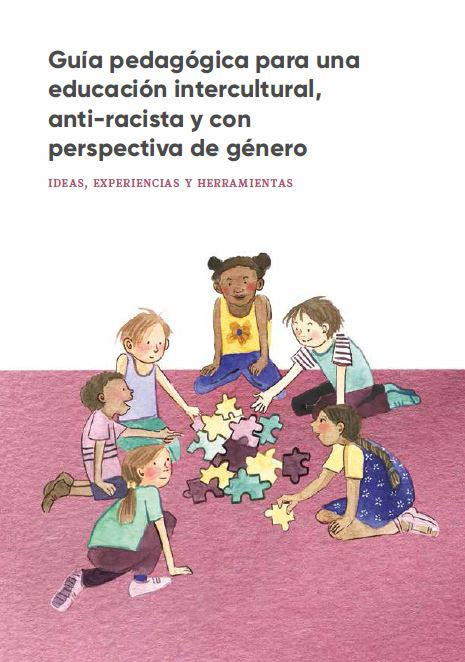 Pedagogical Guide for an Intercultural, Anti-racist and Gender Perspective Education: Ideas, Experiences and Tools 出版年份: 2017 作者: Carolina Stefoni | Andrea Riedemann | Fernanda Stang | Andrea Guerrero | Antonia Garcés | Marta Camarena 机构作者: Programa Interdisciplinario de Estudios Migratorios (PRIEM) | Universidad Alberto Hurtado | Fundación para la Superación de la Pobreza (FUSUPO) The main purpose of this Guide is, then, to share some ideas, tools and experiences that can help build and walk the path towards an intercultural, anti-racist and gender perspective education in various educational spaces. It is directed primarily - though not exclusively, of course - to all those people who are part of formal and informal teaching-learning processes. It is important to emphasize that the Guide does not pretend to be a recipe for a mechanical application, but a tool box that each educational community can use considering its specific context, its particular needs and its potentialities. Guía pedagógica para una educación intercultural, anti-racista y con perspectiva de género: ideas, experiencias y herramientas 出版年份: 2017 作者: Carolina Stefoni | Andrea Riedemann | Fernanda Stang | Andrea Guerrero | Antonia Garcés | Marta Camarena 机构作者: Programa Interdisciplinario de Estudios Migratorios (PRIEM) | Universidad Alberto Hurtado | Fundación para la Superación de la Pobreza (FUSUPO) El propósito principal de esta Guía es, entonces, compartir algunas ideas, herramientas y experiencias que puedan ayudar a construir y andar el camino hacia una educación intercultural, anti-racista y con perspectiva de género en diversos espacios educativos. Está dirigida principalmente -aunque no de manera exclusiva, por supuesto- a todas aquellas personas que sean parte de procesos de enseñanza-aprendizaje formales e informales. Es importante enfatizar que la Guía no pretende ser un recetario para una aplicación mecánica, sino una caja de herramientas que cada comunidad educativa puede usar considerando su contexto específico, sus necesidades particulares y sus potencialidades.
  Gender-Based Violence in Education 出版年份: 2015 作者: Jenny Perkes This paper examines how policies and strategies to address school-related gender-based violence have evolved since 2000, when gender-based violence within education was largely invisible. It traces remarkable progress in research, policy and programmes, particularly since the mid-2000s when evidence around the globe exposed high levels of many forms of violence. However, there is still insufficient knowledge about what works to reduce violence, and weaknesses in processes of policy enactment which inhibit effective action. Through four country case studies, in South Africa, Brazil, India and Liberia, this paper explores how different forms of violence are being addressed in varying contexts. It concludes that more attention is needed to the space between national and local policy enactments, and to tackling at national, district, school and community levels the norms and inequalities at the heart of gender-based violence.
  Quality Physical Education (QPE): guidelines for policy makers 出版年份: 2015 作者: Nancy, McLennan | Jannine, Thompson 机构作者: UNESCO A key feature of the Post-2015 Development Agenda is sustainable development. Sustainable development starts with safe, healthy, well-educated children. Participation in quality physical education (QPE), as part of a rounded syllabus, enhances young peoples’ civic engagement, decreases violence and negative patterns of behaviour, and improves health awareness. The UNESCO QPE Policy Package is an original piece of work, which draws upon results from extensive global research (including the Worldwide Survey of School Physical Education). These guidelines, designed for global application and local adaptation, provide a means of analysing current policy through practical guidance and a ‘how-to’ approach. The materials have been developed in consultation with key partners including the European Commission, the International Council for Sport Science and Physical Education (ICSSPE), UNDP, UNICEF, UNOSDP and WHO. L'Education physique de qualité (EPQ): directives à l'intention des décideurs 出版年份: 2015 作者: Nancy, McLennan | Jannine, Thompson 机构作者: UNESCO A key feature of the Post-2015 Development Agenda is sustainable development. Sustainable development starts with safe, healthy, well-educated children. Participation in quality physical education (QPE), as part of a rounded syllabus, enhances young peoples’ civic engagement, decreases violence and negative patterns of behaviour, and improves health awareness. The UNESCO QPE Policy Package is an original piece of work, which draws upon results from extensive global research (including the Worldwide Survey of School Physical Education). These guidelines, designed for global application and local adaptation, provide a means of analysing current policy through practical guidance and a ‘how-to’ approach. The materials have been developed in consultation with key partners including the European Commission, the International Council for Sport Science and Physical Education (ICSSPE), UNDP, UNICEF, UNOSDP and WHO. Educación física de calidad (EFC): guía para los responsables políticos 出版年份: 2015 作者: Nancy, McLennan | Jannine, Thompson 机构作者: UNESCO A key feature of the Post-2015 Development Agenda is sustainable development. Sustainable development starts with safe, healthy, well-educated children. Participation in quality physical education (QPE), as part of a rounded syllabus, enhances young peoples’ civic engagement, decreases violence and negative patterns of behaviour, and improves health awareness. The UNESCO QPE Policy Package is an original piece of work, which draws upon results from extensive global research (including the Worldwide Survey of School Physical Education). These guidelines, designed for global application and local adaptation, provide a means of analysing current policy through practical guidance and a ‘how-to’ approach. The materials have been developed in consultation with key partners including the European Commission, the International Council for Sport Science and Physical Education (ICSSPE), UNDP, UNICEF, UNOSDP and WHO.
  School Violence and Bullying: Global Status Report 出版年份: 2017 机构作者: UNESCO School violence and bullying occurs throughout the world and affects a significant proportion of children and adolescents. It not only negatively impacts their educational outcomes, but harms their physical health and emotional well-being.This report aims to provide an overview of the most up-to-date available data on the nature, extent and impact of school violence and bullying and efforts to address the problem. It was prepared by UNESCO and the Institute of School Violence and Prevention at Ewha Womans University for the International Symposium on School Violence and Bullying: From Evidence to Action, Seoul, Republic of Korea, 17 – 19 January, 2017.