
相关资源
探索丰富的全球公民教育资源,深化理解,促进研究、倡导、教学与学习。
共找到1,364条结果
 国际儿童发展合作研究报告 出版年份: 2023 机构作者: Chinese Academy of International Trade and Economic Cooperation 国际儿童发展合作对保障儿童权益至关重要。在联合国儿童基金会支持下,商务部国际贸易经济合作研究院开展了国际儿童发展合作课题研究。本报告介绍了美国、英国、日本和德国四个主要捐助国在国际儿童发展合作方面的相关案例,探讨了国际儿童发展合作的不同背景、战略、政策、体制机制和挑战,揭示了国际儿童发展合作的几个显著特点。报告同时分析了中国的国际儿童发展合作模式在过去的几十年里的演变,并结合新形势下儿童发展需求和挑战,为中国参与国际儿童发展合作提出了建议。
 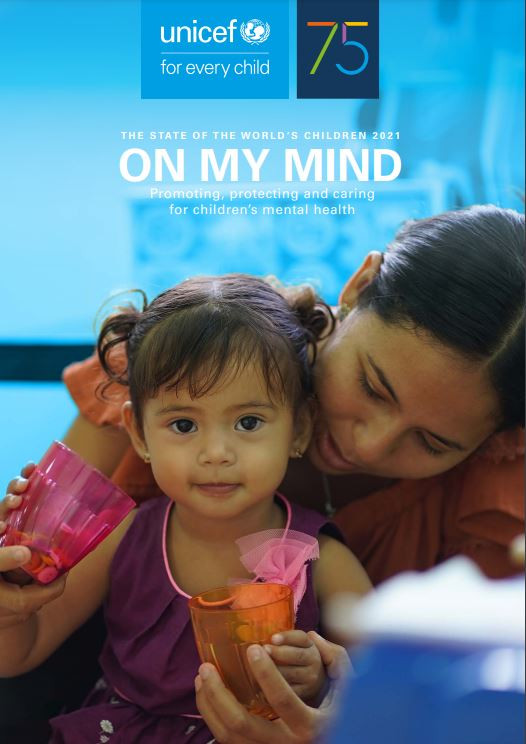 The State of the World's Children 2021 Executive Summary: ON MY MIND - Promoting, protecting and caring for children’s mental health 出版年份: 2021 机构作者: United Nations Children's Fund (UNICEF) This report focuses on the issue of children's mental health and appeals to wider public attention to the issue.
 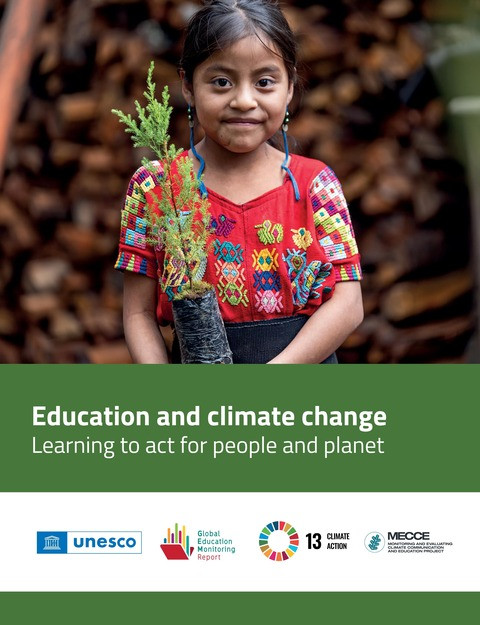 Education and Climate Change: Learning to Act for People and Planet 出版年份: 2024 机构作者: Global Education Monitoring Report Team | Monitoring and Evaluating Climate Communication and Education Project (MECCE) | University of Sakatchewan How can education lead to climate change action?Despite strong evidence on the impact of education on other development outcomes and the role it plays in developing professional capacity for sustainable development transitions, education is often absent from other sectors’ strategic, policy, planning and financing considerations. The Global Education Monitoring Report is introducing a new series to advance dialogue on the interrelationship of education with the other Sustainable Development Goals.The first paper in the series focuses on climate change. It starts by reviewing the growing impact of climate change on education before turning to the role of education in climate action. Education has a somewhat underappreciated contribution to developing professional capacities for the transition to a green economy. Formal, non-formal and informal learning are also commonly believed to be playing a critical role in motivating actions on climate change mitigation and adaptation.Yet a positive association between education attainment and unsustainable consumption levels, as well as inconclusiveness of much research on the direct impact of education on climate change adaptation and mitigation actions has in part contributed to education receiving low priority in global and national climate change agendas.This paper argues that climate change education needs to adapt to fulfil its potential. The education paradigm cannot rely solely on knowledge transfer but needs to focus on social and emotional, and action-oriented learning.Much of the research has focused on the impact of education attainment and cognitive learning. More research is therefore needed to assess other drivers through which education can influence behaviours and motivate climate change action. Such research is needed to formulate viable education reform packages that improve the curriculum, strengthen climate-readiness of schools and education systems, engage learners and prepare educators accordingly.
 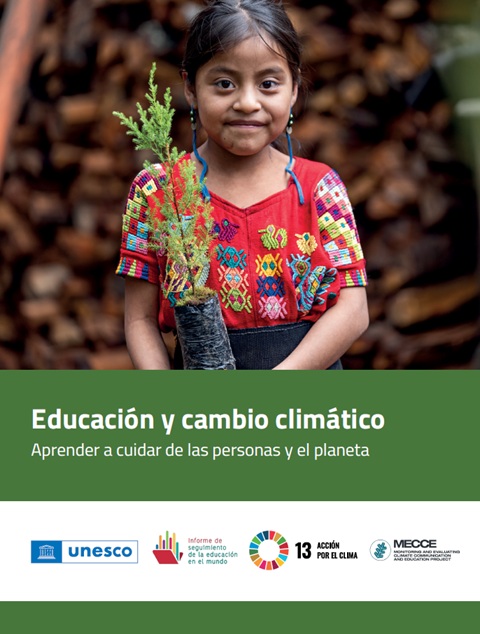 Educación y cambio climático: aprender a cuidar de las personas y el planeta 出版年份: 2024 机构作者: Global Education Monitoring Report Team | Monitoring and Evaluating Climate Communication and Education Project (MECCE) | University of Sakatchewan ¿Cómo puede la educación conducir a la acción contra el cambio climático?A pesar de las sólidas pruebas existentes sobre la repercusión de la educación en el logro de otros objetivos de desarrollo y la función que desempeña en el desarrollo de la capacidad profesional para las transiciones hacia el desarrollo sostenible, la educación suele estar ausente de las consideraciones estratégicas, políticas, de planificación y de financiación de otros sectores.El Informe de seguimiento de la educación en el mundo presenta una nueva serie destinada a fomentar el diálogo sobre la interrelación de la educación con los demás Objetivos de Desarrollo Sostenible. El primer documento de la serie se centra en el cambio climático, y empieza por analizar el creciente impacto del cambio climático en la educación antes de pasar a abordar la función de la educación en la acción climática.La contribución de la educación al desarrollo de capacidades profesionales para la transición a una economía verde está en cierta medida infravalorada. Al mismo tiempo, existe la conciencia de que el aprendizaje, tanto formal como no formal e informal, desempeña una función esencial a la hora de motivar la acción en materia de mitigación del cambio climático y adaptación a sus efectos.Sin embargo, la existencia de una correlación positiva entre el nivel de educación y los niveles de consumo insostenibles, así como la falta de conclusiones de muchas investigaciones sobre la repercusión directa de la educación en la mitigación del cambio climático y la adaptación a sus efectos, han contribuido en parte a que se otorgue escasa prioridad a la educación en las agendas mundiales y nacionales sobre el cambio climático.En este documento se sostiene que es necesario adaptar la educación sobre el cambio climático para que desarrolle todo su potencial. El paradigma educativo no puede basarse únicamente en la transferencia de conocimientos, sino que debe centrarse en el aprendizaje socioemocional y orientado a la acción. Gran parte de la investigación se ha centrado en analizar el logro educativo y los resultados que se alcanzan mediante el aprendizaje cognitivo. Por ello, es necesario seguir investigando para evaluar otros factores mediante los cuales la educación puede influir en los comportamientos y motivar la acción contra el cambio climático. Estas investigaciones son necesarias para formular paquetes de reformas educativas viables que mejoren los planes de estudios, refuercen la preparación de las escuelas y los sistemas educativos para el cambio climático, impliquen a los educandos y preparen a los educadores en consecuencia.
 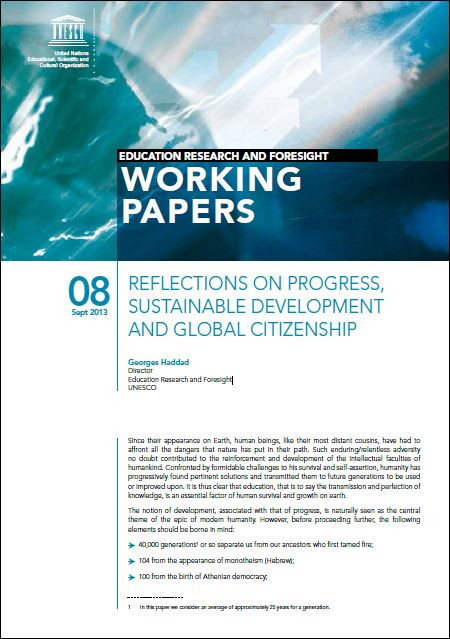 Reflections on Progress, Sustainable Development and Global Citizenship 出版年份: 2013 作者: Georges Haddad 机构作者: UNESCO The arguments developed in this concise presentation demonstrate that sustainable development, progress and global citizenship, efficiently embedded in the context of the Knowledge Society, undeniably participate in the development of the New Humanism promoted by the Director-General of UNESCO, and which we all agree to consider essential for the wealth and prosperity of Humanity in an agreeable, peaceful and friendly common environment.
  UNESCO Roadmap for Implementing the Global Action Programme on Education for Sustainable Development 出版年份: 2014 机构作者: UNESCO To create a world that is more just, peaceful and sustainable, all individuals and societies must be equipped with and empowered by knowledge, skills and values as well as be instilled with a heightened awareness to drive such change. There is now a growing international recognition of Education for Sustainable Development (ESD) as an integral element of quality education and a key enabler for sustainabledevelopment. Both the Muscat Agreement adopted at the Global Education For All Meeting in 2014 (GEM) and the proposal for Sustainable Development Goals (SDGs) developed by the Open Working Group of the UN General Assembly on SDGs (OWG) include ESD in the proposed targets for the post-2015 agenda.In 2013, the 37th session of the General Conference of UNESCO endorsed the Global Action Programme (GAP) on ESD as the follow-up to the UN Decade of ESD (2005-2014). Building on the achievements of the Decade, the GAP aims to generate and scale up concrete actions in ESD. The present Roadmap communicates the GAP endorsed by UNESCO Member States (37 C/Resolution 12) to decision-makers, stakeholders and actors, and provides suggestions for the implementation of the GAP, as well as details on UNESCO’s role. Feuille de route de l'UNESCO pour la mise en œuvre du programme d'action mondiale sur l'éducation pour le développement durable 出版年份: 2014 机构作者: Organisation des Nations Unies pour l'éducation, la science et la culture (UNESCO) Les défis mondiaux interconnectés d'aujourd'hui exigent des réponses qui sont enracinées dans l'esprit de notre humanité collective. Je crois que les risques et les opportunités auxquels nous sommes confrontés appellent à un changement de paradigme qui ne peut être intégré dans nos sociétés par le biais de l'éducation et de l'apprentissage. Le rôle de l'éducation en tant que catalyseur pour la construction d'un avenir meilleur et plus durable pour tous a acquis une reconnaissance croissante, ce qui conduit à la déclaration de la Décennie des Nations Unies pour l'éducation pour le développement durable en 2005. Cet engagement a gagné davantage de force lorsque les États membres se sont engagés à promouvoir Education pour le développement durable au-delà de la fin de la Décennie au Royaume-Nationsconférenceon développement durable 2012 - Rio + 20. Pour tirer profit des réalisations et de créer un nouvel élan lorsque la Décennie des Nations Unies se ferme en 2014, l'UNESCO, en tant qu'organisme chef de file de la Décennie, a mis au point un programme d'action mondiale sur l'éducation pour le développement durable. Sur la base de larges consultations et des contributions d'un large éventail de parties prenantes, le programme a été approuvé par le Generalconférencein UNESCO 2013. Elle intervient à un moment où la communauté internationale est chargé de proposer un nouvel ensemble d'objectifs de développement durable qui sont orientés vers l'action, global dans la nature et universellement applicable.En tant que suivi de la Décennie, le Programme d'action mondial est également conçu comme un béton, contribution tangible à l'après 2015 développement et d'éducation agendas L'. Le Programme d'action mondial est livré avec une feuille de route de mise en œuvre détaillé. Il est destiné à toutes les parties prenantes - gouvernements, les organisations de la société civile, le secteur privé, les médias, la communauté universitaire et de recherche, les organisations intergouvernementales et d'autres institutions pertinentes qui facilitent et appuyer l'apprentissage et la formation, tout le chemin aux enseignants et aux apprenants individuels. La feuille de route explique le Programme de but, les objectifs et les domaines d'action prioritaires afin de permettre l'orientation stratégique et l'engagement des parties prenantes, ainsi que des stratégies de mise en œuvre et de Suivi. Je souhaite que le Programme d'action mondial, qui sera lancé à l'éducation Worldconférenceon pour le développement durable à Aichi-Nagoya, au Japon (Novembre 2014), sera successed dans la mobilisation de la communauté des acteurs de l'éducation pour le développement durable et de fournir des conseils pratiques pour sa mise en œuvre effective . Nous avons tous un intérêt profond dans son succès. Avant-propos Introduction - A Better Tomorrow Begins Today - De la Décennie de l'EDD au programme d'action mondial - Esquisse d'une vision commune - Comprendre EDD Feuille de route - But et objectifs - Domaines d'action prioritaires - Stratégies - Mécanismes - Ressources - Suivi et évaluation Annexe - Action Globale Programme sur l'éducation pour le développement durable comme le suivi de la Décennie des Nations Unies pour le développement durable après 2014. ЮНЕСКО Дорожная карта осуществления Глобальной программы действий по образованию в интересах устойчивого развития 出版年份: 2014 机构作者: Организация Объединенных Наций по вопросам образования, науки и культуры (UNESCO) Для построения более справедливого, мирного и устойчивого мирового сообщества каждый отдельный человек и каждое общество должны быть обеспечены и вооружены знаниями, навыками и ценностными ориентирами, а также обладать четким пониманием того, как добиться подобных изменений. Сегодня мы являемся свидетелями растущего международного признания принципов образования в интересах устойчивого развития (ОУР) как неотъемлемого элемента качественного образования и ключевого фактора устойчивого развития. В Маскатском соглашении, принятом на Глобальном совещании по программе «Образование для всех» в 2014 г., а также в предложении по целям в области устойчивого развития (ЦУР), подготовленном Рабочей группой открытого состава Генеральной Ассамблеи ООН по ЦУР, образование в интересах устойчивого развития фигурирует в числе целей, предложенных к включению в повестку дня на период после 2015 г.В 2013 г. 37-я сессия Генеральной конференции ЮНЕСКО одобрила Глобальную программу действий (ГПД) по ОУР в качестве деятельности по итогам Десятилетия образования в интересах устойчивого развития Организации Объединенных Наций (2005-2014 гг.).Развивая достигнутые в рамках Десятилетия успехи, ГПД направлена на осуществление конкретной деятельности в области ОУР и расширение ее масштабов. Цель настоящей Дорожнойкарты – информировать директивные органы, заинтересованные стороны и участников о принятии государствами – членами ЮНЕСКО Глобальной программы действий и представить предложения по осуществлению ГПД, а также информацию о роли ЮНЕСКО в ее реализации.
  Quality Physical Education (QPE): guidelines for policy makers 出版年份: 2015 作者: Nancy, McLennan | Jannine, Thompson 机构作者: UNESCO A key feature of the Post-2015 Development Agenda is sustainable development. Sustainable development starts with safe, healthy, well-educated children. Participation in quality physical education (QPE), as part of a rounded syllabus, enhances young peoples’ civic engagement, decreases violence and negative patterns of behaviour, and improves health awareness. The UNESCO QPE Policy Package is an original piece of work, which draws upon results from extensive global research (including the Worldwide Survey of School Physical Education). These guidelines, designed for global application and local adaptation, provide a means of analysing current policy through practical guidance and a ‘how-to’ approach. The materials have been developed in consultation with key partners including the European Commission, the International Council for Sport Science and Physical Education (ICSSPE), UNDP, UNICEF, UNOSDP and WHO. L'Education physique de qualité (EPQ): directives à l'intention des décideurs 出版年份: 2015 作者: Nancy, McLennan | Jannine, Thompson 机构作者: Organisation des Nations Unies pour l'éducation, la science et la culture (UNESCO) A key feature of the Post-2015 Development Agenda is sustainable development. Sustainable development starts with safe, healthy, well-educated children. Participation in quality physical education (QPE), as part of a rounded syllabus, enhances young peoples’ civic engagement, decreases violence and negative patterns of behaviour, and improves health awareness. The UNESCO QPE Policy Package is an original piece of work, which draws upon results from extensive global research (including the Worldwide Survey of School Physical Education). These guidelines, designed for global application and local adaptation, provide a means of analysing current policy through practical guidance and a ‘how-to’ approach. The materials have been developed in consultation with key partners including the European Commission, the International Council for Sport Science and Physical Education (ICSSPE), UNDP, UNICEF, UNOSDP and WHO.