
相关资源
探索丰富的全球公民教育资源,深化理解,促进研究、倡导、教学与学习。
共找到3,182条结果
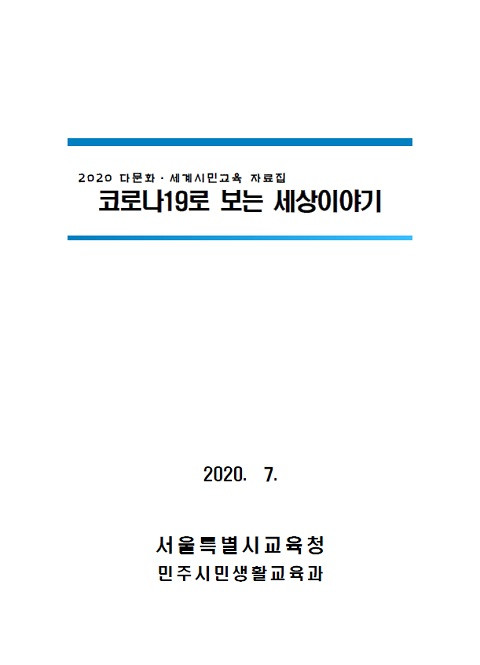 코로나19로 보는 세상이야기: 2020 다문화·세계시민교육 자료집 出版年份: 2020 机构作者: 서울특별시교육청 다문화교육지원센터 본 자료는 서울시교육청 다문화교육지원센터에서 단위학교의 다문화 세계시민 교육을 지원하고자 제작된 것으로, 코로나19 시대에 필요한 평화교육, 세계시민교육, 다문화교육, 인권교육 등의 교수학습 자료이다.
 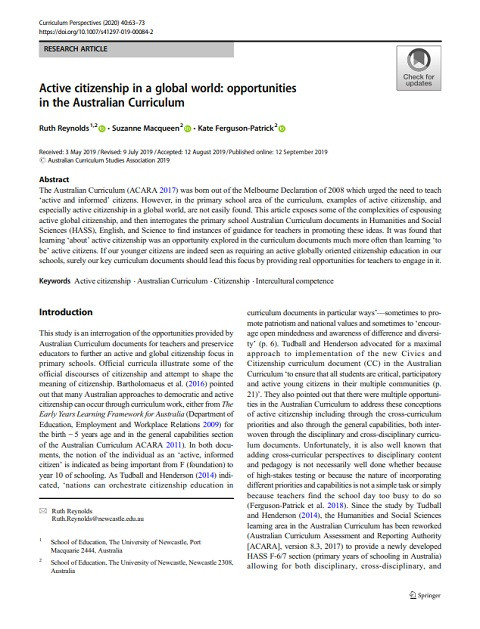 Active Citizenship in a Global World: Opportunities in the Australian Curriculum (Curriculum Perspectives; Vol. 40) 出版年份: 2019 作者: Ruth Reynolds | Kate Ferguson-Patrick | Suzanne MacQueen 机构作者: Australian Curriculum Studies Association (ACSA) The Australian Curriculum (ACARA 2017) was born out of the Melbourne Declaration of 2008 which urged the need to teach ‘active and informed’ citizens. However, in the primary school area of the curriculum, examples of active citizenship, and especially active citizenship in a global world, are not easily found. This article exposes some of the complexities of espousing active global citizenship, and then interrogates the primary school Australian Curriculum documents in Humanities and Social Sciences (HASS), English, and Science to find instances of guidance for teachers in promoting these ideas. It was found that learning ‘about’ active citizenship was an opportunity explored in the curriculum documents much more often than learning ‘to be’ active citizens. If our younger citizens are indeed seen as requiring an active globally oriented citizenship education in our schools, surely our key curriculum documents should lead this focus by providing real opportunities for teachers to engage in it.
 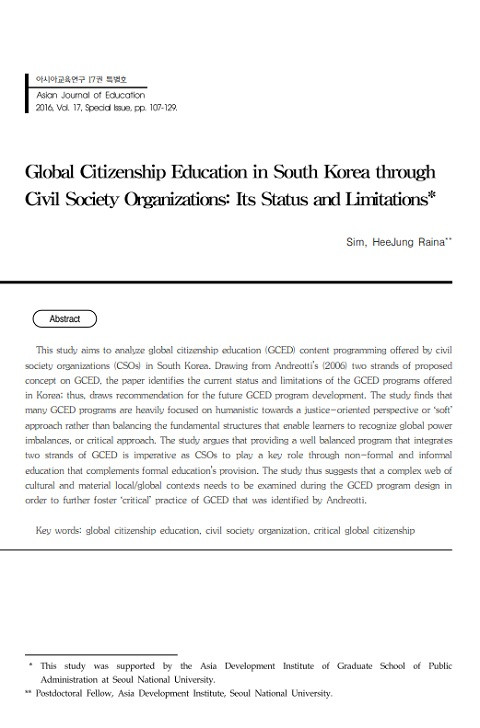 Global Citizenship Education in South Korea through Civil Society Organizations: Its Status and Limitation (Asian Journal of Education, Vol.17, Special Issue) 出版年份: 2016 作者: HeeJung Raina Sim 机构作者: Asia Development Institute of Seoul National University This study aims to analyze global citizenship education (GCED) content programming offered by civil society organizations (CSOs) in South Korea. Drawing from Andreotti’s (2006) two strands of proposed concept on GCED, the paper identifies the current status and limitations of the GCED programs offered in Korea; thus, draws recommendation for the future GCED program development. The study finds that many GCED programs are heavily focused on humanistic towards a justice-oriented perspective or ‘soft’ approach rather than balancing the fundamental structures that enable learners to recognize global power imbalances, or critical approach. The study argues that providing a well balanced program that integrates two strands of GCED is imperative as CSOs to play a key role through non-formal and informal education that complements formal education’s provision. The study thus suggests that a complex web of cultural and material local/global contexts needs to be examined during the GCED program design in order to further foster ‘critical’ practice of GCED that was identified by Andreotti.
 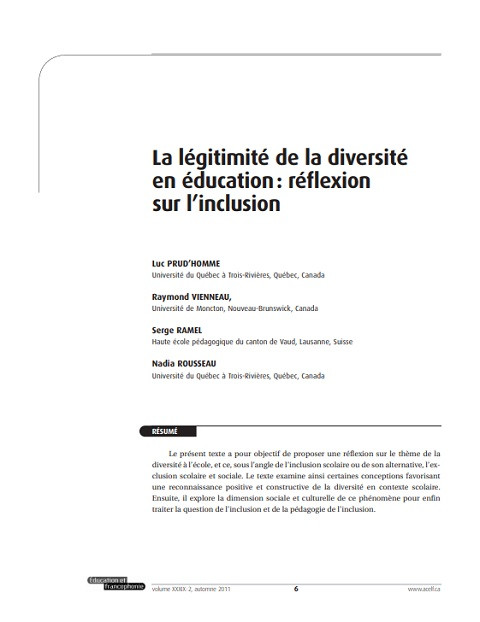 The Legitimacy of Diversity in Education: A Reflection on Inclusion 出版年份: 2011 作者: Luc Prud’homme | Raymond Vienneau | Serge Ramel | Nadia Rousseau 机构作者: Éducation et francophonie | Association canadienne d’éducation de langue française The objective of this article is to explore the theme of diversity in the classroom from the perspective of scholastic inclusion, or its alternative, scholastic and social exclusion. The article examines concepts that foster the positive and constructive recognition of diversity in the school setting, along with the social and cultural dimension of inclusion and the pedagogy of inclusion. La légitimité de la diversité en éducation : réflexion sur l’inclusion 出版年份: 2011 作者: Luc Prud’homme | Raymond Vienneau | Serge Ramel | Nadia Rousseau 机构作者: Éducation et francophonie | Association canadienne d’éducation de langue française Le présent texte a pour objectif de proposer une réflexion sur le thème de la diversité à l’école, et ce, sous l’angle de l’inclusion scolaire ou de son alternative, l’exclusion scolaire et sociale. Le texte examine ainsi certaines conceptions favorisant une reconnaissance positive et constructive de la diversité en contexte scolaire. Ensuite, il explore la dimension sociale et culturelle de ce phénomène pour enfin traiter la question de l’inclusion et de la pédagogie de l’inclusion.
 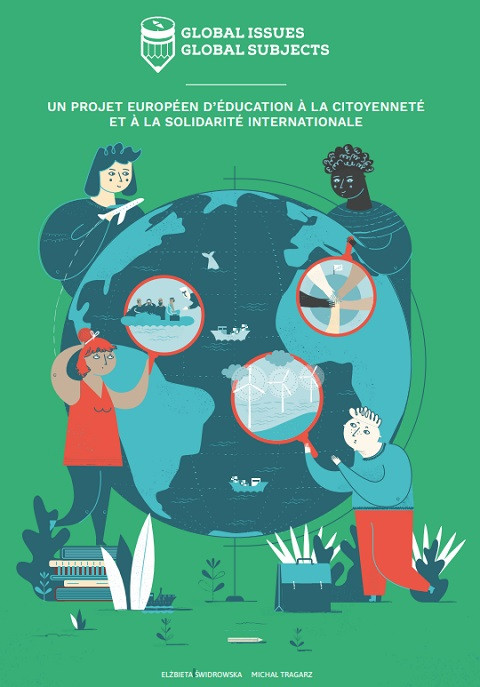 Un projet européen d’éducation à la citoyenneté et à la solidarité internationale 出版年份: 2020 作者: Elżbieta Swidrowska | Michał Tragarz 机构作者: Le Partenariat | Global Issues, Global Subjects (GIGS) | Union européenne Cette brochure nous permet de prendre conscience de l’importance d’une démarche citoyenne ayant pour but de favoriser une solidarité entre les territoires, les générations, les groupes sociaux et d’agir pour la construction d’un monde solidaire.
 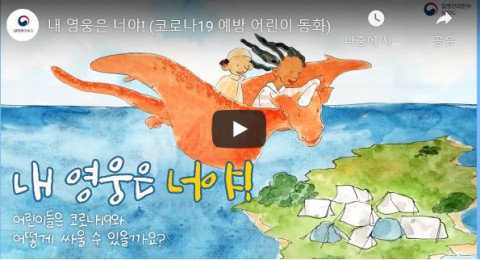 내 영웅은 너야! : 어린이들은 코로나19와 어떻게 싸울 수 있을까요? 出版年份: 2020 作者: 헬렌 패턱 机构作者: 한국심리학회 | 질병관리본부 코로나19로부터 사랑하는 사람들을 어떻게 보호할 수 있을까요? 사라와 친구들이 모험을 통해서 그 방법을 하나씩 배운다고 해요!가족과 친구를 코로나 바이러스로부터 안전하게 지키고, 이 시기를 씩씩하게 이겨내어 영웅이 되는 법까지 우리 함께 알아보러 가볼까요? ※ 본 영상은 한국심리학회와 질병관리본부가 코로나19 예방을 위해 IASC에서 만든 어린이 동화 「My hero is you」를 국내 상황에 맞게 번역 각색하였습니다.
 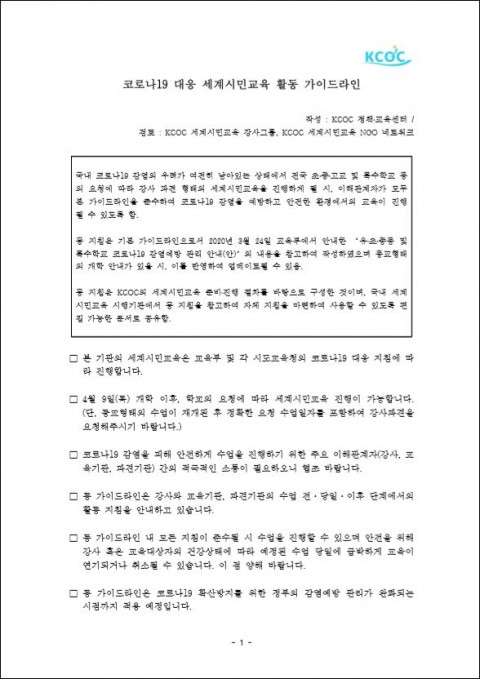 코로나19 대응 세계시민교육 활동 가이드라인 出版年份: 2020 机构作者: 국제개발협력민간협의회 (KCOC) 국내 코로나19 감염의 우려가 여전히 남아있는 상태에서 전국 초·중·고교 및 특수학교 등의 요청에 따라 강사 파견 형태의 세계시민교육을 재개하게 될 시 안전한 환경에서 세계시민교육을 진행할 수 있도록 작성한 세계시민교육 담당자와 강사들을 위한 활동지침서이다.
 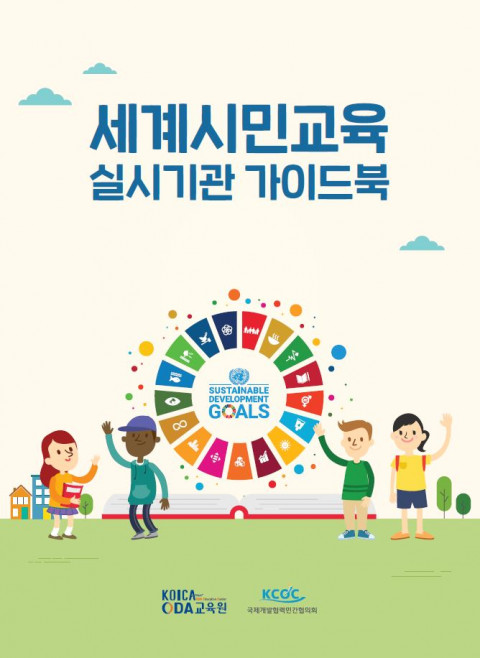 세계시민교육 실시기관 가이드북 出版年份: 2019 机构作者: KOICA ODA 교육원 | 국제개발협력민간협의회 다양한 기관과 NGO 등에서 운영하고 있는 다채로운 세계시민교육 프로그램과 각 기관에 대한 소개 및 교재와 교구 등 참고자료를 수록하고 있다.이 가이드북은 단순히 세계시민교육을 제공하는 기관의 리스트가 아니라 기관의 특성과 운영 프로그램 · 교육 대상을 담고 있다는 점에서 세계시민교육과 세계시민교육 프로그램에 관심 있는 이들에게 유용한 안내서가 될 것이다.
 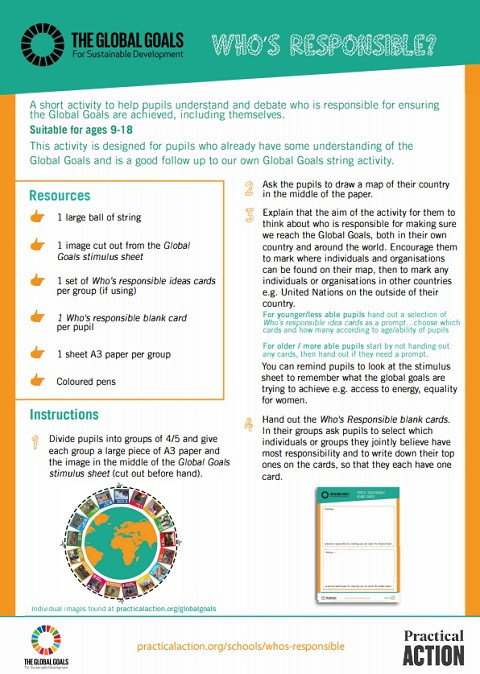 Who’s Responsible?: The Global Goals for Sustainable Development 出版年份: 2018 机构作者: Practical Action This 30 minute activity encourages pupils to consider who is responsible for ensuring we achieve the Global Goals (also known as the Sustainable Development Goals, SDGs). It is suitable for pupils 9-18 it stimulates discussion and debate, and help pupils recognize the role they themselves have to play.